


Antique Silver Biscuit Jar
An antique silver biscuit jar brings Victorian and Edwardian dining tables a touch of formal hospitality, offering a decorative vessel to hold biscuits for guests.
Antique Silver Biscuit Jar
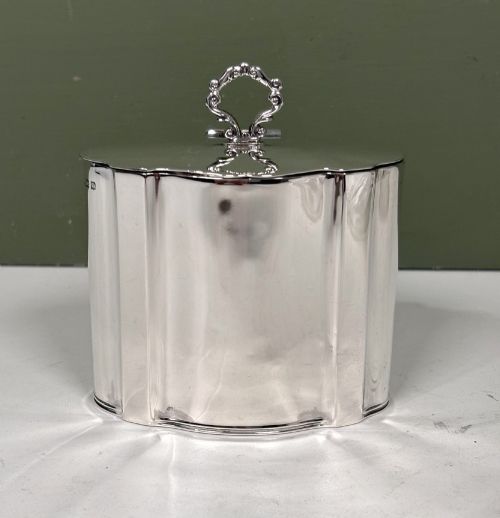
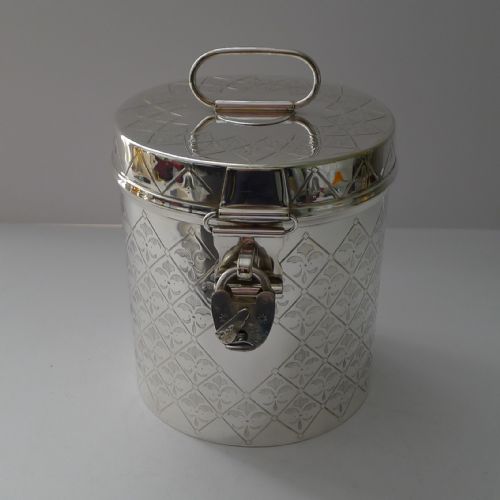
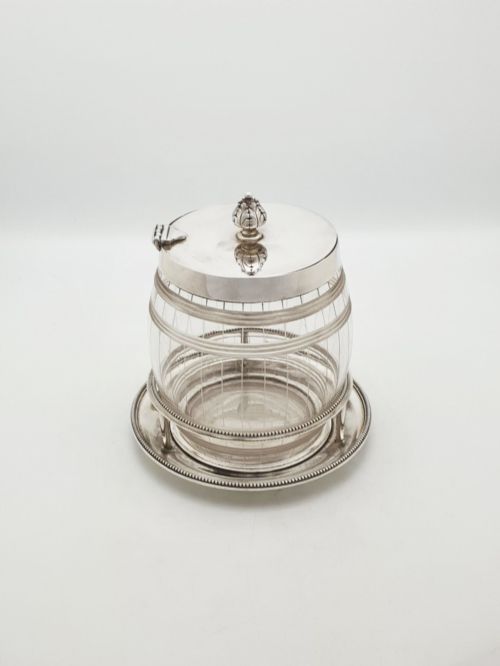
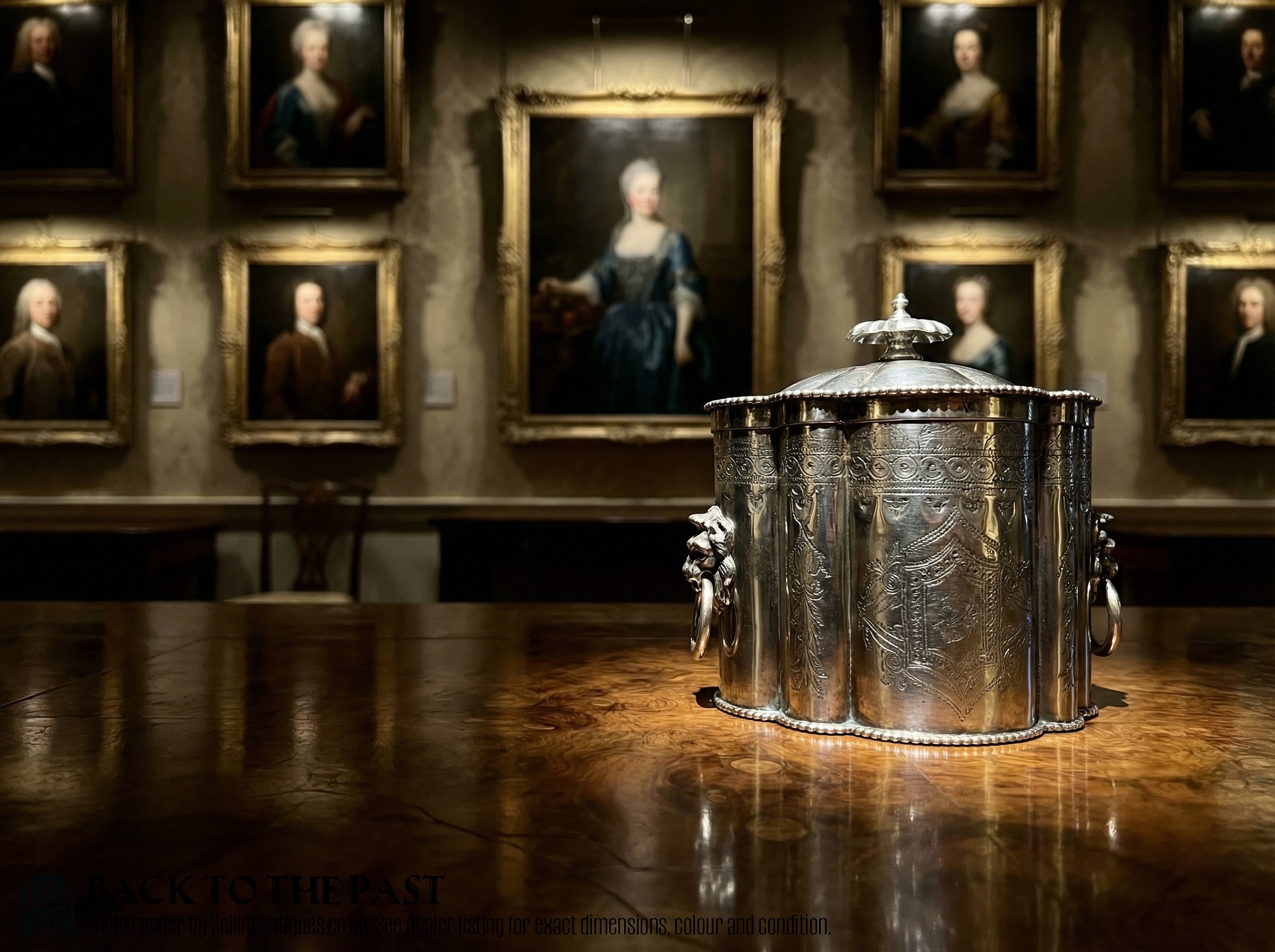
An antique silver biscuit jar generally takes the form of a cylindrical or drum-shaped barrel, box or caddy designed to store table biscuits. These pieces date predominantly from the Victorian and Edwardian eras, spanning the mid-nineteenth century through to the 1920s.
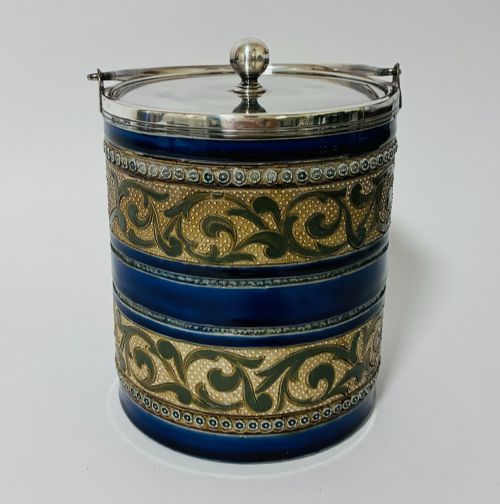
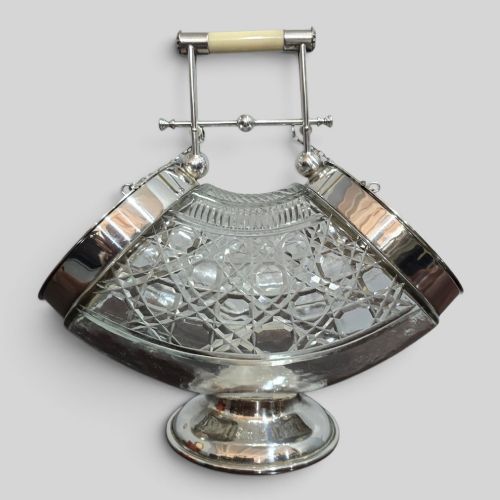
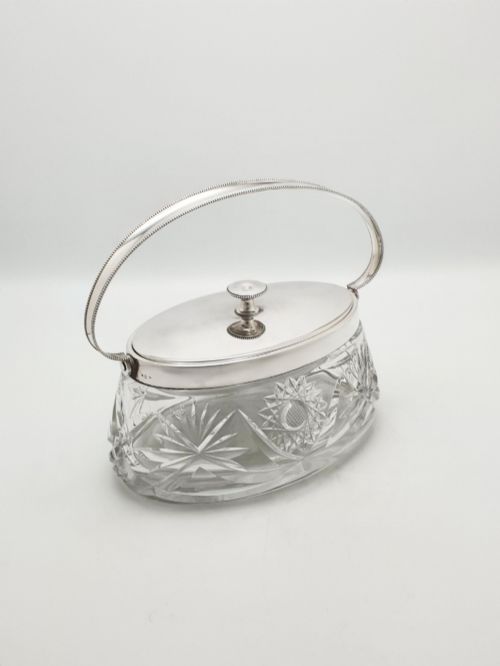
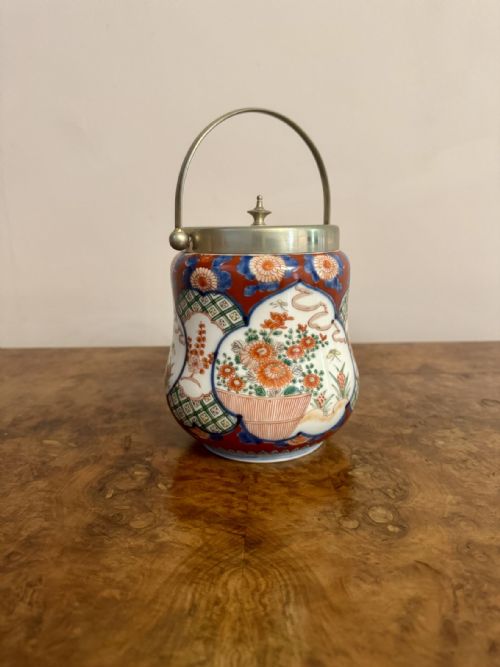
The versions most commonly met on this page combine a ceramic or cut glass body with silver-plated mounts, swing handles and hinged lids. Examples range from simple ceramic jars to elaborate cut glass containers and novelty shapes.
Makers utilised various materials including oak, stoneware, cranberry glass and Jasperware alongside silver plate and sterling silver. Originating primarily in English workshops, these table wares reflect domestic entertaining habits of the period.
Materials and Techniques
Makers combined metalwork and glass-blowing or ceramic moulding to construct these containers, mounting glass bodies in pierced or solid silver-plated frames. Cut glass and cranberry glass vessels required skilled wheel-cutting or batch-colouring techniques to achieve faceted surfaces and rich hues.
Ceramic bodies such as Jasperware, stoneware and earthenware were shaped and fired before receiving applied reliefs or flow blue glazes. Silversmiths then fitted these bodies with cast handles, hinged lids and protective rims utilising traditional soldering and plating methods.
Makers produced novelty biscuit jars shaped like heavy metal weights and drum containers to amuse guests at the tea table.
Judging Quality
Quality rests in the weight and crispness of the metal mounts, the clarity and depth of cut glass facets, and the fineness of ceramic details like Jasperware reliefs. Substantial silver plating thickness and robust hinge mechanisms distinguish superior examples from standard production pieces.
The integration between the glass or ceramic liner and the metal frame reveals the care taken in manufacture, where tight tolerances and well-fitted lids indicate higher craftsmanship.
Mappin and Webb·Elkington and Co·Thomas Bradbury·Robert and Belk·Walker and Hall·Wedgwood·Doulton Lambeth·WMF
The Antique Silver Biscuit Jar Glossary
- Silver Plate
- A base metal such as copper or Britannia metal coated with a thin layer of silver through electroplating or old Sheffield plating techniques. This method allowed makers to produce ornamental vessels at a lower cost than solid silver.
- Jasperware
- A type of fine stoneware developed by Josiah Wedgwood featuring a matte surface, often coloured in blue with applied white stoneware reliefs in neoclassical styles. It remains distinctive for its tactile, cameo-like ornamentation.
- Cranberry Glass
- A red or pink transparent glass produced by adding gold chloride to the molten glass batch. It appears frequently in Victorian tablewares mounted in silver-plated frames.
- Finil
- A decorative knob or handle attached to the top of a lid. On these pieces, finials sometimes take figurative forms such as heraldic dragons.
- Hobnail
- A faceted glass-cutting pattern resembling the hobnails used on heavy boots. This texture catches the light across the body of cut glass containers.
Antique Silver Biscuit Jar: Frequently Asked Questions
What were antique silver biscuit jars used for?
These vessels served as formal table containers for dry biscuits or crackers during afternoon tea and after-dinner hospitality in Victorian and Edwardian households.
Their lidded design kept baked goods crisp in damp climates while presenting an ornamental centrepiece on the dining table.
How do I tell Victorian from Edwardian pieces?
Victorian examples often display heavier, more ornate decoration including deep hand-cut glass, heraldic motifs, and elaborate silver-plated mounts dating from the mid to late nineteenth century.
Edwardian pieces from the early twentieth century tend towards lighter neoclassical styling, simpler geometric glass cutting, and sleeker profiles.
Are liners usually original to the jar?
Many surviving pieces retain their original glass or ceramic liners, which were custom-fitted to the metal frames during manufacture.
Because liners were fragile and prone to breakage over decades of use, replacement liners appear frequently in older tablewares.
How should I clean silver-plated mounts?
Silver-plated mounts require gentle cleaning with a specialised non-abrasive silver polish and a soft cloth to preserve the underlying plating.
Harsh dips or abrasive compounds can strip thin electroplated layers and damage adjacent glass or ceramic components.