
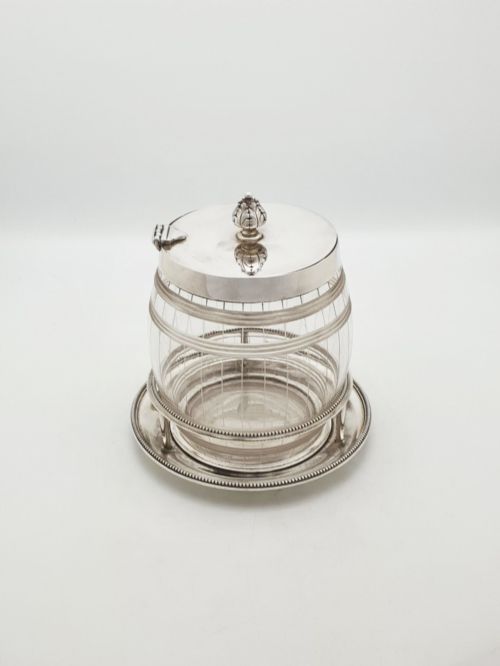


Victorian Biscuit Box
A victorian biscuit box is a refined dining table accessory designed to keep biscuits fresh while adding elegance to the room.
Victorian Biscuit Box
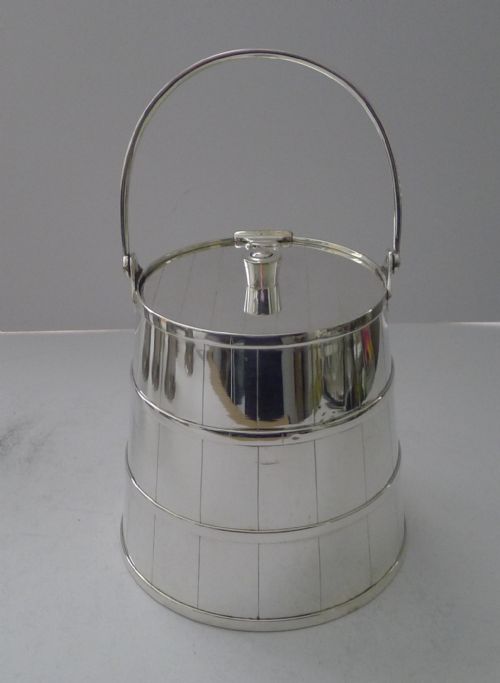
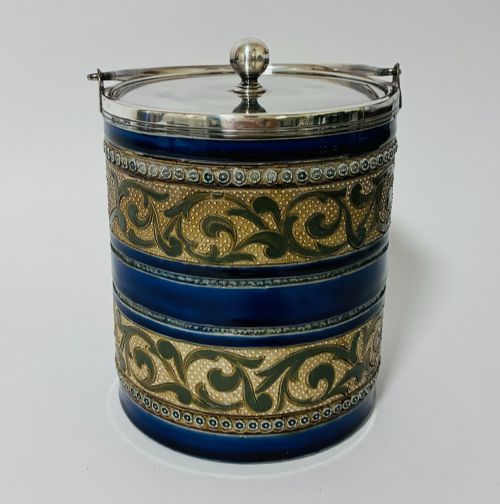
The dominant forms combine silver plate with cut glass, ceramic, or oak bodies. Originating in domestic dining rooms, these items served as practical storage elevated by decorative craftsmanship.
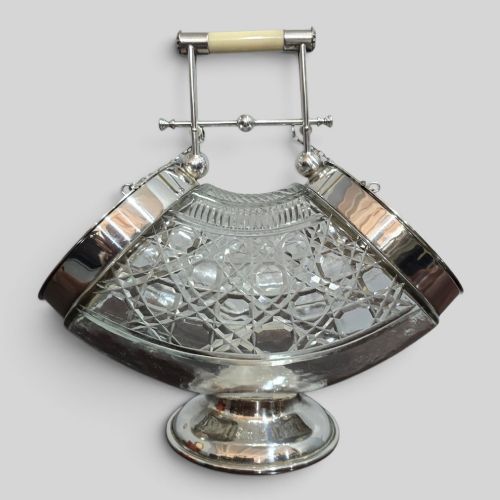
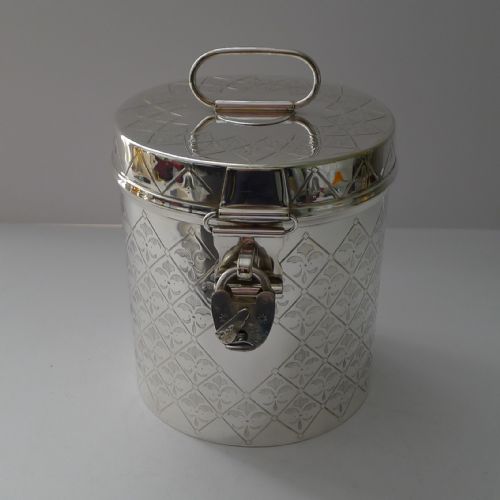
Makers produced these containers in straightforward cylindrical shapes as well as elaborate novelty forms resembling weights, books, and satchels. Surviving examples reflect the shifting tastes of the Victorian and Edwardian periods.
How They Were Made
Silversmiths utilised silver plate, electroplated nickel silver, and sterling silver to form the mounts, hinged lids, and swing handles. These metallic elements were frequently embossed, engraved, or cast with figural finials.
Bodies were constructed from thick cut glass, such as hobnail and twisted patterns, or turned oak and stoneware like Doulton Lambeth. Artisans combined these contrasting textures to create durable containers for the dining table.
Listings feature items spanning the Victorian, Edwardian, and late nineteenth-century periods, utilising cut glass, silver plate, and oak.
What Varies in Quality
Quality rests in the weight of the metal and the precision of the mechanical actions on folding or locking models. Finer pieces demonstrate crisp casting in handles and finials, alongside well-fitted hinges that operate smoothly.
The clarity and depth of the cut glass or the grain selection in the oak bodies distinguish standard production from superior examples. Workshops known for high standards invested greater care in chased decoration and structural joints.
Mappin and Webb·Elkington and Co·Thomas Bradbury·Robert and Belk·Walker and Hall·Peek Frean and Co·John Grinsell and Sons·James Dixon and Sons·Fenton Brothers·Henry Wilkinson and Co·Deykin and Sons·Hardy Brothers·The Alexander Clark
The Victorian Biscuit Box Glossary
- Silver Plate
- A thin layer of silver fused to a base metal such as copper or nickel silver. This technique provided the appearance of solid silver at a lower cost for domestic items.
- EPNS
- Electroplated nickel silver. A common base metal composition used extensively for nineteenth-century tableware mounts and lids.
- Finial
- A decorative knob or ornament attached to the top of a lid. On these pieces, finials frequently take the form of animals, helmets, or heraldic motifs.
- Hobnail Cut
- A raised geometric pattern cut into glass surfaces. This texture catches the light and adds tactile grip to the container body.
- Folding Shell
- A hinged container design featuring two or more shell-shaped compartments that open outward. This mechanical form was popular among major silversmiths.
Victorian Biscuit Box: Frequently Asked Questions
What is a biscuit box?
A biscuit box is a lidded container created to store dry biscuits on the dining table.
These pieces protected the contents from moisture while offering an ornate presentation during tea or after dinner.
How were they used?
Victorian households placed these containers on the dining table or sideboard during formal meals and gatherings.
Guests lifted the hinged lids or manipulated the folding mechanisms to serve themselves during dessert.
How do you clean them?
Silver-plated mounts require gentle cleaning with a soft cloth and a specialised silver polish to avoid damaging the plating.
Glass and ceramic bodies can be washed separately in warm soapy water, taking care to protect any attached metal hinges.
How do you date a piece?
Dating relies on maker's marks, registration numbers, and stylistic cues recorded across the Victorian and Edwardian eras.
Heavier cut glass and specific mechanical shell designs frequently point to the decades between eighteen sixty and nineteen hundred.