


Antique Silver Bird
Antique silver bird pieces range from whimsical novelty pin cushions to finely chased table ornaments, capturing centuries of avian forms in precious metal.
Antique Silver Bird
An antique silver bird brings winged forms into domestic objects, spanning practical desk accessories, decorative vessels and miniature sculptures.
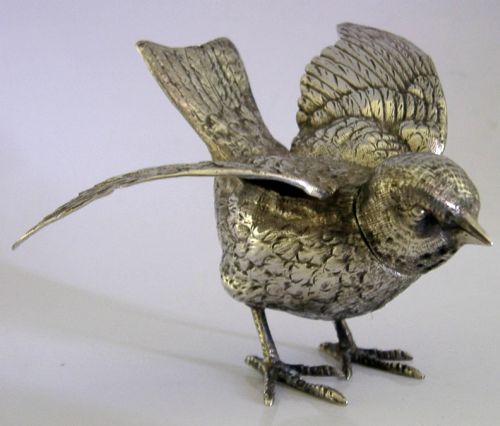
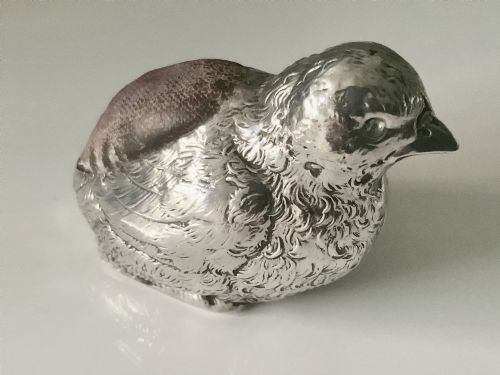
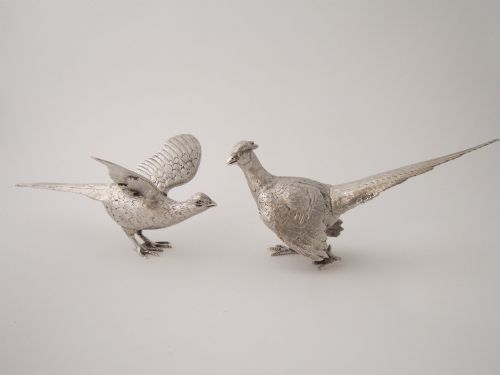
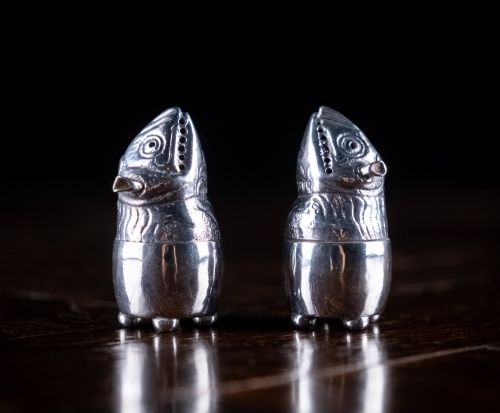
The selections here frequently comprise Victorian and Edwardian novelty pieces such as chick pin cushions, pheasant pepper pots and sculptural desk seals.
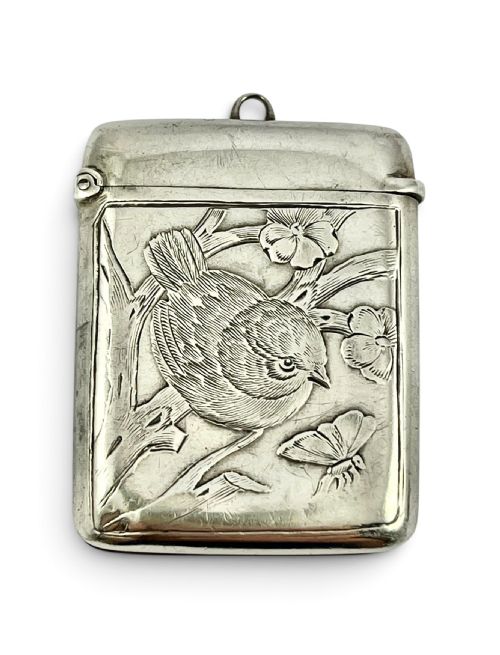
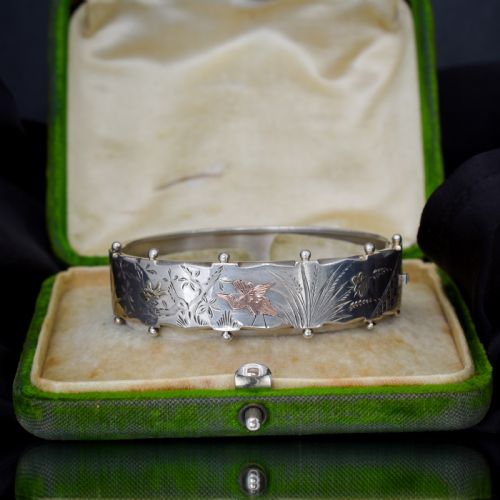
Beyond whimsical desk ornaments, avian motifs appear embossed or engraved upon utility items including snuff boxes, card cases, salts and serving spoons across the nineteenth and twentieth centuries.
How They Were Made
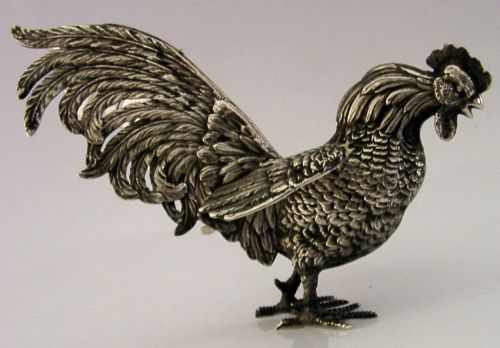
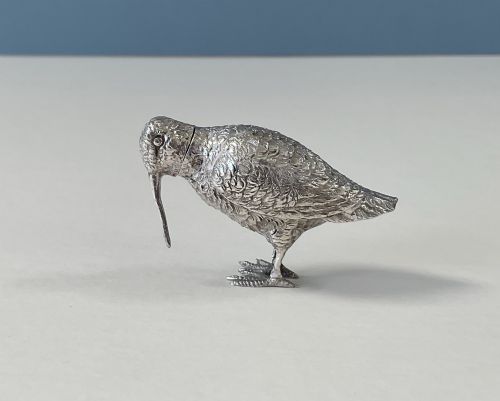
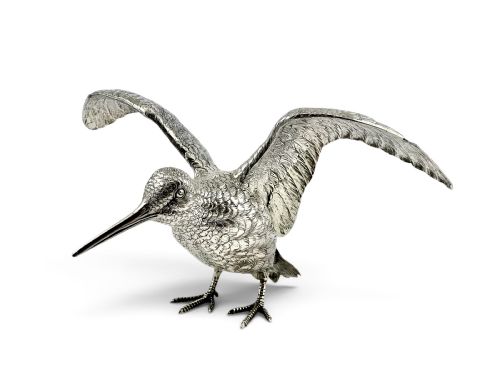
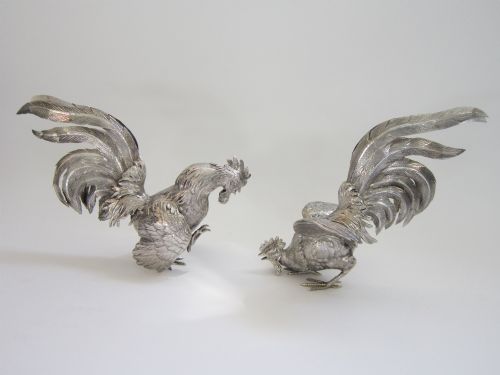
Many three-dimensional figures rely on traditional casting techniques, creating solid or hollow models of cockerels, pheasants and waterfowl with textured feather details.
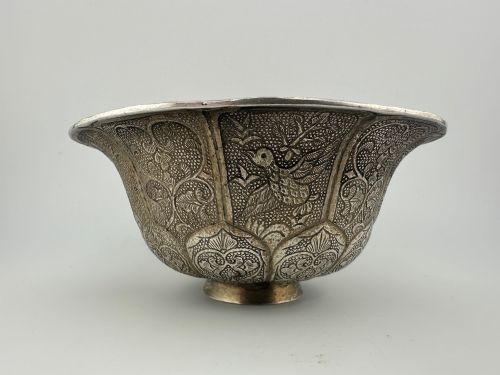
Flatware and decorative containers often utilise repoussé and chasing, pushing the sterling silver or white metal from behind to raise detailed bird and floral reliefs.
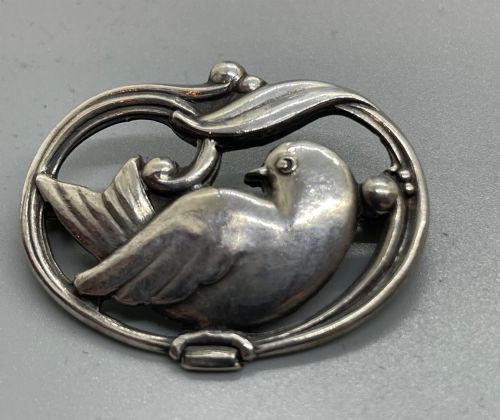
Enamelwork frequently adds vibrant plumage to brooches, menu holders and miniature boxes, fusing powdered glass to the silver surface under high heat.
Avian forms appear across diverse functional objects, including pepper pots, menu holders, vesta boxes, walking cane handles and snuff boxes.
What Varies in Quality
The precision of anatomical modelling distinguishes master animalier silversmiths from mass-produced novelty items, separating realistic feather texture from smooth, featureless casting.
Maker marks and clear assay stamps provide documentary weight, confirming the specific origin, date and silver standard of the piece.
Preservation of delicate applied elements, such as enamel wings, original velvet cushion inserts or retained gilding, dictates the integrity of surviving specimens.
Frederick Brasted·Berthold Muller·Sampson Mordan·Ando Jubei
The Antique Silver Bird Glossary
- Novelty silver
- An item shaped into an amusing or unexpected form, such as an animal, vegetable or everyday object. These functional pieces combine utility with whimsical design.
- Repoussé
- A method of decorating metal by hammering the reverse side to raise a design in relief. Artisans work the front surface with punches for finer definition.
- Chasing
- The complementary technique to repoussé, executed from the front by sinking the metal rather than raising it. This refines surface details and sharpens lines.
- Sterling silver
- An alloy consisting of ninety-two point five percent silver and seven point five percent other metals, usually copper. This standard ensures durability while maintaining high purity.
- Silver plate
- A base metal, such as copper or white metal, coated with a thin layer of silver. Manufacturers utilised this method to offer decorative items at lower costs.
Antique Silver Bird: Frequently Asked Questions
What were silver bird pin cushions used for?
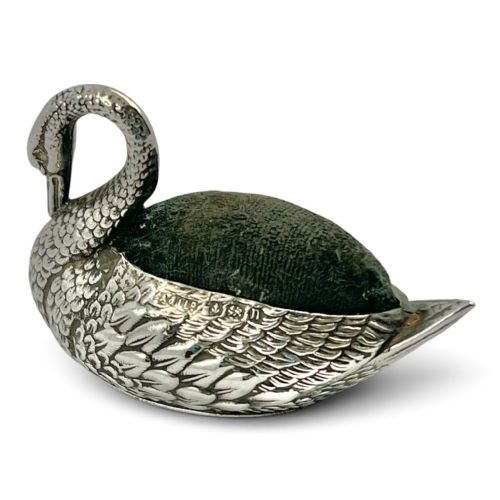
Victorian and Edwardian needleworkers utilised these miniature silver animals, fitted with stuffed velvet pads, to keep pins and needles close at hand during sewing.
Craftsmen modelled them as chicks, ducks and swans, transforming a mundane sewing accessory into a charming desk ornament.
How can I identify the date of a silver bird?
British pieces typically feature hallmark stamps indicating the assay office, date letter and silver standard, allowing collectors to trace the exact year of manufacture.
Continental and unmarked items require stylistic analysis of the form, chasing technique and material composition to estimate their period.
Are these silver birds solid or hollow?
Larger table ornaments and figures are frequently hollow-cast to reduce weight and material costs, though smaller items like pepper pots and snuff boxes utilise fitted compartments.
Solid silver models do occur among smaller novelty pieces and miniature animal figures, carrying a noticeably heavier weight in the hand.
How do I clean antique silver bird figures?
Gentle dusting with a soft microfibre cloth prevents the accumulation of dirt within the fine crevices of chased feathers and engraved plumage.
Harsh chemical dips should be avoided, particularly on pieces featuring enamel, velvet inserts or delicate gilt surfaces that require careful preservation.