
Antique Satinwood Drawers
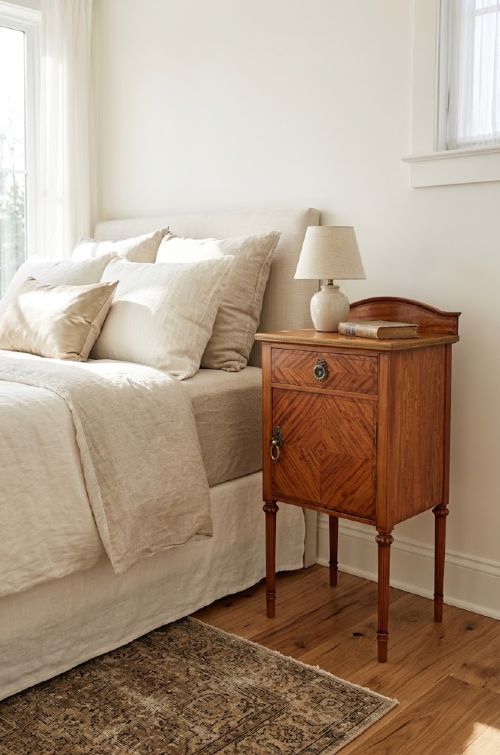
Antique satinwood drawers bring a warm, golden glow and refined timber figuring into a room, offering both practical storage and exceptional cabinet work.
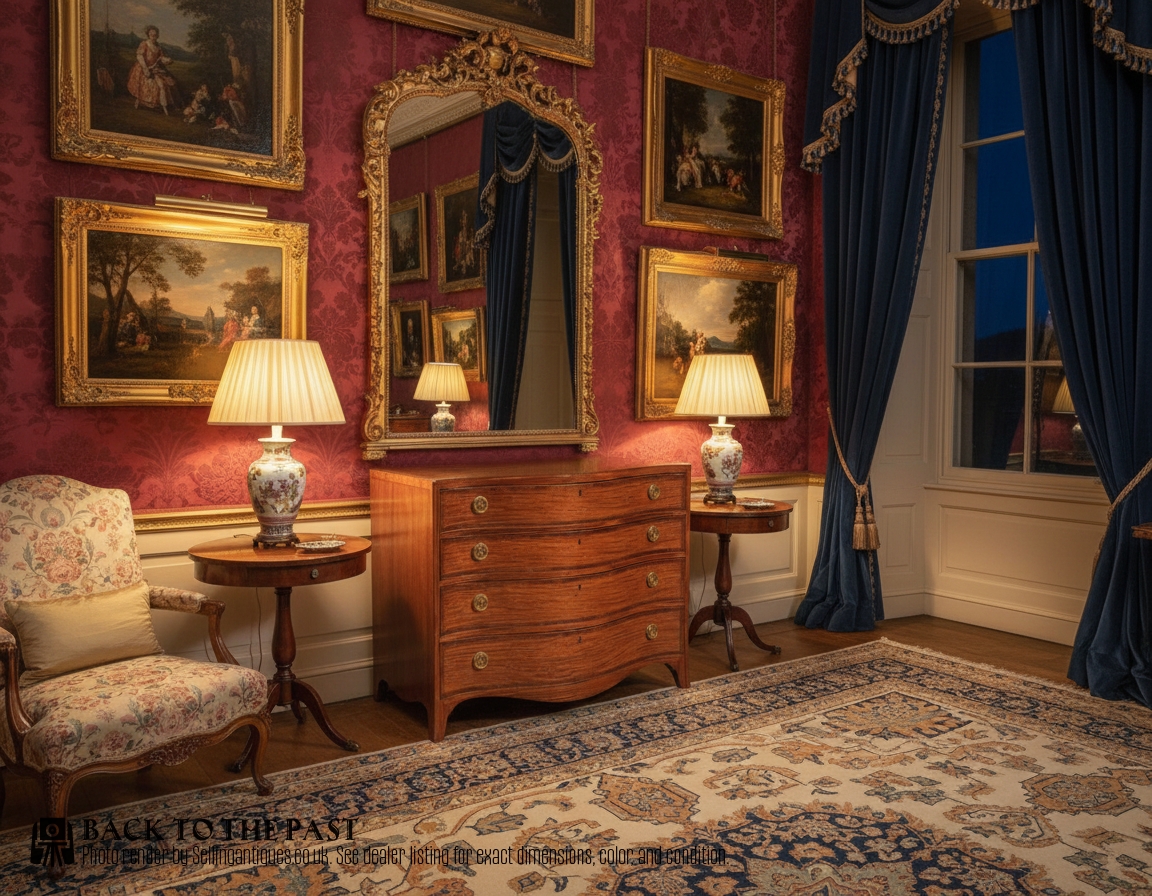
Antique Satinwood Drawers
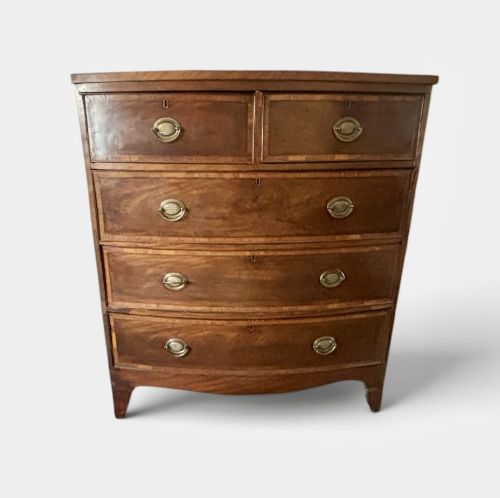
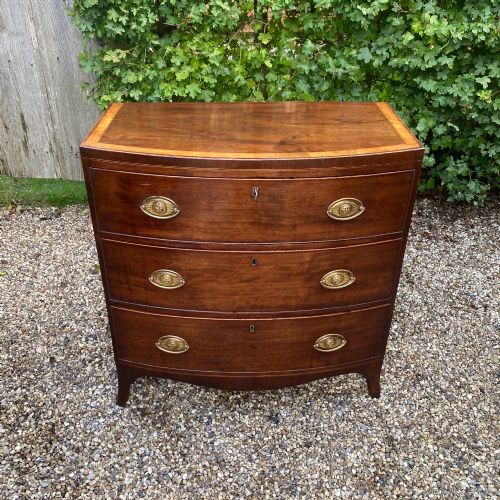
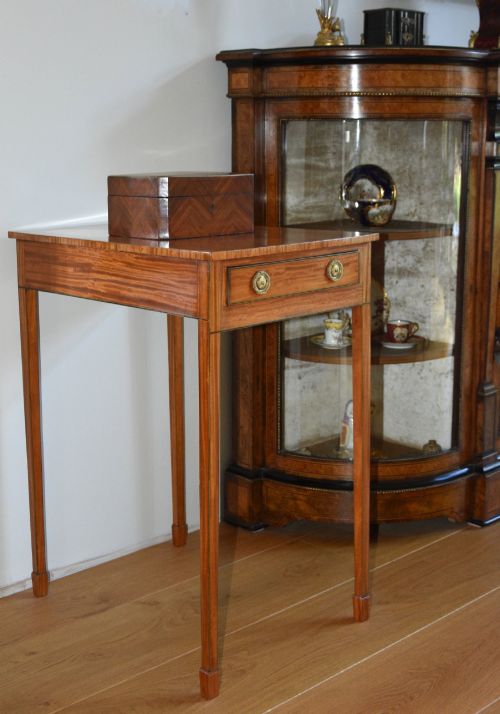
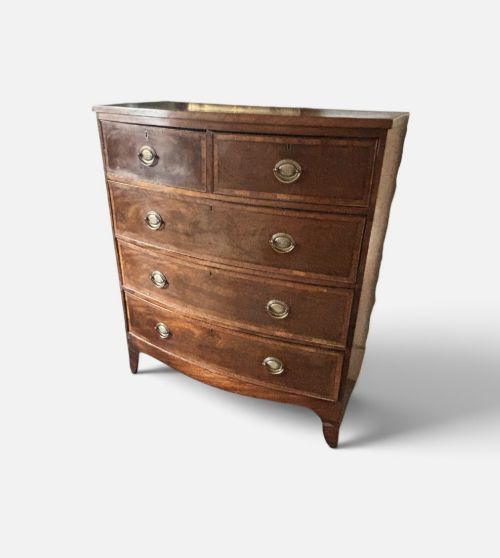
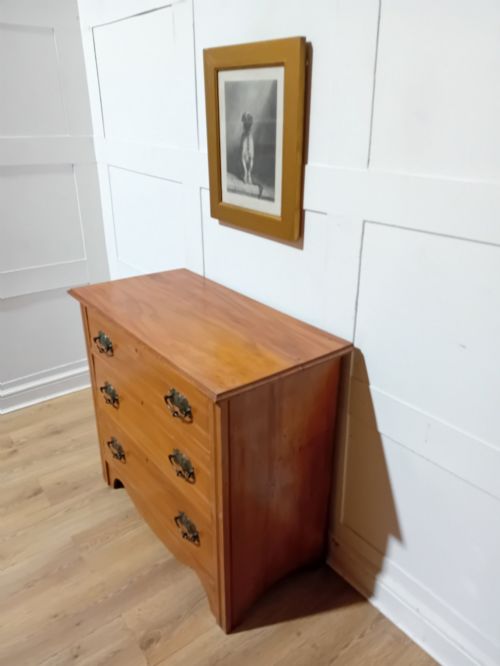
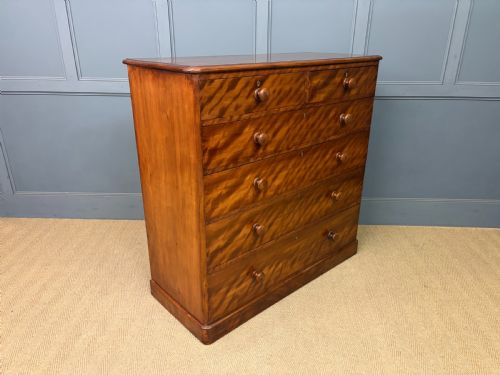
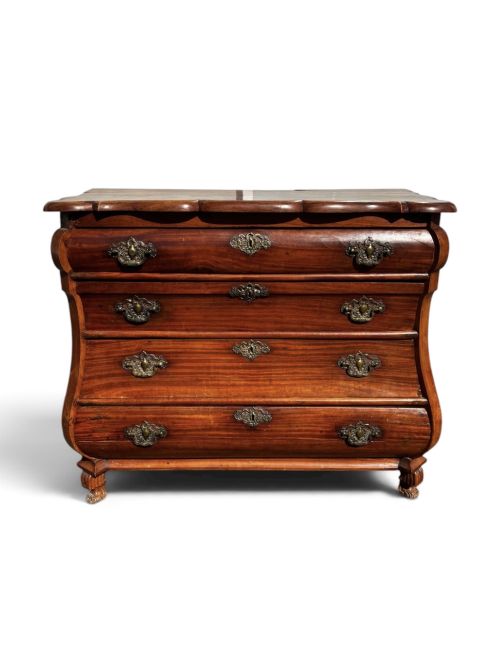
When searching for antique satinwood drawers, buyers encounter pieces primarily originating from the Georgian, Regency, Victorian, and Edwardian eras. The most frequent forms on this page are chests of drawers, often constructed with bow fronts, serpentine shapes, or crossbanded borders.
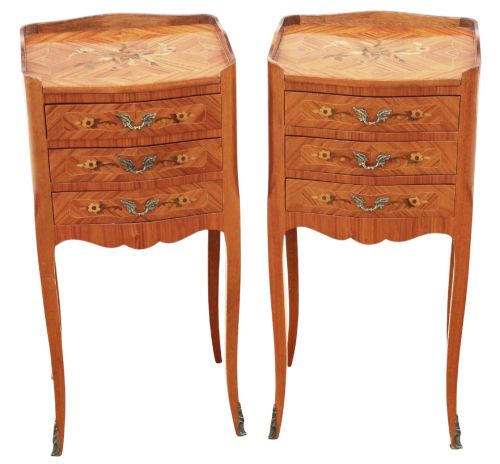
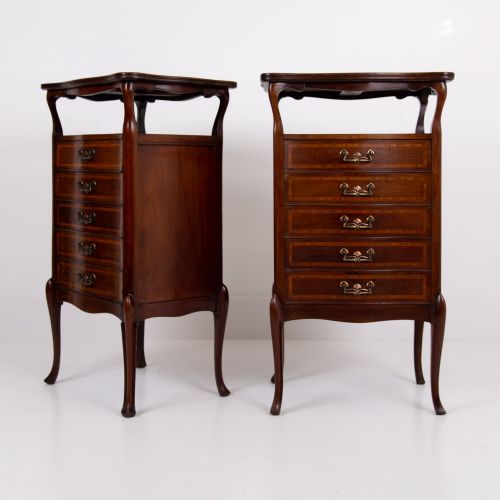
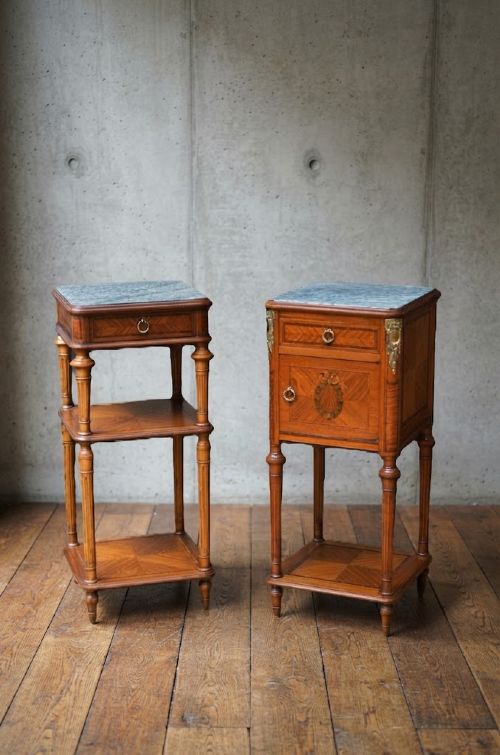
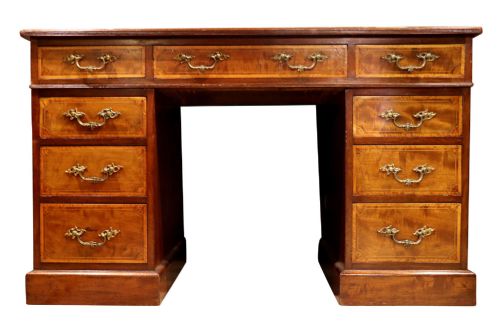
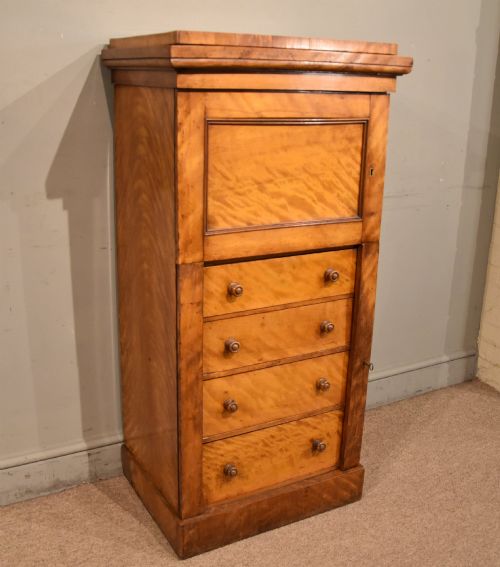
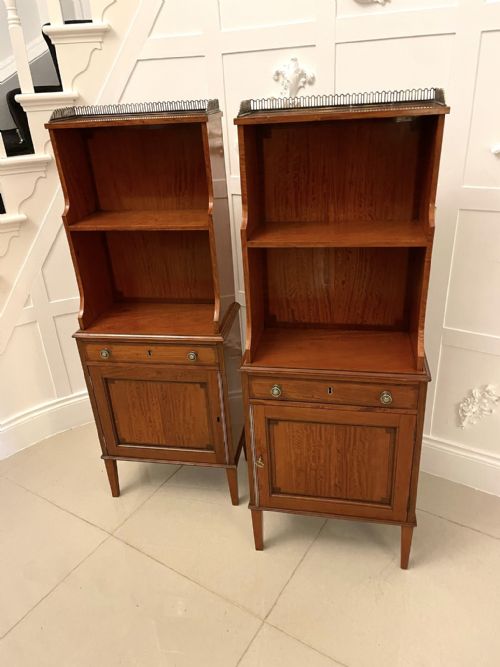
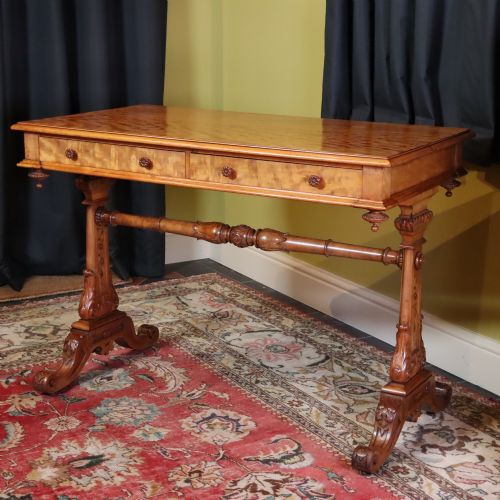
Beyond standard chests, the inventory includes bedside cabinets, tallboys, compactums, and writing desks incorporating drawer storage. These items utilise satinwood either as solid timber or as fine veneers applied over secondary woods like mahogany or pine.
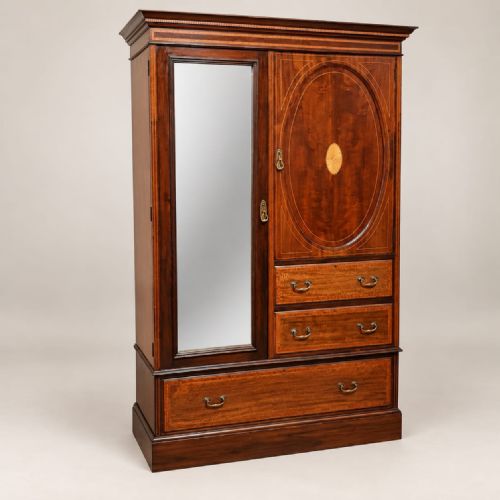
The aesthetic ranges from plain Georgian utility to decorative Edwardian painted surfaces and Sheraton Revival styling. Pieces stem from English workshops as well as continental European makers, spanning small miniature chests up to large bedroom suite wardrobes.
How they were made
Cabinet makers constructed these pieces by applying figured satinwood veneers or solid boards onto structural carcasing made of mahogany, pine, or walnut. Brass hardware, including original handles and escutcheons, was fitted to secure drawer fronts.
Decorative detailing often involved contrasting timber bands, line inlay, and hand-painted motifs executed during the Edwardian period. Structural integrity relied on traditional dovetail joints used within the drawer construction and sturdy framing for carcases.
Listings feature pieces spanning the eighteenth, nineteenth, and early twentieth centuries, incorporating mahogany, pine, walnut, and mirror glass.
What varies in quality
The calibre of these items rests upon the intensity of the timber's natural chatoyancy and the precision of the veneer matching across drawer fronts. Exceptional examples display carefully aligned grain patterns, such as flame or feather figures, which create a luminous visual depth.
Makers' attribution also influences standing, with signed pieces or works originating from known workshops commanding particular attention. The preservation of original hardware, smooth drawer action, and delicate hand-painted embellishments further distinguish superior specimens from simpler utility furniture.
Edwards and Roberts·Harris Lebus of Tottenham·Gillows·Heal and Son·Shapland and Petter·Maple and Co
The Antique Satinwood Drawers Glossary
- Satinwood
- A dense, light-coloured tropical timber prized for its reflective sheen and smooth texture. It serves as both a primary solid wood and a decorative veneer.
- Crossbanding
- A border technique where narrow strips of veneer are laid perpendicular to the surrounding grain. This frames drawer fronts and top surfaces with contrasting timber orientation.
- Bow front
- A convex curved furniture front popular in Regency and Georgian cabinet making. It softens the linear profile of a chest of drawers.
- Tallboy
- A tall chest of drawers consisting of a double chest or a chest raised upon a stand. This form maximises vertical storage capacity in smaller floor spaces.
- Serpentine
- A gently undulating furniture front featuring a convex centre flanked by concave curves. Executing this shape requires advanced woodworking skill.
Antique Satinwood Drawers: Frequently Asked Questions
How do I clean antique satinwood?
Dust surfaces regularly with a soft, dry cloth to prevent particulate accumulation on the polished finish. Avoid using modern chemical sprays or abrasive cleaners that can damage the delicate veneer.
Apply a traditional beeswax polish sparingly when the wood appears dry, buffing it gently to maintain the natural lustre without building up heavy residue. Keep pieces away from direct sunlight and heat sources to prevent the timber from drying or cracking.
Are these drawers suitable for daily use?
These pieces function well for everyday storage provided they are handled with reasonable care. Drawers built with traditional dovetails slide smoothly when kept clean and unburdened by excessive weight.
Placement in rooms with stable humidity levels protects the structural integrity of the timber and veneer. Gentle usage ensures the historic joints and original drawer runners remain intact for future decades.
How do I tell Edwardian satinwood from Victorian?
Edwardian pieces often feature lighter construction, delicate painted floral motifs, and Sheraton Revival styling influenced by eighteenth-century designs. They frequently incorporate satin birch or mahogany banding alongside the primary satinwood.
Victorian examples tend to display heavier proportions, darker overall patination, and simpler geometric line inlay or burr walnut combinations. Cabinet makers of the earlier Victorian era prioritized robust utility over the decorative painted flourishes common around nineteen hundred.
What is the difference between solid and veneered satinwood?
Solid satinwood construction utilises the timber throughout the entire thickness of the panel or component. This method appears more frequently on smaller items like occasional tables and specific regional pieces.
Veneered satinwood involves thin sheets of figured timber applied over a stable secondary wood such as mahogany or pine. This technique prevents warping while displaying the most decorative and reflective grain patterns across large drawer fronts.