






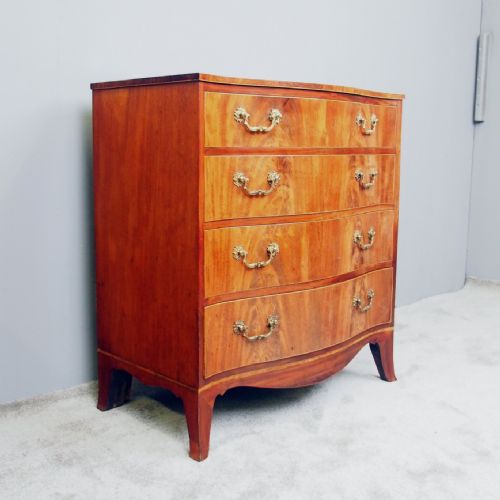

Hepplewhite Serpentine Chest
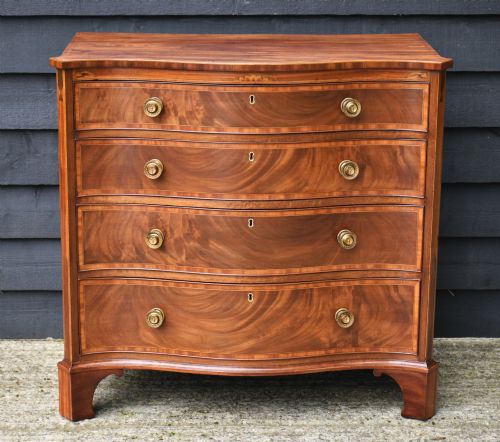
A hepplewhite serpentine chest brings sweeping curves and refined mahogany to a room, offering both generous storage and distinct period grace.
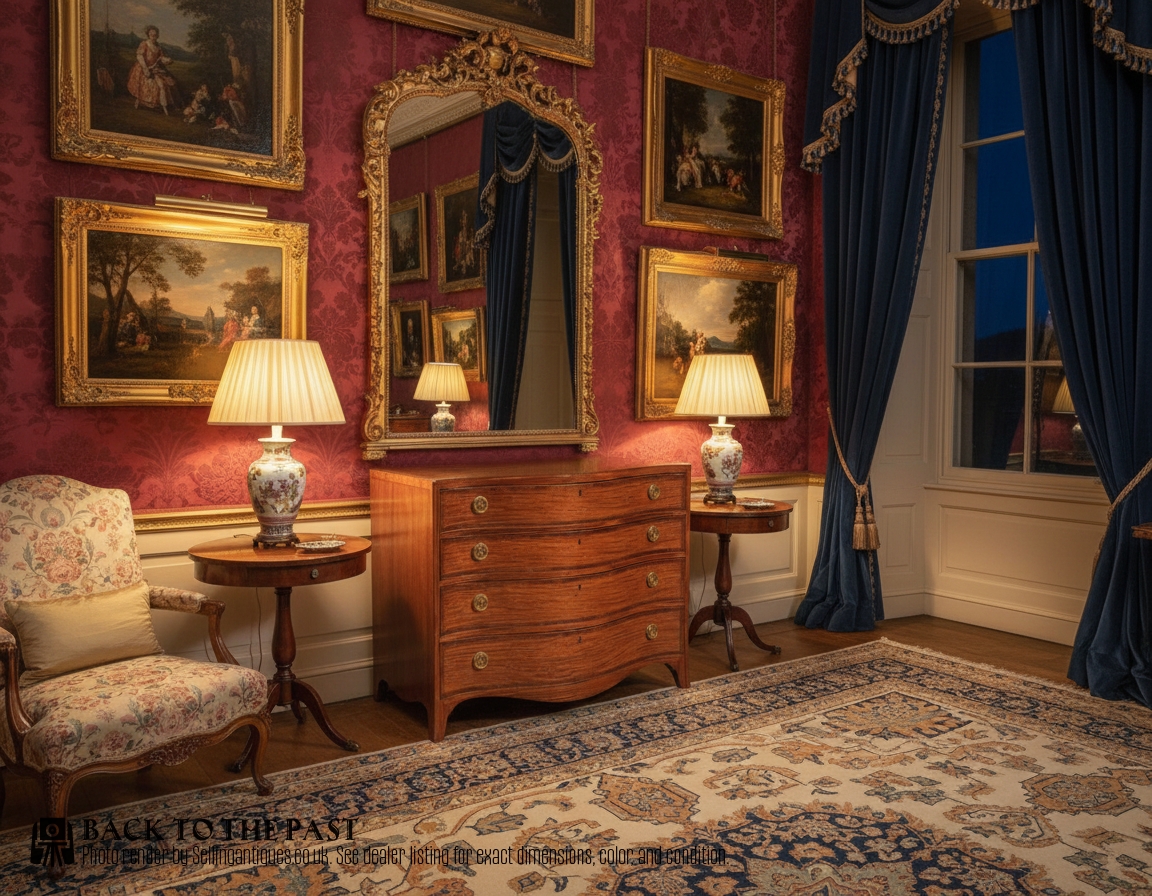
Hepplewhite Serpentine Chest
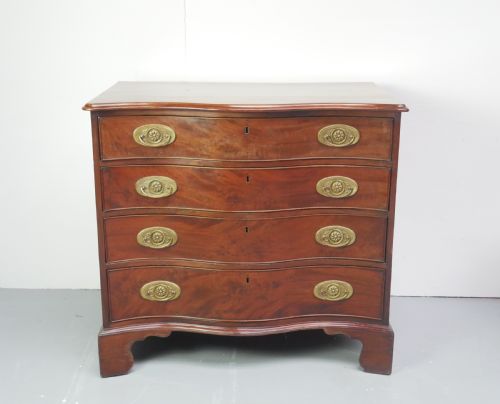
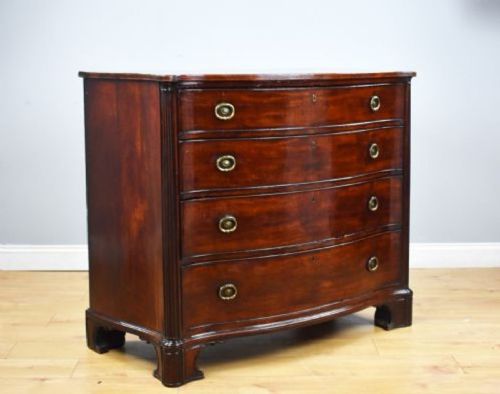
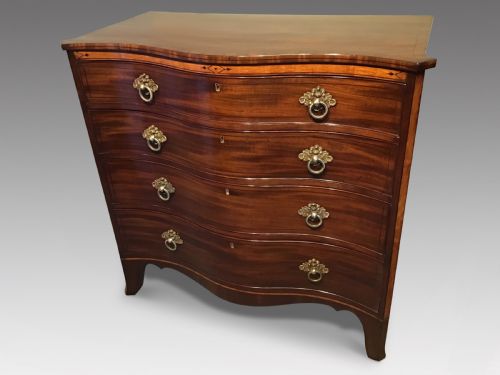
A hepplewhite serpentine chest is a sophisticated storage piece characterised by a gently undulating front profile that curves outward at the centre and inward at the sides. These elegant chests of drawers emerge primarily from the Georgian and 18th century periods, showcasing the lighter proportions and graceful lines associated with this design vocabulary.
Most examples encountered on this page are constructed from rich mahogany, frequently enhanced with boxwood inlay, satinwood, or harewood details. Alongside standard chests of drawers, the selection encompasses specialised forms such as dressing chests, side cabinets, and commodes.
While the majority of pieces date from the 18th century and the George III era, later 19th century revival iterations and early 20th century pieces also appear. The enduring appeal lies in the intricate curve of the drawer fronts, which demands immense cabinetmaking skill to execute successfully.
Materials and Construction
Makers utilised dense timbers like mahogany as the primary structural and visual foundation, often selecting boards with deep grain patterns for the sweeping drawer fronts. Satinwood, harewood, and boxwood were introduced as contrasting veneers and stringing, creating delicate inlaid borders that trace the curved outlines.
Brass handles and escutcheons serve as the standard hardware, punctuating the figured wood with polished metal accents. The curved serpentine facade requires precise shaping of both the solid timber drawer fronts and the corresponding frame to ensure a flush, seamless fit.
Several gentleman's dressing chests still whisper of midnight wig powder and silver-handled brushes tucked neatly behind serpentine drawers.
Evaluating Quality and Detail
The crispness of the serpentine curve itself dictates the visual success of the piece, with superior examples maintaining harmonious proportions from the top surface down to the bracket feet or apron. Internal construction, such as the dovetailing on the drawers and the retention of fitted interior compartments in dressing chests, further distinguishes finer items.
The Hepplewhite Serpentine Chest Glossary
- Serpentine
- A furniture front shaped with a central convex curve flanked by two concave curves. This undulating profile creates movement and catches the light differently across the wood grain.
- Hepplewhite
- A late 18th century design style associated with lighter proportions, graceful curves, and classical inlay motifs. It draws inspiration from the design books published under the name of George Hepplewhite.
- Commode
- A decorative low cabinet or chest of drawers designed for formal reception rooms or bedrooms. In 18th century contexts, the term often describes pieces with serpentine or bombé shapes.
- Harewood
- Sycamore wood that has been stained to a distinctive greyish-brown colour, frequently used for contrasting marquetry and inlay in high-end cabinetmaking. It adds a subtle, muted tone to decorative panels.
- Inlay
- A technique where pieces of contrasting wood, such as boxwood or satinwood, are inserted into recessed cavities in the primary timber to create decorative patterns.
Hepplewhite Serpentine Chest: Frequently Asked Questions
What is a serpentine front?
A serpentine front is a shaped furniture face that curves outward in the middle and inward toward the edges. This flowing contour creates a dynamic visual effect.
Cabinetmakers adopted this profile during the Georgian period to showcase the figured grain of timbers like mahogany.
How do I date an 18th century chest?
Dating relies on examining the construction methods of the drawers, the timber species, and the style of the brass hardware. Secondary woods inside the piece also offer clues.
Georgian examples typically feature hand-cut dovetails and specific aesthetic proportions that shifted into revival styles by the 19th century.
Where were these chests used?
These chests served primarily as principal bedroom storage for clothing, linens, and personal valuables. Dressing variants included internal compartments for grooming items.
Finer commode versions occasionally stood in reception rooms or hallways as decorative display surfaces.
How do I care for mahogany veneer?
Mahogany veneer requires stable room humidity and protection from direct sunlight to prevent the timber from drying out or fading. Gentle dusting with a dry cloth is sufficient for routine maintenance.
Avoiding silicone polishes preserves the natural finish and the integrity of historic wood surfaces over time.
What distinguishes a dressing chest?
A dressing chest incorporates fitted interior compartments, such as lidded boxes or partitions, designed specifically for personal grooming accessories. Some configurations include a slide or a mirror.
These functional additions separated them from standard chests intended solely for general storage.