
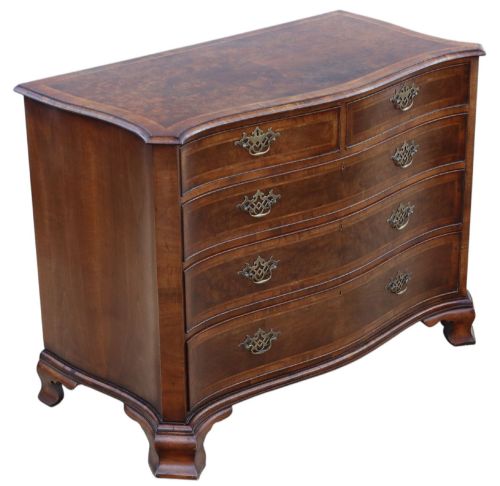
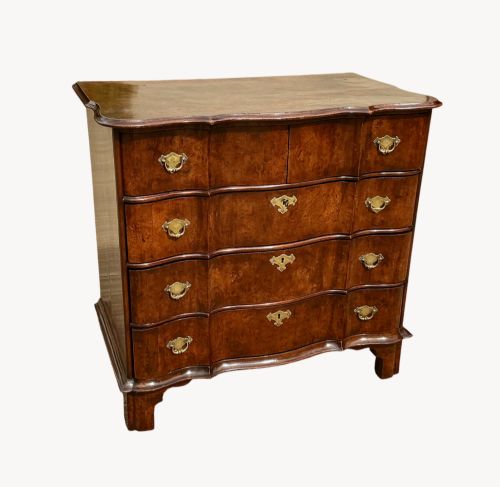
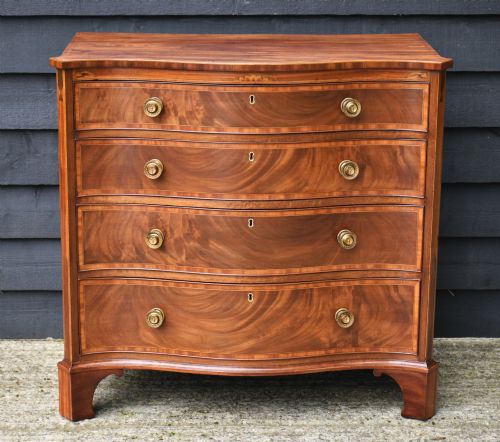
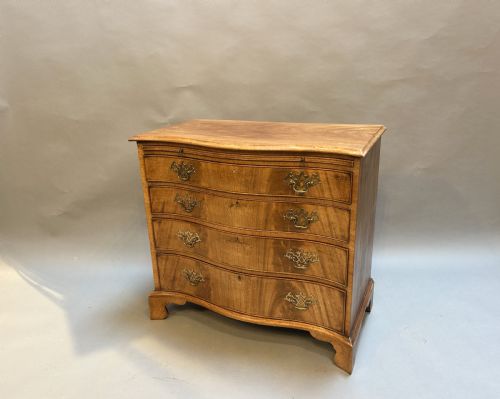

Georgian Serpentine Front Chest
A georgian serpentine front chest brings together fluid cabinetwork and deep drawer storage, offering a commanding focal point for any traditional interior.

Georgian Serpentine Front Chest
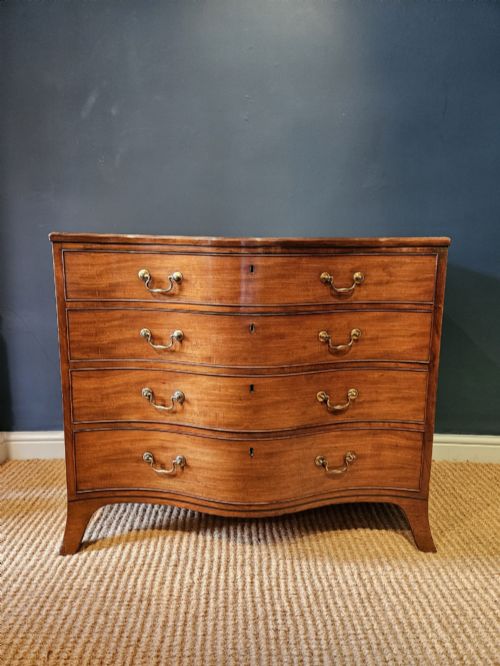
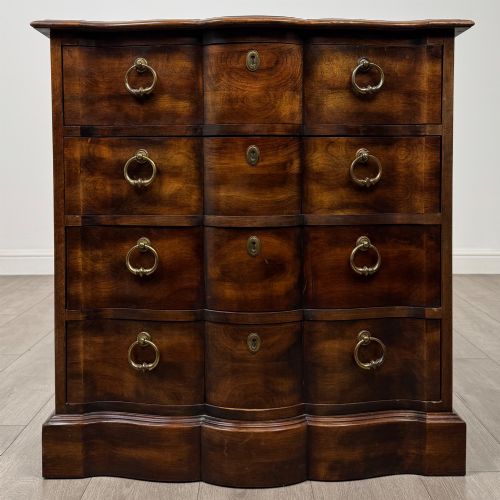
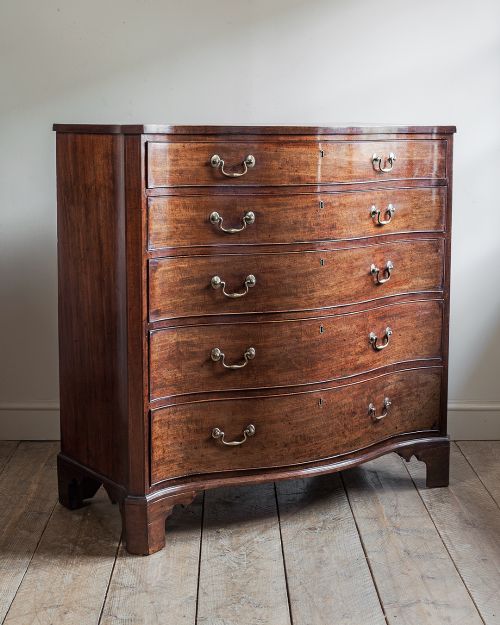
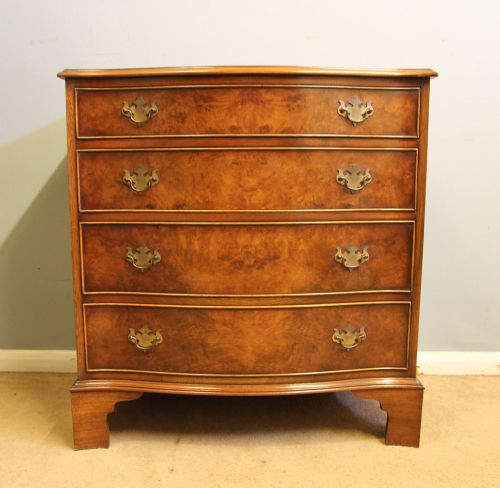
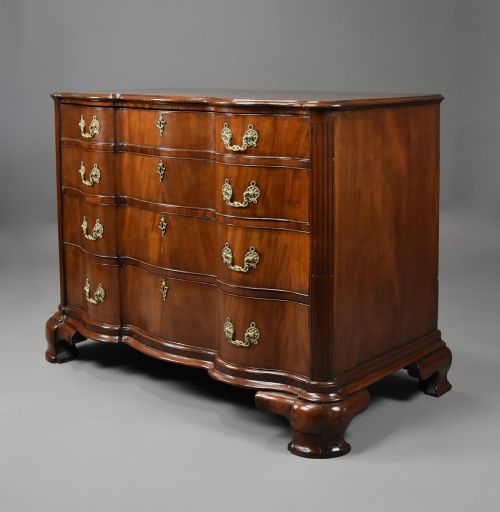
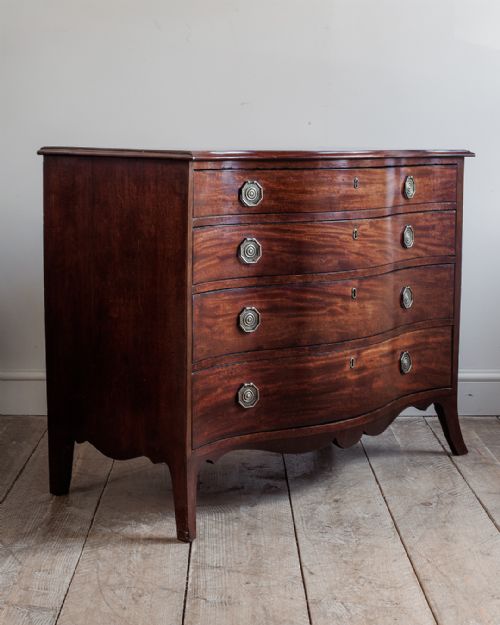
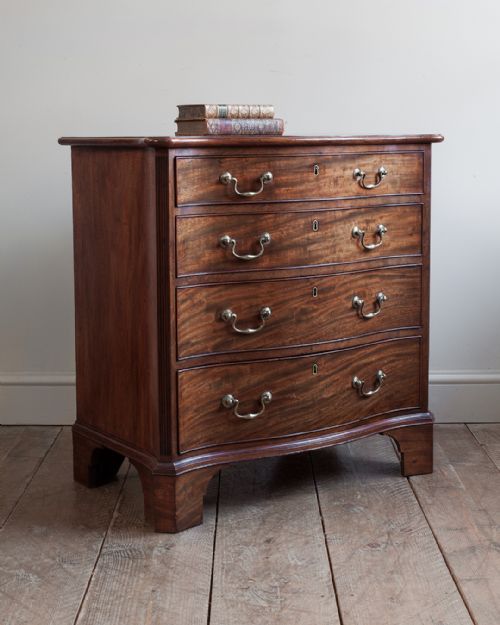
A georgian serpentine front chest combines a distinctly curved, undulating facade with practical drawer storage, forming a major work of 18th-century cabinet making. The pieces seen here span genuine period examples alongside later revivals from the Edwardian era and the 1920s.
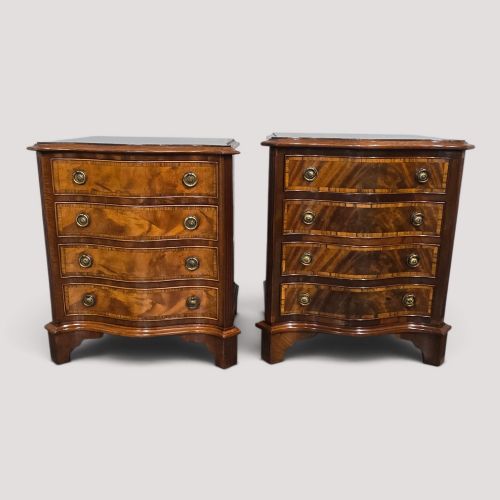
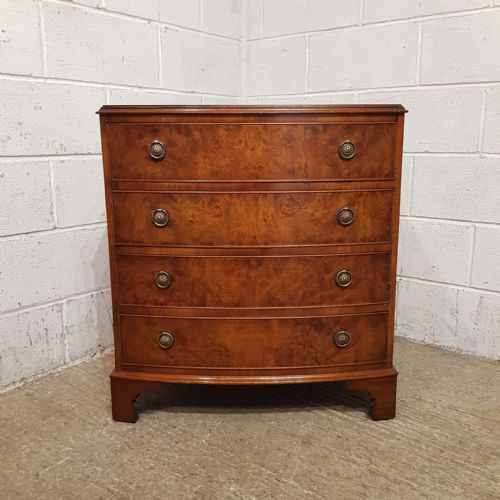
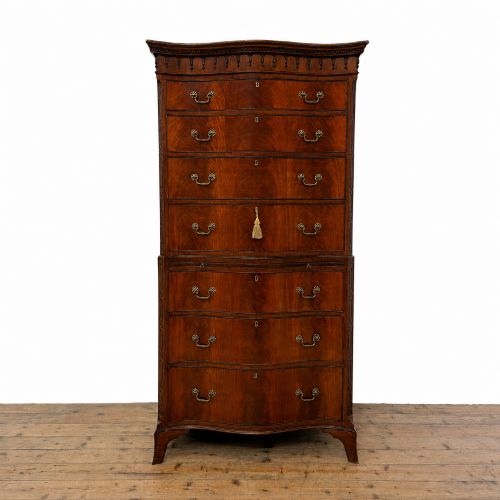
Mahogany dominates the selection, frequently paired with burr walnut or figured veneers that accentuate the sweeping lines of the front. Alongside standard chests of drawers, the forms extend to tallboys, bedside lamp chests, and secretaire bookcases.
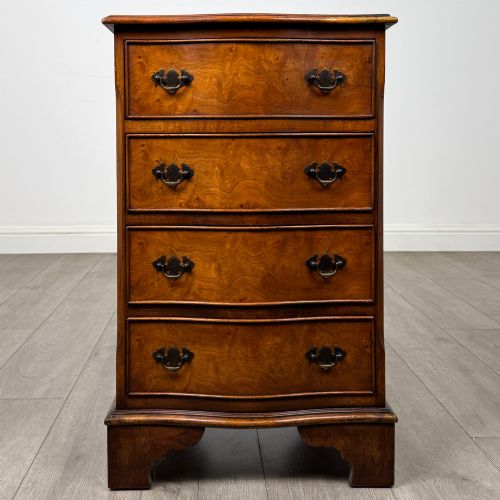
Period examples originating directly in the 18th century sit alongside revival interpretations produced around 1900 and 1920. Buyers frequently encounter smaller bedside formats as well as substantial case pieces featuring brass hardware.
How they were made
Makers shaped solid timbers and applied decorative veneers such as burr walnut, flame mahogany, and fiddleback mahogany over secondary woods. The undulating front required complex carpentry to curve the drawer fronts and carcass framework harmoniously.
Brass handles, escutcheons, and occasional gilt mounts provide functional and decorative accents on both period pieces and later revivals. Cabinet makers employed crossbanding and marquetry inlay to frame the main surfaces and highlight the serpentine contour.
Georgian Serpentine Front Chest Retail Price Guide 2026
Typical asking prices for georgian serpentine front chest among the pieces listed under this phrase on Sellingantiques today, from the lower quarter to the upper quarter. They describe what is for sale here now, not the wider market.
Some chests hide their secrets behind four graduated drawers, while others prefer to keep bedside company as diminutive lamp tables.
What varies in quality
The sophistication of the timber figure dictates much of the visual impact, with richly patterned burr walnut and figured mahogany setting apart the finest examples. Grain selection across the curving drawer fronts demands precise bookmatching to maintain symmetry along the undulating line.
Construction methods distinguish 18th-century originals and high-status revivals from utility iterations, particularly in the dovetailing of drawer linings and the choice of secondary woods. The crispness of the serpentine sweep and the integration of brass hardware further separate standard production from superior cabinet work.
The Georgian Serpentine Front Chest Glossary
- Serpentine
- A curved shape consisting of a convex centre flanked by two concave sweeps. This undulating outline defines the facade of the pieces.
- Commode
- A low chest of drawers or cabinet originating in French taste. The term appears frequently to describe decorative serpentine case furniture.
- Tallboy
- A tall chest of drawers made in two sections, often taking the form of a chest on chest. These pieces provide vertical storage capacity.
- Crossbanding
- A narrow strip of veneer applied to the border of a furniture panel with the grain running perpendicular to the core. It creates a neat framing effect around drawer fronts.
- Oxbow
- A serpentine front shape featuring a concave centre flanked by convex outer curves. This inverted profile appears on continental commodes.
Georgian Serpentine Front Chest: Frequently Asked Questions
How do I spot a genuine 18th century piece?
Examine the secondary woods inside the drawers and check the hand-cut dovetailing for signs of period construction methods. Original pieces exhibit natural timber shrinkage and patination that modern reproductions cannot replicate.
Look closely at the brass hardware and the way the veneer is laid across the curved carcass. Period examples show consistent wear patterns and structural joinery appropriate for eighteenth-century workshops.
What is the difference between revival and original chests?
Revival pieces were manufactured during the Edwardian period or the 1920s and 1930s, imitating earlier eighteenth-century designs. They utilise machine assistance and distinct secondary timbers while adopting classic George III styles.
Originals carry the authentic age and historical material usage of the 1700s. Collectors weigh the historic value of an 18th-century chest against the decorative accessibility of a Georgian revival piece.
Where should I place a serpentine chest?
These pieces function exceptionally well in hallways, living rooms, or bedrooms where the curved facade can catch natural light. Their finished profiles allow them to stand against flat walls as prominent architectural statements.
Smaller bedside lamp chests suit compact spaces while retaining the signature undulating silhouette. Ensure adequate clearance around the protruding curves so the piece can be viewed without obstruction.
How do I care for mahogany and walnut veneers?
Keep wooden furniture away from direct sunlight and steady humidity levels to prevent the delicate veneers from lifting or splitting. Regular dusting with a soft, dry cloth preserves the polished surface without building up wax residues.
Avoid placing damp items directly onto the timber top, particularly on antique burr walnut or figured mahogany. Gentle maintenance protects the historic patination and keeps the crossbanded borders intact.