





Splayed Leg Chest Drawers
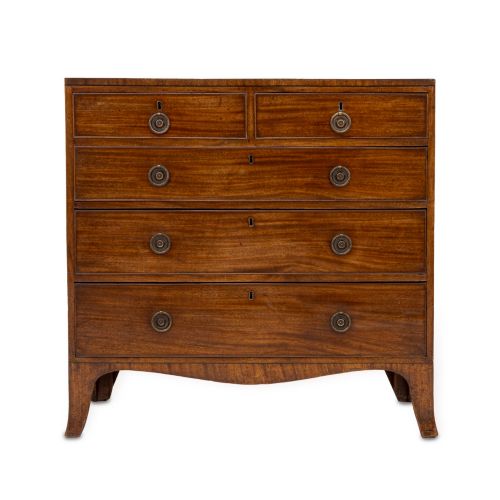
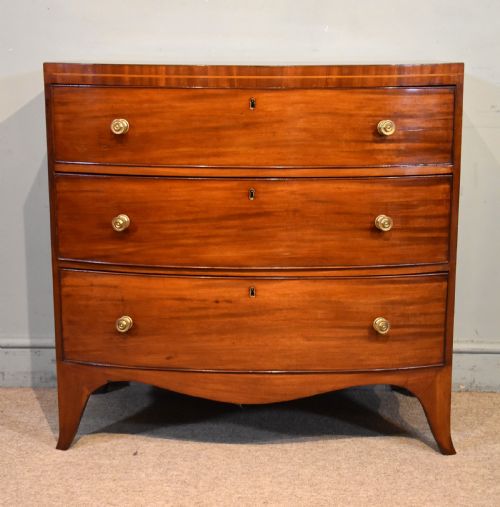
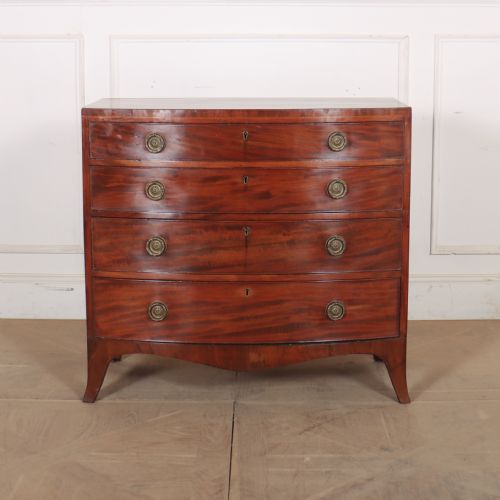
These splayed leg chest drawers bring warmth and utility to a room, offering elegant proportions and practical storage rooted in Georgian and Regency design.
What splayed leg chest drawers are
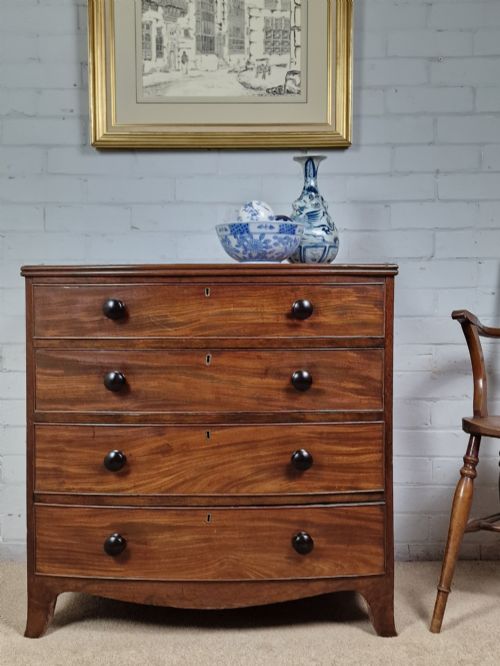
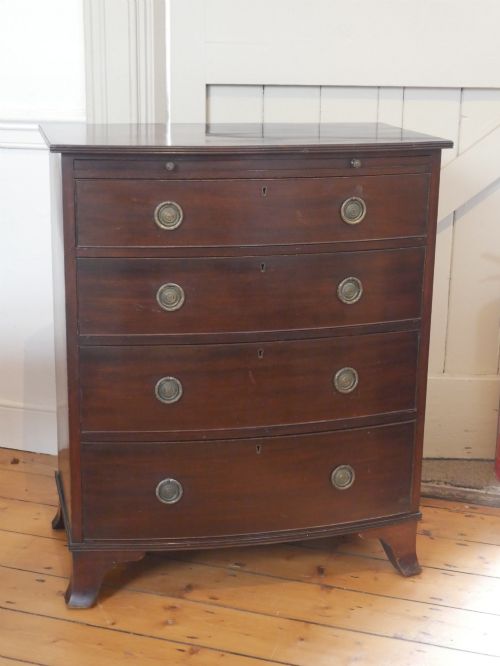
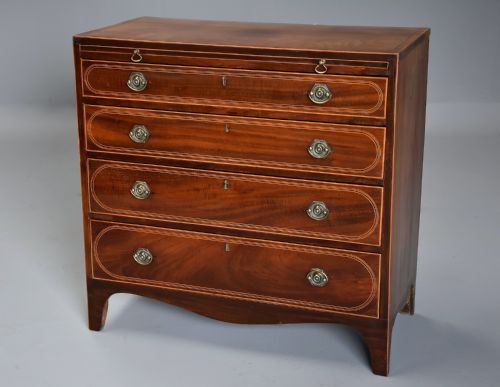
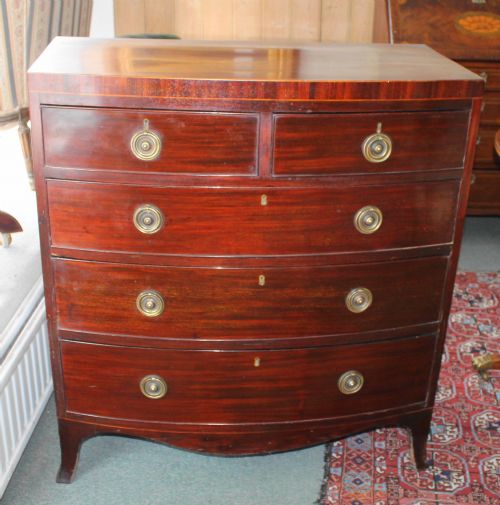
When you search for splayed leg chest drawers, you encounter timber storage furniture featuring distinctive outward-angled feet that lift the carcase from the floor. The pieces on this page span the Georgian, Regency, and late nineteenth-century periods, capturing styles from the standard Georgian era to Hepplewhite revivals. You are most likely to meet mahogany examples, often featuring bow fronts and subtle line inlays.
Makers such as Druce and Co contributed to the later Victorian interpretations, while earlier pieces date directly to the eighteenth century. These chests typically combine multiple graduating drawers with brass hardware, resting securely upon the characteristic splayed supports. Each piece reflects the enduring appeal of compact domestic storage built with refined proportions.
How they were made
Cabinet makers constructed these pieces primarily from solid mahogany and selected veneers, sometimes enriched with contrasting boxwood and satinwood inlay. The timber was chosen for its rich grain, then polished and waxed over time to develop a deep, lustrous patina. Drawer construction utilised traditional dovetailed joints to ensure durability and strength across generations of daily use.
Brass handles and escutcheons were fitted to the drawer faces, secured with pins or screws that complemented the darker tones of the wood. The signature splayed legs were shaped directly from the lower framework or joined securely to the base, providing stable elevation while lightening the visual weight of the carcase.
Retail Price Guide 2026
Typical UK retail prices for splayed leg chest drawers, calculated from the Sellingantiques database of over a million retail prices indexed since 2003. This retail price guide relies exclusively on Sellingantiques data; no external sources or auction records are used, so the figures do not describe the wider market.
Some chests wear their bow fronts like a subtle smile, curving outward to catch the light.
What varies in quality
The distinction between standard examples and superior pieces rests on the choice of timber and the depth of its natural patina. Finer chests display carefully selected mahogany grain patterns that wrap harmoniously around the curved bow fronts, accompanied by crisp satinwood and boxwood stringing.
Proportion and structural harmony also separate the finer workshops from ordinary production. The graceful sweep of the splayed legs must balance the substantial weight of the drawer stack above, maintaining both elegance and stability.
Druce and Co
The Splayed Leg Chest Drawers Glossary
- Splayed leg
- A support that angles outward from the vertical centre, lifting the furniture base cleanly off the floor.
- Bow front
- A convex curved drawer front that projects outward from the centre of the chest, creating a softer silhouette.
- Patina
- The deep, lustrous surface sheen developed on wood through decades of handling, polishing, and natural ageing.
- Satinwood inlay
- Contrasting light-toned wood fitted into recesses on the timber surface to create decorative geometric borders.
- Dovetailed joint
- An interlocking wood joint formed by interlocking wedge-shaped fingers, prized for its exceptional tensile strength.
Frequently Asked Questions
What periods do these chests come from?
The pieces span the eighteenth and nineteenth centuries, including Georgian and Regency periods alongside later revival interpretations.
Craftsmanship evolves across these eras, moving from eighteenth-century originals to late nineteenth-century Hepplewhite revival pieces.
How do I care for mahogany?
Maintain the timber by keeping it away from direct sunlight and sudden temperature changes that dry out the wood.
Regular polishing with traditional beeswax preserves the rich grain and protects the natural patina developed over decades.
Where do splayed legs appear?
The angled supports appear at the base of the chest, lifting the primary storage section away from floor level.
This design choice lightens the overall silhouette of the furniture while providing stable elevation for the heavy carcase.
What woods are used?
Makers relied heavily on mahogany as the primary structural and decorative timber for these classic storage pieces.
Accents of boxwood and satinwood inlay frequently appear on the drawer faces to create subtle contrasting decorative borders.