
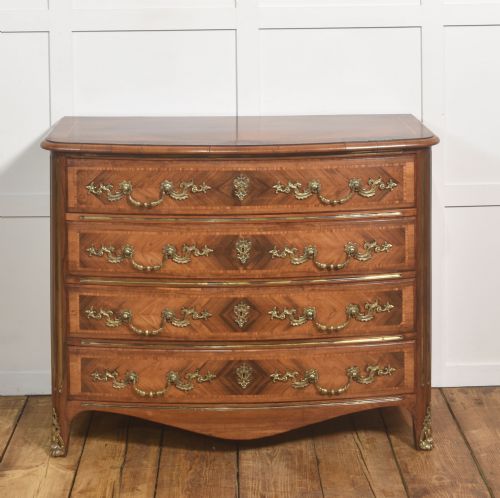
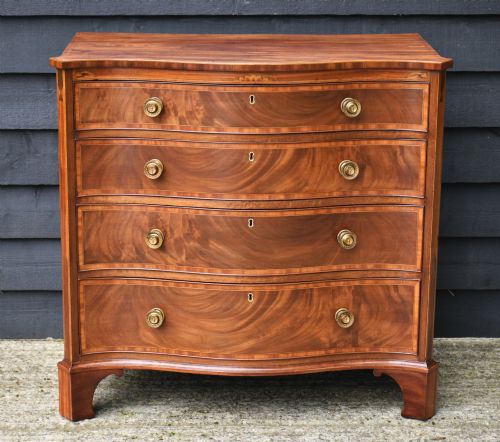
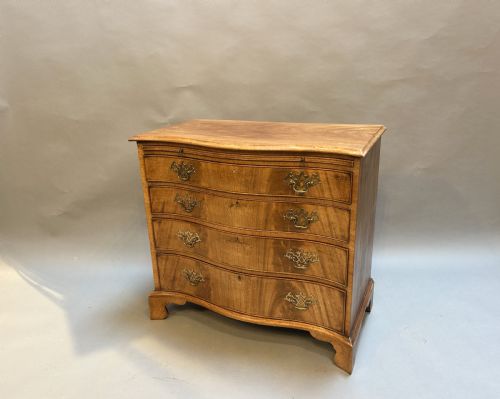
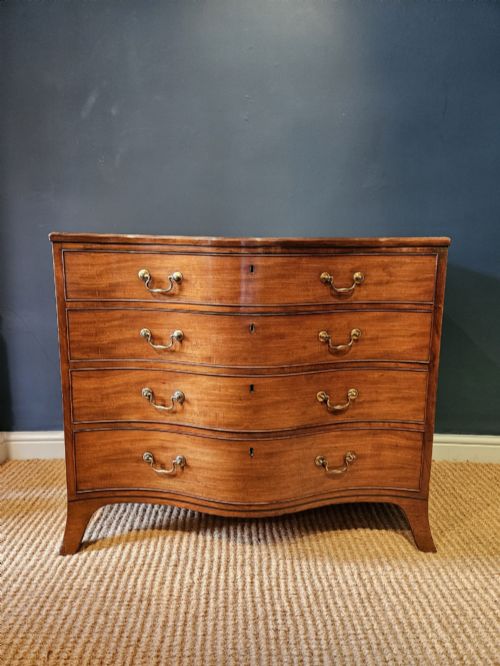

Serpentine Fronted Chest
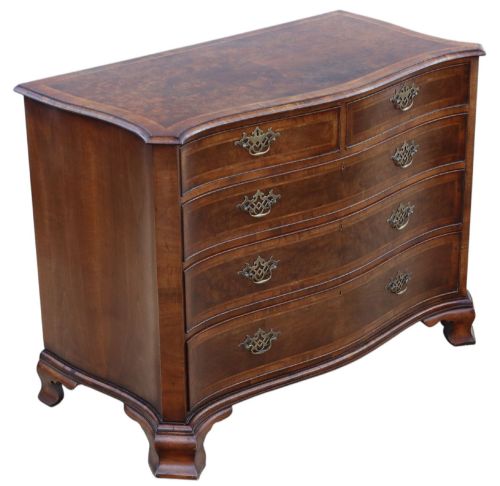
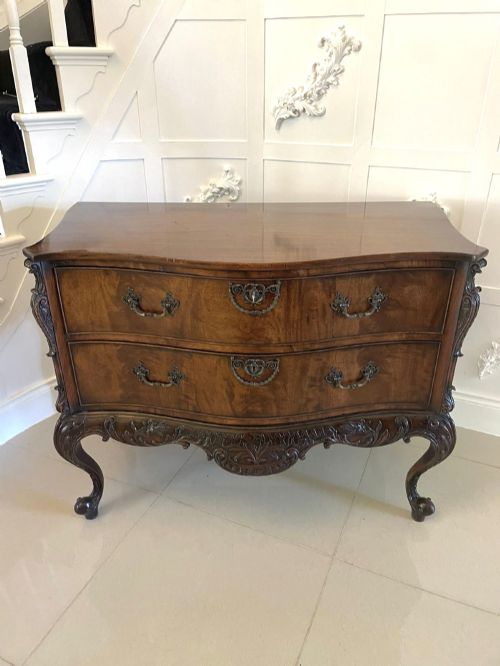
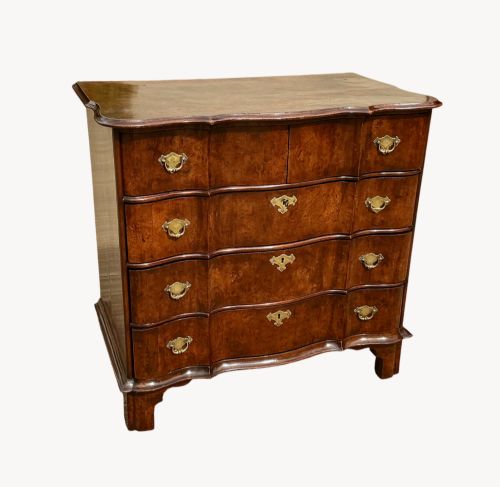
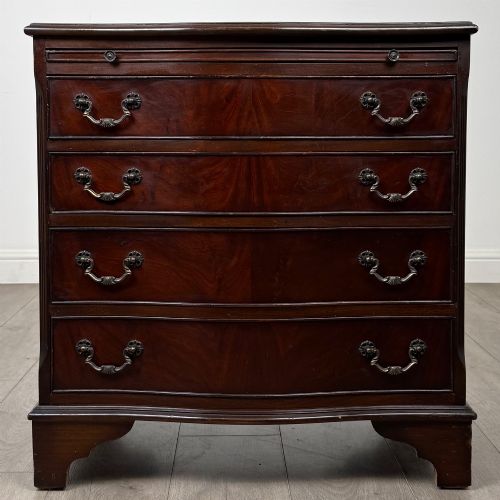
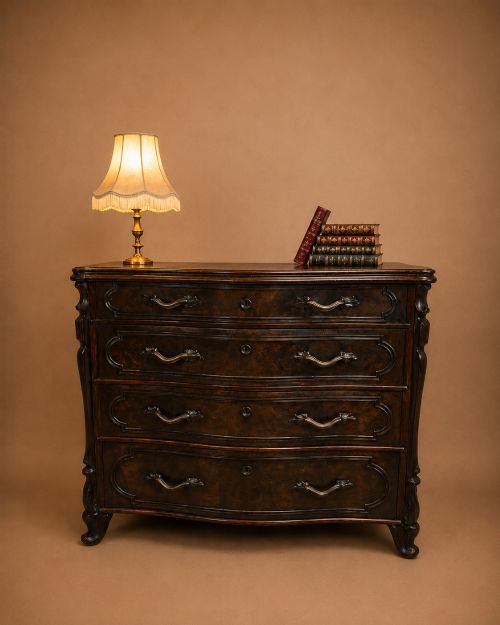
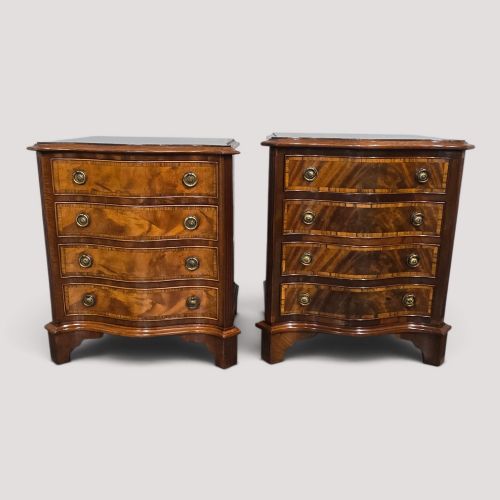
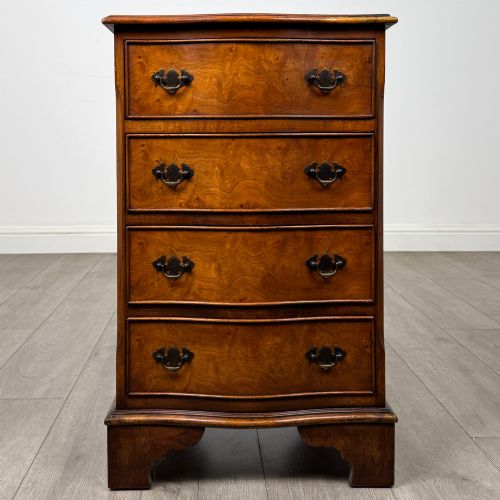
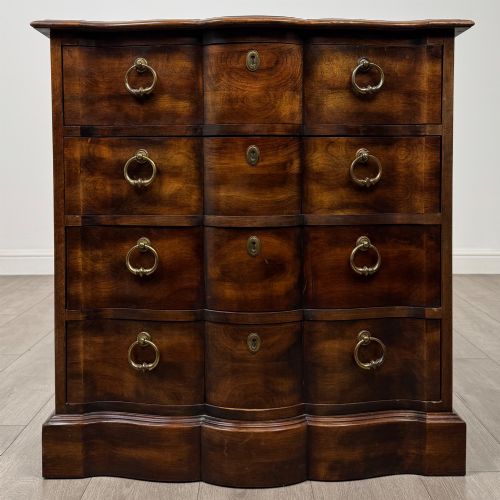
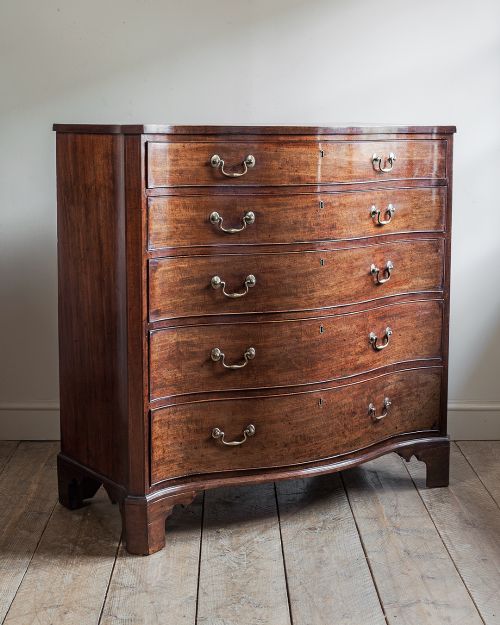
These serpentine fronted chest pieces offer an undulating profile that brings elegance to any room.
Defining the serpentine fronted chest
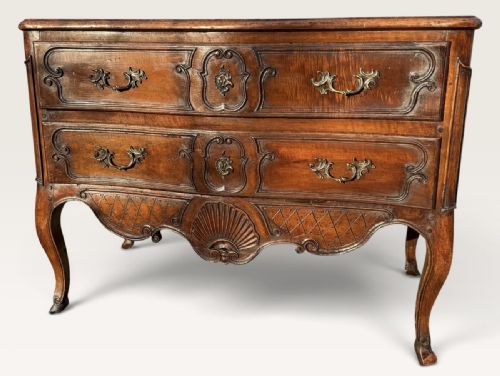
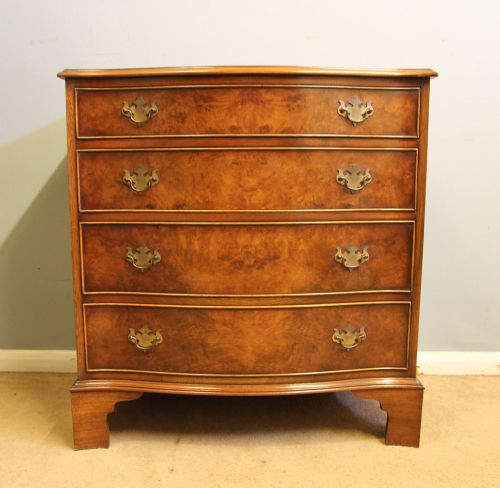
A serpentine fronted chest presents a distinctively curved front that sweeps outward at the centre and inwards at the edges, creating a visually striking silhouette. Collectors searching this phrase encounter forms ranging from bedside tables to large chests of drawers.
The pieces appearing on this page span the eighteenth century up through the nineteen-twenties, incorporating styles from the Georgian period to later revivals. Mahogany and burr walnut dominate the forms, reflecting both period craftsmanship and subsequent revivals of these graceful shapes.
Distinctions in quality and execution
The sophistication of the timber figure largely dictates the visual impact of a piece, with richly patterned flame mahogany and figured burr walnut representing the higher tiers of execution. Subtle variations in the tightness of the serpentine curve and the precision of the joinery separate standard workshop output from exceptional cabinetwork.
Retail Price Guide 2026
Typical UK retail prices for serpentine fronted chest, calculated from the Sellingantiques database of over a million retail prices indexed since 2003. This retail price guide relies exclusively on Sellingantiques data; no external sources or auction records are used, so the figures do not describe the wider market.
Some miniature chests were originally built as apprentice pieces to demonstrate a cabinetmaker's mastery of the difficult serpentine curve.
Maple and Co
The Serpentine Fronted Chest Glossary
- Serpentine
- A curved furniture front characterised by a convex centre flanked by concave wings. This undulating shape requires precise carpentry to execute properly.
- Flame mahogany
- A veneer cut from timber where the grain creates a distinctive flame-like pattern. It was widely utilised on high-grade eighteenth-century case furniture.
- Commode
- A European-influenced term for a low chest of drawers or cabinet. Eighteenth-century makers occasionally applied this label to grander serpentine pieces.
- Secretaire chest
- A chest of drawers featuring a fitted writing drawer with a drop-front writing surface. These combine storage with practical desk space.
Frequently Asked Questions
How do I identify an eighteenth-century piece?
Examine the secondary woods used for drawer linings and internal framing, such as oak or pine, alongside the hand-cut dovetails. Eighteenth-century examples typically show aged patination and construction methods distinct from later nineteenth and twentieth-century revivals.
Look closely at the drawer construction and hardware fixings for signs of period hand-tooling. The presence of original brass pulls and locks further supports an eighteenth-century attribution.
What is the difference between mahogany and walnut versions?
Mahogany pieces tend to feature straight grain or dramatic flame patterns, aligning closely with Georgian and George III aesthetics. Walnut versions frequently showcase burr or figured grain, appearing frequently in later nineteenth-century and nineteen-twenties interpretations.
Cabinetmakers utilised mahogany for its structural strength and reddish-brown tone, while walnut was chosen for its highly decorative and swirling natural patterns.
How were these chests used historically?
These pieces served primarily as bedroom storage for clothing and personal linens, while smaller variants functioned as bedside lamp chests or dressing tables with mirrors. Secretaire versions provided dual utility as writing desks.
In grander rooms, they acted as prominent case furniture where homeowners displayed decorative objects on the top surface while keeping valuables secured in the drawers below.
Are bedside tables common in this style?
Bedside tables and lamp chests appear in both original period forms and later nineteen-twenties pairings. These smaller variants maintain the signature curved front on a reduced scale.
Pairs of bedside chests are occasionally found, offering matching symmetry for bedroom placement alongside larger case pieces.