
18th Century Serpentine Commode
An 18th century serpentine commode brings flowing curves and rich timber into a room, offering both generous storage and distinct period presence.
18th Century Serpentine Commode
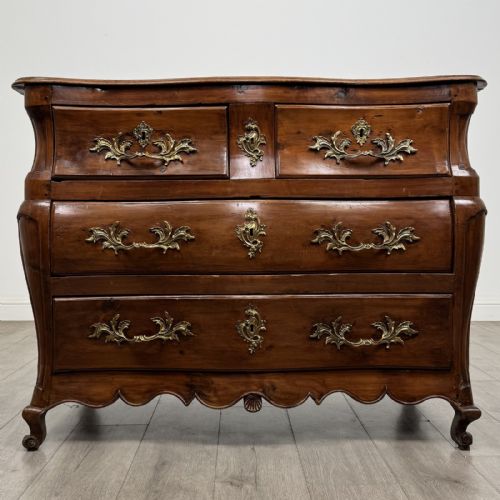
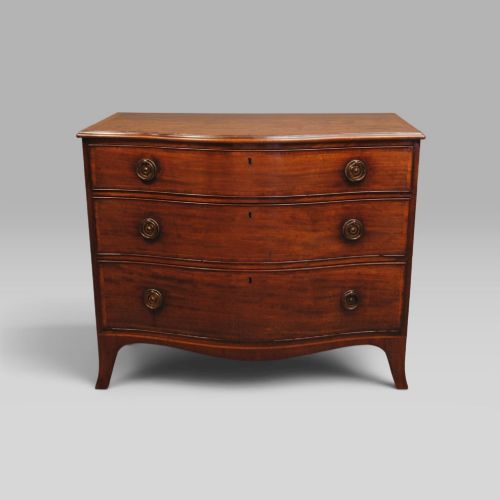
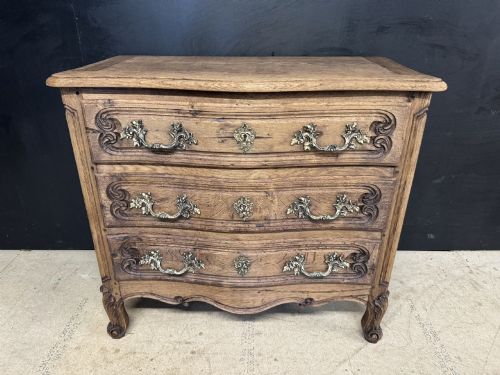
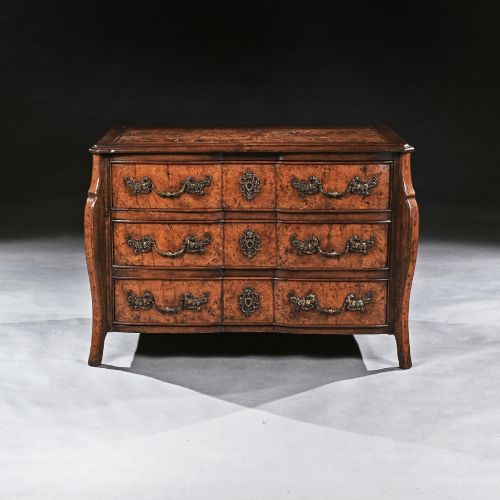
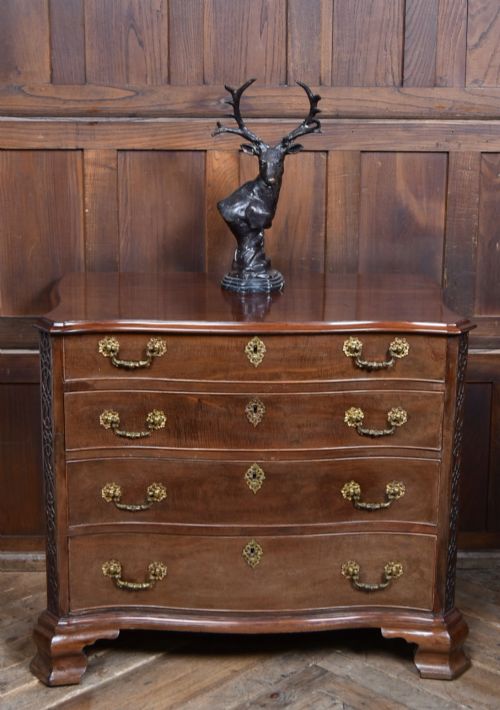
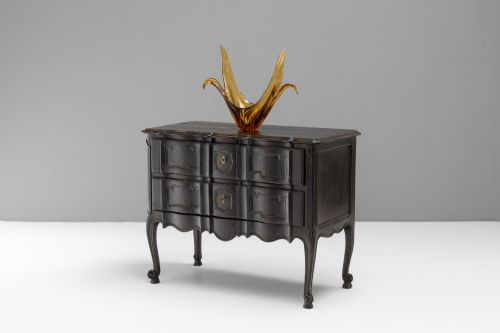
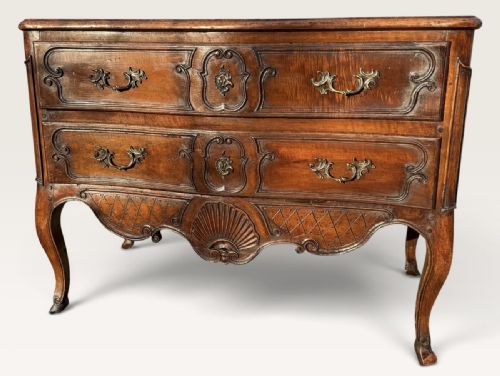
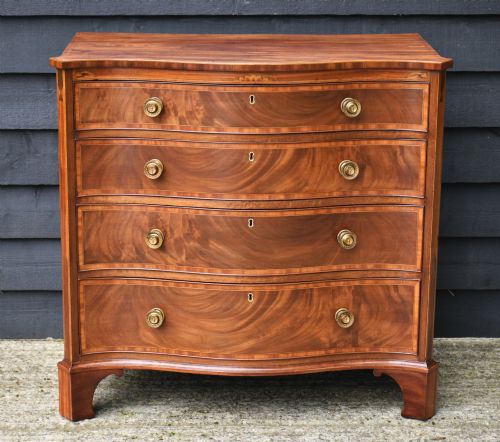
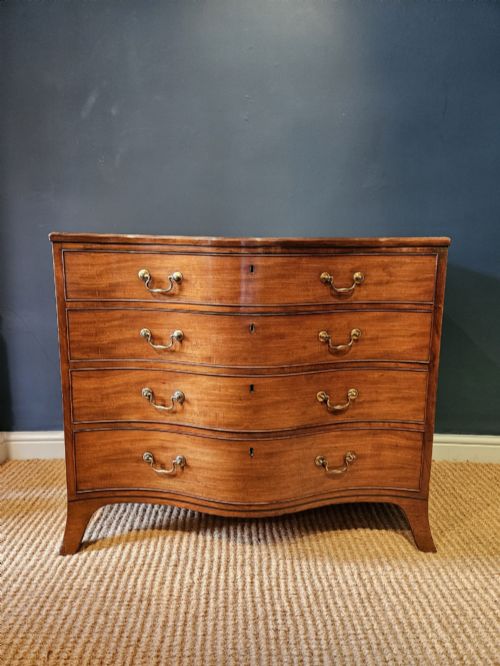
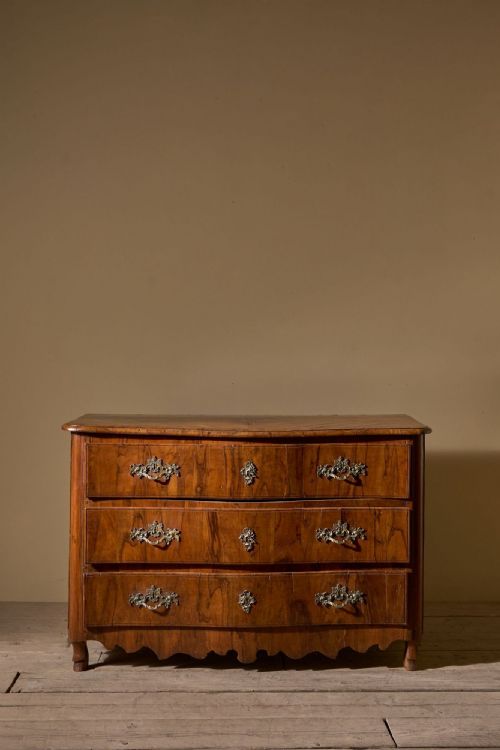
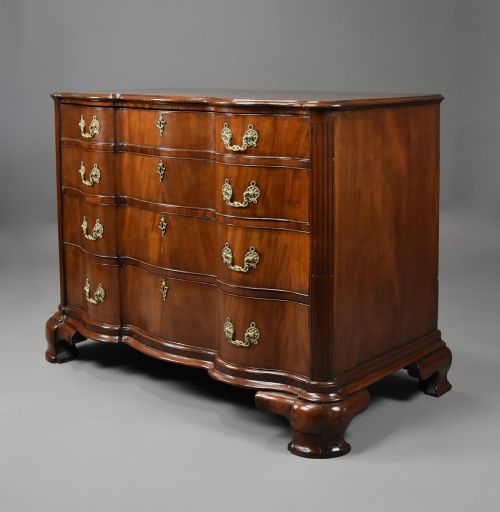
An 18th century serpentine commode is a drawer-based storage chest defined by its undulating, wave-like front contour. The form spans multiple regional traditions across Britain and Continental Europe.
Most examples found on this page trace back to the Georgian period in Britain or French and Dutch workshops. Walnut and mahogany predominate, often appearing alongside oak carcases and decorative fruitwoods.
Makers produced these pieces as refined furniture for principal rooms, combining practical drawer capacity with sculptural woodwork.
Materials and Construction
Cabinetmakers constructed the serpentine front by shaping solid timbers or applying figured veneers onto stable secondary woods such as oak and pine. This technique accommodated the complex curved drawer fronts without warping.
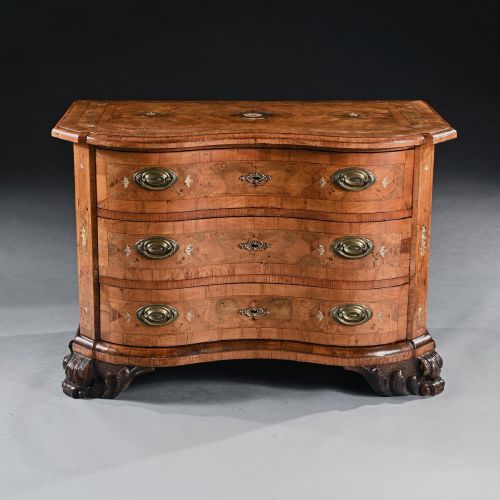
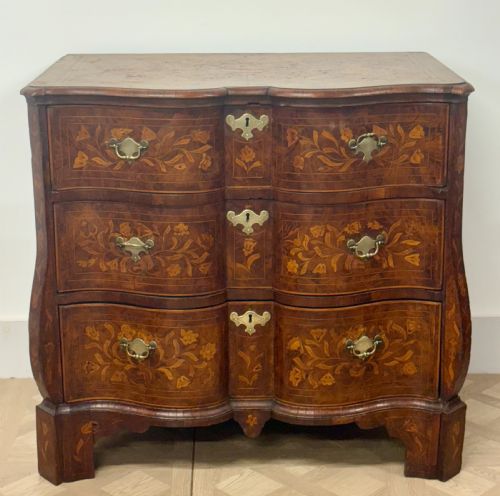
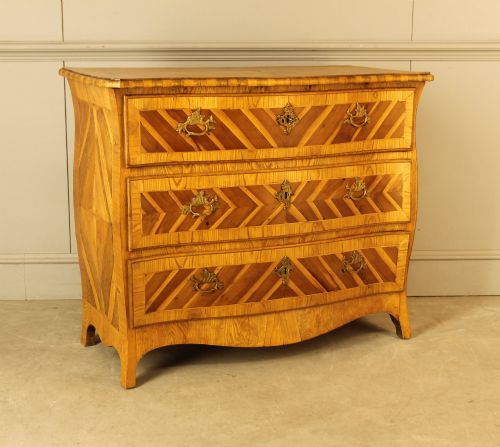
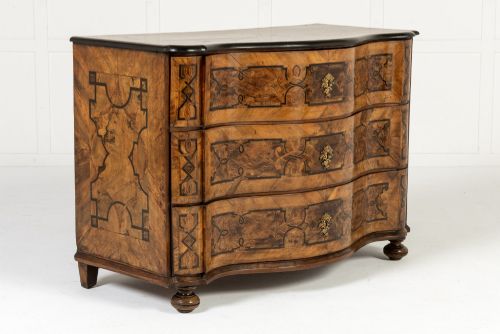
Elaborate surface decoration often involved marquetry, parquetry, or brass hardware fixed to drawer pulls and corners. Continental pieces frequently integrated marble tops above the wooden framework.
Listings feature walnut, mahogany, oak, and marble across British, French, German, and Dutch origins.
Quality Variations
Quality rests in the precision of the serpentine curve and the choice of timber figure, such as highly grained burr walnut or fiddleback mahogany. Superior pieces maintain crisp moulding lines and well-fitted drawer linings.
The sophistication of decorative techniques, including intricate marquetry inlay or the retention of original marble tops and brass mounts, distinguishes standard regional items from high-status examples.
The 18th Century Serpentine Commode Glossary
- Serpentine
- A front contour characterised by a convex central section flanked by concave curves, creating an 'S' shape when viewed from above. This design requires advanced carpentry skills to execute cleanly.
- Commode
- A low chest of drawers or cabinet originating in France during the 18th century. The term later applied broadly to decorative drawer units across Europe.
- Marquetry
- The art of forming decorative patterns using thin veneers of different woods, ivories, or metals. Craftsmen fitted these pieces together to create pictorial or geometric tableaus.
- Bombé
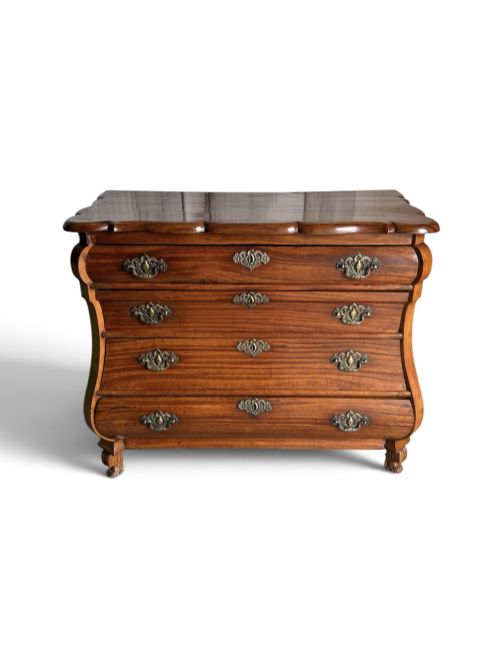
- A swelling, bulging furniture profile common in continental European design. It curves outward in outward-bowed planes on the sides and front.
- Parquetry
- Geometric mosaic woodwork formed by small veneer tiles arranged in repeating patterns. It frequently covers the top and sides of Continental case furniture.
18th Century Serpentine Commode: Frequently Asked Questions
How do I identify an 18th century serpentine commode?
Look for the distinctive undulating front profile combined with period construction methods such as hand-cut dovetails and timber shrinkage patterns.
Examine the secondary woods inside the drawers to confirm age and regional origin before attributing a specific decade.
Were these pieces used as bedroom furniture?
While modern usage often places them in hallways or living rooms, many served as principal storage units in Georgian and Continental bedchambers.
Their generous proportions and fitted drawer configurations accommodated clothing and personal valuables.
How should I care for a walnut commode?
Keep wooden surfaces away from direct sunlight and maintain stable room humidity to prevent the veneer from lifting or cracking.
Apply traditional wax polish sparingly to nourish the grain without building up heavy residue.
What is the difference between British and Continental pieces?
British examples usually rely on solid mahogany or walnut with understated drawer fronts, whereas Continental makers frequently used exotic veneers and integrated marble tops.
French and Dutch pieces also show more pronounced bombe profiles and intricate marquetry.