


Brass Ring Handle Chest
A brass ring handle chest brings tactile warmth and classic joinery to a bedroom, offering a functional storage anchor built to last generations.
Identifying a brass ring handle chest
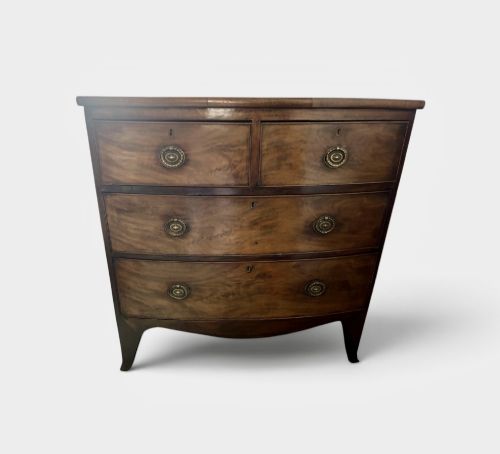
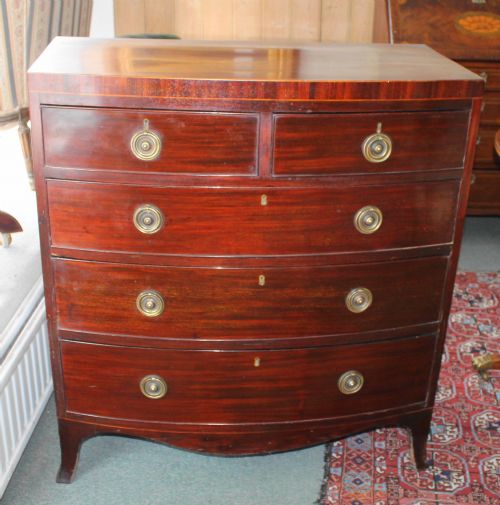
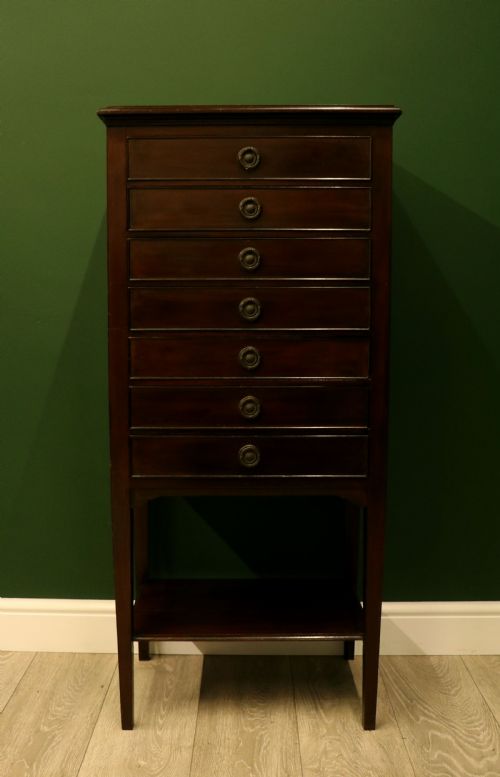
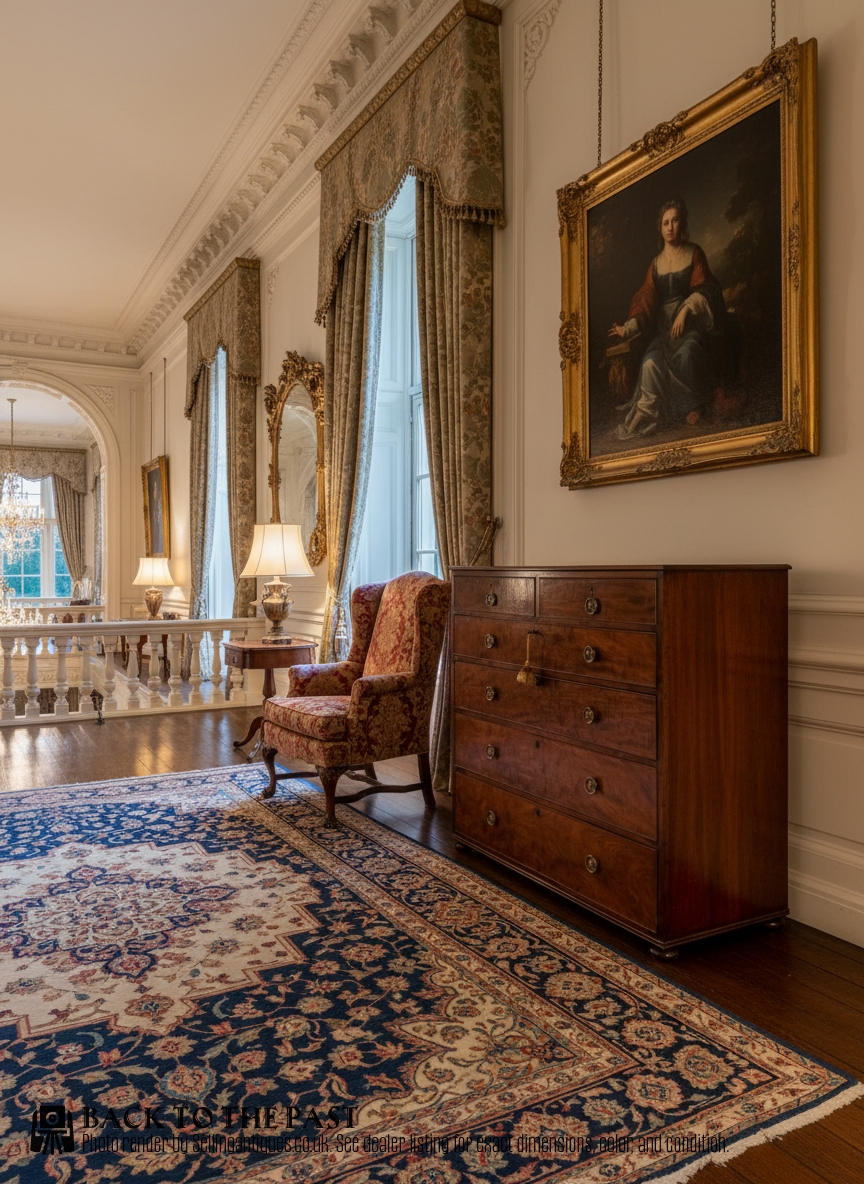
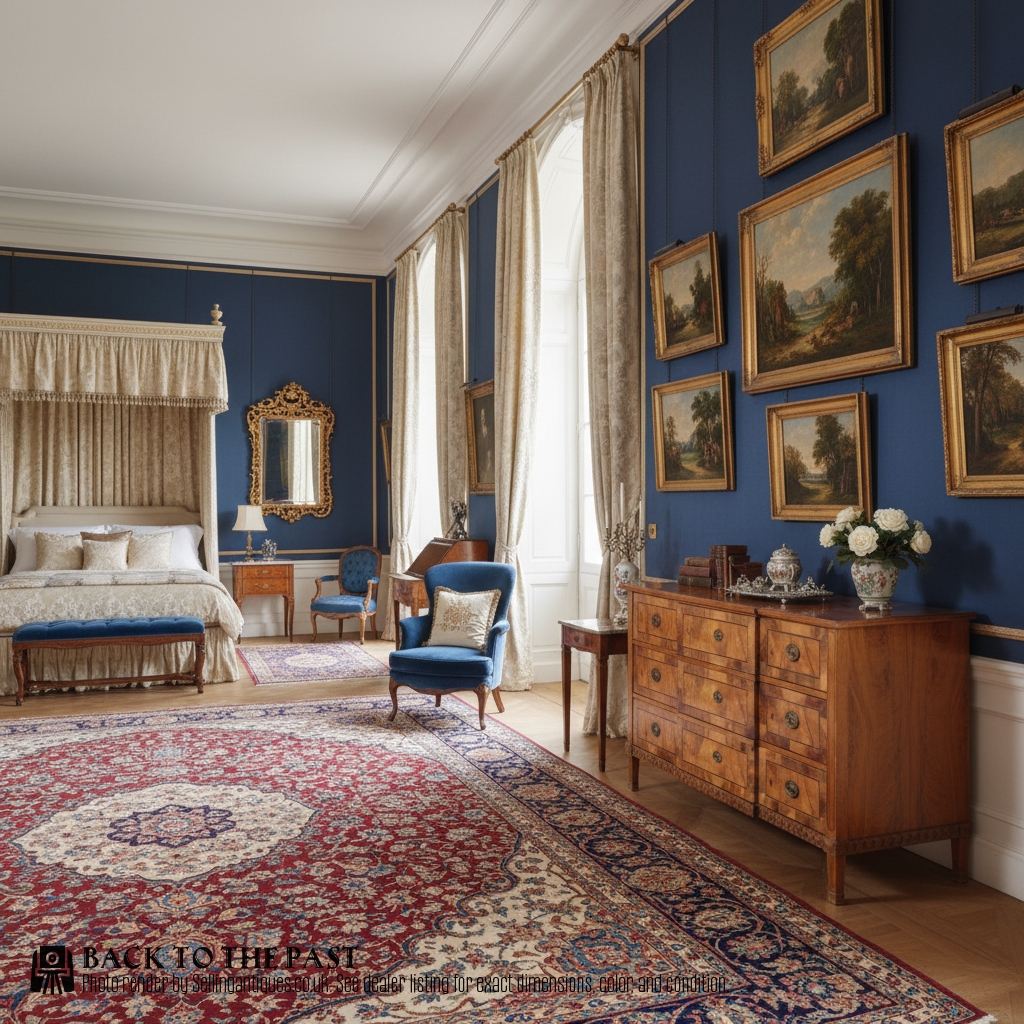
When you search for a brass ring handle chest, you encounter a refined case furniture form distinguished by drop handles secured through backplates on the drawer fronts. The pieces gathered here span the Georgian, Regency, Victorian, and Edwardian periods, stretching from the eighteenth century into nineteen-hundred.
The primary forms take shape as bow front chests of drawers, serpentine chests, and breakfront commodes alongside standard rectangular carcases. Walnut, satinwood, and mahogany dominate the timber selection, frequently enhanced by boxwood inlay, herringbone inlay, or satinwood crossbanding.
You are most likely to meet mahogany examples displaying either straight or curved drawer arrangements, sometimes incorporating a secretaire drawer for writing. The hardware remains integral to the design, whether original brass handles on eighteenth-century pieces or later Edwardian mountings.
Materials and construction
Cabinet makers constructed these carcases using solid timbers and rich veneers, applying mahogany, walnut, and satinwood over secondary woods such as pine. Inlays of boxwood and herringbone patterns were painstakingly embedded into the surfaces to create delicate geometric borders.
Hardware was cast in brass and finished with drop rings suspended from shaped or circular backplates, attached directly through the drawer timber. Drawers themselves relied on hand-cut dovetail joints to ensure structural rigidity over centuries of daily pulling.
Retail Price Guide 2026
Typical UK retail prices for brass ring handle chest, calculated from the Sellingantiques database of over a million retail prices indexed since 2003. This retail price guide relies exclusively on Sellingantiques data; no external sources or auction records are used, so the figures do not describe the wider market.
Several chests feature secret writing compartments hidden behind seemingly ordinary drawer fronts.
Assessing quality and character
The distinction between standard execution and finer workshop production rests in the depth of timber figure and the crispness of inlaid details. Faded mahogany surfaces with untouched original brass hardware and precise crossbanding demonstrate superior historical integrity.
Structural refinement shows in the proportion of the mouldings, the smoothness of the drawer runs, and the complexity of the carcase shape, such as a true serpentine or bow front. Lesser pieces rely on simpler rectangular construction with plainer secondary woods and later replacement handles.
The Brass Ring Handle Chest Glossary
- Bow front
- A cabinet front that curves outward in a convex sweep. This shape softens the room and requires skilled joinery to bend the veneers and drawer edges.
- Serpentine
- A front profile defined by a central convex curve flanked by two concave sweeps. It represents a more complex form than the simple bow front.
- Crossbanding
- A border of veneer laid around the perimeter of a drawer front so the grain runs perpendicular to the central panel. It frames the timber figure.
- Secretaire
- A drawer fitted with a drop-front writing flap and internal small drawers and pigeonholes. It combines storage with a hidden desk function.
- Herringbone inlay
- A decorative banding made of small veneer pieces cut at angles and laid in a repeating V-pattern. This detail adds intricate texture to Georgian surfaces.
Frequently Asked Questions
What periods do these chests come from?
The pieces span the eighteenth, nineteenth, and early twentieth centuries, encompassing Georgian, Regency, Victorian, and Edwardian eras. Each period brings distinct timber choices and decorative veneers.
Earlier examples from the eighteenth century often feature faded mahogany and herringbone inlay, while later Edwardian items utilise satinwood crossbanding and specific drop handle designs.
What woods were used?
Mahogany is the dominant timber across the inventory, supported by walnut and satinwood for specific decorative effects. Secondary woods like pine also appear in carcase construction.
Inlays incorporate boxwood and contrasting veneers to frame the primary wood grain with geometric precision.
How should I care for the surface?
Maintain the timber by dusting with a dry lint-free cloth and applying occasional quality wax to nourish the antique polish. Avoid placing these chests in direct sunlight or near heat sources to prevent timber splitting.
Gentle handling of the brass ring handles preserves both the mountings and the drawer wood around the backplates.