

Regency Period Chest
A regency period chest brings architectural restraint and rich timber figures into a room.
Regency period chests in practice
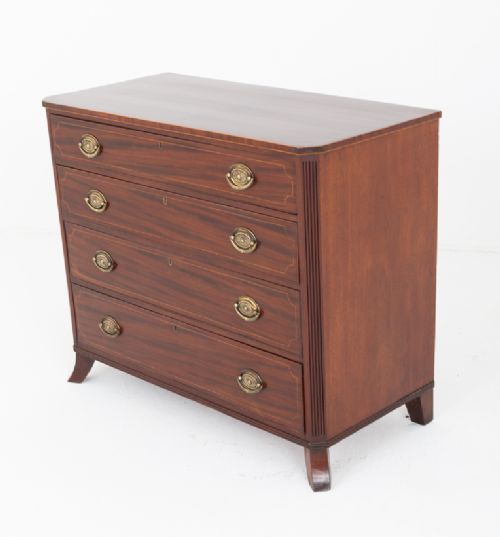
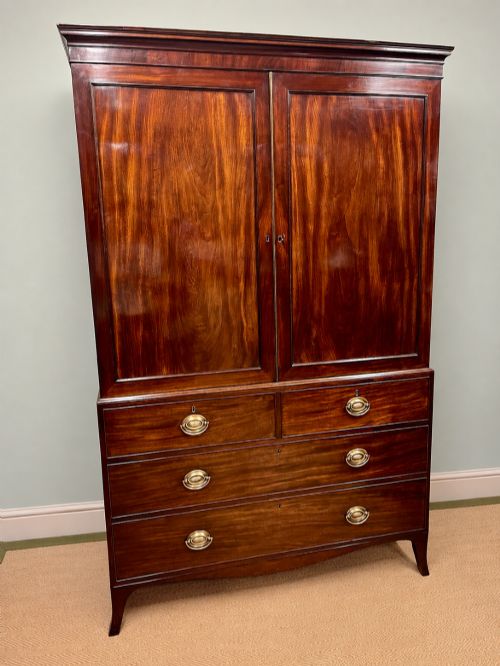
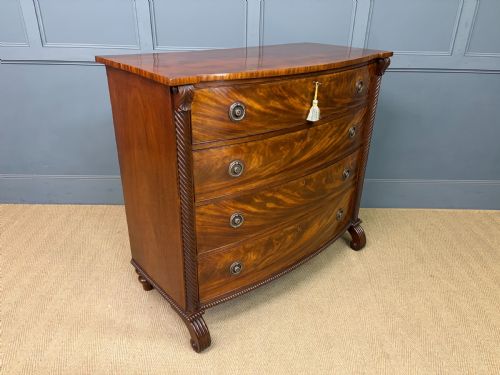
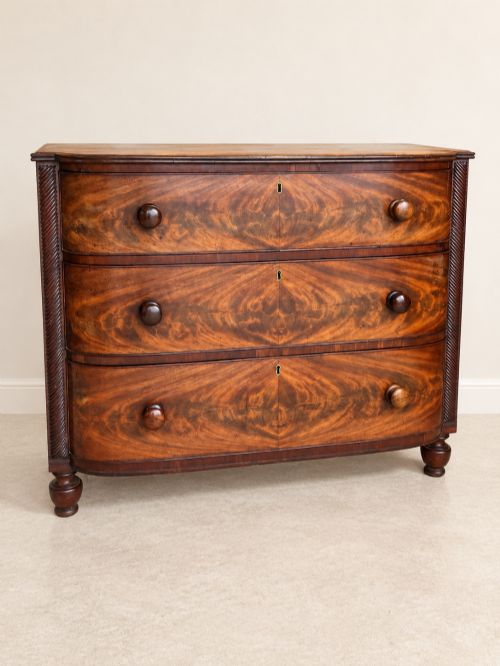
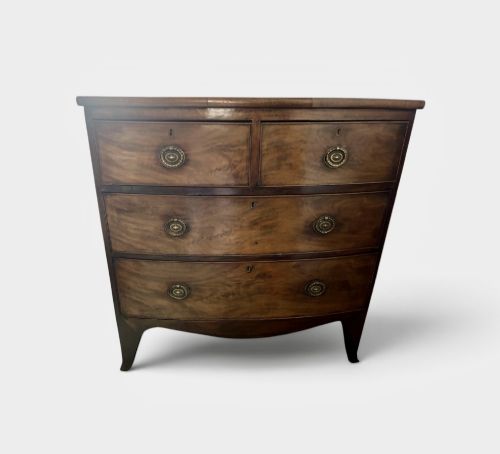
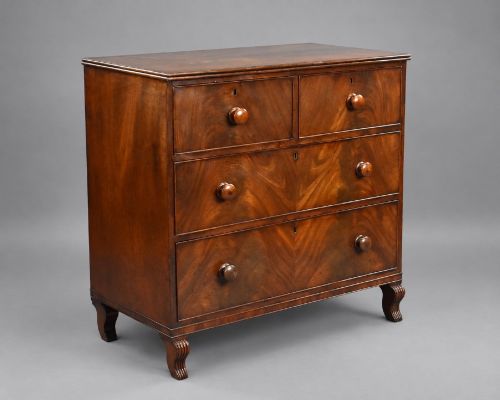
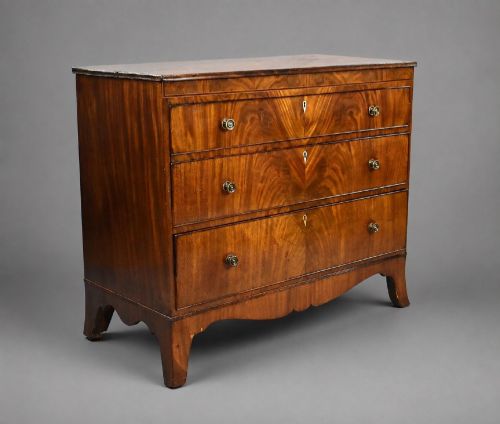
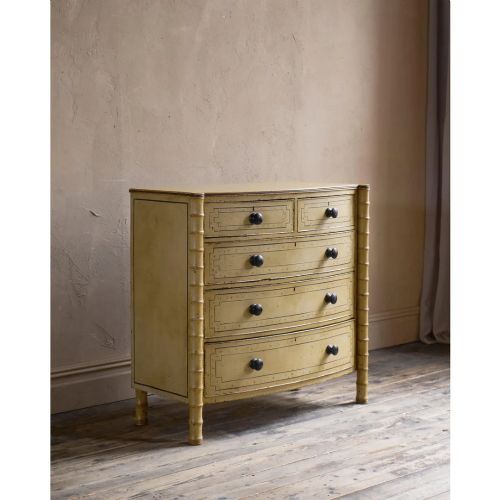
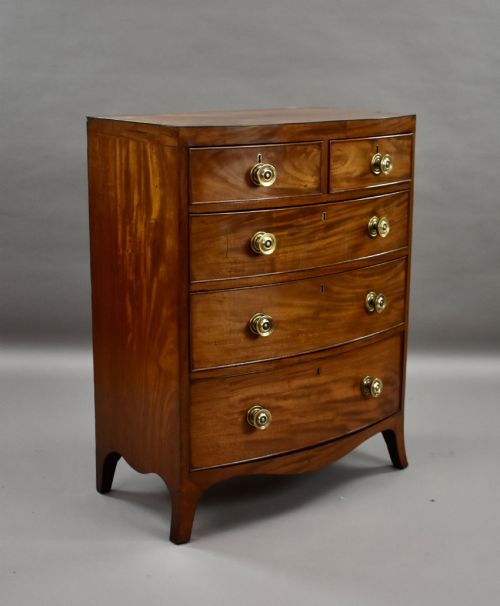
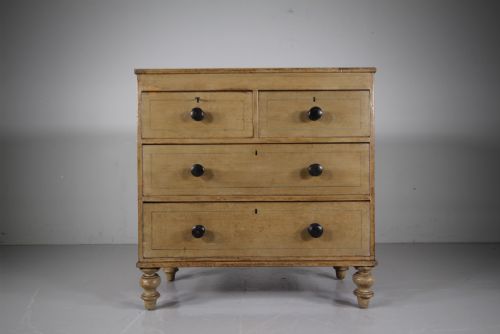
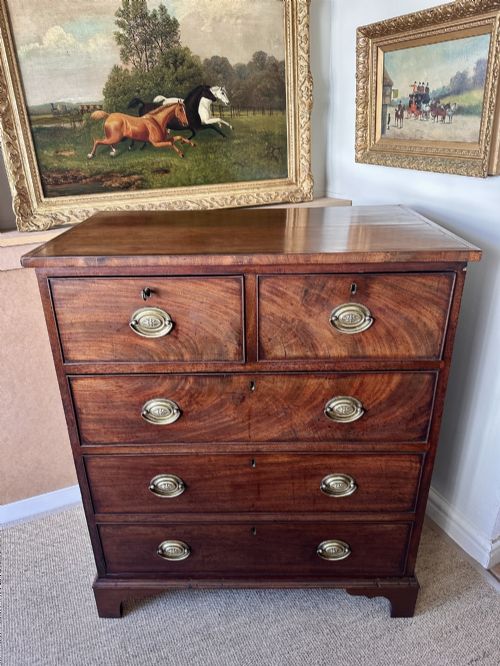
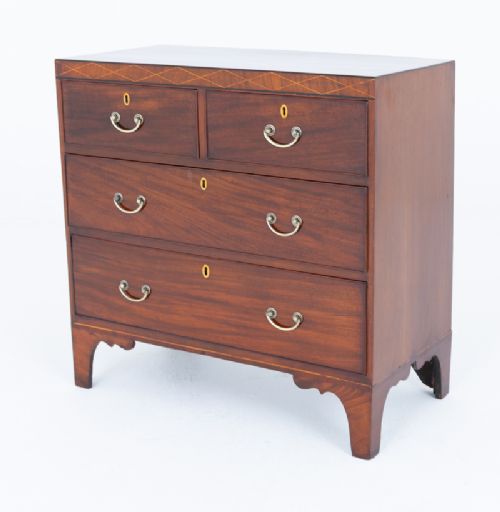
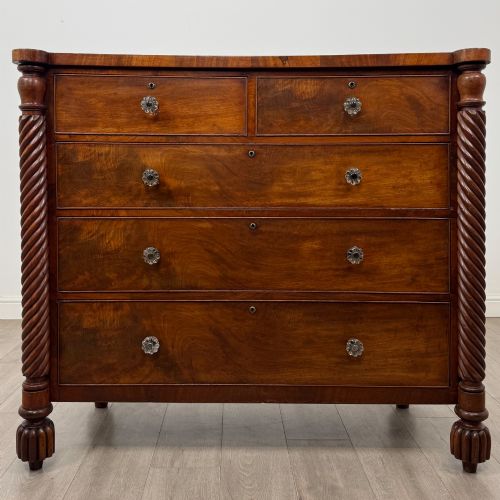
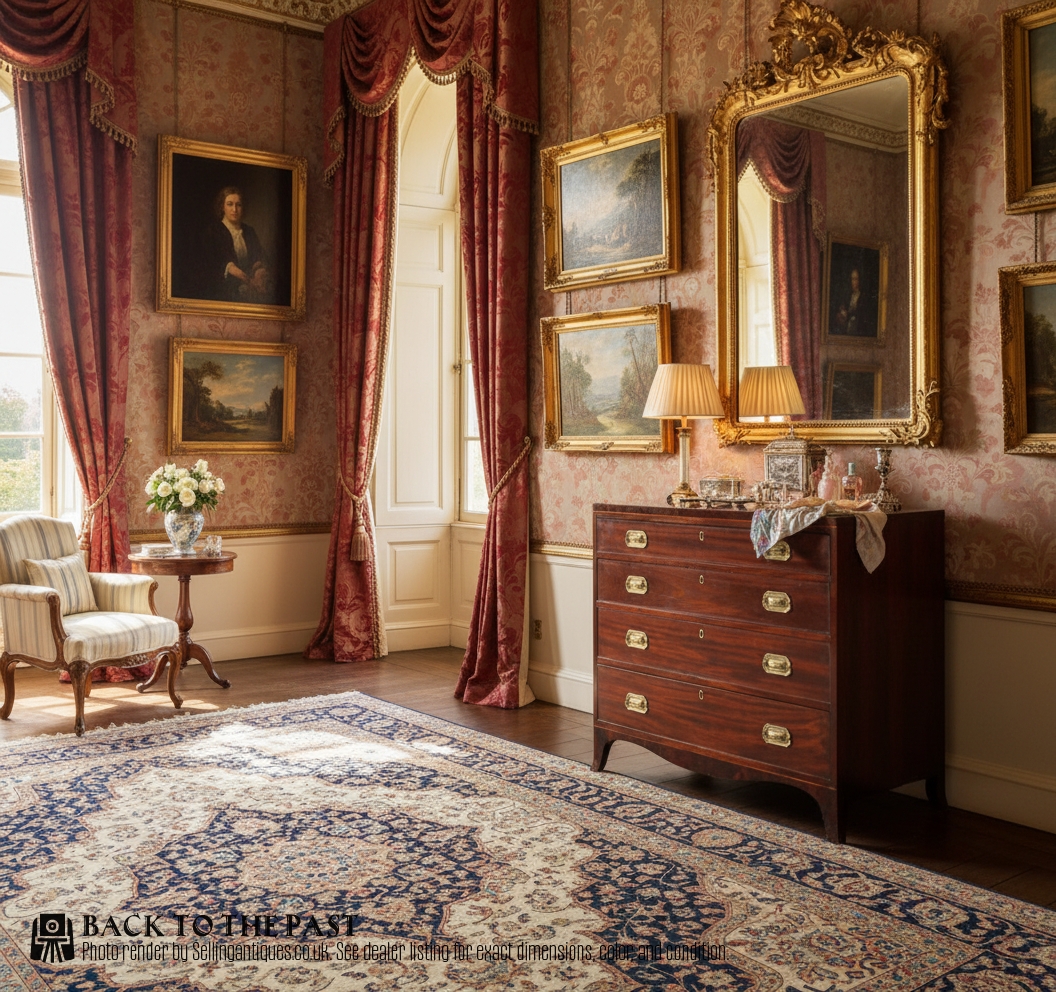
A regency period chest is most commonly encountered as a bow fronted chest of drawers constructed during the early nineteenth century. These pieces appear in solid timber and figured veneers, presenting a formal silhouette defined by clean proportions and restrained classical lines. Alongside standard drawer configurations, variations such as secretaire chests, tallboys, and dressing chests emerge across the selection.
The physical evidence points heavily towards mahogany and flame mahogany veneer as the primary medium for these furnishings. Oak and pine frequently form the secondary timbers used for drawer linings and internal framing. Pieces originating from this era range from compact three-drawer models to substantial serpentine and bow front forms.
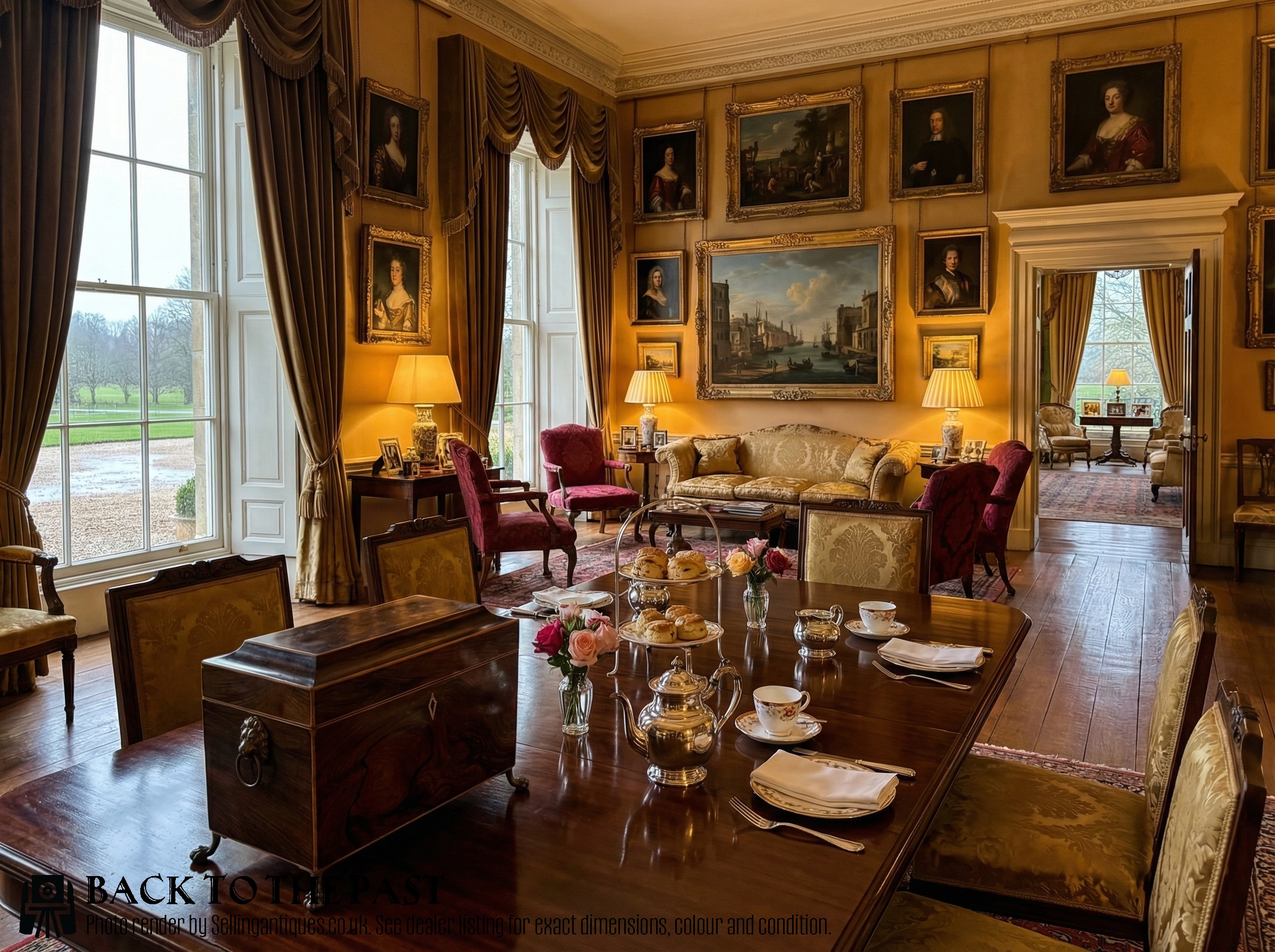
Construction and materials
Cabinet makers of the period utilised dense tropical hardwoods alongside native timbers, applying thin veneers of flame mahogany or rosewood over secondary woods like oak and pine. Drawer interiors typically feature hand-cut dovetail joints, reflecting the standard joinery methods of nineteenth-century workshops.
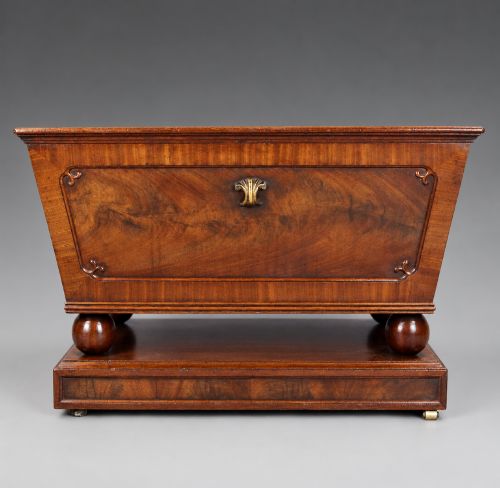
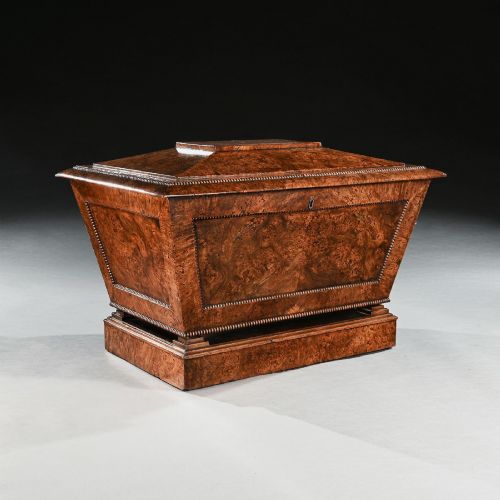
Metal components such as brass handles, escutcheons, and occasional lead linings in associated cellarettes provide functional contrast to the dark timber surfaces. Inlaid details and banded borders appear on selected examples, demonstrating precise timber selection and surface preparation.
Retail Price Guide 2026
Typical UK retail prices for regency period chest, calculated from the Sellingantiques database of over a million retail prices indexed since 2003. This retail price guide relies exclusively on Sellingantiques data; no external sources or auction records are used, so the figures do not describe the wider market.
Recorded forms include standard chests of drawers, tallboys, secretaire chests, and dressing chests dating from the early nineteenth century.
Distinctions in craftsmanship
The degree of figuring in the mahogany veneer dictates much of the visual hierarchy among these pieces, with symmetrical flame patterns commanding greater visual interest. The precision of the drawer dovetails and the integrity of the secondary timbers, such as clean oak linings, mark the distinction between standard utilitarian items and superior cabinet work.
Proportion and execution of the bow or serpentine front shape also separate ordinary pieces from finer examples. Subtle details like original brass hardware and well-matched grain across consecutive drawer fronts indicate the hand of a more accomplished maker.
Thomas Hope·George Simpson
The Regency Period Chest Glossary
- Bow front
- A convex curved cabinet front that swells outward at the centre. This shape softens the corners of a room and defines many regency period chests.
- Flame mahogany
- A veneer cut from the fork of a mahogany tree where the branch meets the trunk. It creates a distinctive, flickering flame pattern across the timber surface.
- Secretaire drawer
- A top drawer fitted with a drop-front panel that conceals a writing surface and small compartments. This dual-purpose feature allows a chest to function as a compact desk.
- Graduated drawers
- A series of drawers that decrease in depth from bottom to top. This arrangement maintains visual balance on tall or medium-scale case pieces.
- Secondary timber
- The interior wood used for drawer linings, backboards, and framing, such as oak or pine. Cabinet makers utilised these sturdy woods behind the primary mahogany or rosewood exterior.
Frequently Asked Questions
How do I identify a regency period chest?
Examine the timber species, structural proportions, and joinery methods visible inside the drawers. Regency pieces typically employ solid mahogany, flame mahogany veneers, and hand-cut oak or pine secondary framing.
Look for classical design cues such as bow fronts, graduated drawers, and restrained brass hardware rather than heavy Victorian ornamentation or later Edwardian revival details.
Where were these chests placed originally?
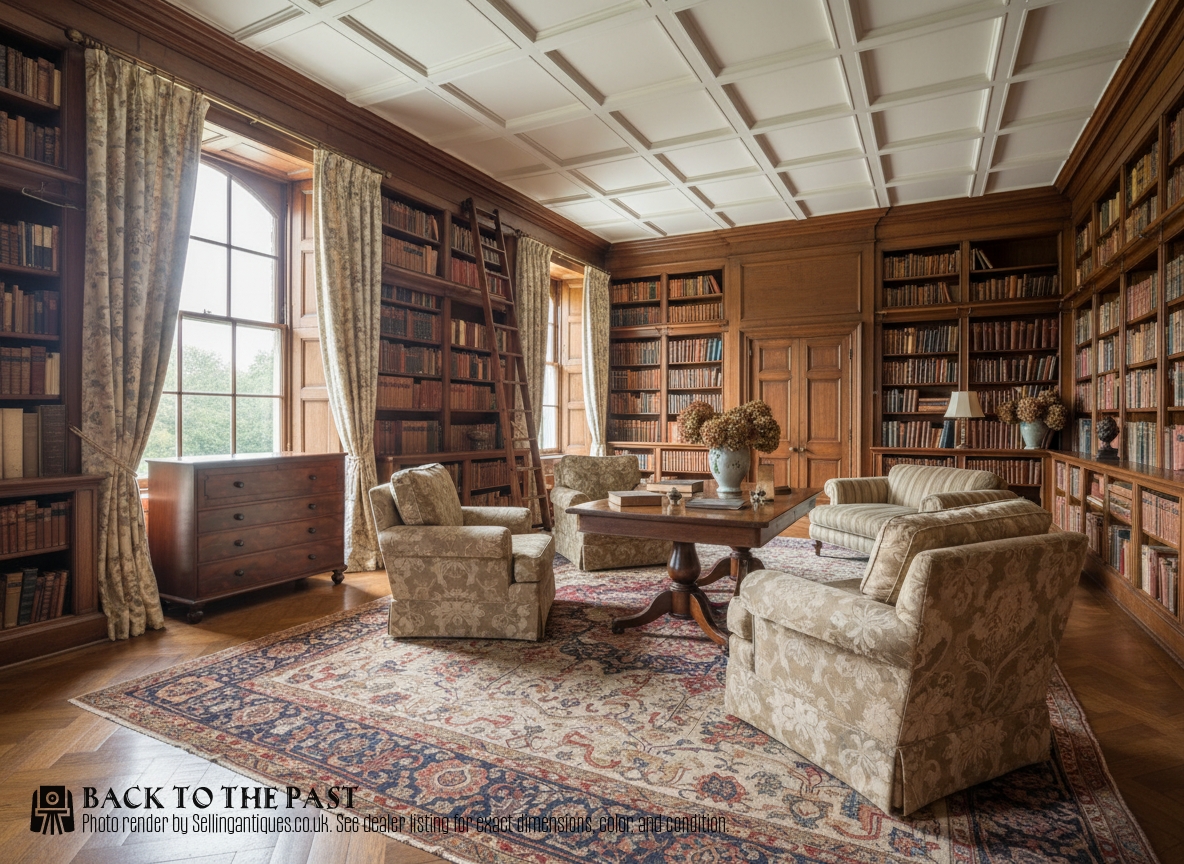
These pieces served primary storage functions in bedrooms, dressing rooms, and formal hallways of nineteenth-century homes. Dressing chests incorporated mirrors or smaller compartments for personal grooming items.
Secretaire variants provided writing facilities in private chambers where space precluded a full-sized bureau or partner desk.
What woods were used in construction?
Mahogany and rosewood dominate the exterior surfaces, often presented as highly figured veneers over sturdy structural carcassing. Flame mahogany was particularly prized for its dramatic grain patterns on drawer fronts.
Internal elements like drawer linings and backboards rely on native secondary timbers such as oak and pine, joined with traditional dovetail techniques.
How should I care for timber surfaces?
Maintain stable indoor humidity levels and keep wooden furniture away from direct heat sources and strong sunlight. Consistent environmental conditions protect antique veneers from splitting or lifting.
Apply a traditional wax polish sparingly to nourish the timber and preserve the natural lustre of the polished mahogany surface over time.