
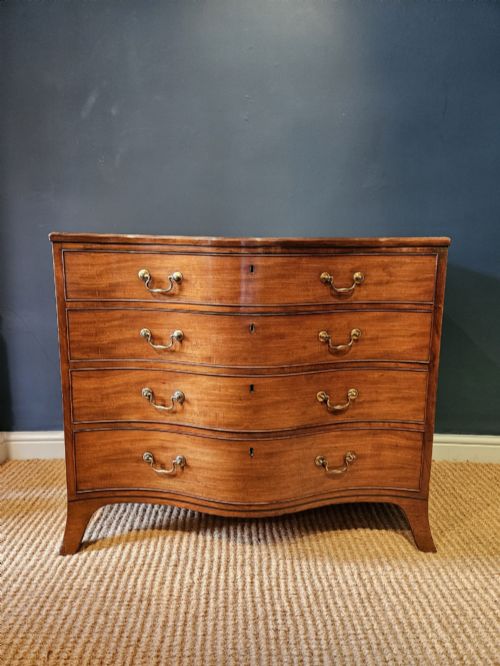
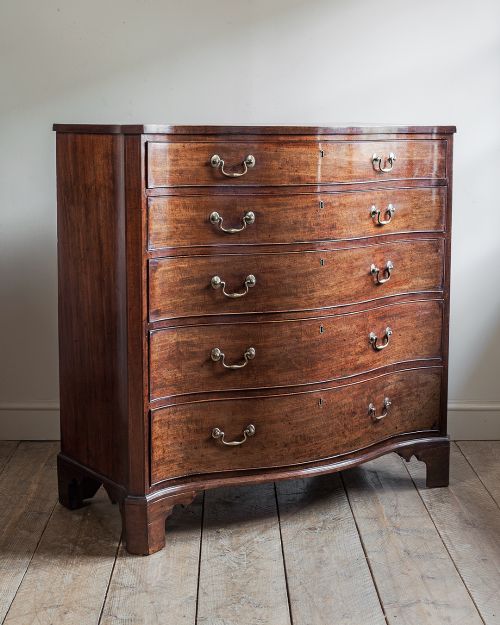
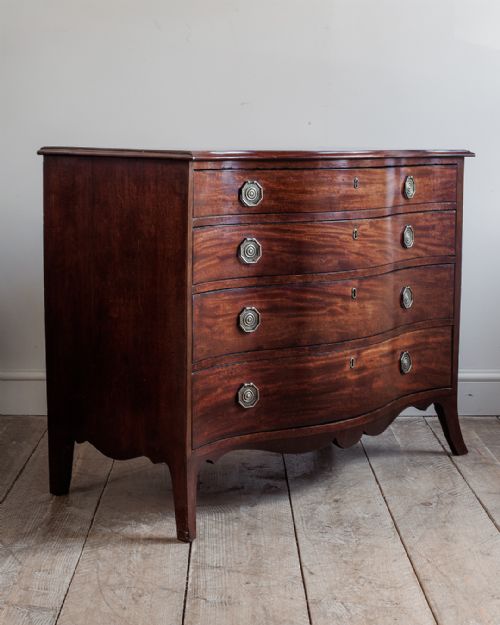
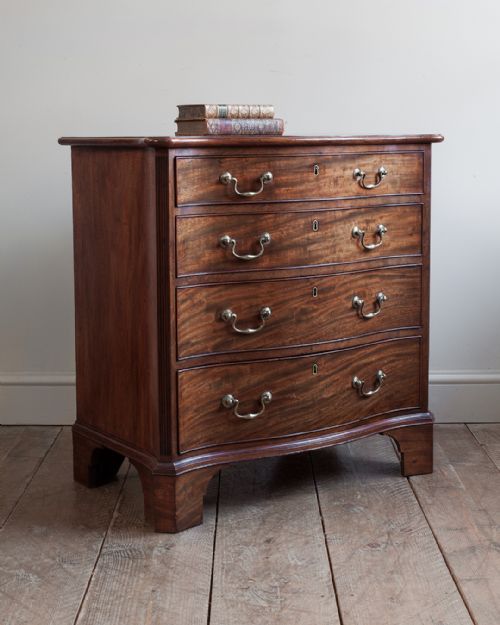

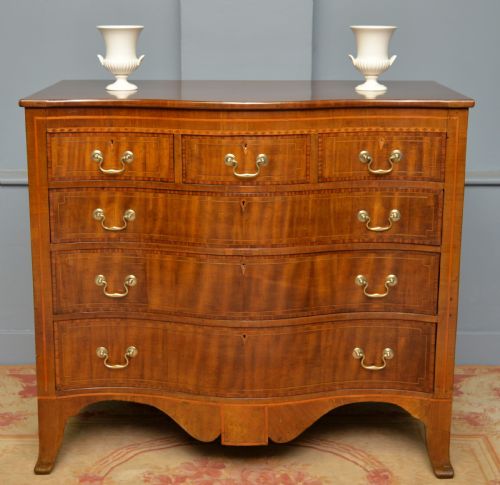
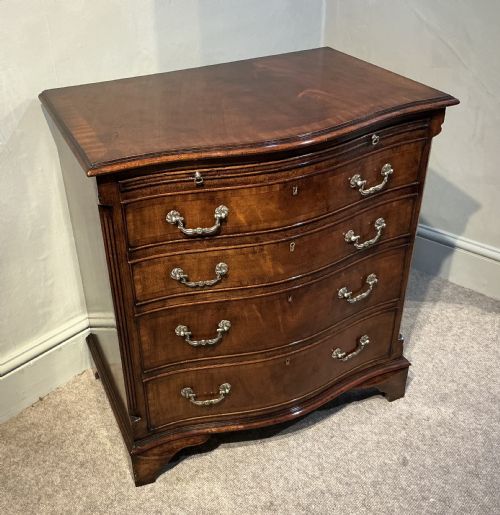
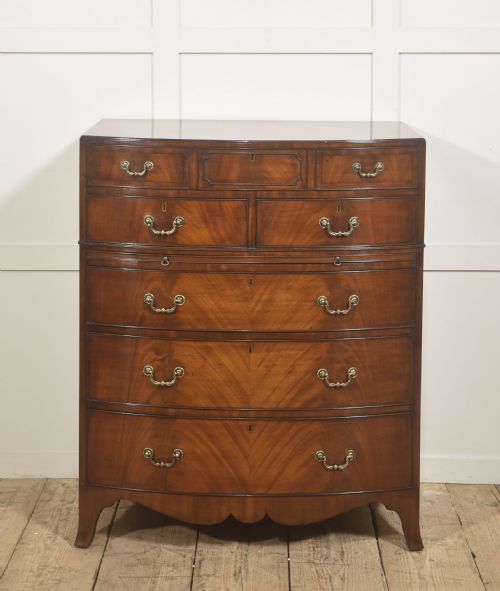


George III Serpentine Commode
A george iii serpentine commode brings sweeping curves and refined cabinetwork into a room.
George III Serpentine Commode
A george iii serpentine commode is a substantial case piece defined by its undulating, curved front and expert proportions. Buyers examine these grand storage items for their distinctive profile and period craftsmanship.
The pieces appearing most frequently on this page belong to the eighteenth century and the broader Georgian era, rendered primarily in rich timber forms. Alongside standard chests of drawers, listings include bedside tables and dressing chests.
Makers shaped these items with specific regional flair, including Scottish examples alongside English pieces. Later revival interpretations from the early twentieth century also surface within the selection.
How they were made
Cabinetmakers utilised solid mahogany, satinwood, and harewood mounted over sturdy oak carcases. Timber veneers were carefully selected for strong figure, fiddleback patterns, or dramatic flame effects.
Complex curves required precise woodworking techniques alongside delicate boxwood inlay and marquetry decoration. Brass hardware such as handles and escutcheons completed the construction.
Listings feature mahogany, satinwood, and harewood constructions spanning the eighteenth century to the twentieth-century revival period.
What varies in quality
The standard of a george iii serpentine commode rests on the depth of figure in the mahogany and the precision of the curved drawer fronts. Superior examples display seamless grain alignment and crisp execution of inlaid borders.
Construction details differentiate standard workshop output from exceptional furniture. Refined cabinetwork shows in the handling of internal oak drawer linings and the integration of intricate satinwood and boxwood details.
Henry Hill Of Marlborough·Waring and Gillow
The George III Serpentine Commode Glossary
- Serpentine
- A front profile shaped with a convex centre flanked by concave curves. This contour requires advanced woodworking skill to maintain smooth lines across multiple drawers.
- Commode
- A decorative storage chest or cabinet standing on legs. In eighteenth-century terminology, the word often describes a fine drawer unit rather than a low bedside cupboard.
- Fiddleback
- A type of figure in mahogany timber showing a wavy, transverse grain pattern resembling the back of a violin. Craftsmen prized this wood for high-status facades.
- Marquetry
- Decorative veneer patterns formed by fitting together thin pieces of various woods. Artisans created floral or geometric motifs across the top and drawer fronts.
- Escutcheon
- A protective brass plate surrounding a keyhole. These fittings often match the drop handles and add functional detail to the facade.
George III Serpentine Commode: Frequently Asked Questions
What is a george iii serpentine commode?
A george iii serpentine commode is a high-status eighteenth-century storage chest defined by its undulating curved front and fine timber veneers. These pieces combine decorative presence with practical drawer space.
Craftsmen built them using dense hardwoods like mahogany and satinwood, often embellishing the surfaces with delicate boxwood stringing and brass mounts.
How were these commodes used?
Georgian households utilised these chests in principal bedchambers and formal reception rooms for storing clothing and linens. Some variations functioned as dedicated dressing chests or bedside tables.
The sweeping top surface also served as a display area for decorative objects, lighting, or personal items.
How do I distinguish eighteenth-century pieces from later revivals?
Authentic eighteenth-century examples display period construction methods, hand-cut dovetails, and genuine timber ageing within the oak drawer linings. Revival pieces from the twentieth century often reveal different secondary woods and modern machining.
Examining the internal structure and the wear patterns on the drawer runners helps confirm the age of the commode.
What woods appear most often?
Mahogany forms the primary structure for the majority of these commodes, frequently selected for its rich grain and stability. Satinwood, harewood, and boxwood appear in veneers and decorative stringing.
Oak is consistently used for internal framing and drawer carcases behind the decorative facades.
How do I live with a serpentine commode?
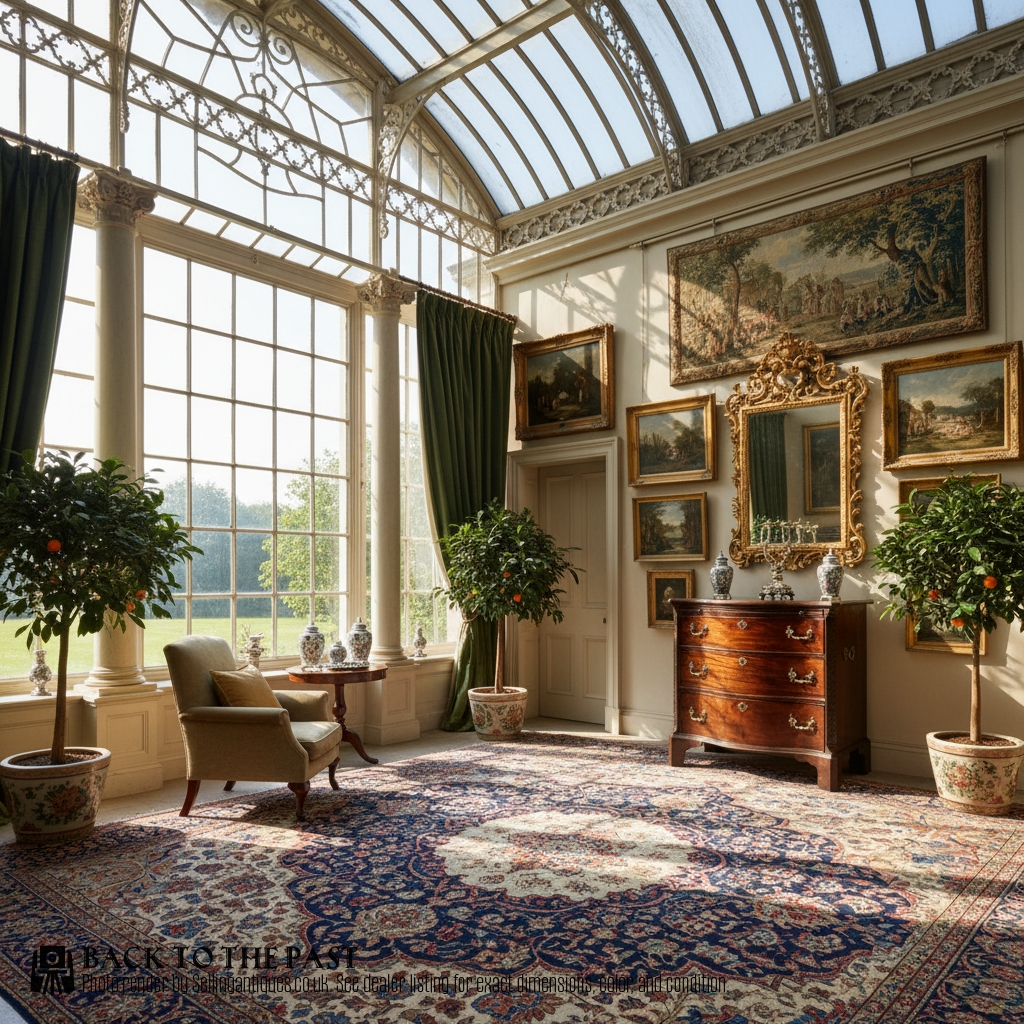
Place the commode against a principal wall where its curved profile can be fully appreciated without obstructing room traffic. Keep the piece away from direct heat sources and strong sunlight to protect the polished wood surfaces.
Routine maintenance involves dusting with a soft cloth and occasionally applying suitable furniture wax to nourish the timber.