
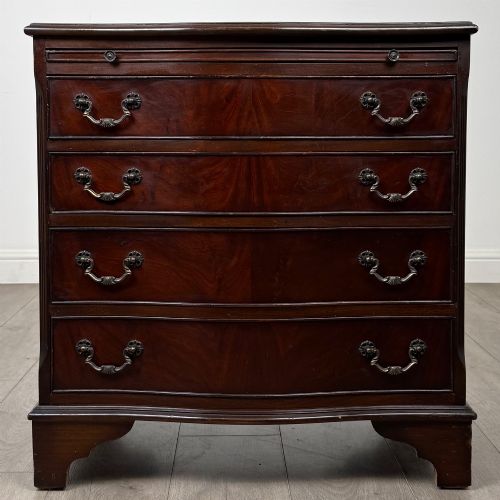
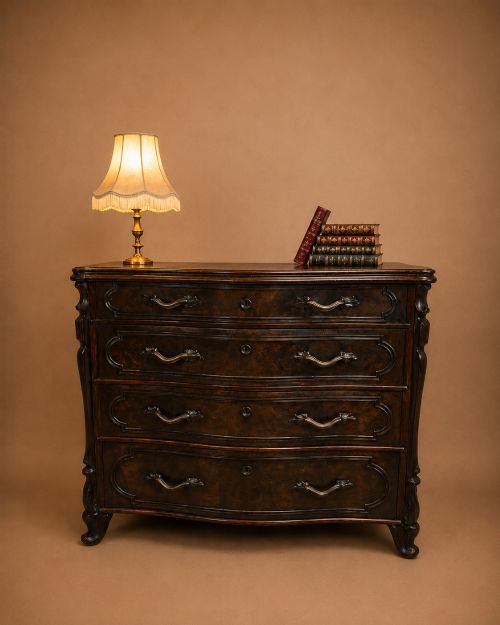
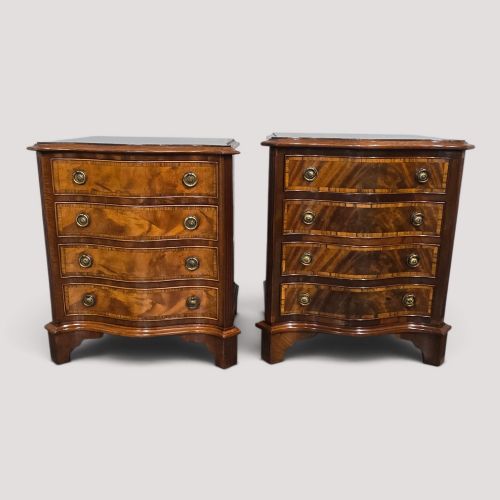
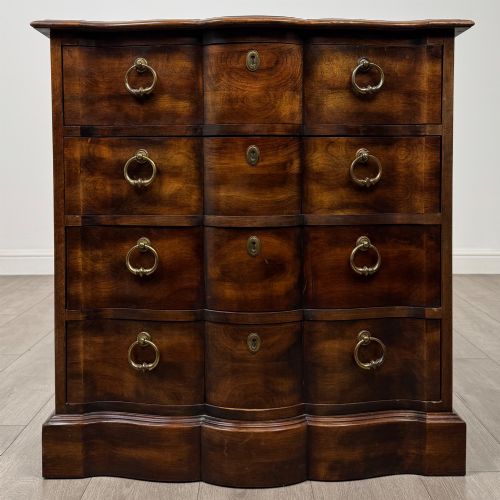



Dark Wood Serpentine Chest
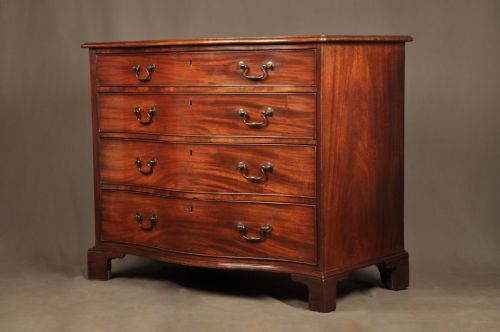
A dark wood serpentine chest brings together fluent curved fronts and rich timber grains across Georgian and later periods.
Dark Wood Serpentine Chest
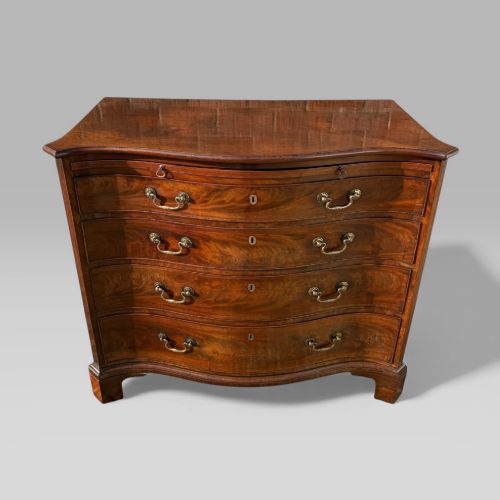
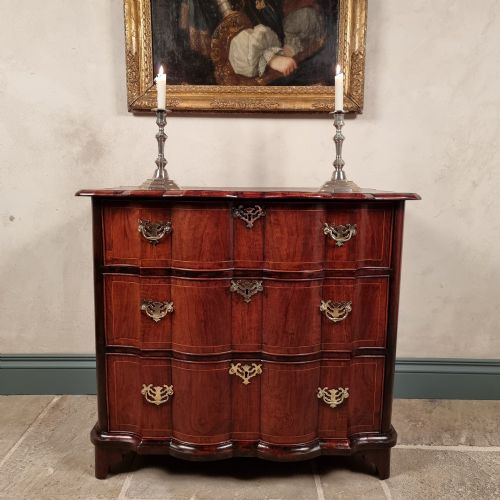
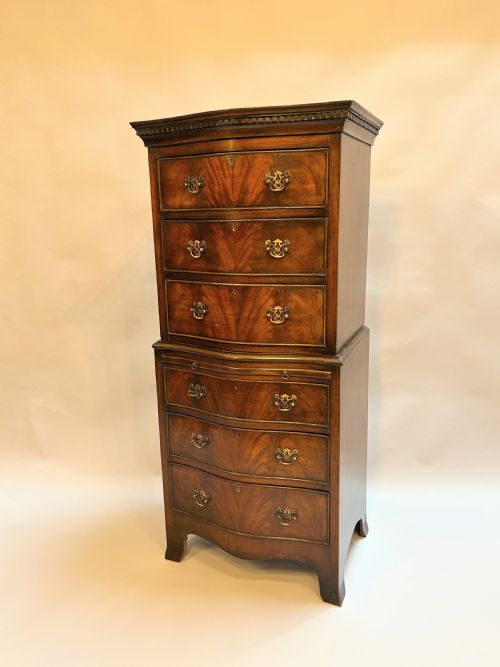
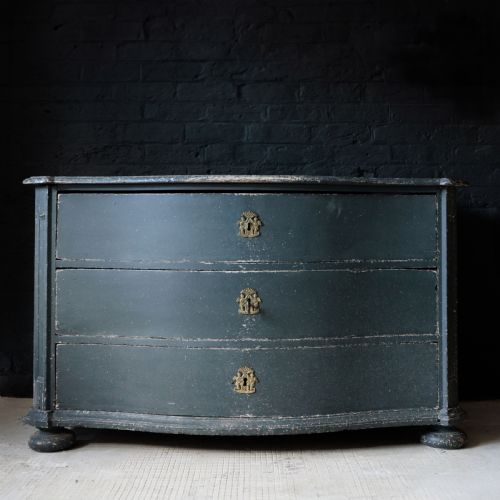
A dark wood serpentine chest presents a distinctive undulating front that curves outward at the centre and inward at the sides, creating a fluid silhouette. These pieces appear primarily as chests of drawers, dressing chests, and tallboys originating from the eighteenth century through the Edwardian era.
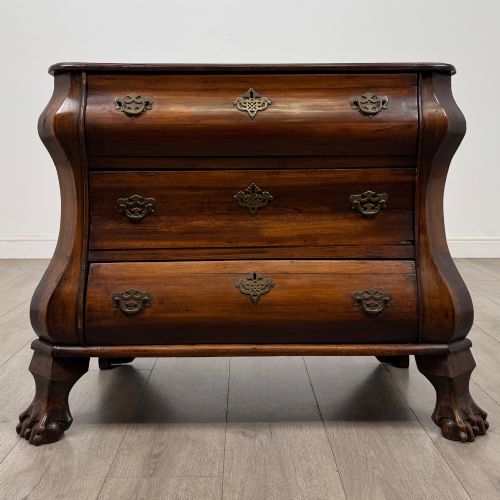
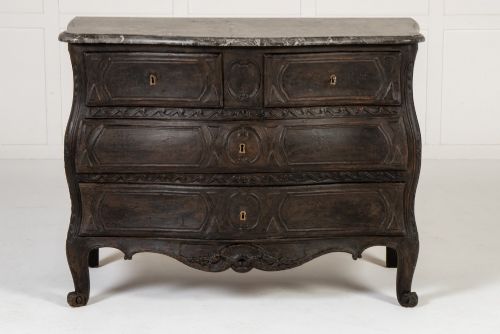
The materials most frequently encountered in these forms include mahogany and walnut, often enhanced by boxwood inlay or flame mahogany veneer. Buyers also encounter related continental examples such as French commodes and Dutch bombe chests sharing the characteristic undulating profile.
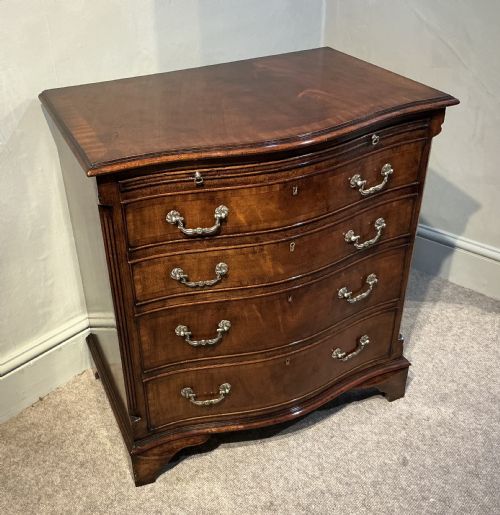
Georgian and George III versions set the standard for these case pieces, while later revivals from the nineteenth and twentieth centuries emulate the proportion and craftsmanship of the earlier eras. Smaller bedside lamp chests and compact forms also emerge among the selection.
Materials and construction
Cabinetmakers constructed the carcased bodies using solid timbers such as mahogany, walnut, oak, and red walnut, applying finely figured veneers to the drawer fronts and top surfaces. Flame mahogany veneer and boxwood inlay provided ornamental contrast to the dark wood ground.
Brass hardware, including swing handles and escutcheons, complemented the rich tones of the timber. Joinery relied on traditional techniques to shape the complex convex and concave curves of the serpentine drawer fronts without compromising structural integrity.
Dark Wood Serpentine Chest Retail Price Guide 2026
Typical asking prices for dark wood serpentine chest among the pieces listed under this phrase on Sellingantiques today, from the lower quarter to the upper quarter. They describe what is for sale here now, not the wider market.
Listings span the eighteenth century through the Edwardian era, featuring mahogany, walnut, oak, and brass hardware.
Judging quality in serpentine furniture
The crispness of the serpentine curve across the drawer fronts and the matching of timber veneers dictate the visual success of the piece. Superior examples exhibit harmonious grain patterns that follow the sweep of the wood rather than appearing patched or disjointed.
Internal construction, such as secondary softwoods used for drawer linings and the precision of the dovetail joints, separates master cabinetwork from later revival pieces. Finer iterations incorporate functional details like writing brushes and sliding shelves integrated into the upper drawers.
The Dark Wood Serpentine Chest Glossary
- Serpentine front
- A furniture front characterised by a convex centre flanked by concave sides. This flowing line requires precise woodworking to shape both the drawers and the supporting frame.
- Commode
- A low chest of drawers or cabinet, frequently associated with French and continental design. These pieces often feature marble tops or elaborate bombé profiles.
- Tallboy
- A tall chest of drawers consisting of one chest stacked upon another, also known as a chest on chest. This vertical format maximised storage space while maintaining a compact footprint.
- Flame mahogany veneer
- A distinct timber veneer cut from the branch junctions of the mahogany tree. It yields a flickering, flame-like pattern prized for decorative drawer fronts.
- Boxwood inlay
- Contrasting light-coloured wood inserted into recesses within the darker primary timber to create geometric or floral borders.
Dark Wood Serpentine Chest: Frequently Asked Questions
How do I date a serpentine chest?
Dating relies on examining the secondary timbers, construction methods, and hardware styles used in the piece. Eighteenth-century examples display hand-cut dovetails and specific timber choices distinct from later Edwardian or twentieth-century revivals.
Secondary characteristics such as drawer linings, backboards, and the wear patterns on runners provide further clues to the period of manufacture.
What is the difference between a commode and a chest of drawers?
A commode typically refers to continental European styles, particularly French designs, featuring ornate commode bodies and sometimes marble tops. A chest of drawers generally follows British domestic cabinetry traditions.
Both forms utilise the serpentine front profile, but their overall proportions and decorative vocabulary reflect different regional workshops.
Are all serpentine chests Georgian?
While the form gained prominence during the Georgian and George III periods, makers continued producing serpentine chests well into the nineteenth and twentieth centuries. Georgian Revival and Edwardian pieces frequently replicate the eighteenth-century aesthetic.
Inspecting the internal timber and construction reveals whether a piece originates from the eighteenth century or a later revival movement.
How do I care for mahogany and walnut furniture?
Maintain dark wood surfaces by keeping them away from direct sunlight and steady heat sources to prevent the veneer from drying or cracking. Regular dusting with a soft, dry cloth preserves the polished finish.
Apply high-quality beeswax sparingly when the wood appears dry, buffing gently to maintain the natural lustre of the mahogany or walnut grain.