
Antique Serpentine Drawers
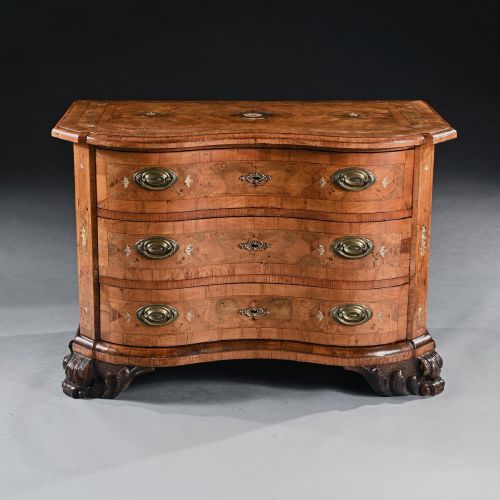
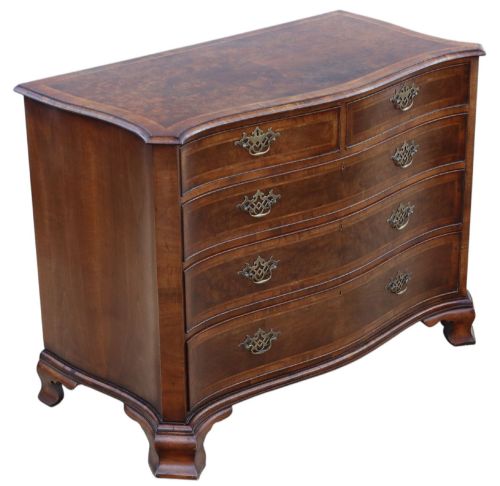
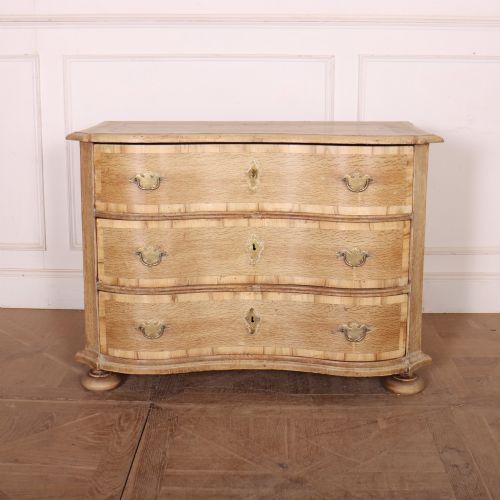
These antique serpentine drawers offer a sweeping, convex-and-concave silhouette that brings exceptional presence to any room.
What antique serpentine drawers are
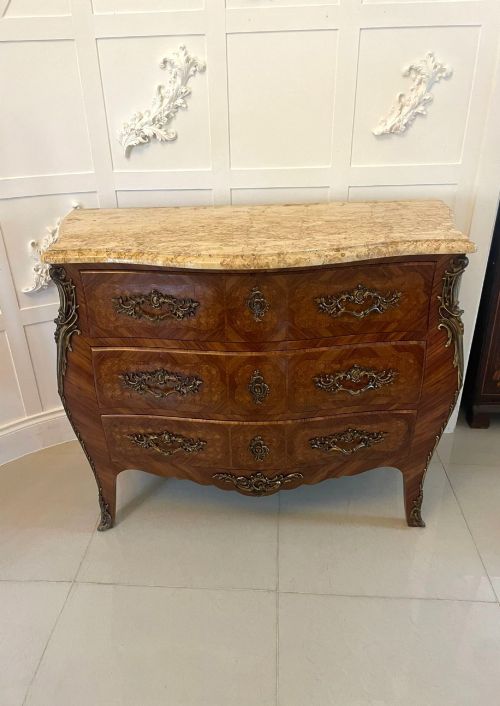
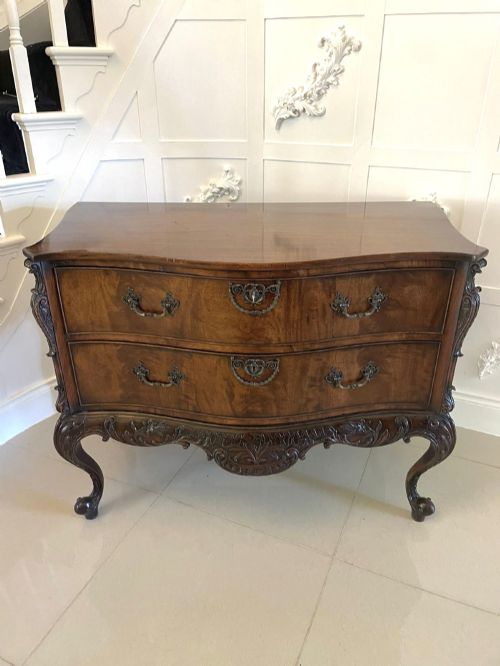
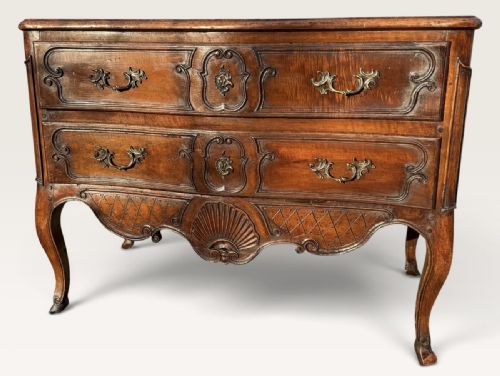
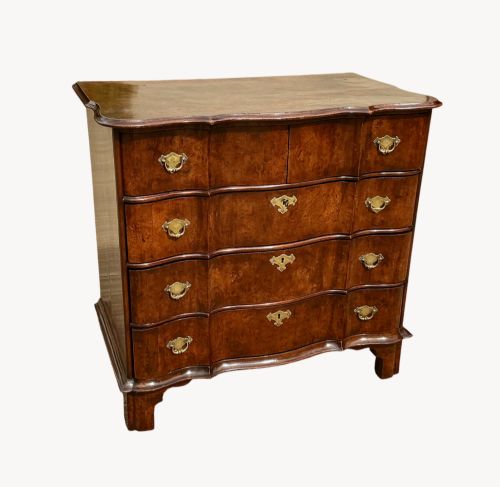
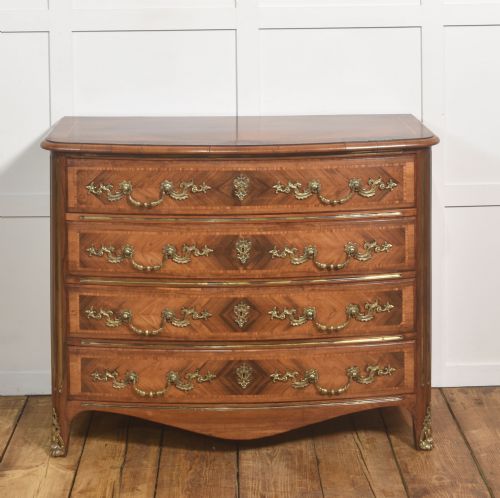
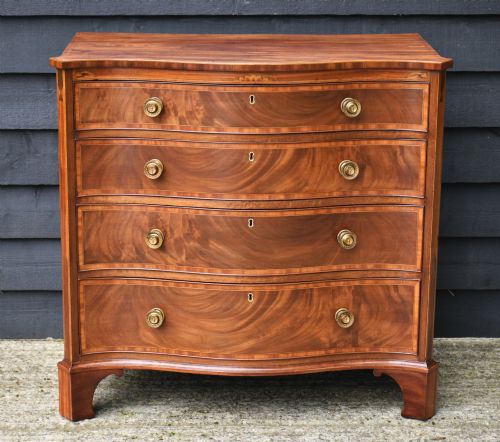
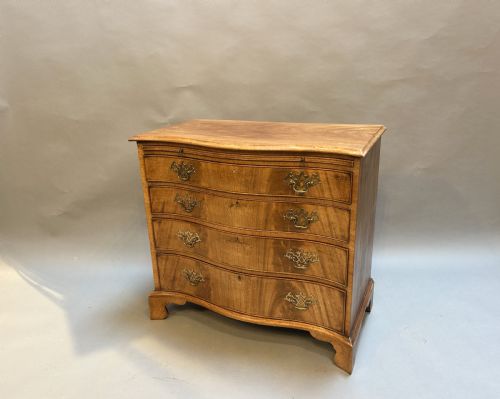
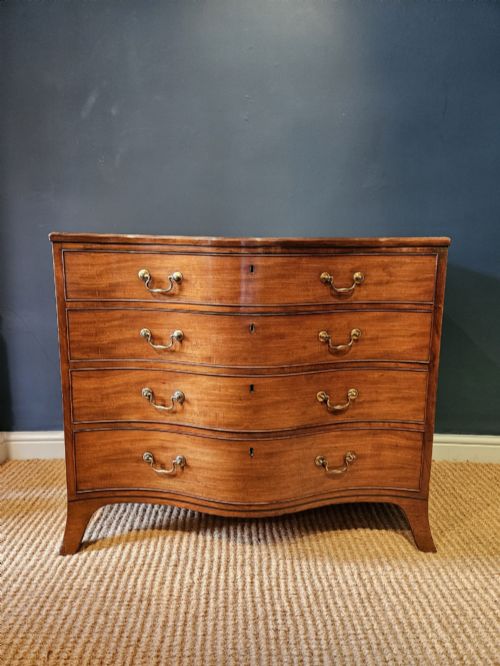
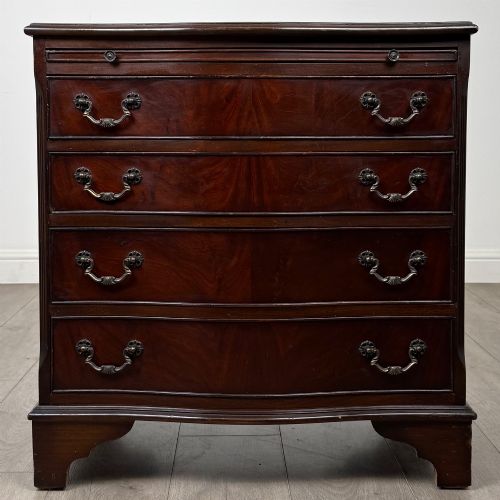
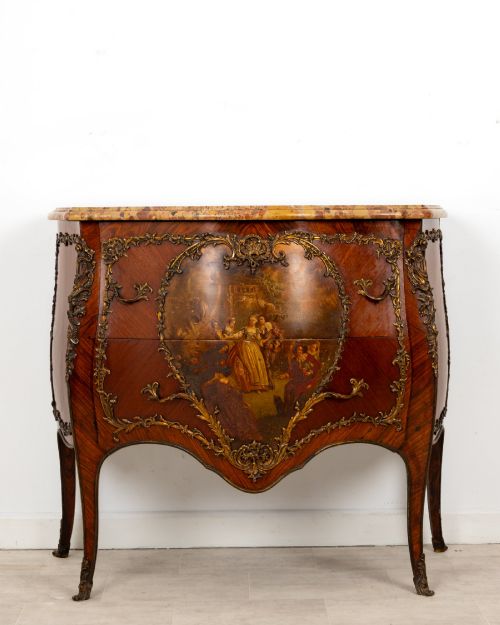
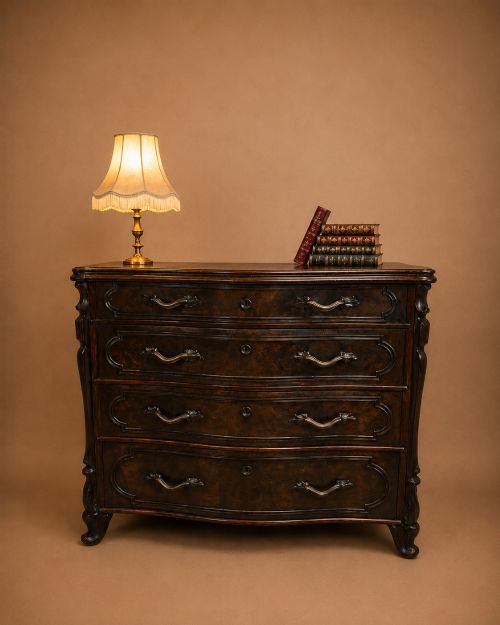
When you search for antique serpentine drawers, you find storage furniture defined by a undulating, curving front profile. The pieces on this page appear primarily as chests of drawers, alongside larger chest on chest formats and French commodes. These items span periods from the Georgian era and the eighteenth century through to the nineteenth century, with some later examples dating around nineteen hundred.
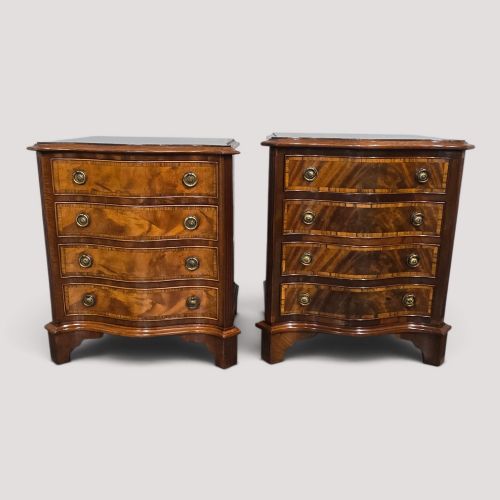
Mahogany dominates the available selection, often featuring figured grain patterns, while walnut, burr walnut, satinwood, and painted wood provide alternative finishes. Styles range from strict Georgian designs and French provincial models to Queen Anne and Sheraton interpretations. Buyers most frequently encounter standard chests of four drawers, though variations with pull-out writing slides or larger proportions also surface.
How they were made
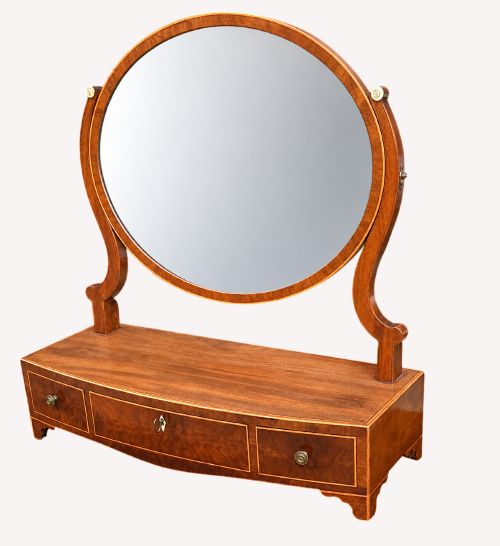
Cabinetmakers constructed these undulating fronts from dense timbers like mahogany and walnut, frequently selecting figured veneers to accentuate the curves. Boxwood inlay adds linear contrast to select surfaces, while specialised boxwood or fruitwood stringing defines the drawer edges on finer examples. The undulating shape demands precise timber manipulation to ensure the curved drawer fronts operate smoothly within their frames.
Brass hardware, including gilt brass handles and escutcheons, secures the drawer fronts and provides functional decoration. Carved details and shaped aprons appear on specific regional and period pieces, matching the overarching style. Joinery techniques relied on traditional solid timber construction combined with stable veneered carcases to maintain the serpentine profile over centuries.
Retail Price Guide 2026
Typical UK retail prices for serpentine drawers, calculated from the Sellingantiques database of over a million retail prices indexed since 2003. This retail price guide relies exclusively on Sellingantiques data; no external sources or auction records are used, so the figures do not describe the wider market.
The inventory includes standard chests of drawers, chest on chest formats, and French provincial commodes.
What varies in quality
The degree of movement in the timber grain separates standard pieces from exceptional ones. Highly figured mahogany and rich burr walnut command attention through their natural patterns, which catch the light across the curved drawer fronts. Finer examples display meticulous alignment in their veneers, ensuring the grain flows continuously across the undulating curves.
Hardware choice and secondary detailing further distinguish the range. Solid gilt brass handles and delicate boxwood inlay reflect a higher standard of craftsmanship than plain replacements or unadorned drawer fronts. The crispness of the curved lines and the smoothness of the drawer action indicate the skill invested during original construction.
The Antique Serpentine Drawers Glossary
- Serpentine
- A front profile characterised by a concave central section flanked by two convex ends, or the reverse. This undulating curve requires advanced woodworking skill to shape timber accurately.
- Burr walnut
- A specialised timber cut from walnut tree growths, yielding a swirling, highly figured grain pattern. It appears frequently on decorative drawer fronts.
- Chest on chest
- A tall storage unit comprising one chest stacked directly on top of a larger lower chest, often providing significant vertical capacity.
- Pull-out writing slide
- A horizontal wooden board integrated above the top drawers that pulls outward to provide a temporary writing surface.
- Commode
- A French term for a low chest of drawers, often featuring ornate handles and pronounced serpentine shaping associated with continental styling.
Frequently Asked Questions
What is a serpentine front?
A serpentine front curves outward and inward in a continuous undulating wave. This shape creates visual depth and catches light differently than a flat piece.
Cabinetmakers adopted this profile during the eighteenth century to showcase advanced woodworking techniques and rich timber grains.
How do I use a chest with a writing slide?
The pull-out slide sits just beneath the top surface or upper drawers. You simply pull it forward to create a compact writing ledge.
This feature allowed individuals to write letters without needing a separate desk in the bedroom.
What wood was most commonly used?
Mahogany is the primary timber found in these serpentine pieces. Walnut and burr walnut also appear frequently, particularly on French and provincial examples.
Craftsmens utilised these dense hardwoods because they held stable curved lines and accepted fine veneers.
How can I tell a Georgian piece from a later one?
Georgian and eighteenth-century pieces generally display heavier solid timber construction and distinct regional cabinetmaking traits. Later nineteenth-century and nineteen-hundred revivals often feature highly figured veneers and specific revival styling cues.
Examining the internal drawer construction and secondary woods helps clarify the exact period.