


Satinwood Dressing Chest
A satinwood dressing chest brings figured timbers and fine cabinet work to the bedroom, offering fitted drawers and often a tilting mirror.
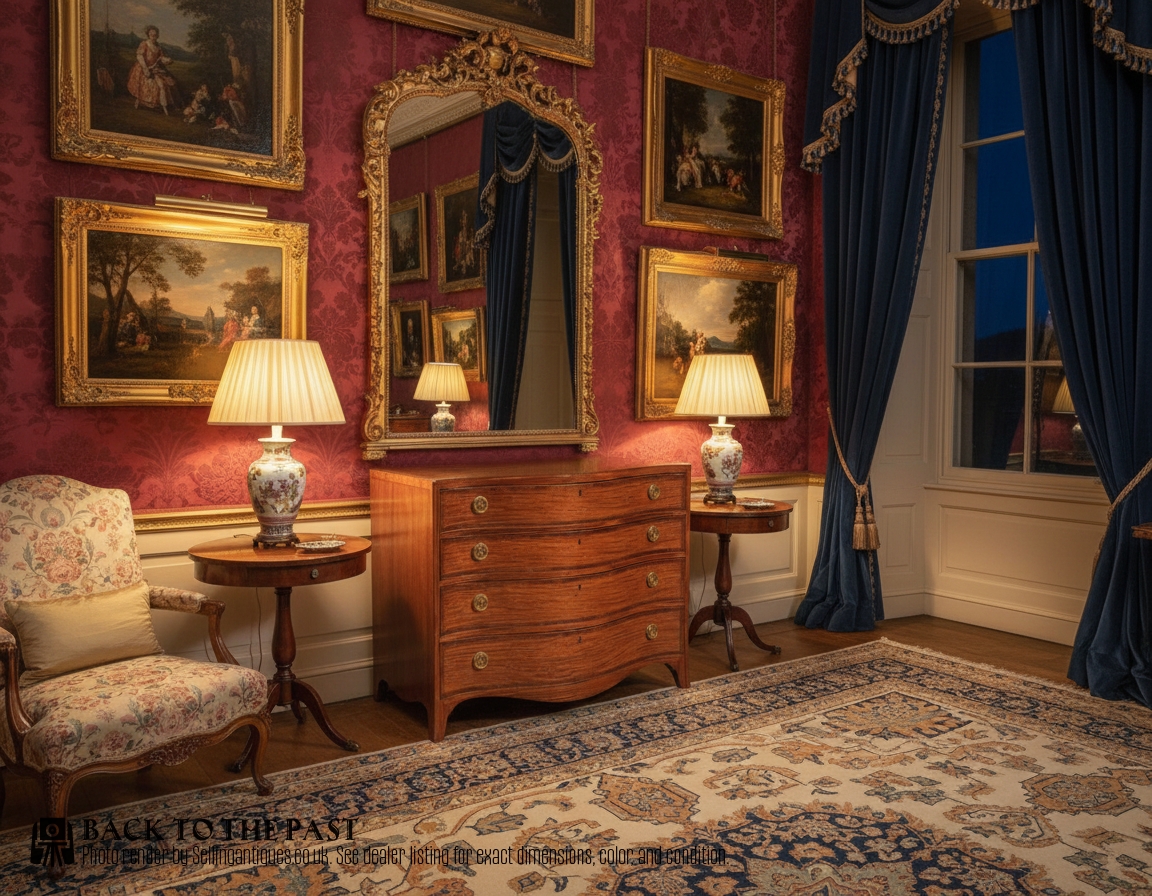
Satinwood Dressing Chest
When you search for a satinwood dressing chest, you are looking at bedroom furniture designed for personal grooming, combining storage drawers with surfaces for mirrors and toilet articles. The pieces gathered here range across the eighteenth, nineteenth, and twentieth centuries, spanning periods from George III to Art Deco.
You will most commonly encounter Edwardian and Victorian examples on this page, alongside earlier serpentine forms and later modern interpretations. These items often appear as dressing tables, kneehole desks, or combined chests of drawers, sometimes accompanied by decorative boxes or larger bedroom suites.
Materials and construction methods
Cabinet makers utilised dense exotic timbers, applying satinwood veneers over secondary woods such as mahogany or pine to achieve striking figured surfaces. Cross banding in contrasting timbers like maple often framed the drawer fronts and top boards.
Structural elements incorporated brass handles, locks, and adjustable mirror glass set within pivoted frames. Inlaid details and stencilled decoration frequently enhanced the primary wood surfaces, reflecting the prevailing styles from Aesthetic movement to Art Nouveau.
Some dressing chests include hidden trinket drawers behind the main mirror frame, designed for storing small valuables out of sight.
Judging the work
Quality rests upon the selection of the timber veneer and the precision of the cabinet work, particularly around inlaid banding and drawer dovetails. Superior examples display carefully matched grain patterns across the front drawers rather than haphazard timber placement.
The integration of the mirror supports, the weight of the brass hardware, and the stability of the carcase separate standard utilitarian pieces from exceptional workshop production. Retained maker signatures or attributions further distinguish the finer pieces.
Gillows·John Taylor of Edinburgh·Holland and Son
The Satinwood Dressing Chest Glossary
- Satinwood
- A lustrous hardwood native to tropical regions, prized for its golden colour and reflective, chatoyant grain. It was frequently used as a veneer on high-status cabinet work.
- Cross banding
- A decorative border technique where thin strips of veneer are laid so the grain runs perpendicular to the main panel. This frames the drawer fronts and top surfaces.
- Serpentine
- A furniture shape featuring a gentle, undulating double curve along the front edge, typically seen on eighteenth-century pieces. It requires high skill to shape wood and veneer to this contour.
- Kneehole
- A desk or dressing table configuration featuring a central recess for the sitter's legs, flanked by pedestals of small drawers. This layout became popular during the eighteenth and nineteenth centuries.
- Aesthetic movement
- A late nineteenth-century design style that emphasised visual beauty and artistic reform over standard historical revivalism. Pieces from this movement often display refined simplicity and subtle inlay.
Satinwood Dressing Chest: Frequently Asked Questions
How do I date a dressing chest?
Dating relies on observing construction methods, timber choices, and stylistic details such as brass hardware and inlay. Eighteenth-century pieces display different proportions and joinery compared to Victorian or Edwardian examples.
Pinned dovetails, secondary wood types, and specific design movements like Art Deco or the Aesthetic movement provide clear chronological markers.
How should I care for satinwood?
Protect satinwood furniture by keeping it away from direct sunlight and maintaining steady room humidity. Sunlight can fade the golden tones of the timber and dry out the veneer.
Dust gently with a dry, soft cloth and avoid commercial silicone polishes that can build up on the antique polished surface.
Where were these pieces used?
These dressing chests were designed principally for principal bedrooms and dressing rooms in substantial homes. They provided a private space for morning routines and stored personal garments close at hand.
Today, they function equally well in modern bedrooms as dressing tables or as decorative drawer units in living spaces.