
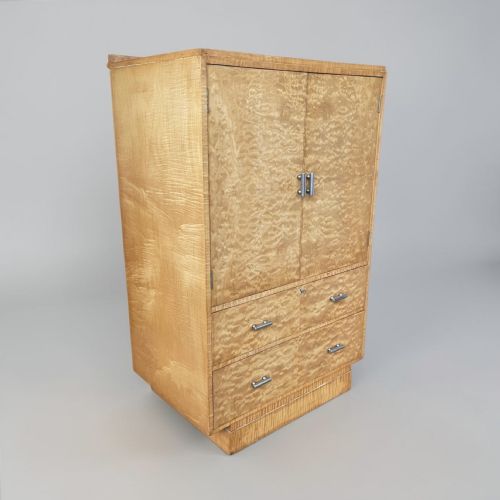
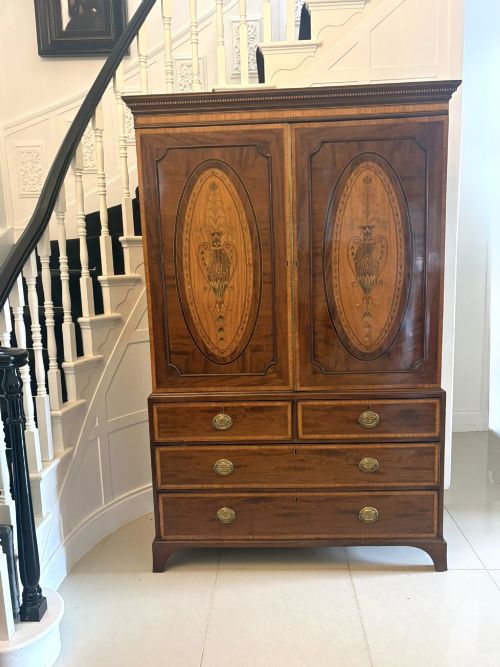
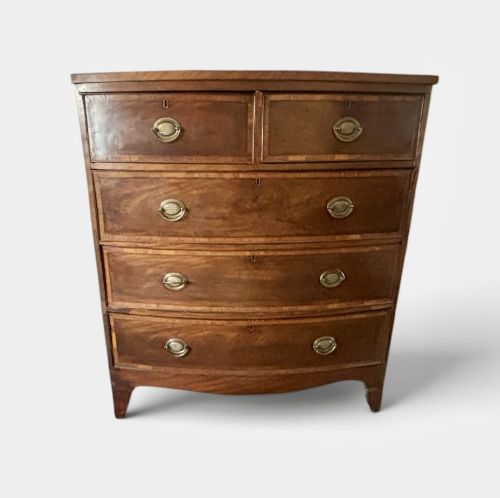
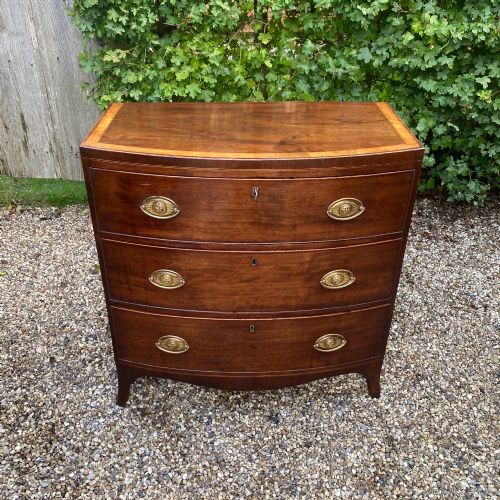


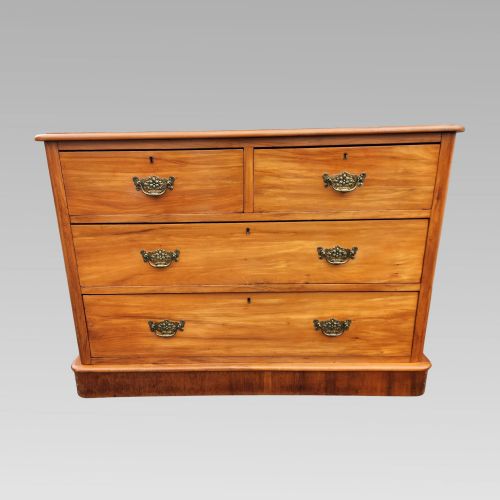
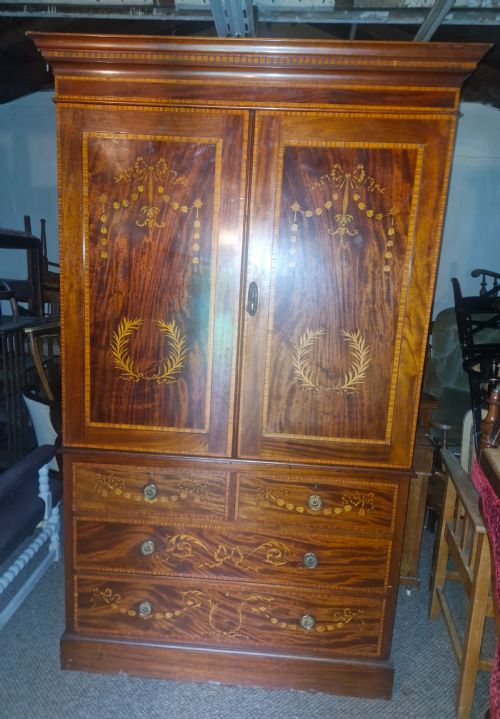
Satinwood Bedroom Chest
A satinwood bedroom chest brings a pale, luminous warmth to a sleeping chamber, offering refined storage through figured timbers and delicate line inlay.
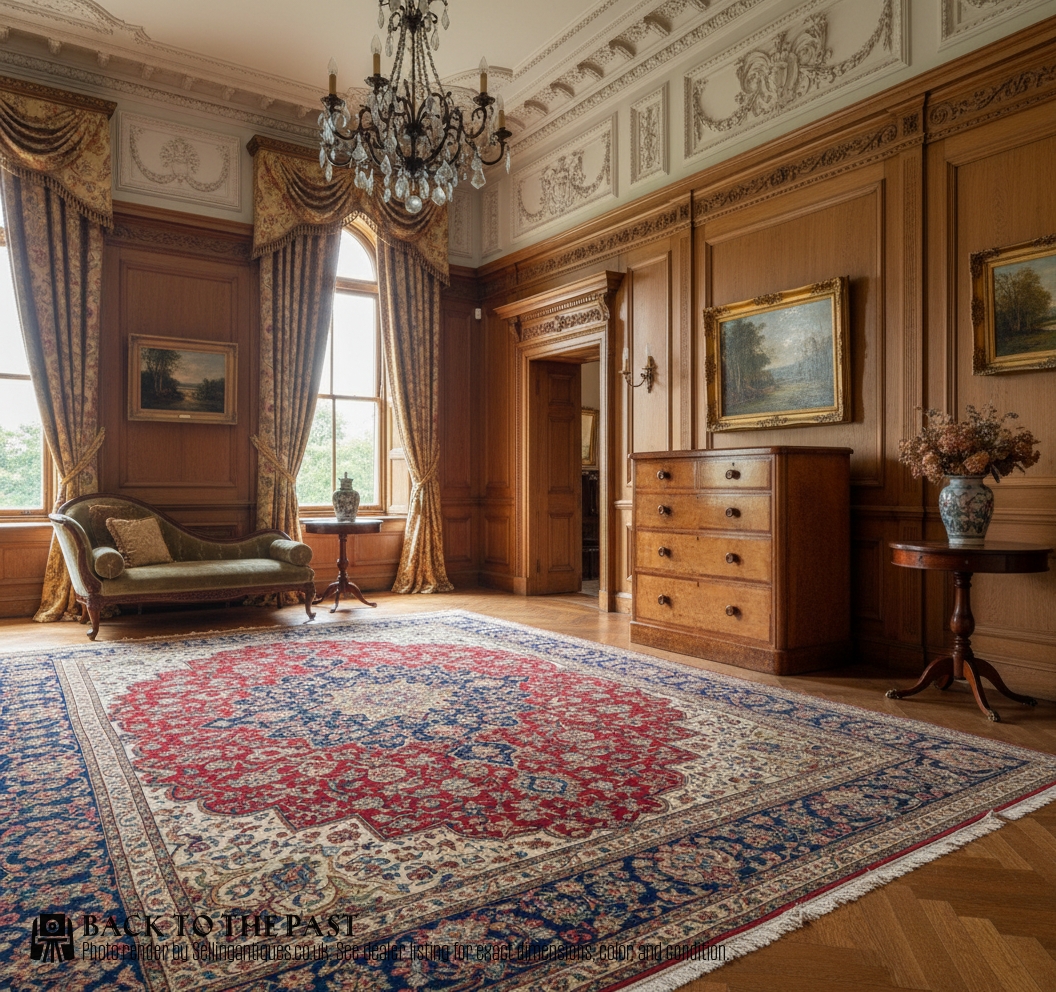
Satinwood Bedroom Chest
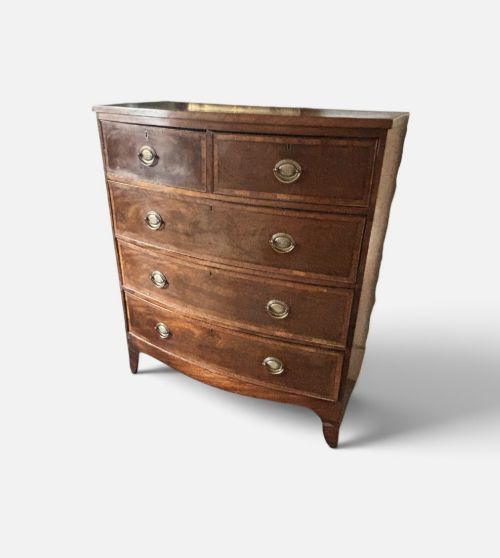
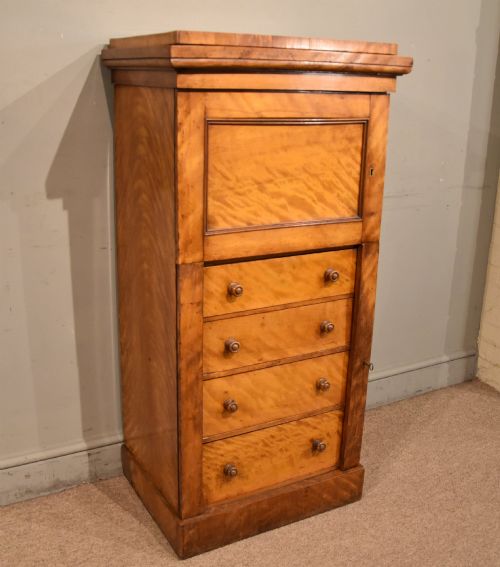
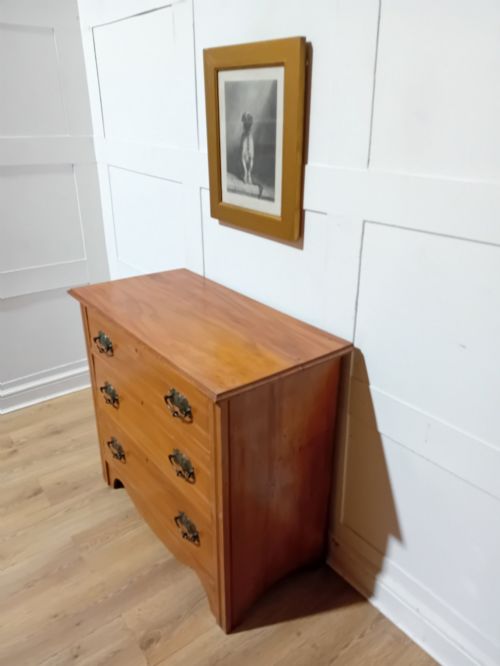
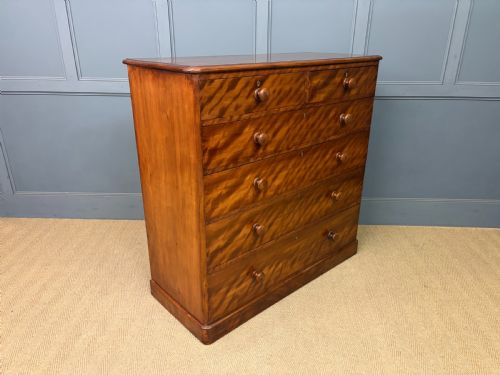
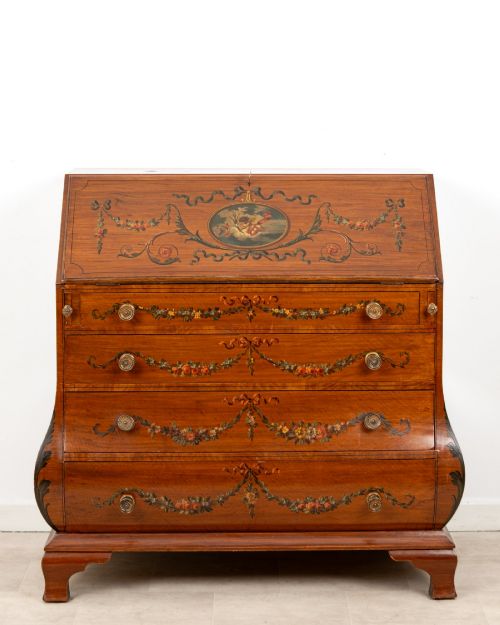
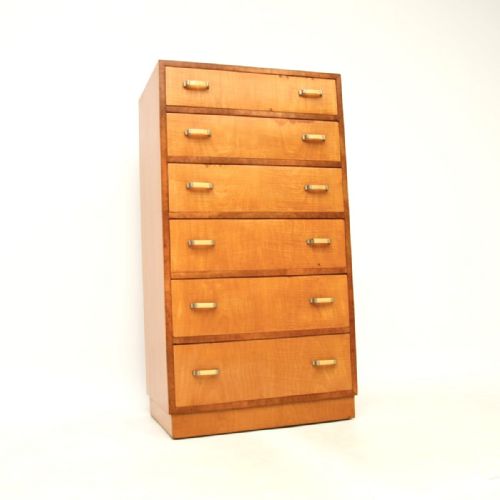
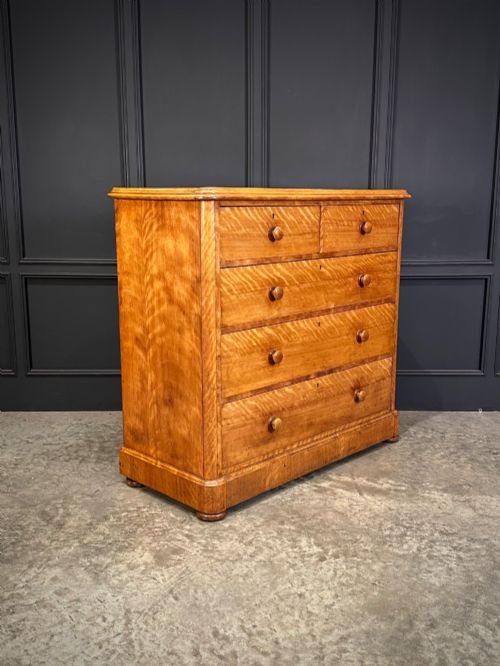
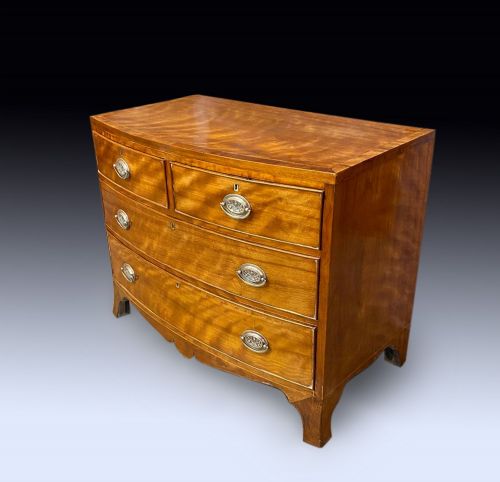
When searching for a satinwood bedroom chest, a buyer encounters forms ranging from compact bow-fronted chests and tallboys to grand Georgian linen presses and Edwardian dressing tables. The pieces span periods from the eighteenth century through the Victorian and Edwardian eras into the Art Deco epoch of nineteen thirty.
Edwardian and Victorian examples predominate on this page, often combining mahogany or walnut carcass construction with satinwood drawer fronts, crossbanding, and stringing. Solid satinwood trunks and serpentine gentleman's dressing chests also appear alongside tall pedestal cabinets and bedside chests.
Originating largely from British workshops and heritage firms, these items served upper-class and middle-class chambers alike. Their survival in varied regional styles demonstrates the enduring popularity of pale exotic timbers in domestic interior design.
What varies in quality
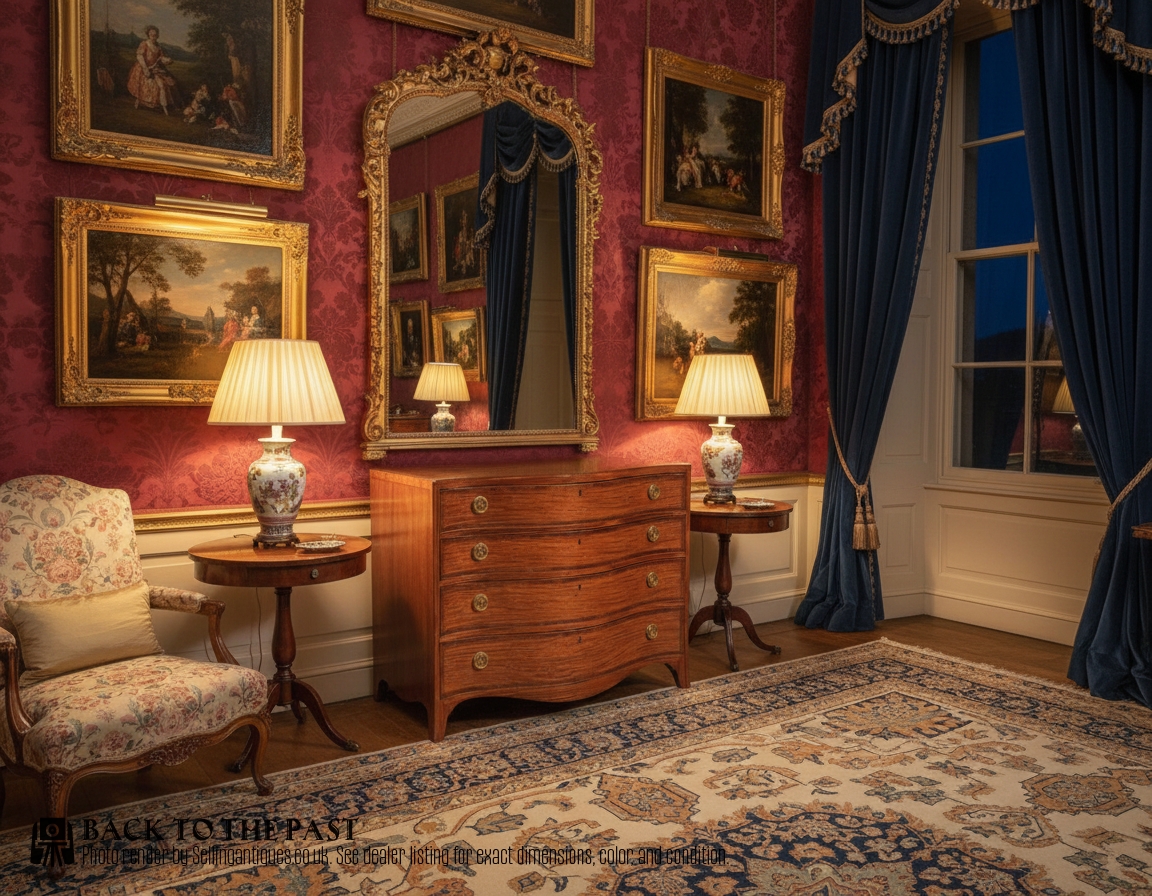
The degree of hand-painted decoration, the precision of marquetry inlay, and the complexity of the cabinet silhouette distinguish standard production from exceptional examples. Serpentine fronts and bow-fronted designs require advanced joinery skill compared to plain rectilinear carcasses.
The choice of timber grain, the retention of original brass hardware, and the crispness of crossbanding determine the overall distinction of a piece. Well-preserved polish and intact veneer work preserve the intended visual impact of the timber.
Several chests feature original handles that have clicked open and shut for over a century of bedroom routines.
Harris Lebus of Tottenham·Heal & Son·Heal's·Druce & Co.
The Satinwood Bedroom Chest Glossary
- Satinwood
- A durable, yellowish-gold exotic hardwood prized for its lustrous, reflective grain and smooth texture. Cabinet makers frequently used it as a veneer or for stringing on formal furniture.
- Crossbanding
- A decorative border technique where veneer strips are laid perpendicular to the grain of the central panel. This frames the drawer front or tabletop with contrasting directional lines.
- Bow front
- A convexly curved cabinet front that projects outward in a smooth arc. This shape gained popularity during the Georgian and Regency periods.
- Serpentine
- A front profile featuring a double-convex curve flanked by concave ends, resembling the undulating shape of a snake. It demands high proficiency from the woodworker.
- Linen press
- A tall storage cabinet featuring upper sliding trays for linens above a lower chest of drawer compartments. They were essential fixtures in grand nineteenth-century bedrooms.
Satinwood Bedroom Chest: Frequently Asked Questions
How do I date a satinwood chest?
Examining construction details, handle types, and secondary timbers helps determine the period of origin. Georgian pieces show hand-cut dovetails and subtle cockbeading, while Edwardian versions often display machine-made precision and painted floral motifs.
Cabinet proportions and styling clues provide further context. Regency chests favour bold mahogany veneers with satinwood banding, whereas Art Deco examples introduce geometric symmetry paired with walnut.
Where should I place a satinwood chest?
These pieces suit bedrooms, dressing rooms, and hallways where their pale timber brightens the interior. Keeping them away from direct sunlight preserves the golden tone of the satinwood veneer.
Allowing stable room humidity prevents timber movement and protects delicate stringing and inlay work. Positioning them against interior walls maintains the structural integrity of the carcase.
How do I clean satinwood furniture?
Dusting regularly with a soft, dry cloth prevents particulate accumulation on the polished surfaces. Avoid silicone-based sprays, opting instead for traditional beeswax applied sparingly to nourish the wood.
Gentle cleaning maintains the historic sheen without stripping the original finish. Professional conservation is advisable for any deep cleaning or structural restoration.
What is the difference between solid satinwood and veneered satinwood?
Solid satinwood utilises the timber throughout the structural components of the item. This construction method appears less frequently due to the scarcity and cost of large logs.
Veneered satinwood applies thin sheets of figured timber over a stable secondary wood such as mahogany or pine. This technique prevents warping while displaying decorative grain patterns across wide drawer fronts.