


Antique Gendje Rug
An antique gendje rug brings the geometric clarity and saturated hues of the Caucasus straight to your floor.
Antique Gendje Rug
When you search for an antique gendje rug, you encounter woven pieces originating from the Caucasus region during the late nineteenth and early twentieth centuries. These textiles include formats ranging from square prayer rugs to elongated runners designed for hallways.
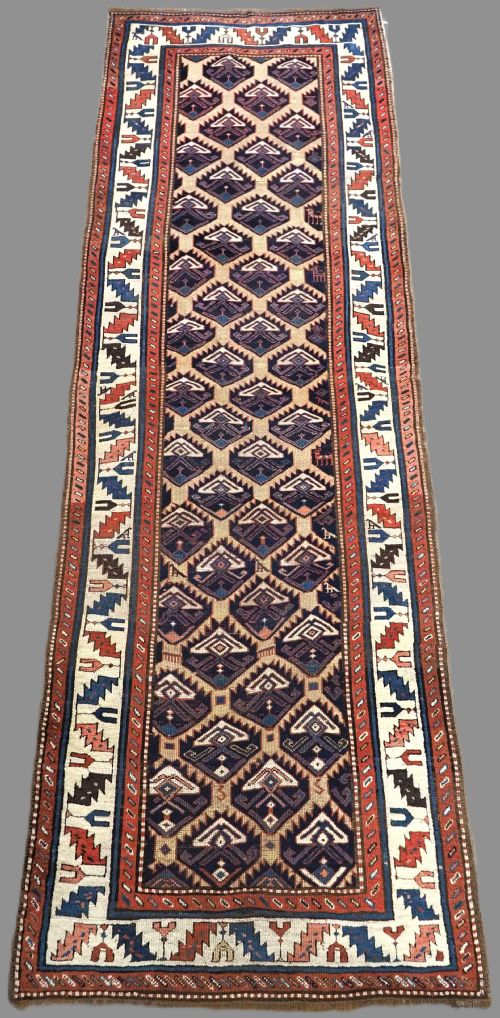
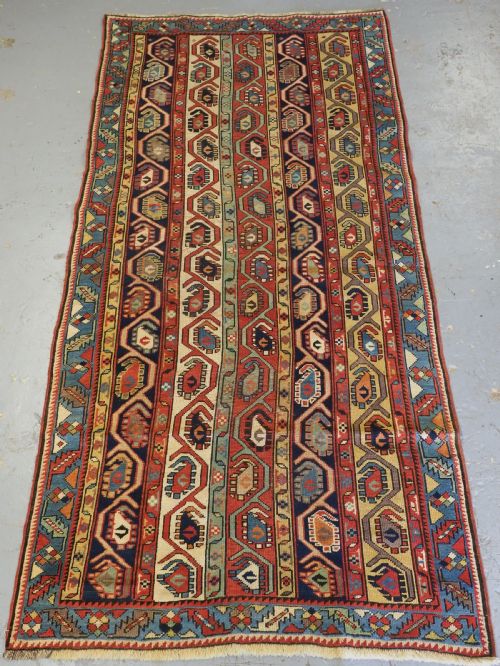
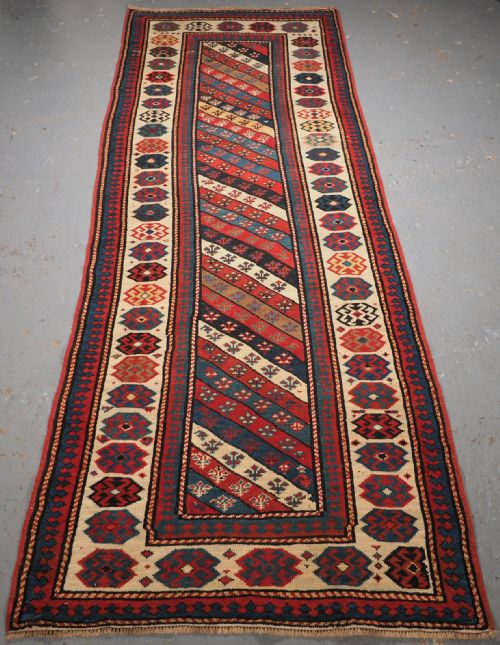
The most common formats on this page are floor runners and prayer rugs carrying distinct geometric layouts. Pieces often display structured repeating patterns like the boteh motif or diagonal stripes across the field.
How they were made
Weavers constructed these textiles using wool and hand-spun wool for the pile and foundation. This organic material provides the dense, durable surface characteristic of the group.
Colour comes from natural dyes applied to the yarn, yielding varied and saturated tones across the fields and borders. The spinning and dyeing methods produce the characteristic handle of Caucasian tribal weaving.
Listings feature items dated between 1880 and 1910, constructed from wool, hand-spun wool, and natural dyes.
What varies in quality
Quality rests upon the crispness of the drawing and the saturation of the natural dyes. Strong contrasts in the colour palette elevate certain examples above standard productions.
The fineness of the weave and the complexity of motifs such as lattice designs or figurative folk art separate standard runners from superior pieces. Preservation of original borders and even wear across the wool surface contribute further distinction.
The Antique Gendje Rug Glossary
- Boteh
- A stylised almond or pear-shaped motif of Persian origin, frequently repeated across Caucasian carpets. It appears widely in diagonal arrangements or structured lattice fields.
- Prayer rug
- A small textile featuring a mihrab or niche design at one end, traditionally used for personal devotion. These pieces often serve as compact wall hangings or focal floor placements.
- Runner
- An elongated narrow carpet format suited for hallways and corridors. They typically display repeating geometric medallions or diagonal stripe patterns.
- Natural dyes
- Colourants derived from plant and mineral sources prior to the widespread introduction of synthetic alternatives. They age to create complex patinas on wool piles.
- Caucasian
- Pertaining to the mountainous region between the Black Sea and the Caspian Sea where distinct tribal weaving traditions developed. The designation groups together stylistic cousins from neighbouring valleys.
Antique Gendje Rug: Frequently Asked Questions
Where were antique gendje rugs made?
These woven pieces originate from the Caucasus region, specifically associated with weaving communities in the eastern and southwestern territories. Artisans in these mountainous areas produced textiles for local use and trade.
The regional style borrows elements from neighbouring traditions while retaining a distinct geometric discipline. Surviving examples reflect the tribal aesthetics of late nineteenth-century Caucasian workshops.
How do I identify a prayer rug?
Prayer formats are recognised by the distinct arch or mihrab shape woven into one end of the field. This architectural motif points the weaver toward Mecca during daily devotions.
Unlike long runners meant for corridors, prayer carpets tend to be compact and square in proportion. Their central fields frequently contain geometric trees, stars, or floral lattices.
What designs appear on runners?
Runners display a variety of repetitive geometric patterns suited to their narrow, elongated proportions. Common motifs include diagonal stripes, colourful boteh repeats, and structured lattice layouts.
Some unusual examples incorporate folk art elements such as horses and people into the narrow format. Borders typically frame these central designs with repeating Caucasian rosette or latch-hook motifs.
How do I care for wool pile?
Vacuum your textile gently without using a rotating beater brush to protect the hand-spun wool fibres. Professional cleaning is recommended when dust accumulates within the dense foundation.
Keep the piece away from direct, harsh sunlight to preserve the saturation of the natural dyes. Rotating the floor covering periodically ensures even wear across high-traffic areas.