


Caucasian Mihrab Prayer Rug
A caucasian mihrab prayer rug brings geometric discipline and rich regional weaving traditions straight into a room.
Caucasian Mihrab Prayer Rug
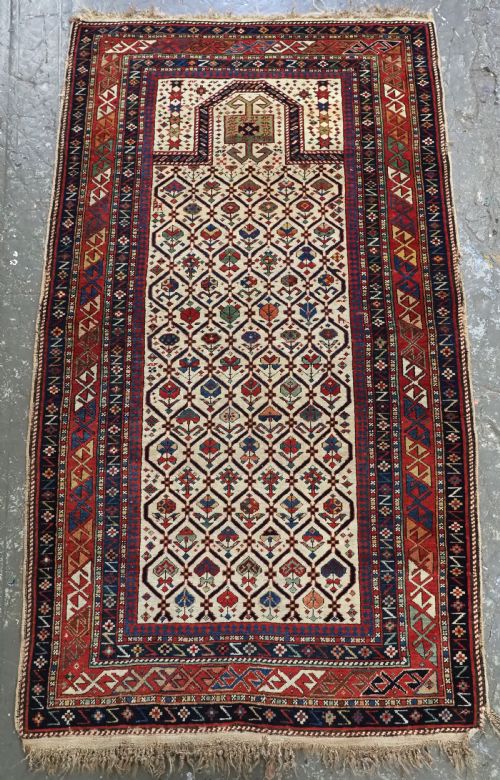
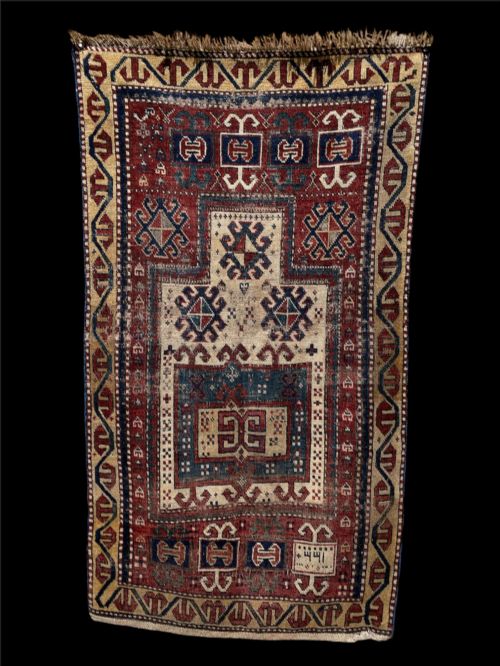
A caucasian mihrab prayer rug centres on the distinct architectural arch motif that defines traditional prayer formats from the Caucasus. These pieces originate from regional weaving centres including Dagestan, Gendje, Shirvan, Kazak and Fachralo.
Most examples date from the Victorian era up to the early twentieth century, spanning decades from eighteen fifty to nineteen twenty. Buyers encounter various specific regional types, such as Marasali or Fachralo rugs, each displaying characteristic village motifs.
The format typically involves a wool pile knotted onto cotton foundations, executed in tribal and regional styles. These rugs serve equally well on floors or displayed on walls as textile art.
What varies in quality
Quality separates by the precision of the geometric drawing and the crispness of the architectural mihrab arch. Finer examples display meticulous knotting density and exceptional clarity within complex floral lattices or small boteh patterns.
Colour saturation also dictates standard, particularly where scarce grounds like yellow or blue elevate the visual impact. The integrity of the original wool pile and the preservation of tribal borders determine the overall standing of an individual piece.
Village weavers sometimes inserted tiny wandering geometric animals into the borders, reminding us that even sacred prayer mats welcomed a touch of daily whimsy.
The Caucasian Mihrab Prayer Rug Glossary
- Mihrab
- The arched architectural niche design at the head of a prayer rug, representing the direction of prayer. This defining motif guides the visual layout of the entire field.
- Boteh
- A stylised almond or pear-shaped motif representing a leaf, bush or flame. Artisans repeat this ancient symbol across the field in various sizes and orientations.
- Kazak
- A bold and colourful style of weaving originating from the southern Caucasus region. These rugs are celebrated for their strong geometric designs and saturated primary colours.
- Shirvan
- A style of weaving from the eastern Caucasus known for refined floral lattices and balanced compositions. These pieces often feature crisp ivory grounds and intricate border guards.
- Dagestan
- A regional weaving attribution from the mountainous Caucasus area famous for detailed geometric work. Dagestan rugs frequently incorporate precise lattice patterns and structured borders.
Caucasian Mihrab Prayer Rug: Frequently Asked Questions
How do I identify a prayer rug?
A prayer rug is easily identified by the distinct mihrab arch at one end, which points the user toward Mecca during daily devotions. The field below the arch often remains uncluttered or filled with repeating motifs like boteh.
These formats were specifically woven for personal prayer rather than general floor decoration. Their compact dimensions reflect this dedicated traditional purpose.
Where were these rugs made?
These textiles were produced by village and tribal weavers across the Caucasus region, spanning modern-day territories between the Black Sea and the Caspian Sea. Specific towns and districts like Gendje, Shirvan, and Dagestan developed distinct local styles.
Weavers passed down these regional patterns through generations, maintaining unique colour palettes and knotting traditions. Each producing area imparted unmistakable characteristics to its output.
Are wool and cotton standard materials?
Traditional village weavers relied primarily on locally sourced wool for the soft pile of the rug. Cotton typically served as the foundation material for the warp and weft threads, providing structural stability.
This combination ensured the rugs remained durable enough for daily floor use while retaining flexibility. The quality of the wool directly influences how the pile ages over time.
How should I care for an antique rug?
Protect antique pile work by placing the rug in areas with low foot traffic and minimal direct sunlight. Regular gentle vacuuming without a beater bar prevents dust accumulation in the wool pile.
Professional cleaning should be undertaken sparingly and exclusively by specialists experienced in antique textiles. Proper underlays help prevent slipping and reduce friction against hard floors.