


19th Century Prayer Mat
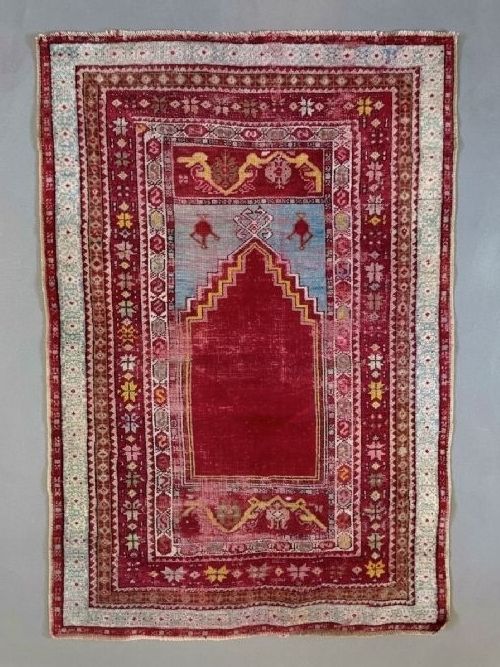
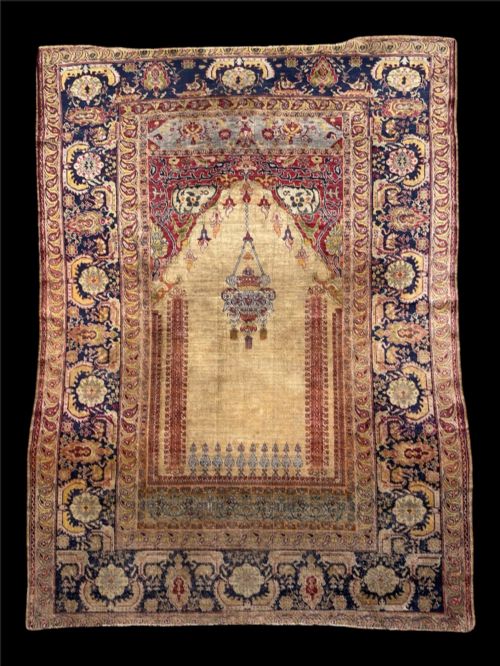
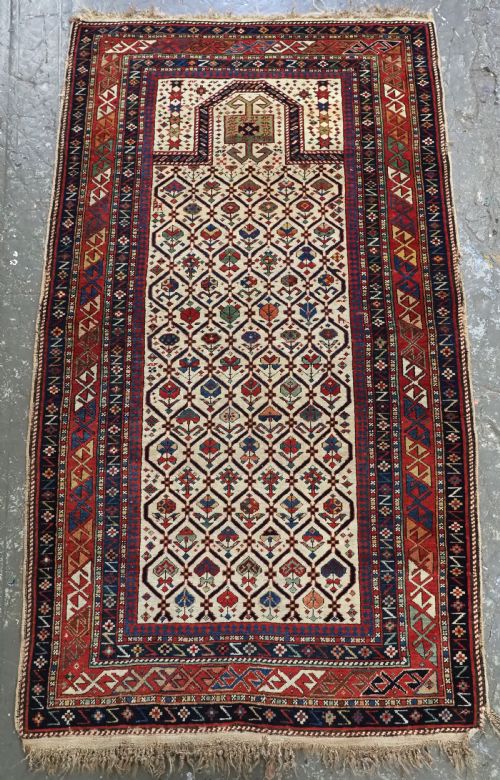
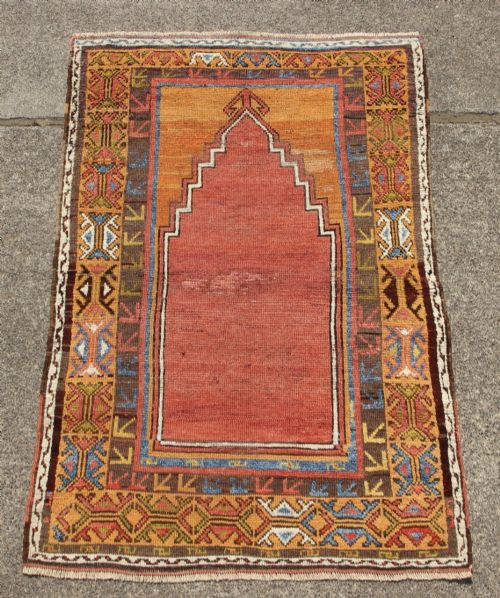
A 19th century prayer mat brings historical textile artistry into a home, offering traditional motifs and woven textures originating from Anatolia, the Caucasus, and Persia.
19th Century Prayer Mat
The format varies from compact village rugs to multi-niche saffs, with formats designed for individual use. Buyers frequently encounter regional variations such as Ghiordes, Milas, Kazak, and Kirman village types spanning the eighteen hundreds.
Materials and construction
Weavers utilised natural dyes derived from plants and minerals, yielding deep blue, camel, yellow, and ivory grounds that patinate with age. The pile typically consists of hand-spun wool, occasionally combined with cotton foundations or silk highlights in urban workshops.
Nomadic and village weavers employed dense knotting techniques on vertical or horizontal looms, incorporating camel hair in specific tribal formats. The structural integrity relies on tightly packed wool or cotton warps and wefts that secure the pile.
19th Century Prayer Mat Retail Price Guide 2026
Typical asking prices for 19th century prayer mat among the pieces listed under this phrase on Sellingantiques today, from the lower quarter to the upper quarter. They describe what is for sale here now, not the wider market.
Some weavers cleverly hid small weaving errors or protective amulets within the dense pile to ward off the evil eye.
Assessing quality
Quality rests upon the precision of the knotting, the saturation and complexity of the natural dye palette, and the crispness of the geometric or floral drawing. Superior examples maintain structural integrity across the foundation while displaying balanced proportions within the mihrab.
The rarity of the ground colour and the fidelity of traditional village designs further distinguish finer weaving. Variations in wool quality and the fineness of the spin directly influence the tactile handle and resilience of the pile.
The 19th Century Prayer Mat Glossary
- Mihrab
- The arched niche depicted on a prayer mat, representing the direction of prayer.
- Saf
- A multi-niche prayer rug designed to accommodate multiple worshippers in a row.
- Millefleurs
- A dense background pattern composed of countless tiny flowers and floral sprays.
- Warp
- The vertical threads stretched lengthwise on the loom that form the foundational structure.
- Weft
- The horizontal threads passed through the warps to bind the knots and secure the weave.
19th Century Prayer Mat: Frequently Asked Questions
How were these mats used?
These textiles served as portable spaces for individual prayer, defining a clean area for daily devotions. They were often rolled up between prayer times and transported or stored.
In domestic settings, they functioned as personal devotional objects rather than general floor coverings, preserving their pile from heavy foot traffic.
Where did these rugs originate?
Originating across the Near East and Central Asia, production centred in regions such as Anatolia, the Caucasus, and Baluchistan. Each area developed distinct wool qualities and palette preferences.
Village weavers and nomadic tribes created regional designs that reflected their specific cultural heritage and local dyeing traditions.
How do I care for a textile of this age?
Protect the piece from direct sunlight to prevent natural dye fading, and vacuum gently without using a rotating brush roll. Professional textile cleaning is recommended for deep maintenance.
Using a quality underlay prevents slipping and cushions the historic foundation against hard flooring.