


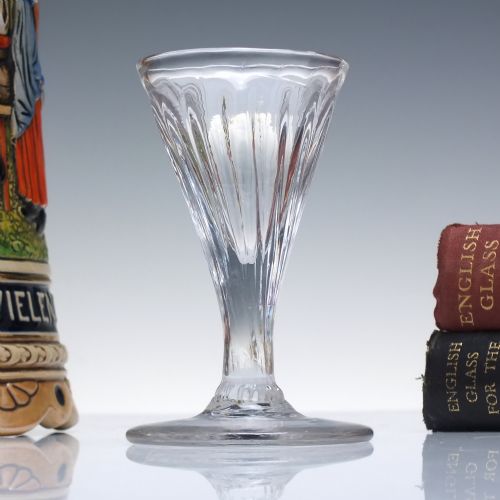


Antique Firing Glass
An antique firing glass is a sturdy, heavy-footed drinking vessel designed to bang on a table like a hammer, and you want one for its resonant history.
Antique Firing Glass
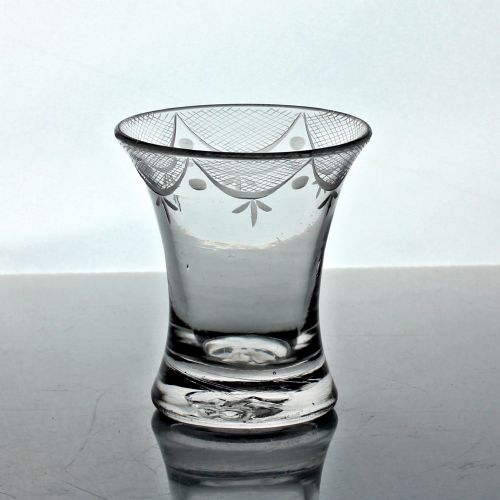
When you search for an antique firing glass, you encounter small, robust drinking vessels from the eighteenth century. These pieces take their name from the sharp crack they made when slammed onto a wooden table to mimic musketry volleys at toasts.
You are most likely to meet examples featuring thick, heavy feet designed to absorb this percussion without shattering. The forms range from plain stem variants to those with opaque twist stems and engraved bowls.
How they were made
These items were shaped from lead glass using traditional glassblowing and forming methods. Makers created the distinctive heavy base by gathering extra metal at the bottom to withstand repeated impact.
Decoration on the bowl often involved rib moulding, facet cutting, or delicate diamond-point and wheel engraving. Opaque twists were formed by incorporating threads of white or coloured enamel glass inside the stem.
Owners banged these vessels so hard during enthusiastic toasts that eighteenth-century tavern tables frequently bore circular scars from the impact.
What varies in quality
The distinction between average and exceptional pieces rests in the balance of the metal and the crispness of the engraving. A superior firing glass possesses clear, resonant metal with minimal internal bubble inclusions.
The weight distribution determines the quality of the foot, where a thicker, more even spread provides the necessary heft for the glass's namesake purpose. Finely executed facet cutting or clear opaque twists elevate the piece above plain stem variants.
The Antique Firing Glass Glossary
- Firing glass
- A heavy-footed drinking vessel used in the eighteenth century for toasting by striking the base on a table. The thick foot absorbs the shock.
- Opaque twist
- A stem decoration formed by threads of white or coloured glass twisted inside a clear column. This technique dates predominantly to the mid-eighteenth century.
- Plain stem
- A simple, unadorned cylindrical or tapered glass stem lacking air bubbles or twists. It represents a standard form of eighteenth-century drinking vessels.
- Lead glass
- Glass containing lead oxide, which increases brilliance, weight, and workability. This material is standard for quality British drinking vessels of the period.
Antique Firing Glass: Frequently Asked Questions
What is an antique firing glass?
An antique firing glass is an eighteenth-century drinking vessel characterised by an exceptionally thick, heavy foot.
They were used during toasts where drinkers struck the base against the table, creating a sound resembling gunfire.
Were firing glasses used for wine?
These vessels were primarily utilised for toasts, port, wine, or drams during formal gatherings and club meetings.
Their robust construction was specifically engineered for the physical tradition of banging tables rather than delicate sipping.
Why do they have such thick feet?
The heavy foot acts as a shock absorber to prevent the bowl from shattering when slammed downward.
This structural necessity gives the glass its distinct visual weight and physical balance.