


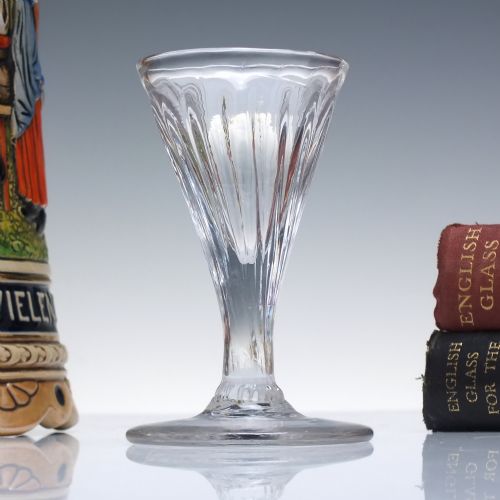


Georgian Dram Glass
A georgian dram glass is a small, heavy drinking vessel meant for strong spirits, offering a tangible link to eighteenth-century tavern and domestic life.
Georgian Dram Glass
When you search for a georgian dram glass, you look at small drinking vessels intended for spirits like whisky, gin, or cordials. These pieces date principally from the eighteenth century into the early nineteenth century.
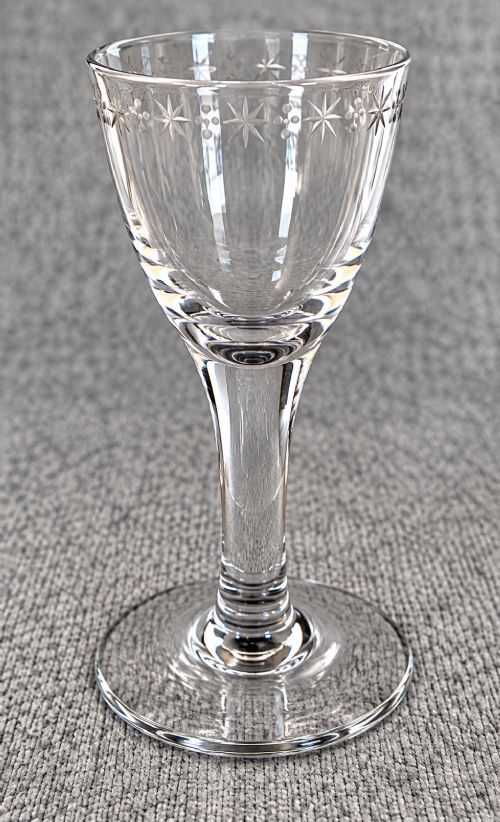
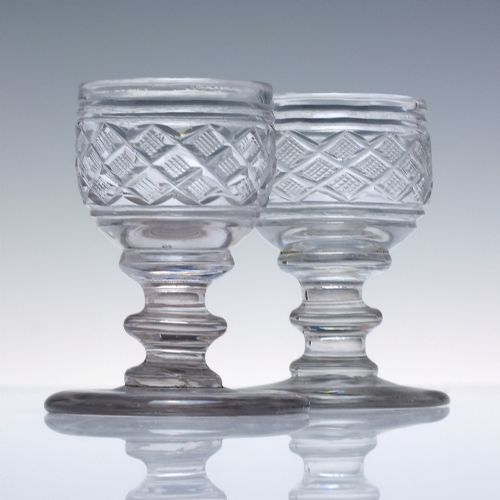
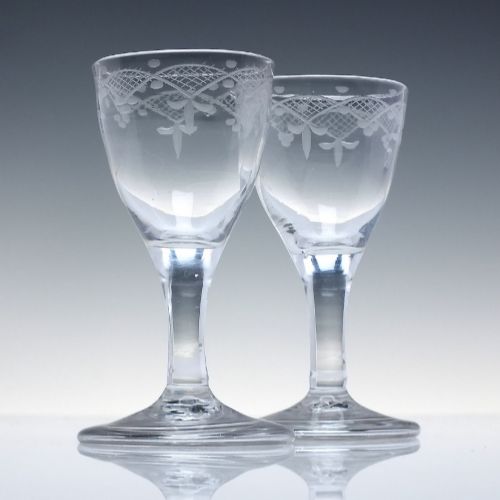
You are most likely to meet plain stem, rib moulded, or facet cut versions on this page. Many examples feature folded feet for added stability and durability during spirited toasts.
The form spans straightforward everyday tavern glassware to more ambitious vessels with air twists, opaque twists, or heavy baluster stems.
How they were made
These vessels rely on lead glass, lead crystal, and clear flint glass shaped by hand blowing. Artisans utilised iron pontils to manipulate the molten metal, leaving identifiable marks on the underside of the bases.
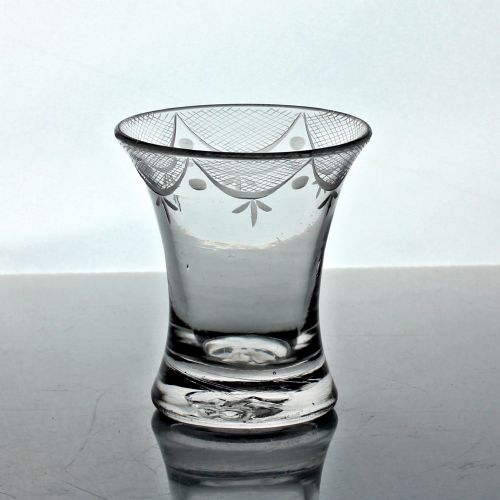
Rib moulding and optical effects required gathering glass into small dip moulds before expanding and twisting the vessel. Cutting and engraving came later, employing wheels to incise facets, swags, and floral motifs onto the cooled surface.
Some deceptive glasses hold barely a thimbleful of spirit beneath their towering, solid lead-glass bases.
What varies in quality
Quality rests in the weight, clarity, and proportion of the metal, alongside the crispness of any cut or engraved decoration. Heavy baluster forms and delicate air twists demonstrate superior glasshouse skill compared to straightforward plain stems.
The integrity of the foot, especially folded rims and domed profiles, influences desirability. Subtle handling marks and tiny bubbles within the hand-blown metal confirm period authenticity rather than detracting from the piece.
The Georgian Dram Glass Glossary
- Folded foot
- A base formed by doubling the edge of the glass back underneath itself to create a thickened, durable rim. This technique protected the vessel from chipping on rough tavern tables.
- Baluster stem
- A thick, swelling stem form reminiscent of architectural balusters, typical of early eighteenth-century drinking vessels. It gives the piece considerable heft in the hand.
- Air twist
- A decorative stem enclosing spiral threads of trapped air created by drawing and twisting canes of hot glass. It produces a luminous interior pattern when held to the light.
- Opaque twist
- A stem containing white or coloured enamel glass rods drawn into fine internal threads. These threads appear straight, spiral, or paired around a central gauze.
- Deceptive glass
- A vessel with an unusually thick solid base that makes the bowl appear to hold much more liquid than it actually contains. These forms suited games and toasts.
- Firing glass
- A heavy-footed drinking vessel designed to be banged on a table rather than set down gently. The stout foot absorbed the impact during toasts.
Georgian Dram Glass: Frequently Asked Questions
What were georgian dram glasses used for?
These small vessels served for drinking neat spirits such as whisky, gin, or cordials in domestic settings and taverns. Their compact capacity matched the potent alcohol strengths of the era.
They also played a central role in formal toasts and club rituals where participants banged the heavy bases onto wooden tables.
How do I date a dram glass?
Dating relies on combining the form of the bowl, the style of the stem, and the construction of the foot. Early examples favour heavy balusters and folded feet, while later decades introduce facet cutting and lighter opaque twists.
Material composition and tool marks provide further clues to align a piece with the eighteenth or early nineteenth century.
Why do some glasses have thick bases?
A thick or deceptive base reduces the internal capacity of the bowl while maintaining a satisfying weight in the hand. This design trick amused drinkers and slowed consumption during prolonged toasts.
It also lowered the centre of gravity, preventing accidental spills on crowded tavern tables.