





Antique Enamel Charger
An antique enamel charger brings heavy metalwork and brilliant coloured glass into a room, offering large-scale decorative presence from the nineteenth century.
Antique Enamel Charger
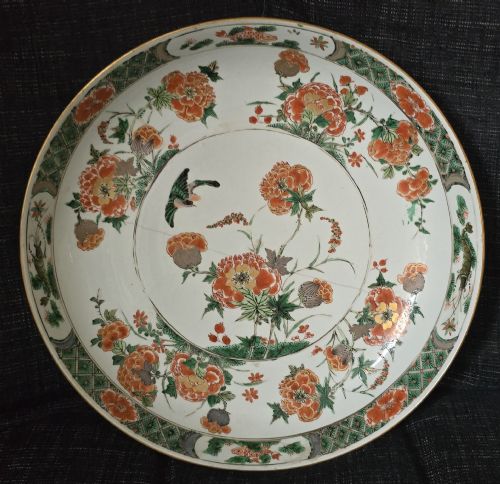
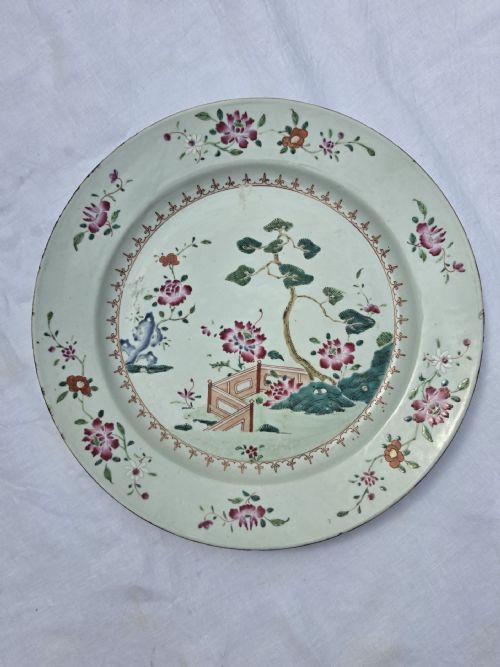
When someone searches for an antique enamel charger, they encounter wide, shallow display vessels meant for walls or heavy tables. The pieces here span the nineteenth century, including specific dates from the 1870s, 1880s, and 1890s, alongside Chinese export wares and Japanese Meiji period examples.
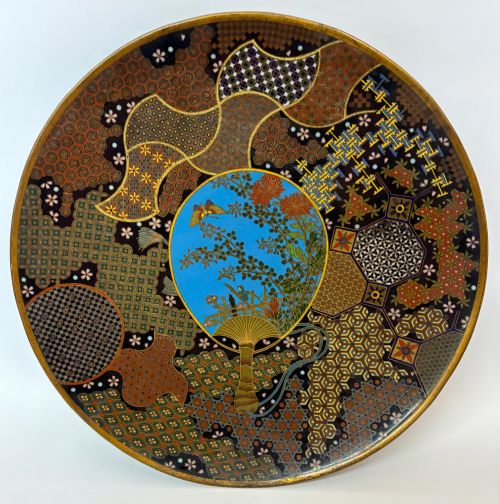
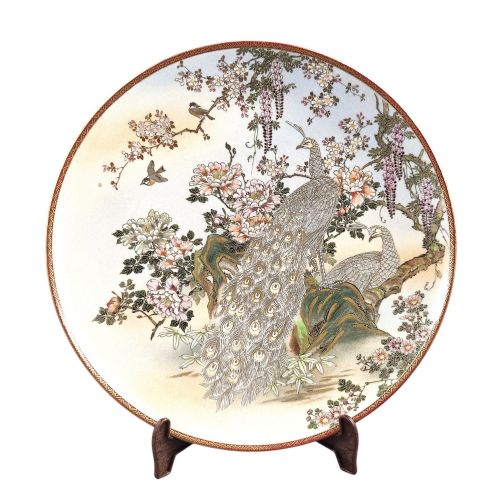
Most entries on this page take the form of Japanese cloisonne chargers or large plates decorated with birds, dragons, and landscapes. Alongside these metal grounds sit porcelain dishes utilising similar decorative depth, including Imari, Kutani, and Satsuma wares.
Originating largely from East Asian traditions such as the Meiji period and Qing dynasty, these large plates served primarily as ornamental centerpieces rather than functional tableware. Their substantial diameters command attention when mounted on stands or displayed upright.
How they were made
Makers formed the structural body of a typical antique enamel charger using hammered copper or brass bases. Onto this metal foundation, artisans soldered thin brass wire to map out intricate cellular designs.
The resulting compartments, or cloisons, were filled with powdered glass pastes and fired in kilns at high temperatures. After cooling, the surface was ground flat and polished to a smooth, uniform finish.
Alternative pieces utilised porcelain bases overlaid with enamel or used specialised techniques like totai shippo, applying cloisonne directly over a ceramic or porcelain core to mimic tree bark textures.
Antique Enamel Charger Retail Price Guide 2026
Typical asking prices for enamel charger among the pieces listed under this phrase on Sellingantiques today, from the lower quarter to the upper quarter. They describe what is for sale here now, not the wider market.
Watch for frogs and shrimp sneaking into the fine wirework alongside traditional dragons and phoenixes.
What varies in quality
The distinction between ordinary production and superior work lies in the discipline of the wirework and the depth of the palette. Finer examples display microscopic cellular geometry that remains completely uniform across a massive surface.
Artistic execution dictates value, separating standard repeating motifs from pieces featuring complex naturalistic scenes of fauna, deities, or historical figures. The inclusion of an artist signature or workshop mark often elevates the standing of a charger.
Surface finishing separates expert firing from hasty production. Superior pieces exhibit a dense, polished glaze free from pitting or heavy cloudiness in the coloured enamels.
The Antique Enamel Charger Glossary
- Cloisonne Enamel
- A metalwork technique where thin wires are soldered to a base to create compartments filled with glass paste. This method defines the majority of the metal plates on this page.
- Charger
- A large decorative plate or dish exceeding normal tableware sizes. These items were designed for display rather than dining.
- Totai Shippo
- Cloisonne enamel applied over a porcelain or ceramic core rather than metal. This unusual method creates textured surfaces resembling tree bark.
- Meiji Period
- The era of Japanese history lasting from 1868 to 1912. Much of the fine metalwork and intricate enamel pieces date from this prolific time.
- Imari
- A style of Japanese export porcelain featuring deep cobalt blue and iron red overglaze. These decorative pieces frequently appear alongside enamel metalwares.
Antique Enamel Charger: Frequently Asked Questions
What is an antique enamel charger?
An antique enamel charger is a wide, decorative display plate made during periods like the nineteenth century, typically featuring fused glass work on metal.
These large display pieces were manufactured in workshops across Asia and exported globally for wealthy interiors.
How were antique enamel chargers displayed?
Historical owners placed these large decorative plates on heavy wooden stands, sideboards, or mounted them directly onto walls.
Because of their substantial weight and delicate glazed surfaces, they functioned purely as ornamental art rather than dining utensils.
How do you date a cloisonne charger?
Dating relies on stylistic clues, mounting methods, wire thickness, and any accompanying reign marks or artist signatures.
Nineteenth-century examples from the Meiji period often exhibit extremely fine brass wiring and complex pictorial themes.
What is the difference between cloisonne and totai shippo?
Standard cloisonne builds its cells upon a solid metal foundation of copper or brass.
Totai shippo applies the same wired enamel technique directly over a ceramic or porcelain body.