



Antique Desk Casket
An antique desk casket provides a secure tabletop vessel for correspondence and precious items, uniting utility with period craftsmanship.
Antique Desk Casket
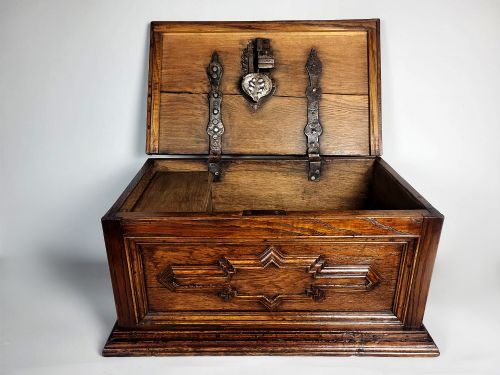
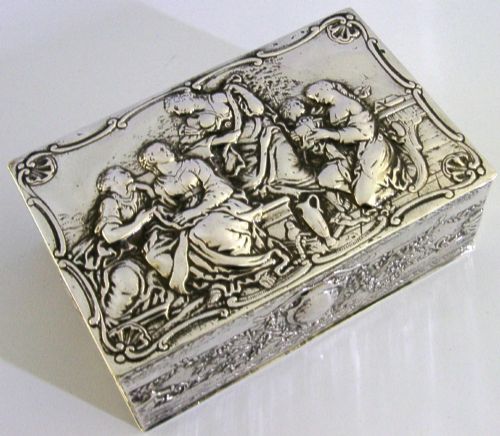
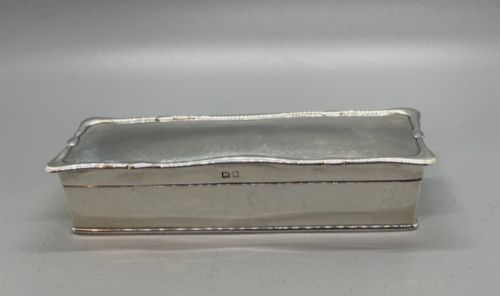
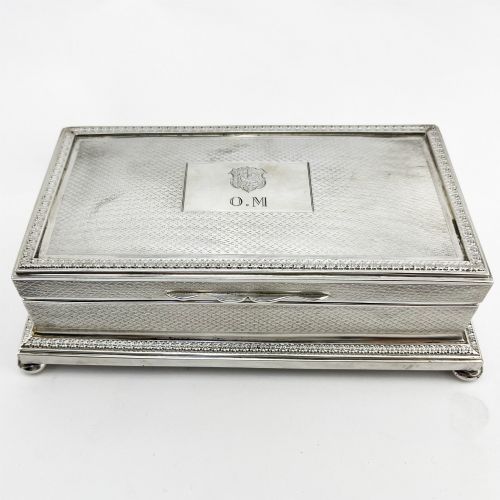
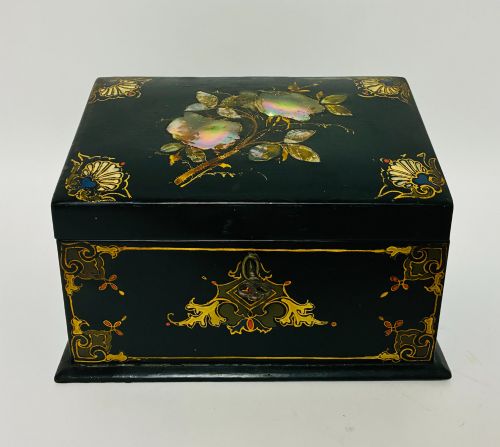
An antique desk casket serves as a functional container for letters, documents, and small desk accessories, appearing in varied forms across centuries of domestic and professional life. When searching for an antique desk casket, a buyer encounters forms such as stationery boxes, document boxes, and correspondence caskets designed for desktop use.
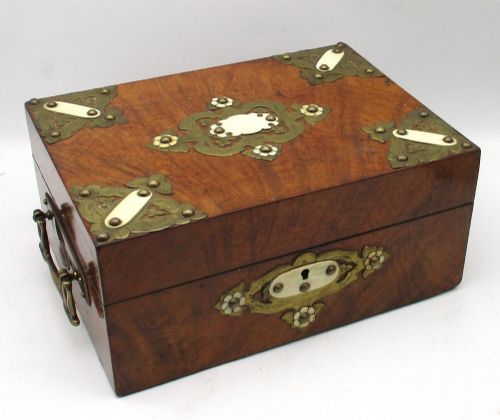
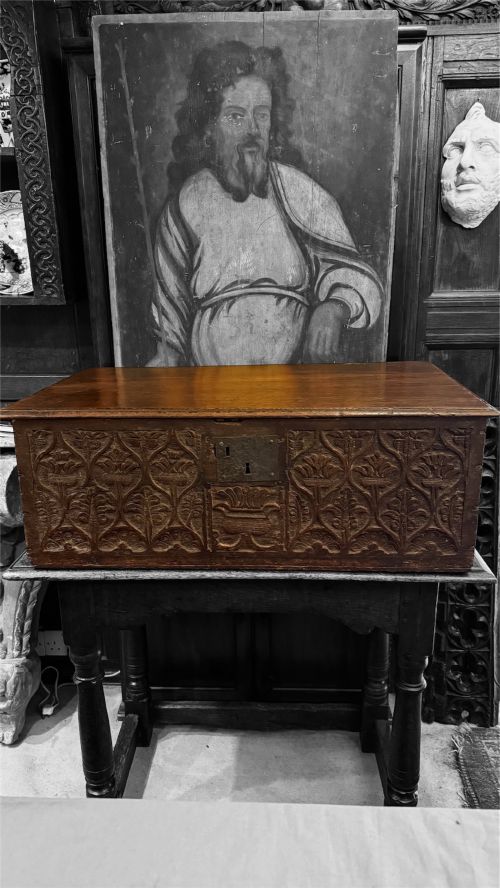
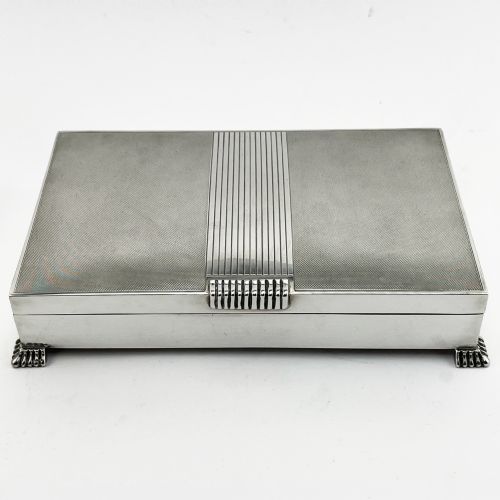
The pieces seen here span periods from the seventeenth century through to the twentieth century, with strong representations from the Victorian and Regency eras. Materials range from dense hardwoods like burr walnut and rosewood to sterling silver, brass, and marble.
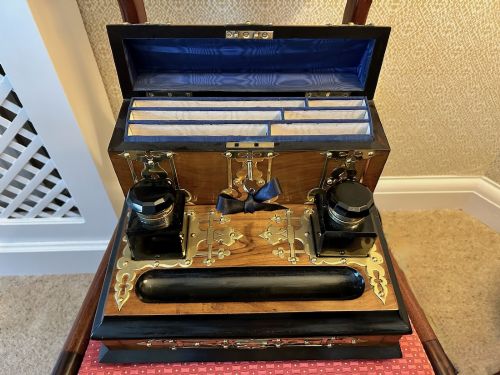
The function of these boxes remains closely tied to writing and administration, encompassing specialised stationery cases with fitted letter slots alongside general caskets for trinkets and valuables. Such items reflect the domestic habits of past eras, serving both decorative and organizational purposes on a study table.
Materials and Construction
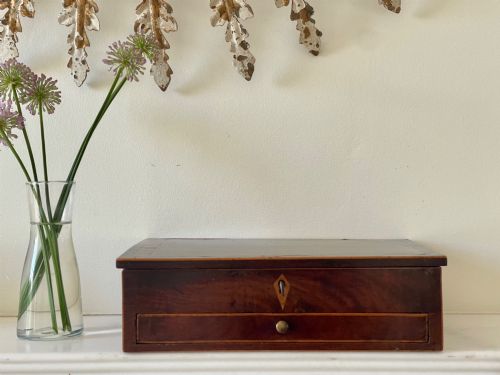
Woodworking forms the backbone of these pieces, utilising foundational timbers like oak and pollard oak overlaid with decorative veneers including burr walnut, flame mahogany, rosewood, and amboyna. Makers employed solid timber for structural integrity while applying figured veneers to display rich grain patterns on the exterior surfaces.
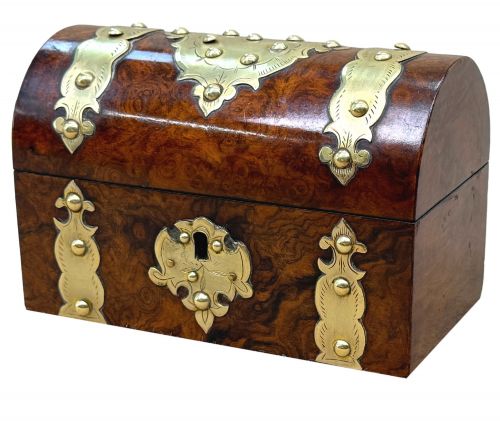
Metal components such as brass straps, corner mounts, and complex steel locks reinforce the wooden bodies, often seen on Regency and Victorian campaign and document boxes. Silverwork and plating appear extensively in later cigarette and trinket boxes, frequently paired with fitted wooden interiors or gilt linings.
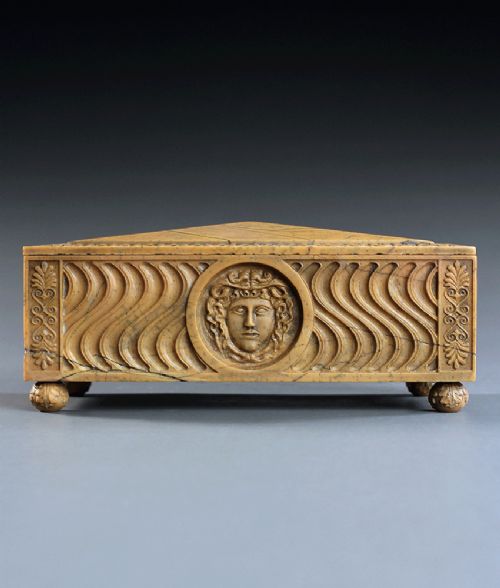
Specialised decorative techniques distinguish specific pieces, including Tunbridge ware micro-mosaics, marquetry inlays, carved bone elements, and repousse copper work executed in the Arts and Crafts tradition. Stonework such as Siena marble also appears in Grand Tour pieces, demonstrating diverse material combinations.
Periods represented across the inventory span from the seventeenth century through the Victorian and Regency eras into the twentieth century.
Assessing Quality and Execution
The distinction between standard and superior pieces rests upon the precision of the cabinetry and the selection of raw materials, such as highly figured burr walnut veneers or dense rosewood. Cabinetmakers who matched grain patterns symmetrically across lids and panels demonstrated a higher level of workshop skill.
Hardware integration plays a vital role in overall execution, separating basic containers from exceptional examples fitted with original, complex steel locks, flush brass handles, and robust hinges. The inclusion of internal fittings, such as original velvet linings, cut glass inkwells, or functional letter dividers, elevates a box's integrity.
Decorative detail further separates the range, from simple polished wood surfaces to intricate marquetry inlays, hand-engraved silver scrolls, and specialised Tunbridge ware geometric patterns. The crispness of execution in carved bone, repousse copper, or cut steel decoration dictates the visual success of the piece.
Mappin & Webb·A & J Zimmerman Ltd
The Antique Desk Casket Glossary
- Burr walnut
- A prized veneer taken from the wart-like growth on a walnut tree, yielding complex, swirling grain patterns. It was heavily utilised by Victorian cabinetmakers for high-status stationery boxes.
- Campaign box
- A portable container constructed for military officers on active service, typically featuring recessed brass handles and reinforced corners. These items prioritize rugged durability alongside refined timber construction.
- Siena marble
- A yellow quarried stone with dark grey or purple veining, popular during the eighteenth and nineteenth centuries. It frequently surfaces in Grand Tour decorative caskets.
- Stationery box
- A specialised desk accessory featuring internal partitions and slots designed to hold writing paper and envelopes upright. Victorian examples often incorporate sloping lids and double doors.
- Tunbridge ware
- A form of British woodwork originating in Kent, characterised by tiny wooden tesserae assembled into intricate pictorial or geometric mosaics. It decorates luxury Victorian boxes.
- Repousse
- A metalworking technique where the artisan hammers the design from the reverse side to form a raised pattern in relief. This method appears on Arts and Crafts copper boxes.
Antique Desk Casket: Frequently Asked Questions
What is the difference between a casket and a box?
In historical terminology, a casket often implies a more decorative, highly finished container intended for valuables or letters, sometimes featuring architectural shapes like sarcophagus forms. A box can encompass simpler, utilitarian storage vessels.
Desk caskets specifically indicate items meant to sit on a writing table to hold correspondence, documents, or personal items, whereas general boxes might serve various household storage needs.
How do I care for antique wood boxes?
Wood boxes require stable room environments away from direct sunlight and rapid temperature fluctuations to prevent veneer cracking or timber shrinkage. Maintaining low humidity protects both the structural wood and the historical glue.
Regular dusting with a soft, dry cloth preserves the polished surface without the need for heavy modern polishes. Waxing should be done sparingly using traditional formulations appropriate for antique finishes.
Were these boxes locked originally?
Many desk caskets and stationery boxes were fitted with functional locks to secure private correspondence, financial papers, or jewellery from servants and guests. Original working keys are occasionally present but remain uncommon.
Locks on these pieces often involve complex brass or steel mechanisms embedded directly into the wooden framework or silver walls, reflecting the importance placed on personal privacy in past centuries.
How do I identify the period of a desk box?
Dating relies upon a combination of construction techniques, timber choices, hardware styles, and decorative motifs characteristic of specific eras. For instance, Regency pieces frequently display geometric brass inlay in rosewood, while Victorian examples often utilise burr walnut with heavy brass mounts.
Maker's marks, hallmarked silver mounts, and internal paper labels further assist in narrowing down the date of manufacture. Comparing the joinery methods inside the box provides additional clues to its age.