

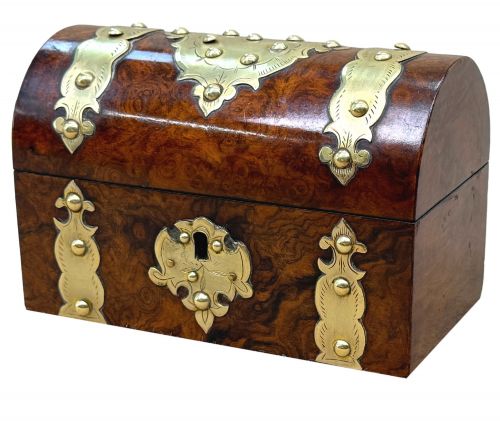


Domed Letter Box
A domed letter box provides a secure and striking desk storage solution, bringing period character and neat organisation to any study.
Domed Letter Box
When you search for a domed letter box, you are looking at nineteenth-century desk accessories designed to hold correspondence and writing equipment. The pieces seen on this page date principally to the Victorian period, around eighteen sixty, alongside later examples from nineteen hundred.
These items take various desk forms, including stationery boxes, inkstands, and boxes and caskets. They are most commonly encountered with curved, domed lids that set them apart from standard flat-topped desk boxes.
How they were made
Cabinet makers constructed these boxes using a solid timber carcase faced with decorative hardwoods such as burr walnut, walnut, pollard oak, and coromandel wood. The distinctive curved lids required precise carpentry to shape the timber smoothly over the domed frame.
Metal mounts, particularly brass straps and hinges, were fitted to reinforce the corners and edges of the wooden body. Some examples also incorporate glass panels or ceramic elements within the desk ensemble.
Domed Letter Box Retail Price Guide 2026
Typical asking prices for domed letter box among the pieces listed under this phrase on Sellingantiques today, from the lower quarter to the upper quarter. They describe what is for sale here now, not the wider market.
Victorian letter boxes often swallowed your post whole, hiding it securely beneath a heavy curved lid until sorting time.
What varies in quality
The choice of decorative veneer dictates much of the visual appeal, with heavily figured burr walnut and richly grained coromandel sitting at the upper end of the range. Plain timbers like oak represent more utilitarian manufacture.
The integration of brass mounts and the execution of the Gothic revival style details separate standard production items from pieces exhibiting finer craftsmanship.
The Domed Letter Box Glossary
- Coromandel
- A dense, heavily figured exotic timber with dark brown and black grain patterns, prized for nineteenth-century luxury boxes. It provides a striking, highly polished surface on better desk accessories.
- Burr Walnut
- Timber taken from the abnormal growth of a walnut tree, showing intricate swirling patterns and knots. Cabinet makers used these veneers on high-status Victorian pieces.
- Gothic Revival
- An architectural and decorative style popular during the nineteenth century, characterised by pointed arches, heavy metalwork, and medieval motifs. Many domed letter boxes adopt this aesthetic.
- Stationery Box
- A desk box fitted with internal compartments specifically sized for writing paper, envelopes, and correspondence. These pieces often feature tiered dividers.
- Inkstand
- A desk stand holding inkwells alongside a stationery or letter box. This combination piece kept all writing necessities together in one compact unit.
Domed Letter Box: Frequently Asked Questions
What is a domed letter box?
A domed letter box is a Victorian desk accessory designed to hold correspondence, featuring a curved or arched lid. These pieces typically sit on a desk or table to keep writing paper organised.
Cabinet makers produced them in various timbers, often adding brass mounts and internal dividers for stationery and envelopes.
How old are these boxes?
The pieces seen here date from the nineteenth century, primarily originating in the Victorian era around eighteen sixty. A small number of later examples extend toward nineteen hundred.
They reflect the period requirement for orderly correspondence before the widespread use of modern envelopes and mass-produced desk furniture.
What materials were used?
Maker materials include decorative hardwoods such as walnut, burr walnut, coromandel wood, pollard oak, and standard oak. Metal components, particularly brass, appear frequently as mounts and hinges.
Some examples also incorporate glass or ceramic elements to complement the woodwork and protect internal surfaces.
Where were they used?
These boxes were housed in Victorian studies, libraries, and home offices to store incoming and outgoing post. They provided a tidy method for keeping writing paper protected from dust and moisture.
Today, they function well in modern interiors as decorative storage containers on desks or side tables.