


Gothic Strapwork Box
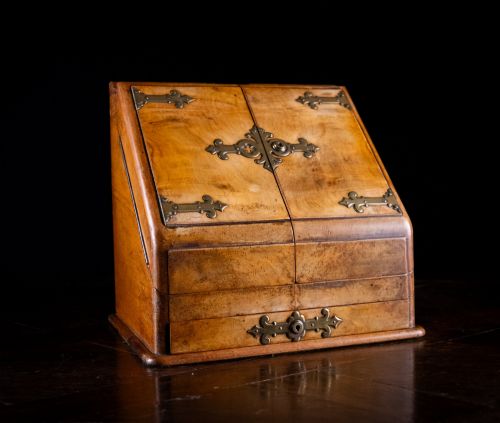
These gothic strapwork box examples are decorative receptacles defined by metal mounts, built to hold stationery, valuables or correspondence.
Gothic Strapwork Box
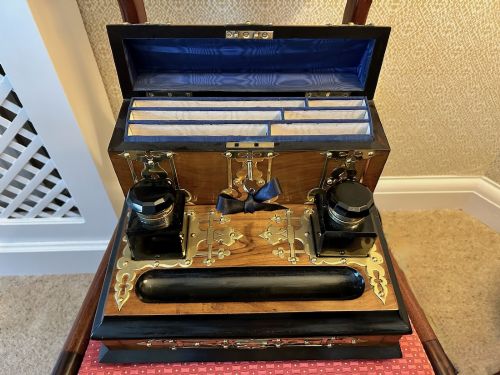
When you search for a gothic strapwork box, you find containers that combine wooden carcases with prominent metal bands, hinges, and corner reinforcements. These pieces take forms such as stationery boxes, tea caddies, desk stands, jewellery boxes, and cigar humidors.
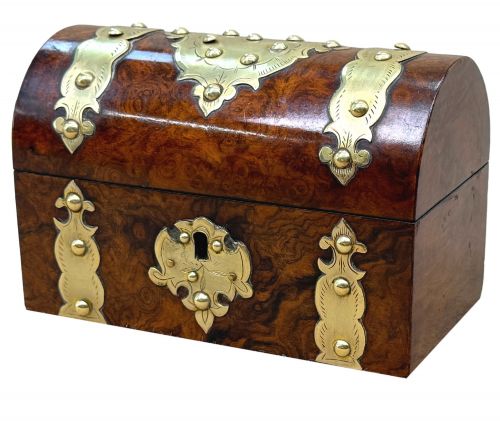
The versions most common on this page date from the nineteenth century, particularly the Victorian era and the Gothic Revival style. They utilise domestic timbers alongside exotic woods, finished with brass or iron mounts across domed or rectangular lids.
How they were made
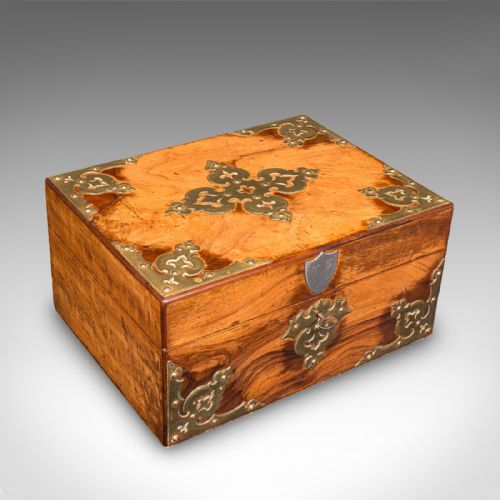
The construction relies on solid or veneered timber carcases built from walnut, burr walnut, coromandel, oak, and pollard oak. These wooden bodies provide stable foundations for the applied decorative elements.
Metal strapwork in brass, gilt brass, or wrought iron is secured across the surfaces using matching screws or rivets. This metalwork reinforces corners and lids while creating geometric strapwork patterns across the timber.
Listings feature nineteenth-century and Victorian pieces alongside sixteenth-century iron-bound coffers, spanning oak, walnut, coromandel, and wrought iron.
What varies in quality
The distinction between standard items and superior examples lies in the selection of timber veneers, such as finely figured burr walnut and coromandel. Heavier gauge metal mounts and integrated locking mechanisms also elevate the grade of a piece.
Interior fittings distinguish better pieces, including fitted silk linings, fitted compartments for writing equipment, and matched glass inkwells. The precision of the joinery around the strapwork mounts indicates the skill of the original maker.
The Gothic Strapwork Box Glossary
- Strapwork
- Flat metal bands or strips applied in geometric patterns across the surface of a box for reinforcement and decoration. This technique originates in earlier medieval and Renaissance metalwork.
- Stationery box
- A desk accessory designed to hold writing paper, envelopes, and correspondence upright in internal partitions. These boxes often feature sloping or domed lids to accommodate folders.
- Coromandel
- A dense, heavy exotic timber featuring dark brown grain patterns with contrasting lighter streaks. It was frequently utilised for high-end nineteenth-century desk accessories.
- Caddy
- A small container originally intended for storing loose tea leaves, often fitted with internal compartments and a secure lid. Surviving examples frequently utilise decorative wood veneers and metal mounts.
- Gothic Revival
- An architectural and decorative style popular during the nineteenth century that revived medieval forms, pointed arches, and heavy metal strapwork. Pieces in this style draw inspiration from earlier centuries.
Gothic Strapwork Box: Frequently Asked Questions
What is a gothic strapwork box used for?
These boxes function as desktop storage for correspondence, writing paper, and small valuables. Nineteenth-century versions served specific purposes like holding cigars, tea, or sewing equipment.
Today, they suit modern desks and living spaces as secure containers for everyday items or as decorative objects on side tables.
How do I identify a Victorian box?
Victorian examples display characteristic nineteenth-century timber choices like burr walnut and coromandel paired with Gothic Revival brass mounts. They often feature domed lids and fitted wooden interiors.
Construction methods, lock mechanisms, and internal silk or paper linings also point toward nineteenth-century manufacturing techniques.
Are these boxes made of solid wood?
Many examples utilise solid oak or walnut carcases, while finer decorative pieces apply burr walnut or coromandel veneers over a stable secondary timber. This veneering technique highlights decorative grain patterns.
Metal strapwork and mounts are then secured directly through these wooden surfaces to provide structural reinforcement.
What maintenance do these boxes need?
These pieces require standard care for antique wooden furniture, keeping them away from direct sunlight and extreme temperature shifts. Occasional gentle dusting preserves the timber finish.
Metal strapwork benefits from light cleaning without harsh chemical polishes to maintain the aged surface character of the brass or iron.