


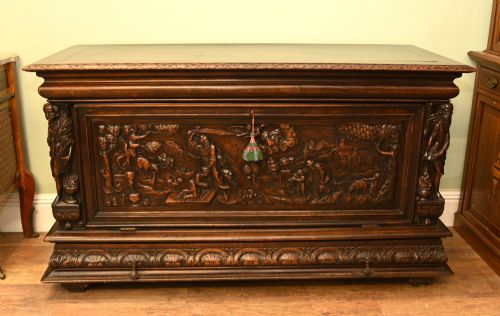
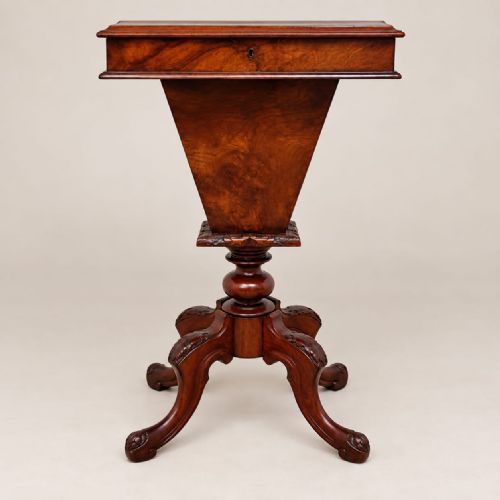
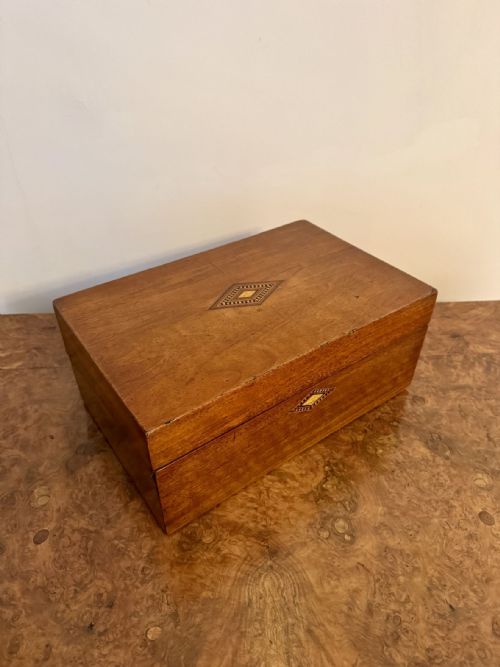
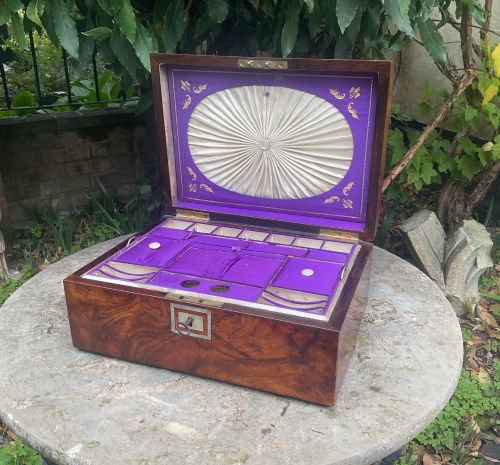

19th Century Walnut Box
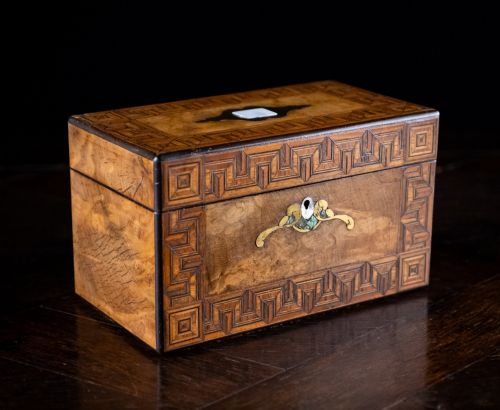
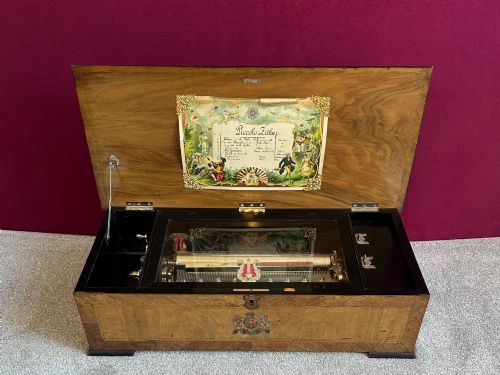
A 19th century walnut box brings warmth and rich grain to a desk, holding letters, jewellery or writing tools with period craftsmanship.
19th Century Walnut Box
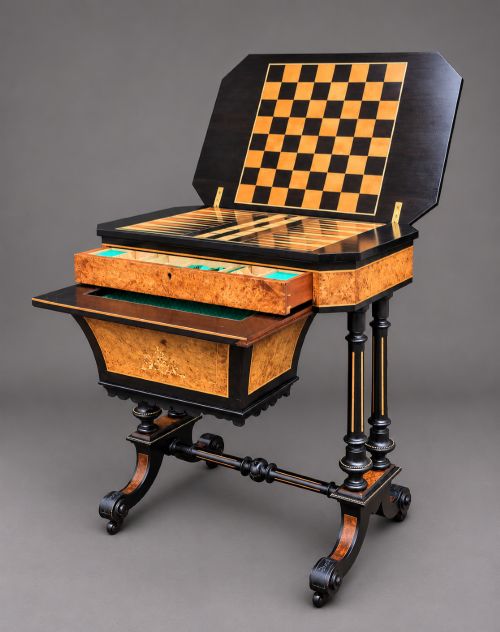
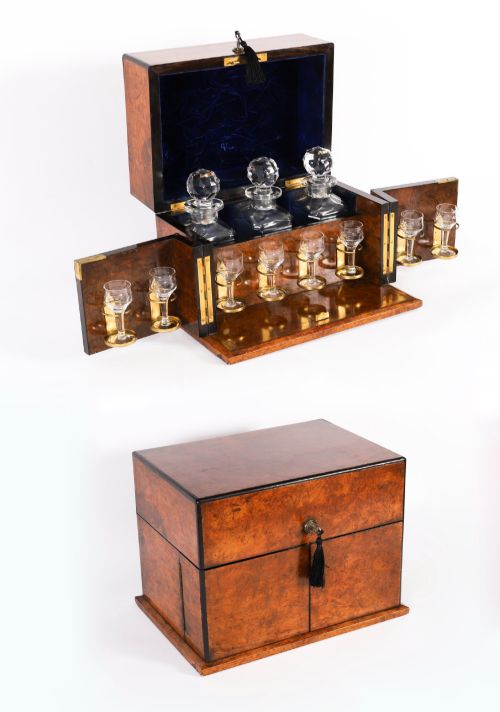
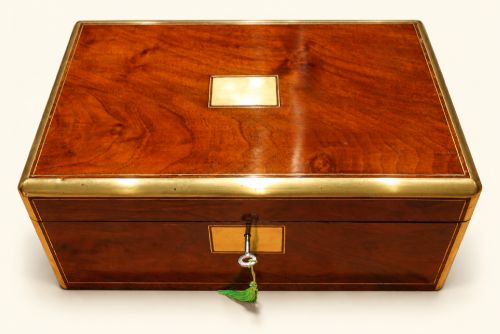
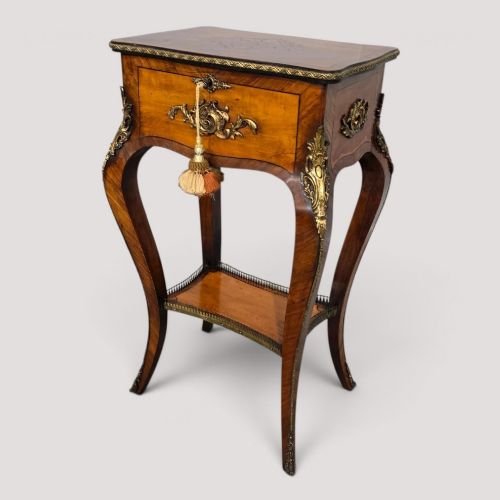
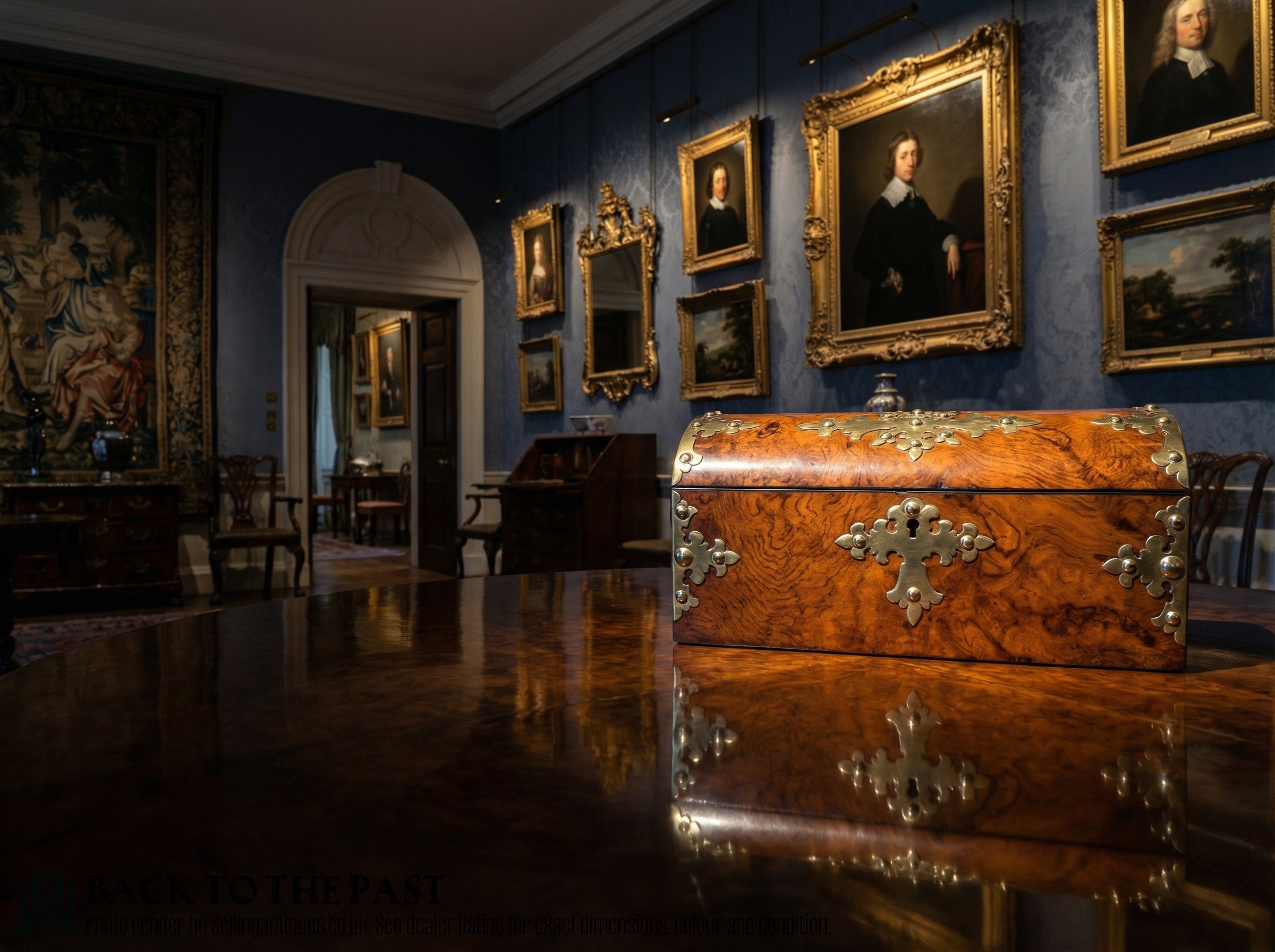
A 19th century walnut box encompasses a diverse group of personal containers designed for writing, sewing, letter storage, and safekeeping valuables. The selection commonly includes stationery cabinets, tea caddies, writing slopes, and jewellery caskets originating from Victorian and Georgian periods.
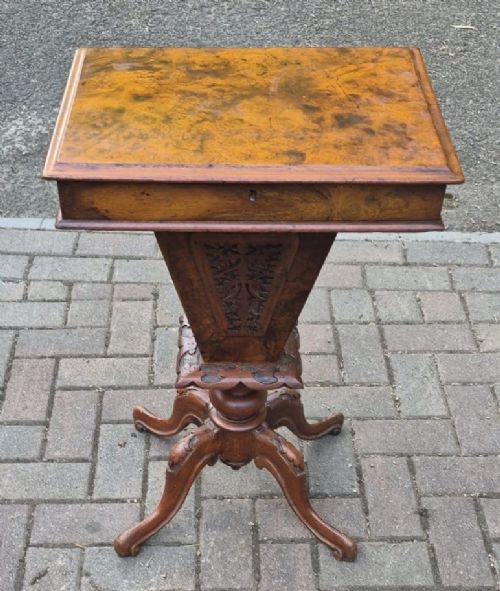
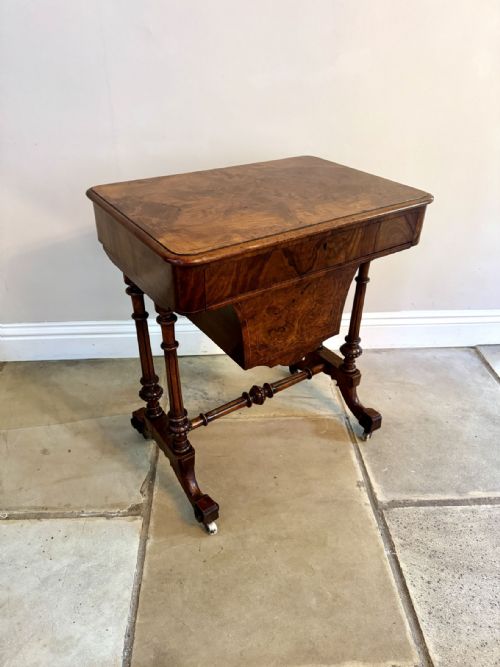
Makers utilised both plain and highly figured timber, applying brass mounts, bone inlay, and Tunbridge ware decoration to domestic accessories. These pieces range from small table-top caskets to larger freestanding work tables and cabinets housing fitted velvet interiors.
Materials and construction methods
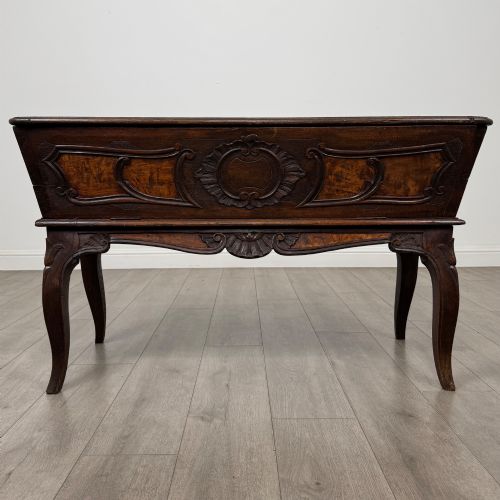
Cabinetmakers constructed carcass frames in solid walnut or pine veneered with burr walnut and figured sections to create striking swirling patterns across lids and panels. Boxwood, mother-of-pearl, and brass stringing often formed geometric inlay framing the edges of the timber.
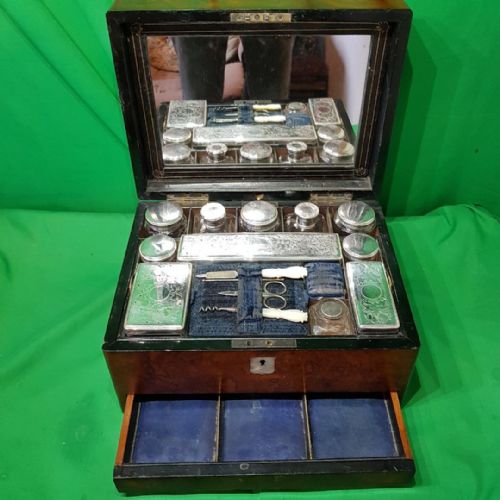
Interiors typically combined cedar or mahogany secondary woods with hand-cut dovetail joints on drawers, alongside velvet, silk, or leather linings fitted for specific desk accessories.
19th Century Walnut Box Retail Price Guide 2026
Typical asking prices for 19th century walnut box among the pieces listed under this phrase on Sellingantiques today, from the lower quarter to the upper quarter. They describe what is for sale here now, not the wider market.
Listings feature various desk accessories including writing slopes, stationery cabinets, and tea caddies constructed primarily from walnut, burr walnut, and brass.
Judging execution and preservation
Quality rests in the selection of the burl veneer symmetry and the precision of the mitred and inlaid banding running along the lid edges. Superior examples retain original working locks, escutcheons, and complete fitted compartments without replacement wooden dividers.
The sophistication of internal mechanisms, such as secret drawers released by hidden latches or complex brass-bound strapwork, separates standard utility items from luxury bespoke productions.
Henry Hollamby·Edmund Nye·Langdorff And Fils·Lochmanns
The 19th Century Walnut Box Glossary
- Burr walnut
- Timber sliced from the gnarled growth on a walnut tree, yielding a swirling, highly decorative grain pattern used for veneering luxury box lids.
- Writing slope
- A portable slant-topped desk hinged to fold flat, containing compartments for inkwells, pens, and paper.
- Stationery box
- An upright cabinet fitted with tiered partitions designed for organising correspondence and envelopes on a desk.
- Tunbridge ware
- Small wooden mosaic decoration created from thousands of tiny dyed wood blocks arranged into geometric or pictorial motifs.
- Casket
- An ornamental box with a lid, frequently utilised for storing jewellery, documents, or personal treasures.
19th Century Walnut Box: Frequently Asked Questions
How do I date a walnut box?
Dating relies upon construction characteristics, such as hand-cut dovetails, secondary woods like mahogany or pine, and the style of brass hardware fitted to the corners.
Cabinetry from the earlier decades exhibits simpler linear veneers, whilst high Victorian examples often incorporate heavy burr walnut and elaborate marquetry inlay.
What were tea caddies used for?
Tea caddies stored precious loose-leaf tea under lock and key to protect the expensive commodity from dampness and theft in the Victorian household.
These boxes frequently featured internal foil-lined compartments and removable canisters for different tea varieties.
How should I care for burr walnut?
Walnut requires stable room humidity away from direct sunlight and heat sources to prevent the delicate burl veneers from drying and cracking.
Applying occasional microcrystalline wax helps maintain the lustre of the French polished surface without building up residue.
Are keys usually included with antique boxes?
Many antique boxes survive without their original keys because small brass keys were easily misplaced over successive generations.
Locks can often be opened by specialist locksmiths or fitted with a replacement key if access to the interior compartments is required.