


Dome Top Stationery Casket
A dome top stationery casket is a desk accessory designed to hold correspondence, most frequently seen here in Victorian walnut, coromandel and pollard oak.
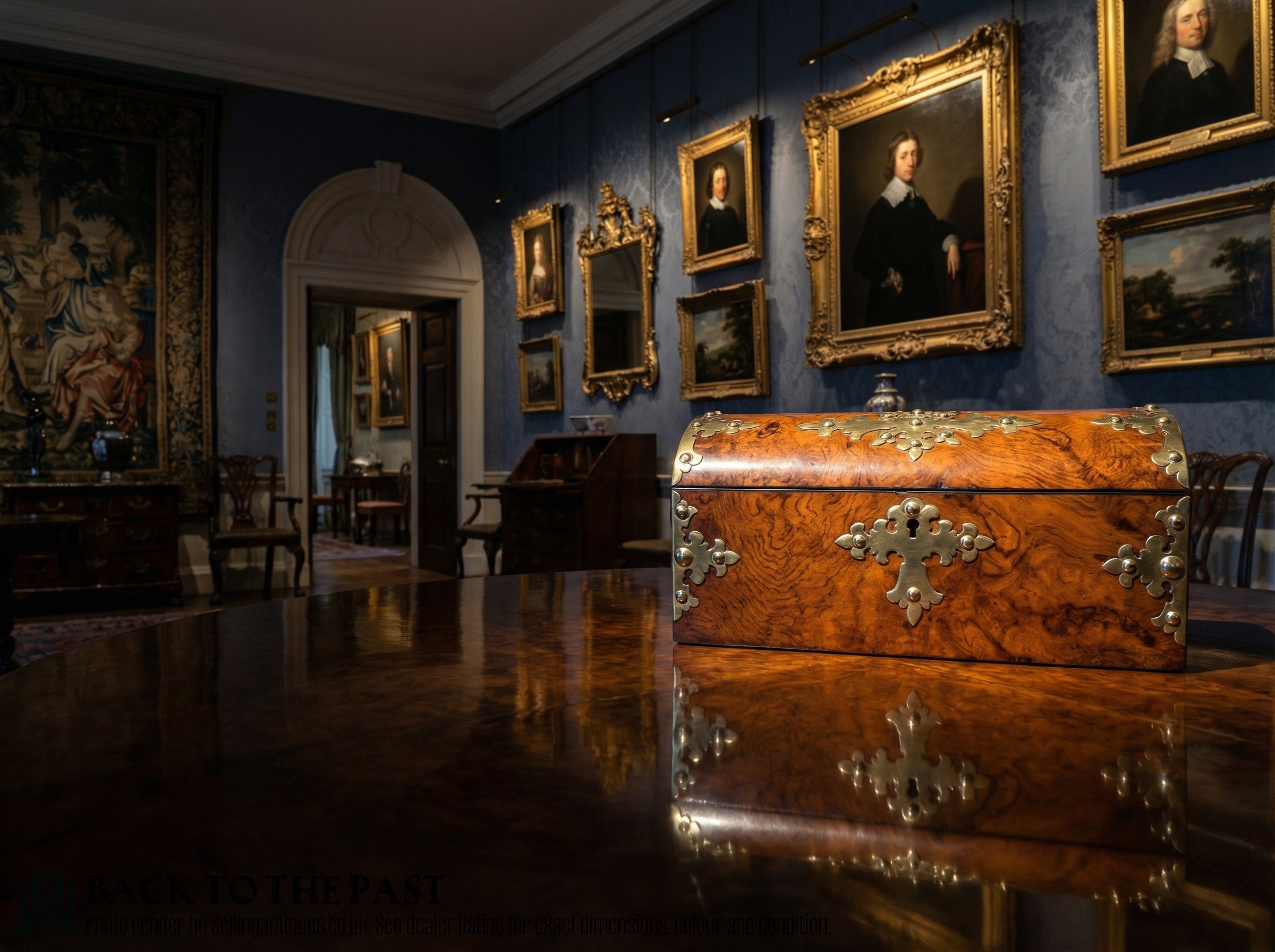
Dome Top Stationery Casket
A dome top stationery casket is an enclosed desk box made to hold letters, paper and writing equipment. The curved lid distinguishes it from flat-topped writing boxes, offering greater interior height for upright storage. Walnut and coromandel are the predominant timbers found across these Victorian examples.
Most pieces date from the nineteenth century, specifically around eighteen sixty to eighteen eighty. They appear in styles ranging from plain walnut to Victorian Gothic revival. Brass mounts and straps frequently reinforce the corners and edges of the wooden body.
How they were made
Cabinet makers constructed these caskets using dense hardwoods such as walnut, pollard oak and coromandel over a solid wooden carcase. Burr and figured varieties of walnut were selected for their decorative grain patterns on the curved lids and front panels. Timber selection dictated the visual prominence of the box upon a desk.
Brass hardware, including straps, mounts and hinges, was fitted to the exterior to provide both structural reinforcement and decorative contrast against the dark wood. Some examples incorporate ceramic cabochons or gilt brass details within the Gothic revival style. Interiors were typically lined to protect stationery from friction and dust.
Dome Top Stationery Casket Retail Price Guide 2026
Typical asking prices for dome top stationery casket among the pieces listed under this phrase on Sellingantiques today, from the lower quarter to the upper quarter. They describe what is for sale here now, not the wider market.
Brass banding and Gothic revival architectural motifs appear frequently across these desk caskets, alongside specialised regional retailers.
What varies in quality
The choice of exotic timber determines the upper tier of quality, with highly figured coromandel and pollard oak commanding attention over standard walnut. Grain alignment across the curved dome lid demonstrates the skill of the original cabinet maker. Timber selection sets the baseline for a casket's distinction.
The sophistication of the brass mounts and the inclusion of specific makers or retailers, such as Trussell of Brighton, elevate certain pieces. Subtleties in Gothic revival architectural detailing and the integration of gilt brass or ceramic elements separate standard production items from finer workshop commissions.
Trussell Brighton
The Dome Top Stationery Casket Glossary
- Coromandel wood
- A dense, heavy timber native to Asia, prized for its dark brown colour and striking contrasting streaks. It provides a luxurious surface finish on high-end nineteenth-century desk boxes.
- Pollard oak
- Oak timber taken from a tree that has been pollarded, resulting in a clustered, knotty grain pattern. This figure creates a highly decorative and mottled appearance on casket surfaces.
- Gothic revival
- An architectural and decorative style popular in the nineteenth century, characterised by pointed arches, quatrefoils and heavy metal hinges. This influence appears frequently on desk accessories of the period.
- Stationery box
- A desk organiser built with internal dividers to hold envelopes, paper and cards upright. The dome top variation provides extra clearance for taller items.
Dome Top Stationery Casket: Frequently Asked Questions
How were stationery caskets used?
They sat upon library tables and partner desks to keep correspondence, envelopes and writing materials organised and protected from dust. The divided interiors allowed owners to sort letters by category.
By the mid-nineteenth century, writing desks required dedicated accessories to manage the increasing volume of personal and business post.
How do I date a Victorian stationery box?
Dating relies on timber choices, construction techniques and stylistic markers such as Gothic revival brass mounts. Most examples originate from the middle and latter decades of the nineteenth century.
Specific retailer signatures or stamps on the lock plates can sometimes narrow the production window further.
Can I use these boxes for modern letters?
Yes, the internal compartments remain well-suited for holding modern stationery, cards and small desk items. The sturdy timber construction and functional lids continue to serve everyday desk organisation.
Care should be taken to protect antique wood and interior linings from excessive moisture and direct sunlight.