


Walnut Letter Box
A walnut letter box is a handsome desktop organiser designed to keep incoming correspondence tidy in the Victorian and Edwardian study.
Walnut Letter Box
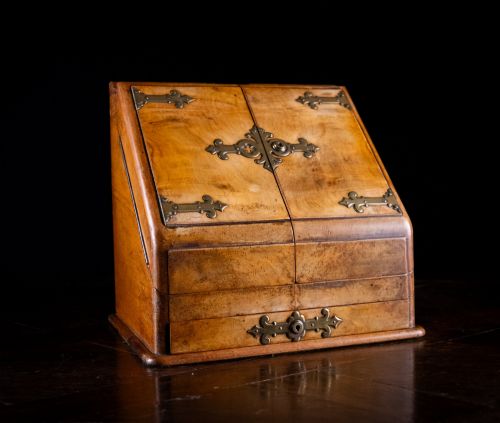
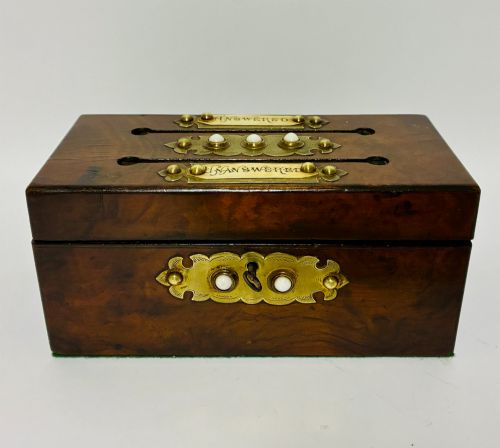
A walnut letter box is a desk accessory designed to hold stationery, letters and envelopes in nineteenth-century studies and libraries. The examples seen here span the Victorian and Edwardian periods, taking forms such as stationery boxes, correspondence chests and desk stands.
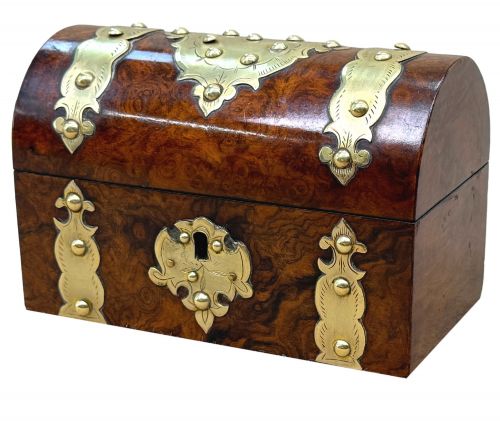
Most pieces date from the nineteenth century, including dome-top variants and brass-bound models built for heavy daily use. Makers employed rich timber veneers to create practical yet decorative desktop receptacles that suited the formal writing desks of the period.
Materials and construction
Makers built these boxes using solid hardwoods and decorative veneers such as burr walnut, applying mixed hardwood veneers over stable carcases. Brass mounts, hinges and banding reinforced the corners while providing a crisp contrast to the dark grain of the timber.
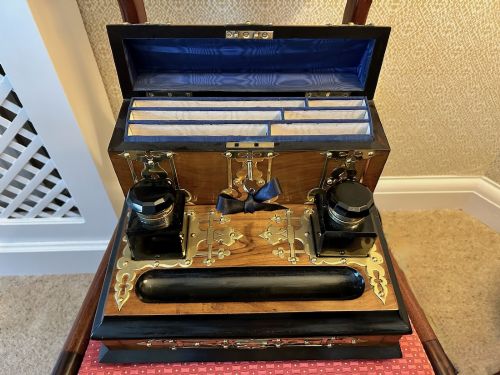
Interiors often incorporated compartments lined with silk or fitted with bone and boxwood details to sort correspondence. More elaborate examples utilised Tunbridge ware mosaics or hand-painted porcelain panels set into the lids and doors.
Listings for this phrase feature pieces from the Victorian and Edwardian eras, predominantly constructed from walnut, burr walnut and brass.
Quality and craftsmanship
The distinction between standard desk accessories and finer cabinet work lies in the selection of the timber and the precision of the joinery. Figured burr walnut displays rich, swirling grain patterns that demand expert sawing and polishing to look balanced across the lid and front.
Superior pieces incorporate robust brass bindings, integrated locking mechanisms with working keys, and meticulous internal fittings such as tiered stationery dividers. Lesser examples rely on simpler veneers and basic box construction without the refined decorative banding or specialised internal compartments.
Edmund Nye
The Walnut Letter Box Glossary
- Burr walnut
- A prized timber harvested from the tree's root growth, known for its intricate, swirling grain patterns. It was frequently sliced into thin veneers for high-end Victorian furniture and desk boxes.
- Tunbridge ware
- A meticulous woodworking technique originating in Kent involving small mosaic tiles made from natural woods arranged to form geometric or pictorial scenes. These panels decorate the surfaces of specific nineteenth-century boxes.
- Stationery box
- A desk-top cabinet designed to hold writing paper, envelopes and correspondence neatly upright. They often feature sloping or domed lids and drop-front doors.
- Brass bound
- A method of reinforcing box corners and edges with fitted brass strips secured by small pins. This technique added structural durability and a distinct metallic contrast to the timber.
Walnut Letter Box: Frequently Asked Questions
What is a walnut letter box used for?
These boxes provided a designated place to store incoming and outgoing mail on a Victorian desk. The internal compartments kept envelopes and writing paper organised before the era of mass postal sorting.
They also served as decorative items in the home, often matching other library accessories like inkstands and bookends. Their secure lids and doors helped protect private correspondence from dust and prying eyes.
How do I date a walnut letter box?
Dating relies on observing the construction methods, hardware styles and decorative motifs present on the piece. Victorian examples often feature heavy brass mountings and Gothic revival influences, whereas Edwardian pieces tend to show lighter marquetry inlay.
Reference points include the presence of Tunbridge ware decoration, dome-top shapes typical of the mid-nineteenth century, and the transition from simpler box designs to elaborate drop-front stationery cabinets towards the end of the century.
Are these boxes suitable for modern desks?
They function effectively on modern desks for organising tablets, notebooks, letters and stationery items. The internal dividers remain well-suited for sorting paperwork in a contemporary study.
Care should be taken to place them away from direct heat sources and strong sunlight to protect the walnut veneer and any delicate silk or bone internal linings.
What distinguishes a domed top from a flat top?
Domed top boxes appeared frequently during the mid-nineteenth century and offered a taller internal profile for storing larger envelopes. The curved lid construction required specialist woodworking skills to bend or shape the timber veneer correctly.
Flat-topped stationery cabinets often opened with drop fronts or sloping doors that revealed tiered compartments. These later designs prioritized quick access to writing materials over the enclosed storage of earlier dome-top variants.