

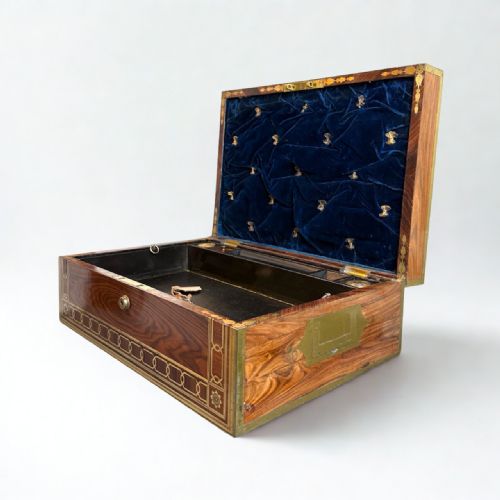


Decorative Desk Box
A decorative desk box brings order to correspondence and papers while adding character to a table.
Decorative Desk Box
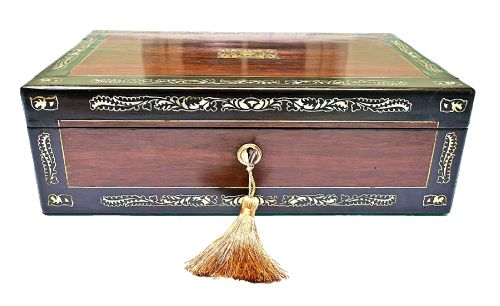
A decorative desk box serves to store writing materials, letters, and small personal valuables within reach on a table or writing surface. These pieces appear in forms such as writing slopes, stationery boxes, inkstands, and table cabinets, originating from periods spanning the seventeenth century through the early twentieth century.
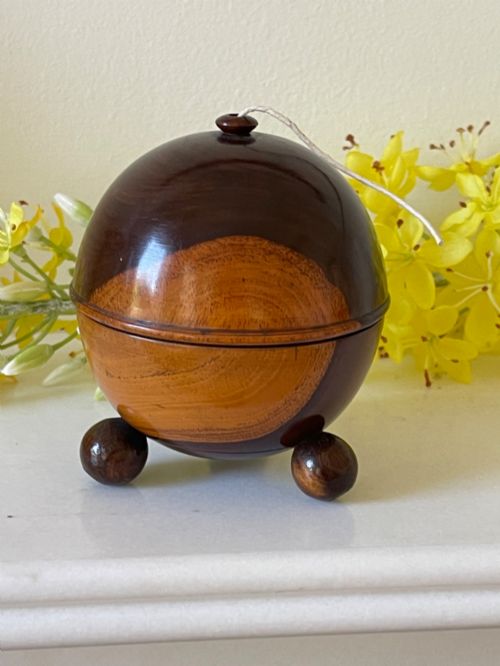
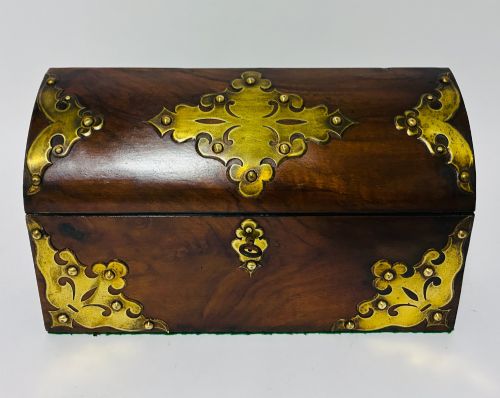
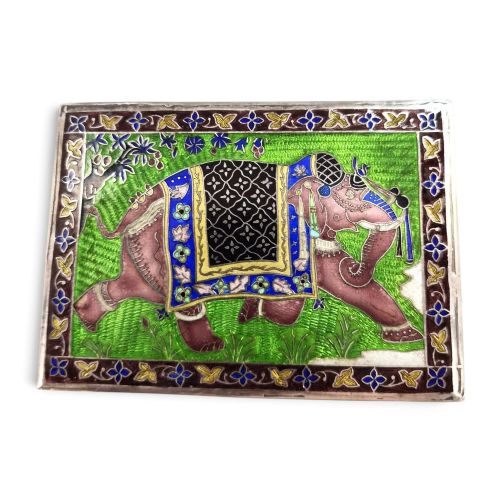
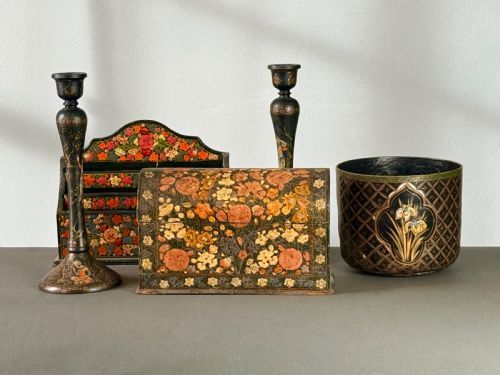
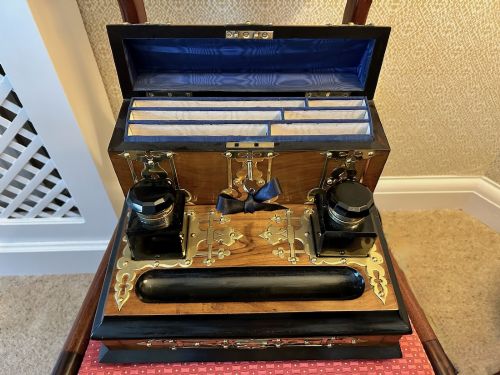
Buyers will most frequently encounter nineteenth-century and Victorian examples on this page, often fashioned from woods like walnut, rosewood, and coromandel. Alongside these wooden containers, the selection includes silver, lacquer, and brass-mounted pieces reflecting various international styles from English Gothic Revival to Chinese and Japanese traditions.
How they were made
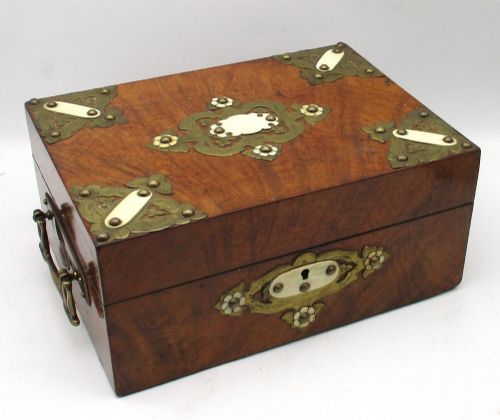
Cabinet makers utilised dense exotic timbers such as coromandel, ebony, and burr walnut, frequently applying intricate marquetry, tunbridge ware inlay, or boullework across the exterior surfaces. These wooden structures were reinforced with brass banding, corner mounts, and fitted interior compartments designed for specific stationery needs.
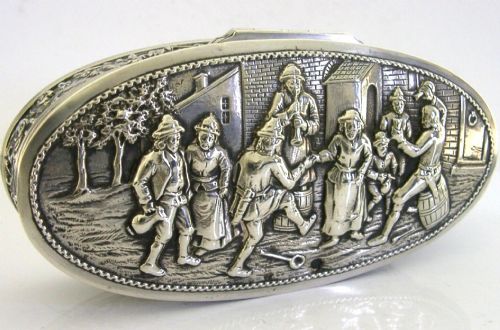
Metalwork pieces incorporate solid silver, copper, and sterling silver with enamel or agate cabochon mounts, whilst lacquer variants rely on layered resin applied to a wooden or fibrous base. Artisans also employed specialist stone inlay techniques like pietra dura to embellish the lids of the finest stationery cases.
Decorative Desk Box Retail Price Guide 2026
Typical asking prices for decorative desk box among the pieces listed under this phrase on Sellingantiques today, from the lower quarter to the upper quarter. They describe what is for sale here now, not the wider market.
Several containers cleverly disguise their true function as stationery storage by taking the physical form of stacked leather-bound books.
What varies in quality
The distinction between standard and superior pieces rests on the precision of the cabinetry and the complexity of the decorative techniques employed. Examples featuring meticulous tunbridge ware micro-mosaic, detailed boullework, or finely executed pietra dura panels demonstrate a higher level of artisanal skill.
Interior fittings and hardware also define the grade of an object, with complete original velvet linings, secret drawers, and substantial brass mounts indicating better workshops. The choice of burr veneer, such as richly figured yew or walnut, elevates the visual presence of the container.
C.G. Hope Hastings·Gucci
The Decorative Desk Box Glossary
- Writing slope
- A portable box with a hinged sloping lid designed to provide a slanted surface for writing letters. Inside, it contains compartments for inkwells, pens, and paper.
- Coromandel
- A dense, heavy wood imported from Asia, prized for its dark brown colour and striking black grain. It was frequently utilised for high-end Victorian boxes.
- Tunbridge ware
- A form of woodwork originating in Kent involving small blocks of coloured wood assembled into mosaic patterns. These geometric designs create pictorial scenes or borders on boxes.
- Pietra dura
- An artistic technique using cut and fitted polished coloured stones to create inlay images. It appears on the lids of select nineteenth-century stationery boxes.
- Boullework
- An elaborate form of marquetry using tortoiseshell and brass inlaid in contrasting patterns. Named after a French royal cabinet maker, it adorns decorative French table boxes.
Decorative Desk Box: Frequently Asked Questions
What is a decorative desk box used for?
These containers were originally built to hold writing paper, envelopes, inkwells, and pens in an orderly fashion on a desk. Today, they serve a similar purpose for organising modern correspondence or storing small personal keepsakes.
Many examples feature specific internal divisions for stamps and nibs, reflecting the writing habits of the nineteenth and early twentieth centuries.
How do I tell a writing slope from a stationery box?
A writing slope opens to reveal a slanted writing surface lined with leather or velvet, with storage space hidden underneath and behind for ink and pens. A stationery box sits upright on a desk with a hinged or folding front and internal tiers specifically sized to hold folded letters and envelopes.
Slopes are designed for the act of writing itself, whereas stationery boxes are intended purely for desktop storage.
How should I care for a wooden desk box?
Keep wooden boxes away from direct sunlight and sudden temperature changes to prevent the veneers and fine timbers from drying out or cracking. Occasional dusting with a soft, dry cloth is sufficient to maintain the polish of materials like walnut and coromandel.
Avoid using modern liquid polishes, which can seep into microscopic cracks in old wood or damage delicate marquetry and inlay work.
What periods are represented in these boxes?
The selection includes pieces from the seventeenth century through the Georgian and Regency eras, with a strong concentration of Victorian and early twentieth-century examples. Styles range from traditional English and Dutch work to Arts and Crafts items and Asian lacquerware.
Each period brought distinct materials and decorative techniques, from early ebony cabinets to later burr yew and silver-mounted pieces.