





Antique Desk Letter Box
An antique desk letter box organises correspondence with the weight and gravity of the nineteenth-century writing table.
Antique Desk Letter Box
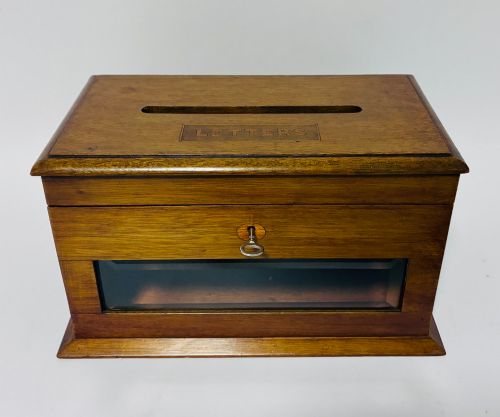
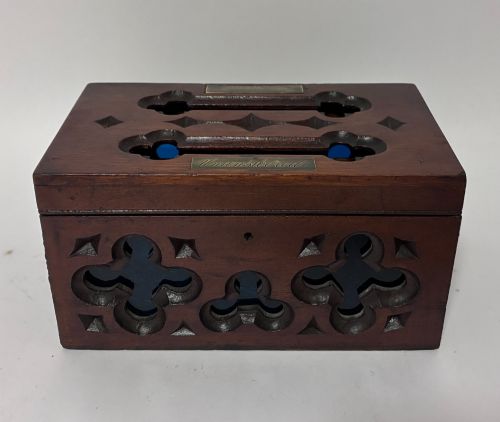
An antique desk letter box serves as a desktop receptacle for incoming and outgoing post, keeping letters sorted and private upon the writing surface. The pieces on this page span the Georgian, Victorian and Edwardian periods, appearing alongside related forms such as stationery cabinets, writing slopes and desk tidies.
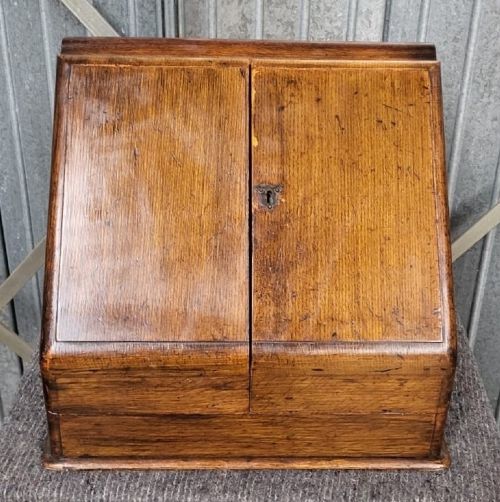
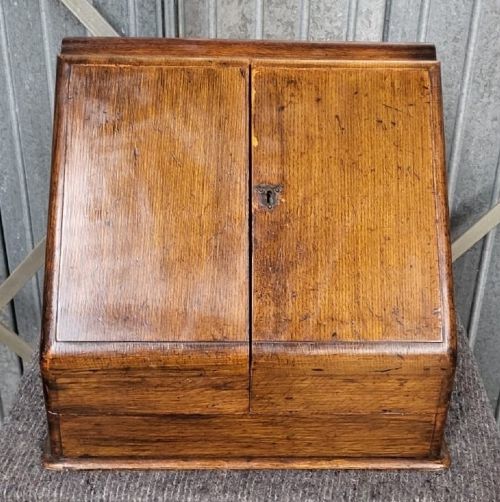
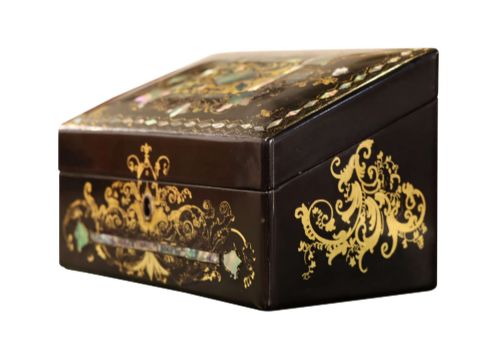
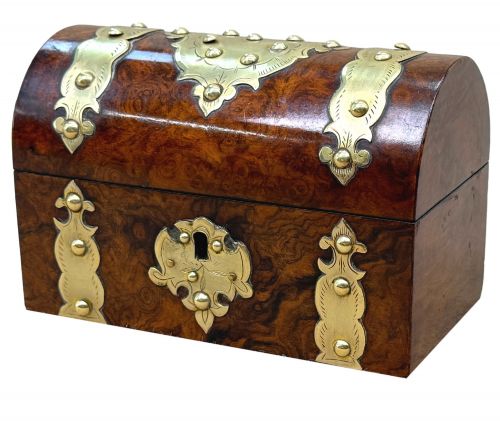
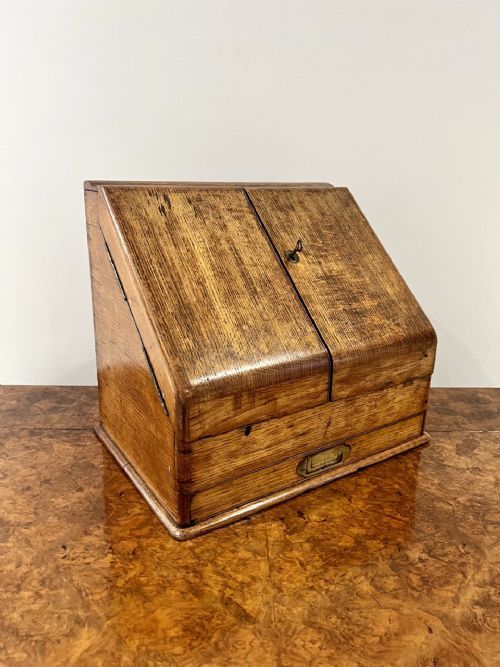
Victorian examples dominate the selection, manifesting in durable timbers like oak, mahogany, walnut and coromandel, often fitted with brass mounts and glass inkwells. Buyers encounter domestic country house boxes alongside more formal stationery caskets intended for the library or study.
How they were made
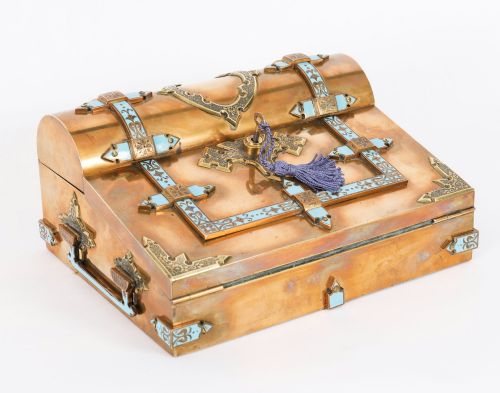
Cabinet makers built these boxes using dense hardwoods including mahogany, oak and walnut, frequently applying veneers of burr walnut, rosewood or satinwood to visible surfaces. Brass hinges, locks, handles and carrying mounts provide structural reinforcement while decorative brass banding and strapwork secure the joints.
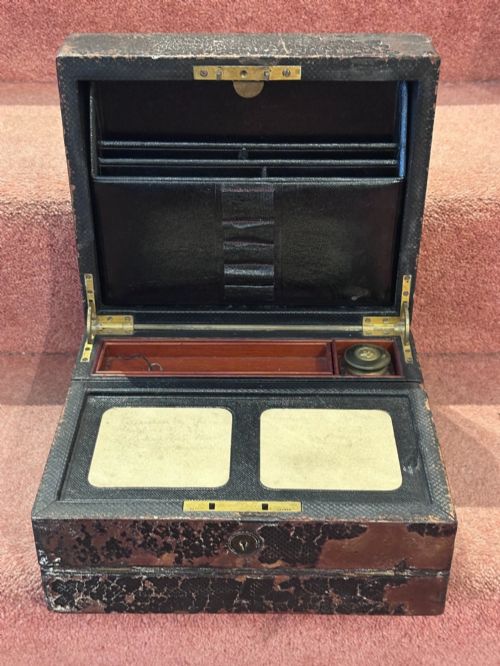
Specialist techniques define specific regional pieces, such as the intricate timber mosaic work found on Tunbridge ware examples, the bone inlay seen on Anglo-Indian pieces, and the black lacquer work of Japanese export items. Interior compartments utilise green velvet, leather linings and fitted dividers designed to hold envelopes and pens.
Antique Desk Letter Box Retail Price Guide 2026
Typical asking prices for desk letter box among the pieces listed under this phrase on Sellingantiques today, from the lower quarter to the upper quarter. They describe what is for sale here now, not the wider market.
Listings feature woods spanning oak, mahogany, walnut, coromandel, rosewood, satinwood and pollard oak across Victorian and Edwardian periods.
What varies in quality
The refinement of the timber selection dictates the hierarchy of quality, moving from plain utilitarian oak to highly figured burr walnut, coromandel or satinwood veneers. Superior pieces display matched grain patterns across the fall front or dome top, indicating careful material preparation by the cabinet maker.
Interior complexity separates standard containers from exceptional pieces, with better examples incorporating spring-loaded mechanisms, secret drawers, pegged compartments and matching glass inkwells or calendars. The integration of solid brass mounts rather than plated substitutes elevates the construction standard.
Edmund Nye
The Antique Desk Letter Box Glossary
- Stationery Box
- A desktop cabinet designed to hold writing paper, envelopes and correspondence, usually featuring a sloping lid or a drop-front door revealing tiered dividers.
- Writing Slope
- A portable desk that opens to form an inclined writing surface, often incorporating hidden compartments, pen trays and slots for letters beneath.
- Tunbridge Ware
- A type of nineteenth-century decorative woodwork characterised by tiny mosaic tiles formed from naturally coloured British timbers to create geometric or pictorial motifs.
- Correspondence Box
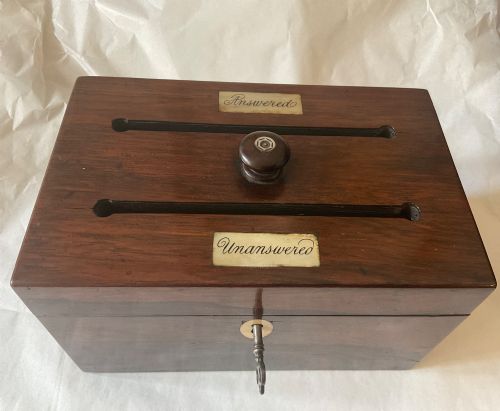
- A container specifically proportioned for letters, frequently fitted with dual interior compartments labelled for answered and unanswered mail.
- Fall Front
- A hinged panel at the front of a cabinet or box that drops down to provide access to the interior shelves or letter slots.
Antique Desk Letter Box: Frequently Asked Questions
What is an antique desk letter box?
An antique desk letter box is a secure desktop container used during the Georgian, Victorian and Edwardian eras to sort and store correspondence before postage collection.
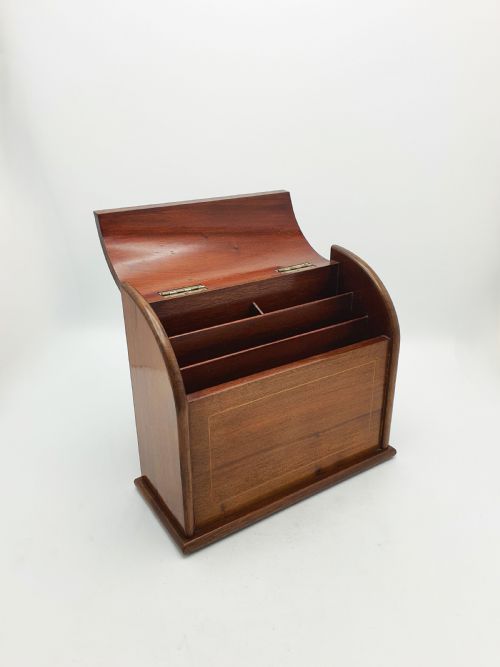
These pieces range from simple oak desk tidies to elaborate coromandel and brass-mounted caskets designed for the Victorian study or country house library.
How were letter boxes used?
Households utilised these boxes to keep incoming mail private and organised until the recipient could reply, often sorting items into answered and unanswered compartments.
In larger country houses, a dedicated letter box received post intended for the daily collection by the local postal service.
How do I date a Victorian letter box?
Dating relies on the prevailing timber fashions, construction methods, hardware design and any accompanying patent dates or manufacturer stamps found on the locks.
Early Victorian pieces often feature rosewood or mahogany with heavy brass mounts, while later Edwardian examples lean towards lighter oak finishes and simpler inlaid decoration.