


Victorian Dome Top Box
A victorian dome top box brings practical storage and architectural presence to a room, turning everyday containers into sculptural objects.
Victorian Dome Top Box
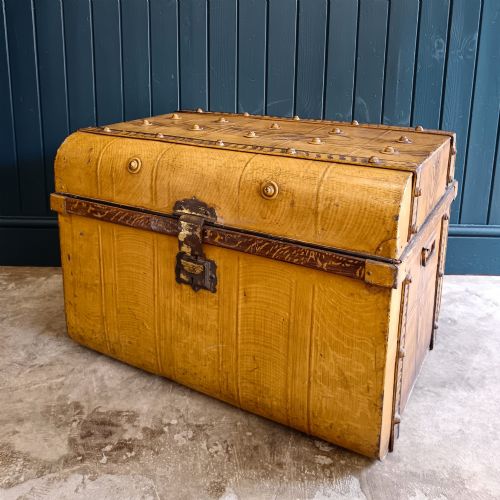
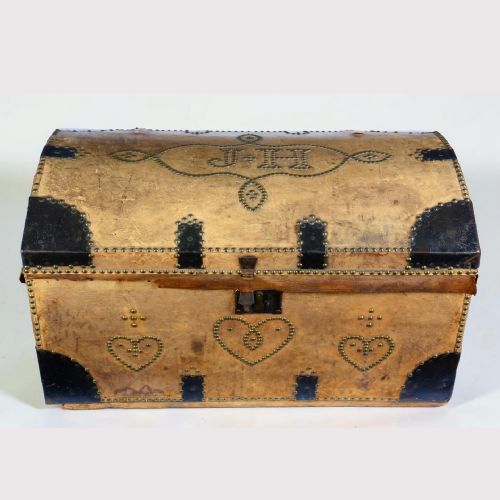
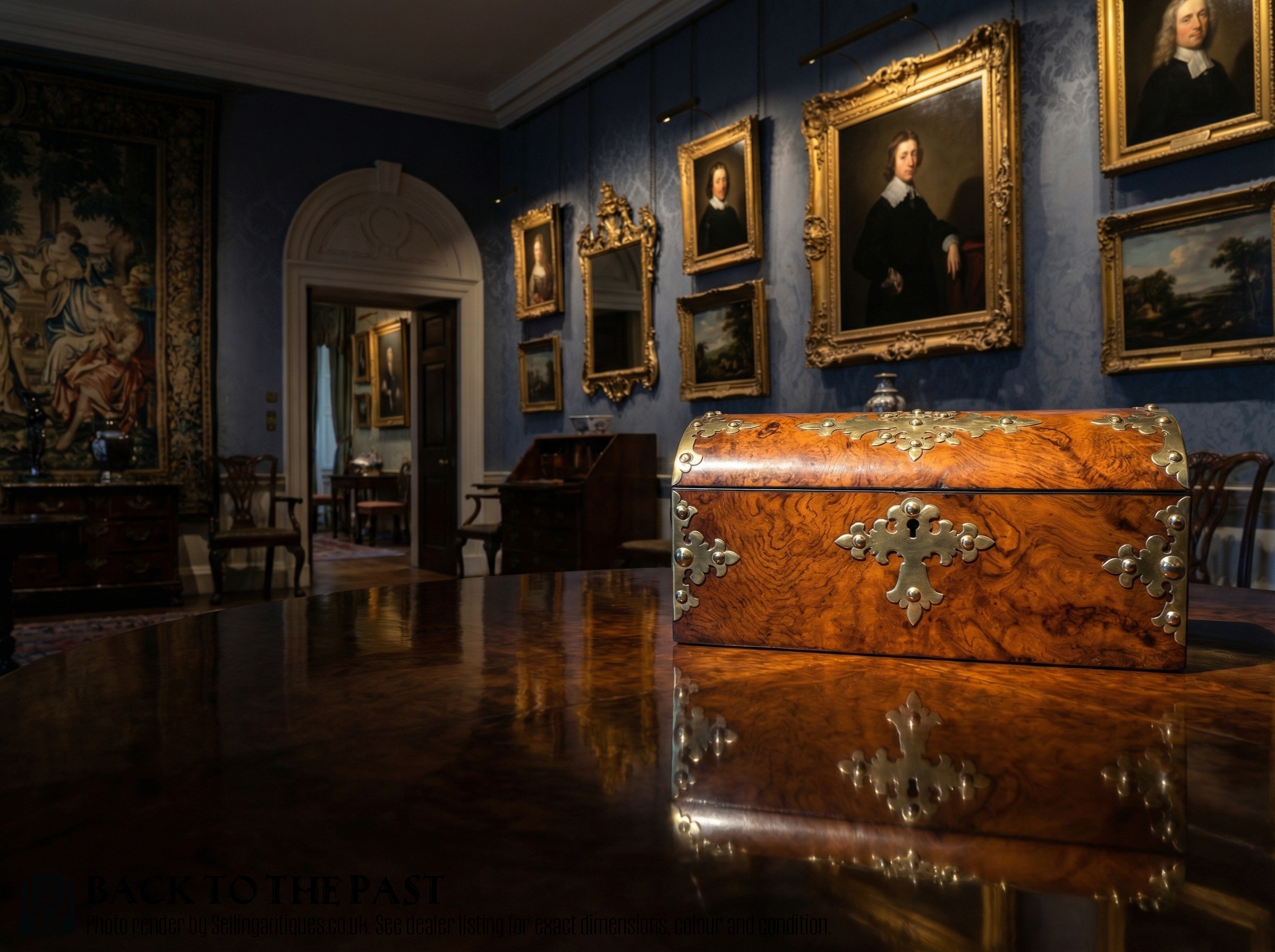
When searching for a victorian dome top box, buyers encounter an array of utilitarian and decorative containers shaped with curved lids, spanning from large travel trunks down to small desk caskets. The most common examples on this page are compact stationery boxes, tea caddies, and jewellery caskets fashioned in walnut and coromandel, alongside larger pine and leather storage chests.
These pieces originated across the nineteenth century, with many items bearing the distinct influence of Gothic Revival and Baroque tastes alongside rustic country traditions. Smaller tabletop versions served domestic desk and parlour functions, while larger trunks accommodated the travel requirements of the period.
Materials and Technique
Cabinet makers utilised dense hardwoods such as walnut, rosewood, and coromandel, often selecting burr veneers to showcase intricate natural grain patterns across the curved lids. These wooden bodies frequently incorporated brass binding, corner mounts, and studwork to reinforce the structure and decorate the exterior.
Larger travelling trunks combined robust pine or iron frameworks with applied leather, canvas, or painted finishes designed to withstand transport. Interiors often featured fitted compartments, velvet or silk linings, and specialised spaces for letters, bottles, or tea.
Standards of Craftsmanship
Superior examples display precise joinery where the curved lid aligns seamlessly with the box base, matched with high-grade figured wood veneers that wrap continuously across the domed profile. Finer pieces incorporate substantial cast brass mounts, functioning original locks with keys, and elaborate internal fittings.
Simpler utilitarian chests rely on painted pine, plain iron hardware, or heavier leather construction intended for basic utility rather than decorative display in a parlour.
Arthur Wannop·Barton
The Victorian Dome Top Box Glossary
- Coromandel wood
- A dense, heavily figured exotic timber with dark brown and black striations, frequently utilised for high-end nineteenth-century stationery boxes and tea caddies.
- Stationery box
- A desk accessory designed with internal vertical divisions and a sloping or curved lid to organise paper, envelopes, and writing instruments.
- Tea caddy
- A lidded container constructed to store loose tea leaves securely, often featuring internal foil lining or multiple compartments.
- Gothic Revival
- An architectural and decorative style popular in the nineteenth century that reintroduced pointed arches, quatrefoils, and medieval ornamentation.
- Studwork
- An external decorative method using brass or iron nails hammered in regular patterns to secure leather or reinforce trunk edges.
Victorian Dome Top Box: Frequently Asked Questions
What were dome top boxes used for?
Smaller variations served as desktop repositories for writing paper, bottled scents, jewellery, or tea leaves within the Victorian home.
Larger versions functioned as travel trunks and blanket chests, designed to protect clothing and personal belongings during transit.
How do I identify a Victorian box?
Key indicators include period timber choices such as coromandel and burr walnut, alongside characteristic brass mounts and period lock mechanisms.
Stylistic cues like Gothic Revival motifs and heavy leather or brass studwork also point directly to nineteenth-century production.
Are these boxes difficult to maintain?
These pieces require minimal upkeep beyond occasional dusting and keeping wooden surfaces away from direct heat sources.
Leather and iron components benefit from dry storage environments to preserve the original patination and prevent material degradation.
Where should I place a dome top box?
Tabletop boxes suit placement on desks, sideboards, or dressing tables where their figured wood grains and brass details remain visible.
Larger trunks function effectively as coffee tables or blanket chests at the foot of a bed, providing functional hidden storage.