

Antique Delftware Charger
When you search for an antique delftware charger, you seek a broad tin-glazed earthenware plate carrying painted tin glaze from past centuries.

Antique Delftware Charger
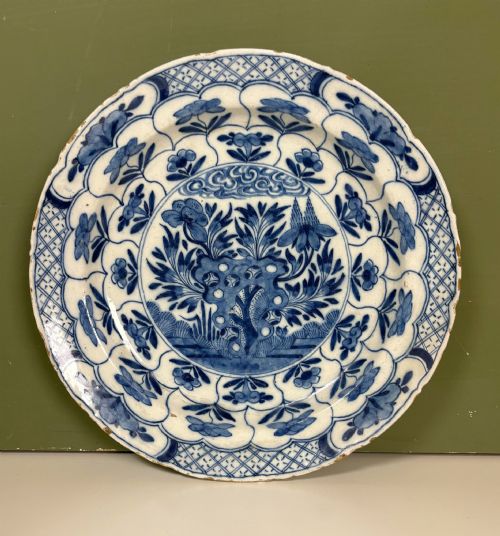
An antique delftware charger is a wide, shallow ceramic dish originally produced for display or serving during the seventeenth and eighteenth centuries. These large plates span English, Dutch, French, and Spanish origins, featuring broad rims designed to showcase painted motifs.
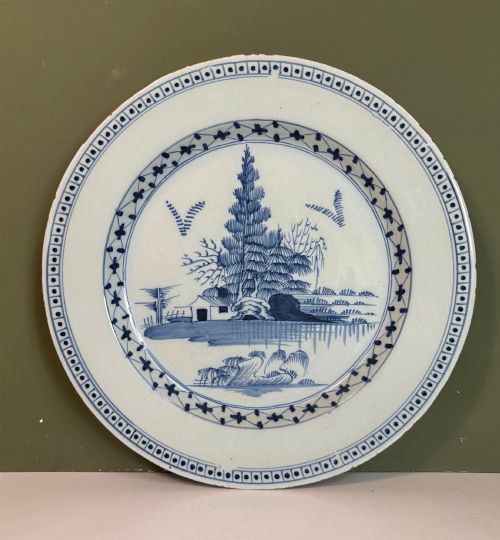
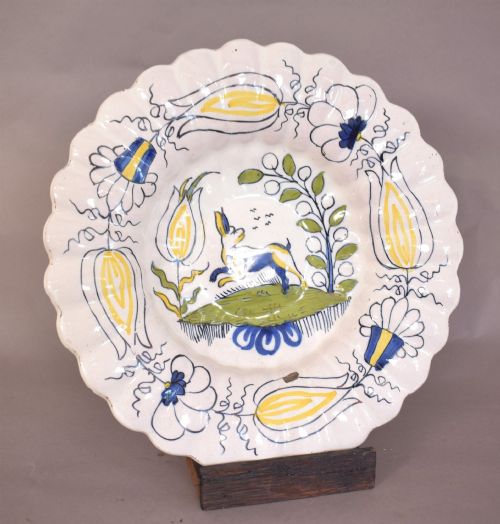
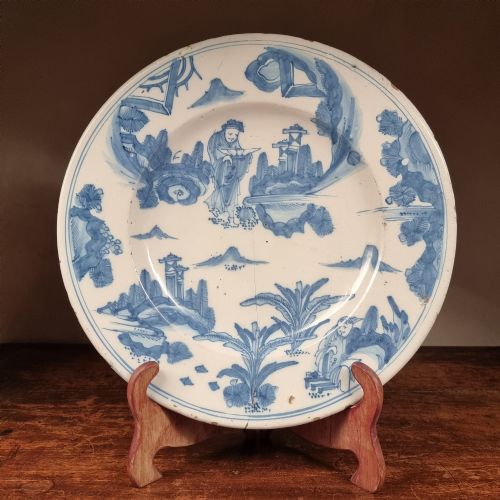
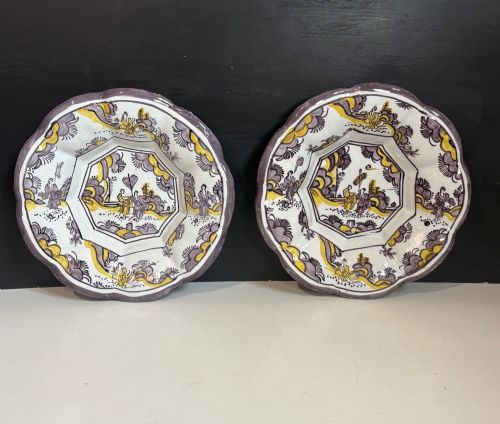
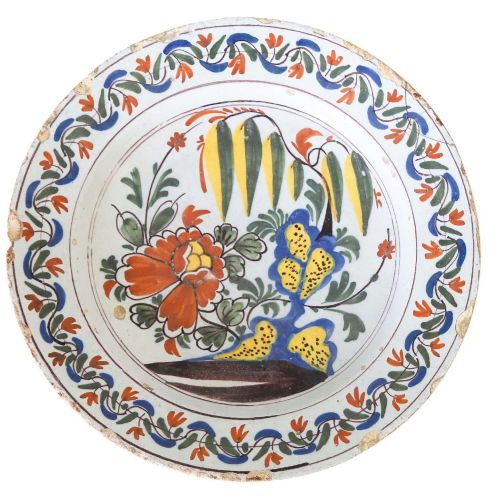
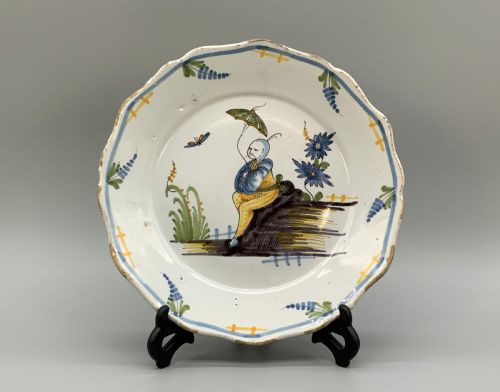
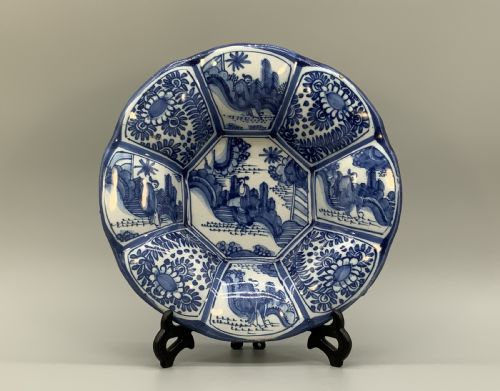
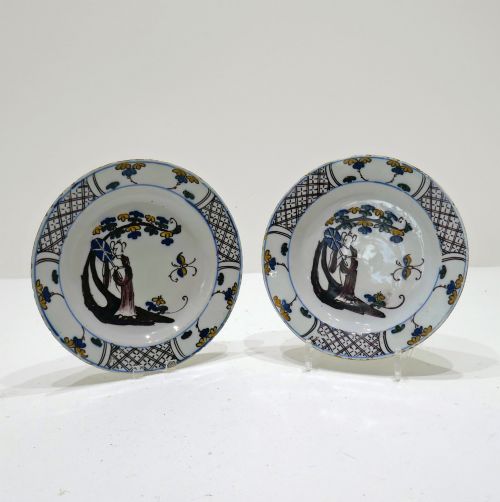
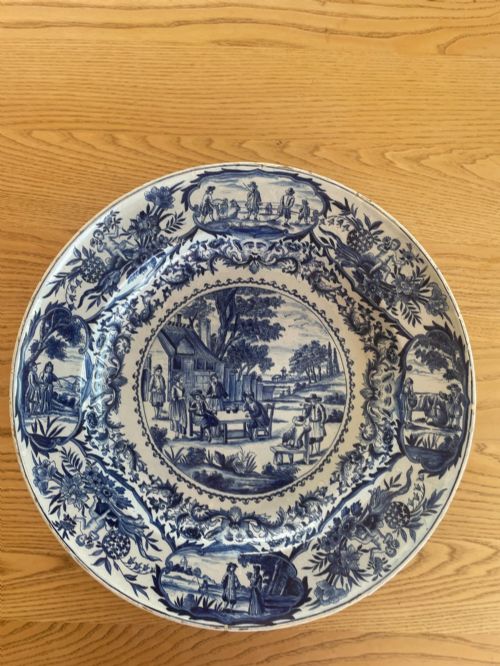
The version you are most likely to encounter on this page is an eighteenth-century blue and white or polychrome charger. Many examples display floral, geometric, or Chinoiserie designs painted across earthenware bodies.
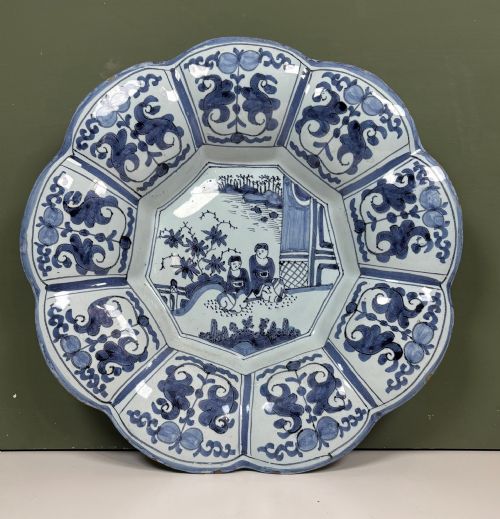
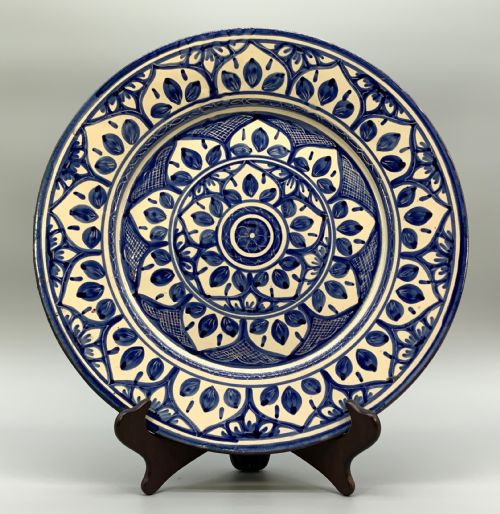
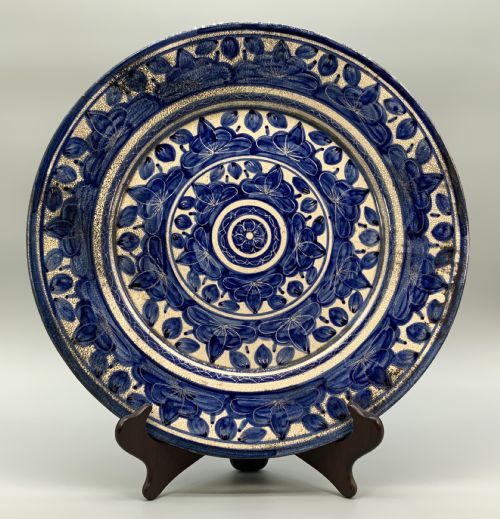
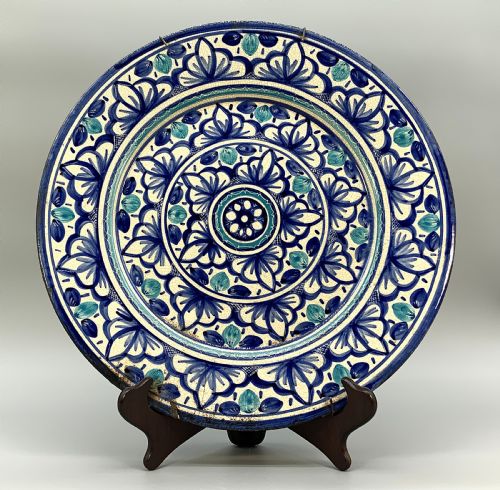
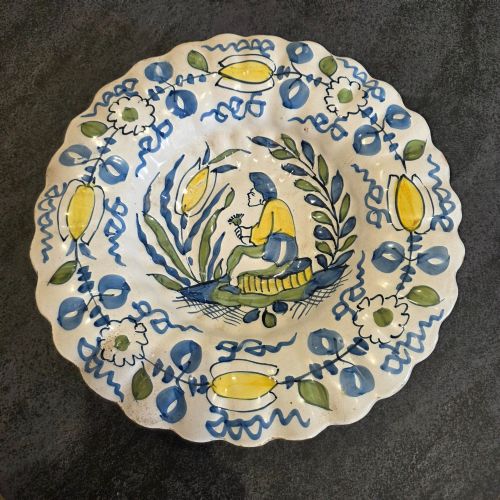
Surviving pieces range from standard blue and white plates to lobed dishes, barber's bowls, and large Moorish style continental wall platters. Each form demonstrates the traditional methods of tin glazing practiced across European workshops.
How They Were Made
Potters formed these items from earthenware clay, coating the fired biscuit body in an opaque white tin glaze that provided a smooth canvas for decoration. Artisans then applied pigments directly onto the absorbent porous surface before a final firing fused the oxides into the glaze.
Makers utilised cobalt pigment and cobalt oxide for deep blue tones, alongside manganese and yellow pigments for polychrome details. These hand-painted compositions often reflect Dutch Delftware, Georgian Chinoiserie, or Kraak styles.
Listings feature earthenware chargers spanning the seventeenth, eighteenth, nineteenth, and twentieth centuries, predominantly decorated in blue and white or polychrome tin glaze.
What Varies in Quality
Quality in an antique delftware charger lies in the crispness of the hand-painted brushwork and the stability of the tin glaze across the earthenware body. Superior examples display confident, detailed floral or figurative compositions with minimal glaze pooling or disruption.
The ambition of the design dictates distinction, separating simple utilitarian plates from large polychrome exhibition chargers decorated with complex geometric or Chinoiserie schemes. Preservation of the tin glaze and original coloration further separates standard items from finer survivals.
Lambeth·Bristol
The Antique Delftware Charger Glossary
- Tin-Glazed Earthenware
- Earthenware pottery coated with a lead glaze made opaque by the addition of tin oxide. This white surface serves as the ground for hand-painted cobalt and polychrome decoration.
- Charger
- A large decorative plate or platter typically measuring over thirty centimetres in diameter. These wide vessels were placed on buffets or hung on walls.
- Polychrome
- Decoration employing multiple colours rather than a single hue. On these ceramics, artists combined manganese, yellow, and blue pigments.
- Chinoiserie
- European interpretations of Chinese artistic motifs and landscapes. Potters painted these imaginative eastern scenes onto seventeenth and eighteenth-century dishes.
- Kraak Style
- A Dutch and English adaptation of late Ming dynasty Chinese porcelain designs. These plates feature segmented panels radiating around a central decorated basin.
Antique Delftware Charger: Frequently Asked Questions
How were antique delftware chargers used?
These large plates served primarily as decorative display items on walls or sideboards during the seventeenth and eighteenth centuries. Some forms, such as barber's bowls or marriage plates, fulfilled specific domestic and ceremonial functions.
While robustly made from earthenware, their soft tin glaze meant they were easily chipped during daily dining use. Consequently, most surviving chargers were preserved as ornamental pieces.
How do I distinguish English from Dutch delftware?
English and Dutch delftware chargers share tin-glazed earthenware bodies, but subtle differences in glaze tone and body weight help separate them. English factories often produced slightly thicker plates with softer, warmer glaze characteristics.
Dutch workshops frequently achieved a brighter blue and whiter glaze finish, alongside distinctive manganese highlights. Examining the footrim and the specific palette provides further clues to regional origin.
How should I care for a delft charger?
Display your charger away from direct sunlight and damp environments to protect the porous earthenware and tin glaze. Keep the piece secure on a stable wall mount or specialised plate stand designed for heavy ceramics.
Dust the surface gently with a dry, soft cloth, avoiding water immersion or chemical cleaning agents that could harm the historic glaze.