
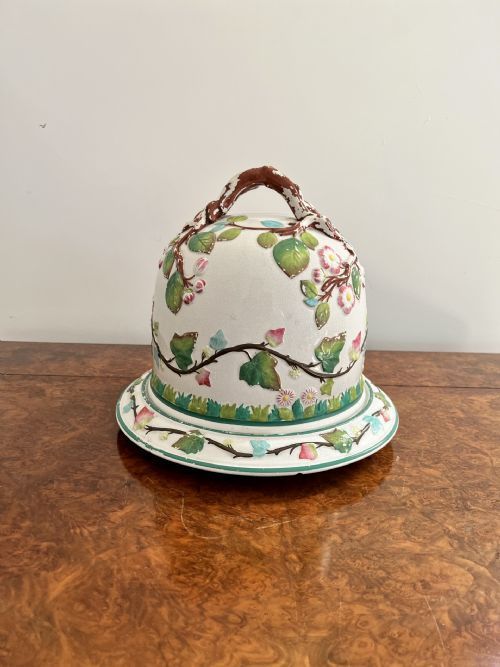


Antique Cheese Keeper
An antique cheese keeper brings table service from the Victorian and Edwardian dining room right into the modern home.
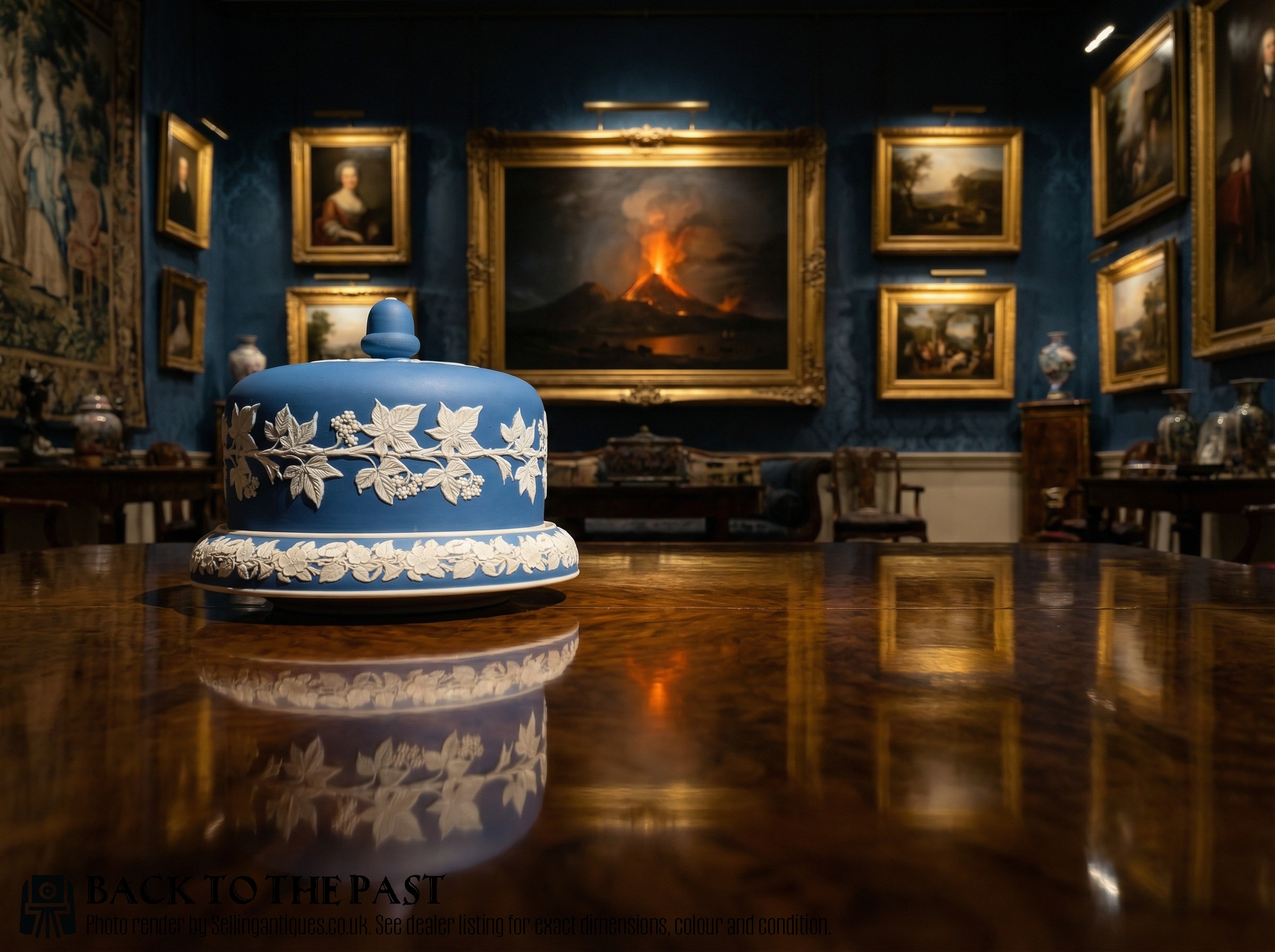
Antique Cheese Keeper
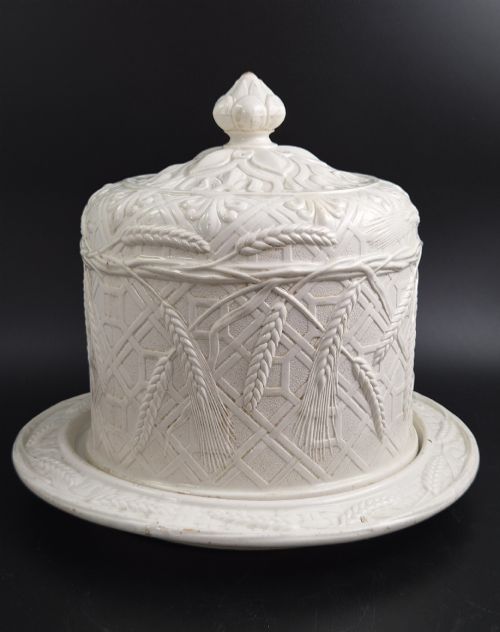
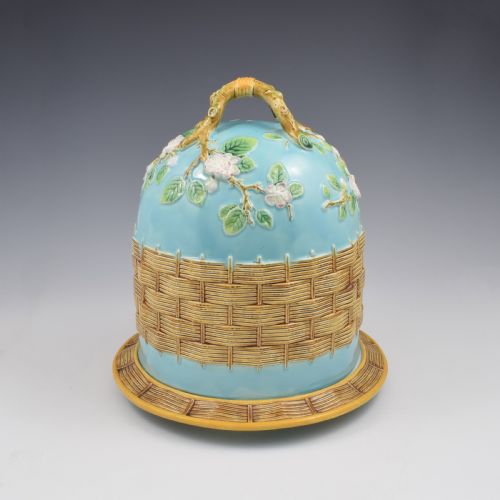
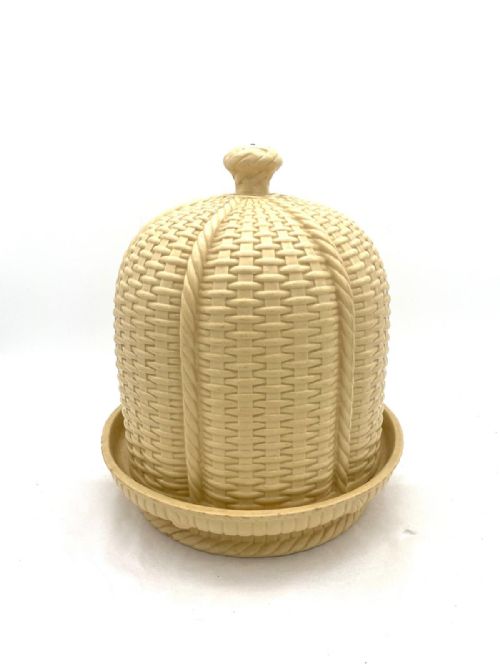
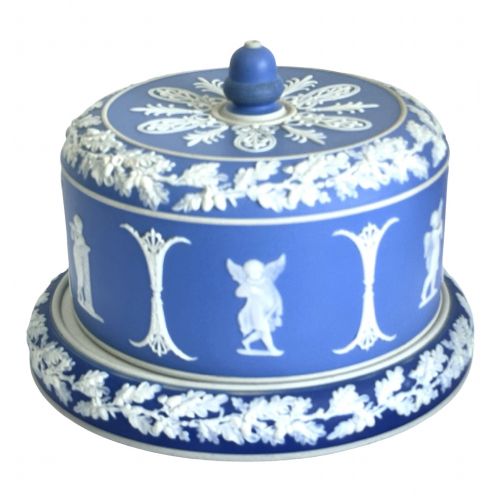
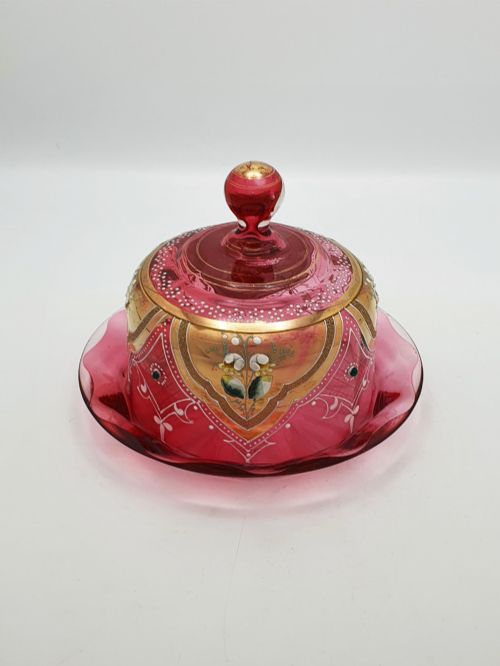
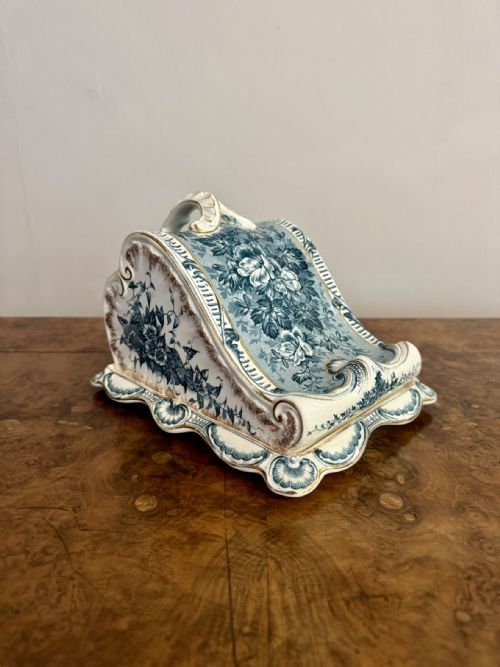
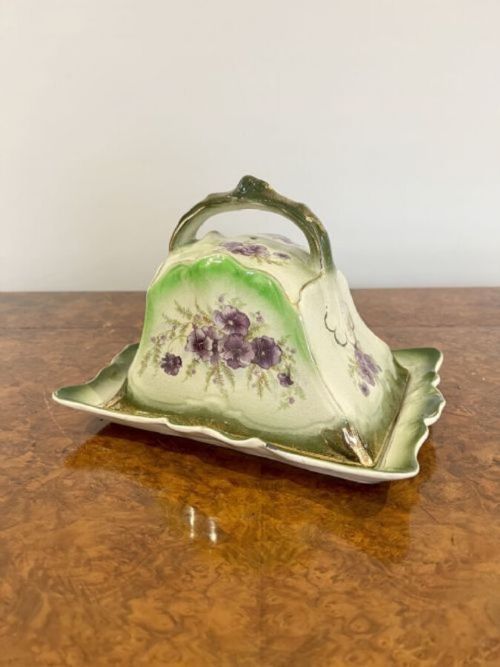
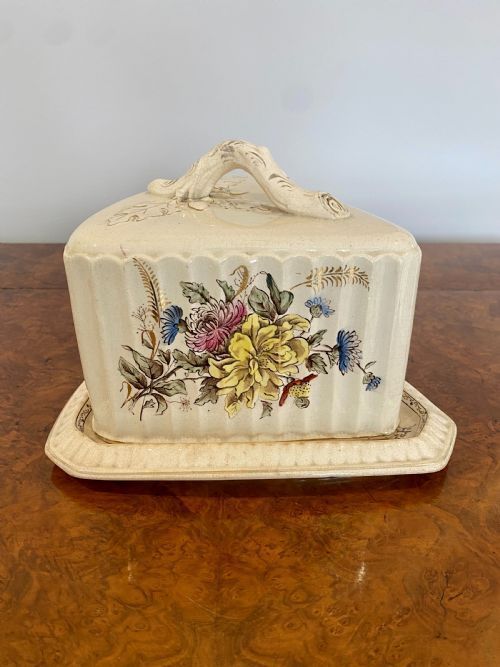
An antique cheese keeper is a covered dish designed to preserve cheese on the Victorian or Edwardian dining table, appearing as a domed cover resting upon a fitted base plate. The pieces seen here encompass earthenware, stoneware, ironstone, majolica, jasperware, and glass, alongside one oak housekeeper cupboard.
Victorian majolica and white ironstone dominate the selection, often taking the form of large cheese domes and stands with moulded decoration. Smaller examples emerge in cranberry glass or silver plate, reflecting the varied scale of nineteenth-century and early twentieth-century dining habits.
How they were made
Potters shaped these vessels from earthenware, ironstone, and stoneware, applying heavy lead or tin glazes to seal the porous clay bodies. Moulded motifs such as wheat, lattice, and apple blossom appeared directly in the clay before firing.
Majolica pieces received colourful lead glazes that pooled in the recesses of the relief work, while jasperware utilised contrasting matte coloured clays. Glass and silver plate examples combined blown glass covers with metal stands and handles.
Antique Cheese Keeper Retail Price Guide 2026
Typical asking prices for cheese keeper among the pieces listed under this phrase on Sellingantiques today, from the lower quarter to the upper quarter. They describe what is for sale here now, not the wider market.
Listings feature ceramics spanning the Victorian and Edwardian eras, predominantly fashioned from earthenware, ironstone, and majolica glaze.
What varies in quality
Quality rests upon the crispness of the moulded relief and the depth of the glaze application. Pieces modelled with sharp botanical detail by known makers stand apart from utilitarian wares.
The weight of the ceramic body and the proportional balance between dome and stand dictate the tactile presence of the piece on the table.
George Jones·Wedgwood·James Dudson·Copeland·John Maddock
The Antique Cheese Keeper Glossary
- Majolica
- A type of earthenware covered with colourful lead-based glazes first popularised in the mid-nineteenth century. The technique allows for rich greens, browns, and pinks that highlight botanical moulding.
- Ironstone
- A heavy, durable ceramic patented in the nineteenth century to bridge the gap between earthenware and porcelain. It provides a dense, white body well suited to large kitchen and dining vessels.
- Stilton dome
- A tall, cylindrical cheese keeper specifically proportioned to house a whole Stilton cheese. These pieces tower above standard flat cheese dishes.
Antique Cheese Keeper: Frequently Asked Questions
How do I use a cheese keeper?
Place a wedge or small wheel of cheese directly on the base plate and cover it with the domed lid. This keeps the cheese from drying out in the open air.
Room temperature serves cheese best, so remove the keeper from the refrigerator an hour before serving.
Were these only used for cheese?
Most domes served dairy at the end of the meal, while larger variations accommodated tall Stilton cheeses. Some Welsh vernacular cupboards also stored bread and cheese together in farmhouse kitchens.
Guests selected their portions directly from the table while the ceramic cover protected the food between courses.
How do I clean an antique cheese keeper?
Wash the ceramic or glass components gently by hand using warm water and mild dish soap. Avoid harsh scrubbers that might scratch the glaze or wear down delicate relief work.
Dry thoroughly before storing to protect older ironstone and earthenware bodies from moisture retention.
How do I date a cheese keeper?
Look to the ceramic body, glaze type, and stylistic markers such as Victorian majolica moulding or Edwardian glass decoration. Maker marks stamped into the underside of the base plate provide definitive pottery attributions.
Heavier white ironstone pieces often date to the mid-nineteenth century, while lighter glass and silver plate versions point toward nineteen hundred.