


19th Century Jasperware
These pieces of 19th century jasperware bring classic ceramic relief work into Victorian interiors through tea sets, desk pieces and decorative vessels.
19th Century Jasperware
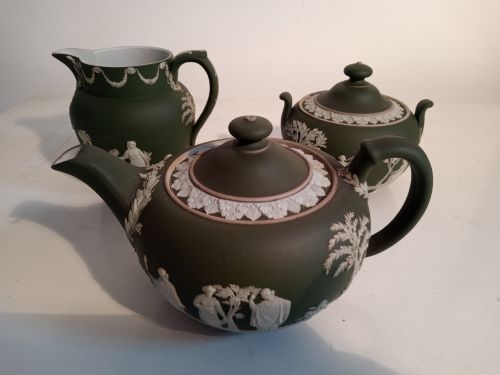
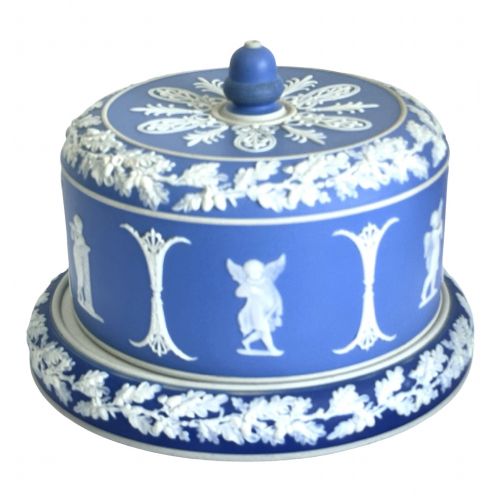
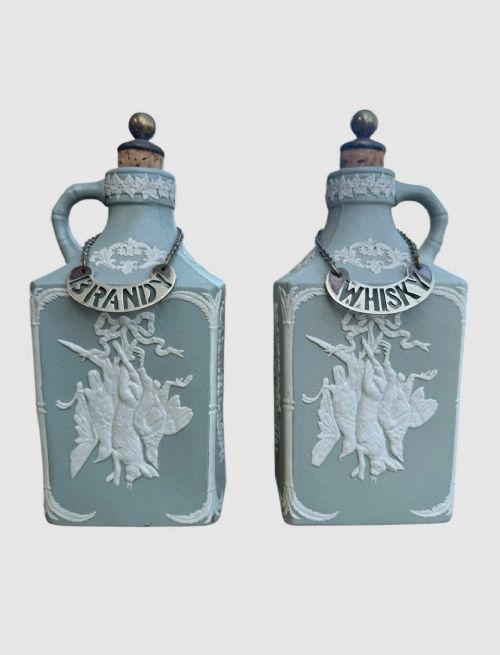
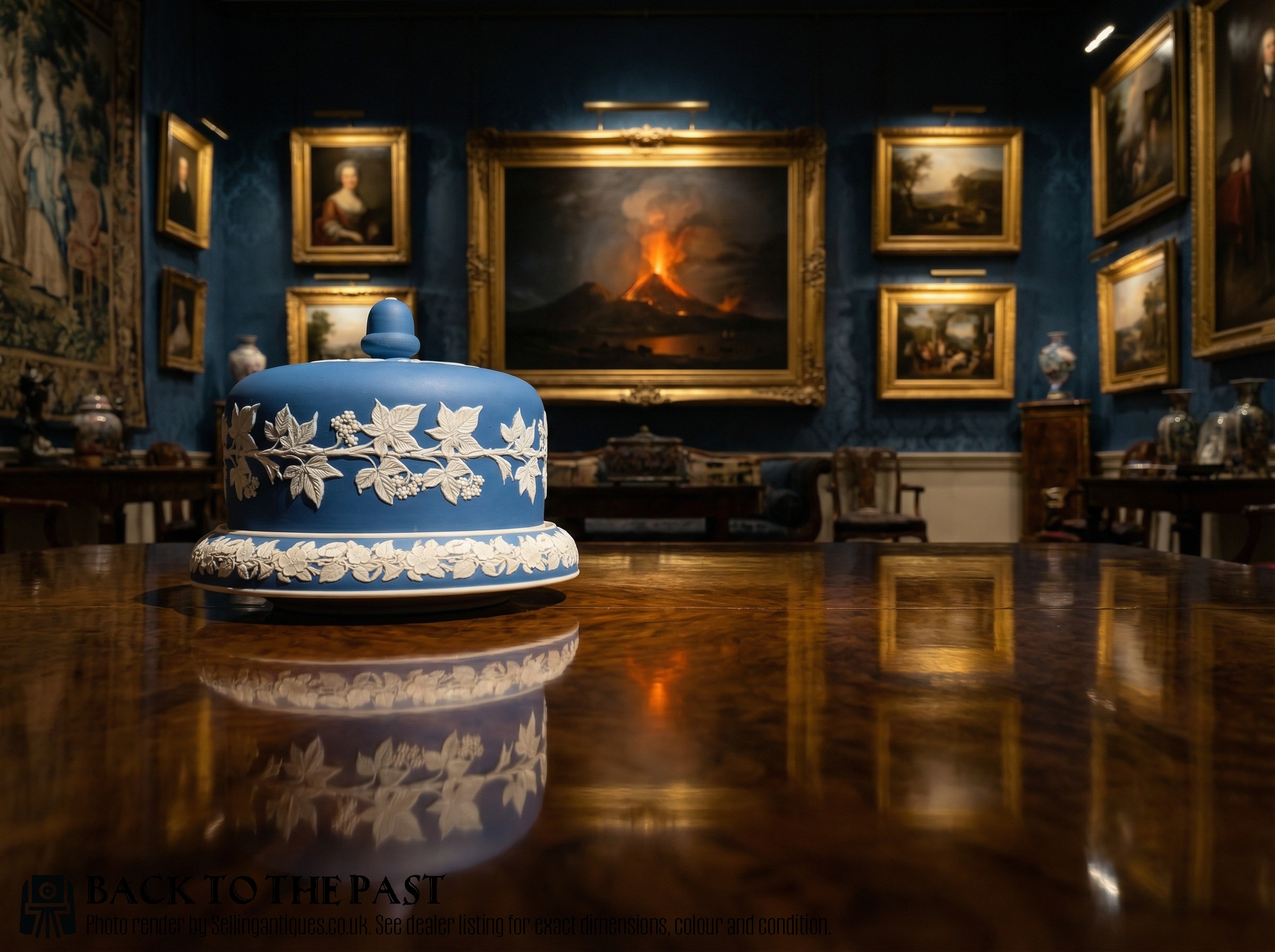
When you search for 19th century jasperware, you encounter a distinct variety of fine stoneware developed primarily by pottery manufacturers during the Victorian period. These items range from small trinket boxes and match strikers to substantial cheese domes and spirit flagons, often featuring contrasting white neoclassical motifs against coloured bodies.
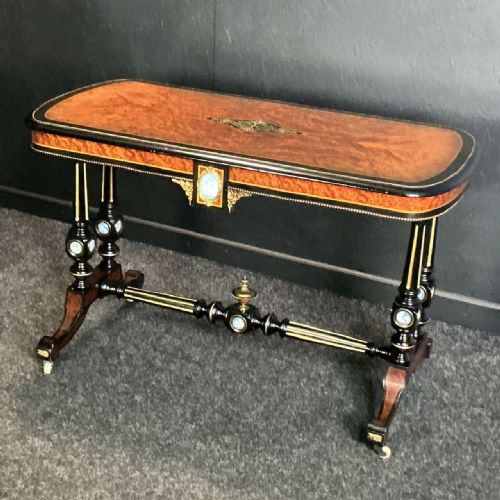
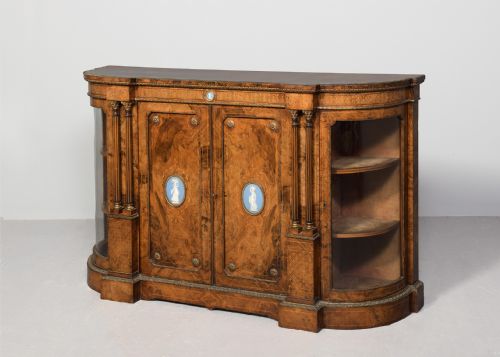
The objects on this page span the 19th century, with notable representation from the 1860s through to the 1890s. Alongside standalone ceramics, you find pieces where ceramic plaques are integrated into furniture such as writing tables and credenzas, paired with amboyna, walnut and giltwood.
Blue and green colourways dominate the selection, appearing in both miniature and large-scale domestic objects. The forms reflect both utilitarian household functions, such as wine coolers and tea sets, and purely decorative mantel items like urns and table lamps.
How They Were Made
The primary material is fine stoneware, created with an unglazed matte finish that highlights the sharp detail of applied white bas-relief figures. Potters moulded these classical figures separately before applying them by hand to the tinted clay body.
In more elaborate Victorian applications, the ceramic components are mounted in or combined with other materials. Evidence shows jasperware plaques set into amboyna and ebonised wood furniture, or mounted with ormolu and gilt bronze on lamps, urns and decanters.
Listings feature jasperware integrated into nineteenth-century furniture, including amboyna centre tables and giltwood writing desks.
What Varies in Quality
Quality in these ceramics rests on the crispness of the moulded relief work and the precision of the application against the background clay. Superior examples maintain sharp definition in the classical figures without blurring at the edges where the sprigged ornament meets the body.
The standard of the surrounding materials also elevates certain pieces above standard domestic wares. Credenzas and writing tables incorporating jasperware plaques alongside exotic timbers like burr walnut or amboyna represent the higher tiers of nineteenth-century production.
Wedgwood·Adams
The 19th Century Jasperware Glossary
- Jasperware
- A type of fine stoneware developed with a matte surface, typically featuring white relief ornamentation against a coloured ground. This ceramic technique defines the majority of pieces in this category.
- Sprigging
- The method of moulding distinct decorative motifs separately and applying them to the surface of a ceramic piece. This technique creates the characteristic raised white designs found on these vessels.
- Credenza
- A grand Victorian cabinet or sideboard used for display and storage, occasionally incorporating ceramic plaques into its timber structure. These large items sit among the more substantial furniture pieces listed here.
- Ormolu
- Gilded bronze mounts applied to decorative objects and lamps. This metallic detailing frequently frames or enhances ceramic bodies in nineteenth-century decorative arts.
19th Century Jasperware: Frequently Asked Questions
What colours do these pieces come in?
The listings show distinct colour variations, most notably shades of blue and olive green. These tinted ceramic bodies provide the contrasting background for the applied white relief decoration.
Darker blue tones and softer olive shades appear across tea sets, trinket boxes and larger decorative domes from the latter half of the nineteenth century.
How were these ceramic items used?
Nineteenth-century households utilised these wares for both daily dining and parlour decoration. Pieces range from functional tea sets and cheese domes to match boxes and wine coolers.
Other items served an ornamental purpose, such as mantle urns, table lamps and ceramic plaques set into luxury writing desks and credenzas.
How do I date these objects?
Dating relies on stylistic indicators and specific production years recorded in the evidence, spanning from the early nineteenth century through to the 1890s. Victorian pieces often combine the ceramic body with period furniture woods like amboyna or walnut.
Individual pieces occasionally bear specific dates or registry marks from the mid-to-late Victorian era, helping to place them within the 1860, 1880, or 1890 brackets.
Are these pieces purely ceramic?
Many examples combine the ceramic stoneware body with other luxury materials typical of the period. Match boxes and urns often feature metal mounts, while larger furniture pieces integrate plaques into wood.
Writing tables and credenzas incorporate giltwood, ormolu, and exotic veneers alongside the ceramic inlays, showing the versatility of the material in Victorian design.