


Victorian Wedgwood Ceramics
Victorian Wedgwood ceramics are nineteenth-century functional and decorative wares that bring tangible neoclassical elegance and rich colour to a modern interior.
Victorian Wedgwood Ceramics
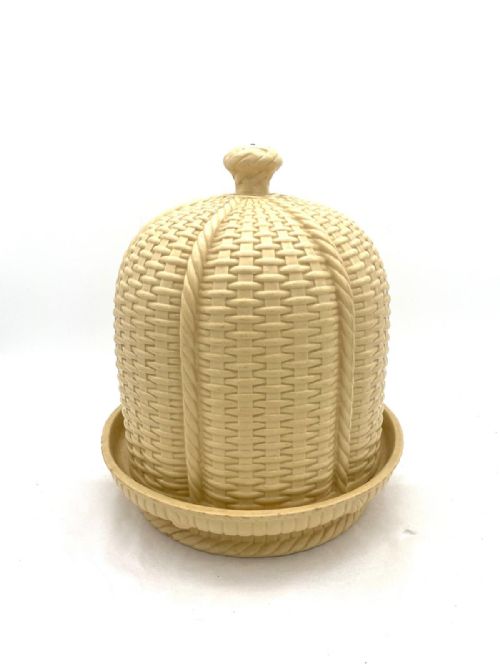
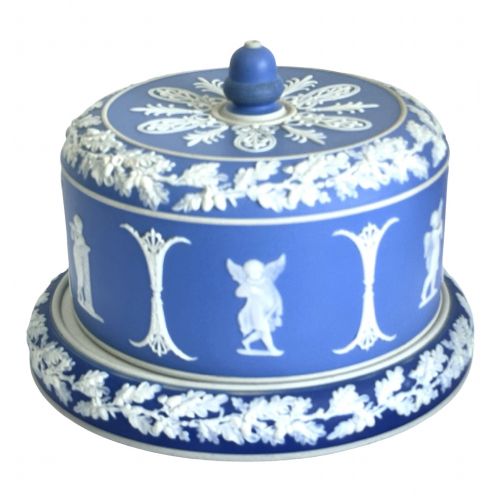
Victorian Wedgwood ceramics encompass a diverse range of nineteenth-century decorative and table wares, from utilitarian kitchen pieces to refined mantel ornaments. When exploring victorian wedgwood ceramics, buyers most frequently encounter jasperware biscuit barrels, cheese domes, and tea sets produced across the nineteenth century.
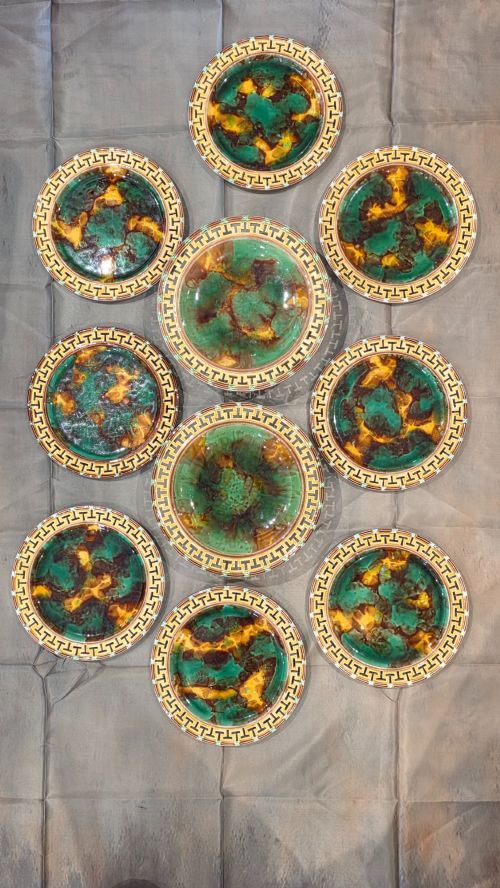
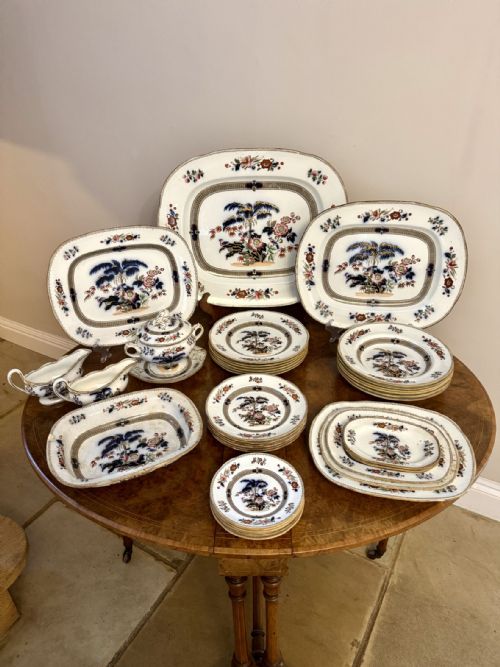
The selections span functional dining items like dessert services and game pie dishes alongside ornamental vases, jardinières, and patch boxes. Many examples date from the 1870s and 1880s, reflecting the high period of Victorian production and design.
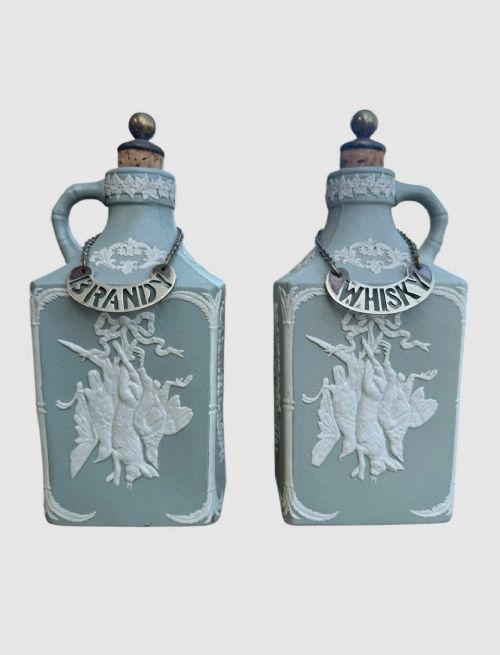
Makers utilised distinct bodies such as stoneware, earthenware, creamware, and caneware, often incorporating classical relief decorations or vibrant glazes. These pieces demonstrate both the domestic utility and the artistic ambition of the Staffordshire potteries during the reign of Victoria.
How they were made
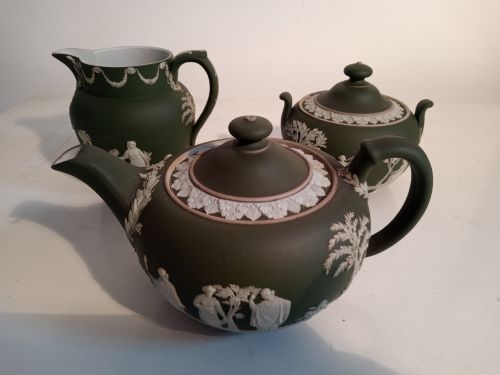
Potters produced jasperware by mixing metal oxides into an unglazed vitrified stoneware body, allowing distinct background colours to support applied white stoneware reliefs. This technique required precise temperature control during kiln firing to ensure the contrast between the coloured body and the applied motifs remained sharp.
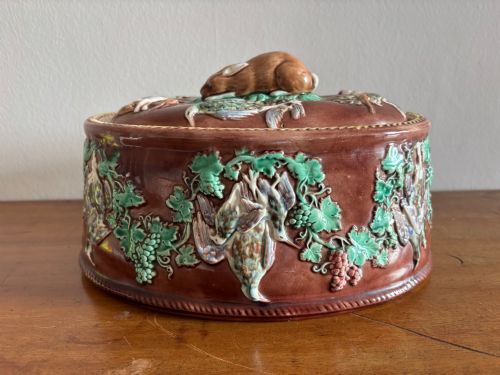
Majolica and earthenware items relied on coloured lead glazes applied over moulded or hand-painted surfaces, yielding rich, glossy finishes suited to decorative serving dishes. Creamware and caneware bodies provided durable, pale foundations for botanical painting and transfer printing.
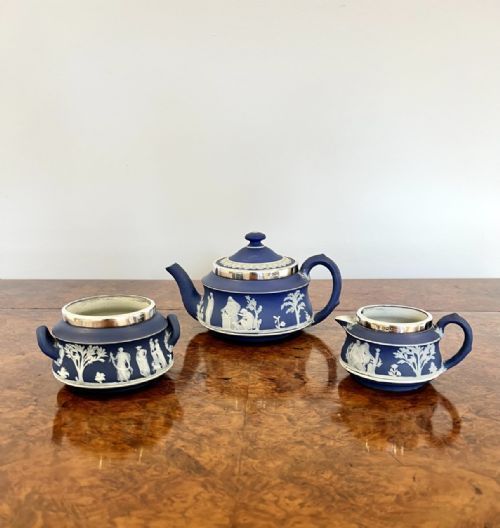
Metal mounts in silver plate were frequently added to functional forms like biscuit barrels and tea sets, combining ceramic bodies with sturdy hardware for daily nineteenth-century use.
Listings feature nineteenth-century Wedgwood items spanning stoneware, jasperware, earthenware, and caneware, alongside functional forms like cheese domes and biscuit barrels.
What varies in quality
The crispness of applied bas-reliefs dictates much of the visual distinction in jasperware, where sharper detailing indicates fresher moulds and more careful finishing by the modeller. Colour saturation in the body and the evenness of the glaze also separate standard production wares from superior exhibition pieces.
Hand-painted elements, such as botanical creamware services or Persian style designs by named artists, introduce another tier of distinction through individual artistic execution rather than standard factory output.
The inclusion of original silver plate mountings and the survival of matching covers, stands, or multi-piece settings significantly influence the integrity and completeness of surviving service pieces.
Thomas Allen
The Victorian Wedgwood Ceramics Glossary
- Caneware
- A buff-coloured, fine earthenware body resembling the colour of bamboo or unbleached flour. It was frequently utilised for utilitarian kitchenware, game pie dishes, and moulds.
- Majolica
- A type of earthenware coated with an opaque tin-lead glaze and painted with metallic oxide colours. It is celebrated for its rich, lustrous appearance and moulded botanical or animal motifs.
- Creamware
- A refined, light-coloured earthenware perfected by Wedgwood in the eighteenth century and continued into the Victorian era. It provided a smooth, pale yellow surface ideal for botanical hand-painting.
- Bas-relief
- A sculptural technique where figures and ornaments project only slightly from the flat background plane. Wedgwood utilised white stoneware bas-reliefs extensively on jasperware vessels and plaques.
- Drabware
- A heavy, utilitarian stoneware or earthenware body fired in dull, brownish-grey or neutral clay tones. It was typically reserved for robust kitchen and dairy vessels.
Victorian Wedgwood Ceramics: Frequently Asked Questions
What were biscuit barrels used for?
Victorian biscuit barrels served as lidded containers on the dining or drawing-room table for storing dry biscuits and sweet treats during afternoon tea.
Their ceramic bodies were often fitted with silver plate mountings and handles to facilitate passing around the table among guests.
How do I care for my ceramics?
These pieces require gentle hand washing in warm, soapy water using a soft cloth, avoiding abrasive pads that can scratch unglazed jasperware or delicate glazes.
Metal mounts should be polished carefully with a suitable non-abrasive cleaner while keeping the surrounding ceramic surface protected.
How are different periods identified?
Periods are identified through a combination of factory backstamps, impressed letters or numbers, stylistic cues, and the specific composition of the ceramic body.
Changes in colour palettes, such as the emergence of olive green or multi-colour jasperware in the later nineteenth century, also help narrow down the date of manufacture.
Were game pie dishes for cooking?
Game pie dishes were designed for both baking heavy meat pies in the oven and presenting them directly at the dining table.
The durable caneware or stoneware bodies retained heat effectively and protected the pastry crust during baking.