
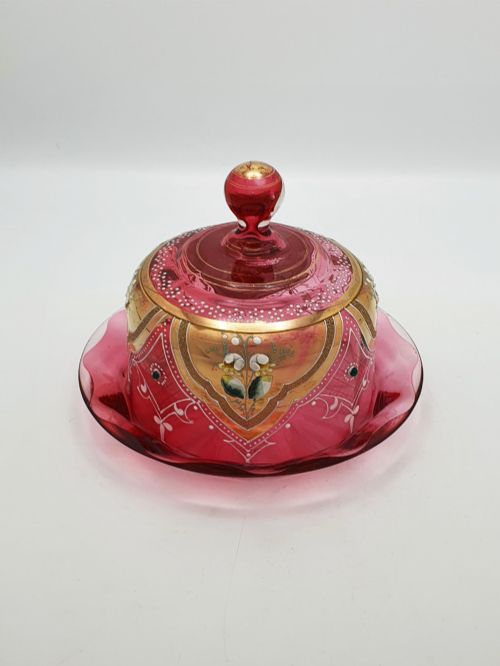
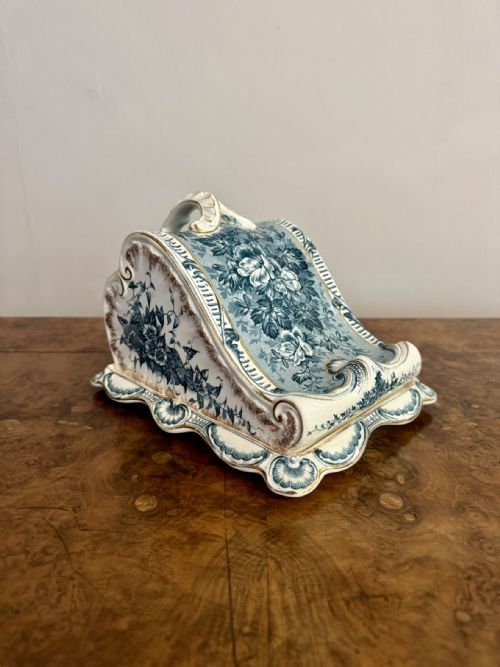
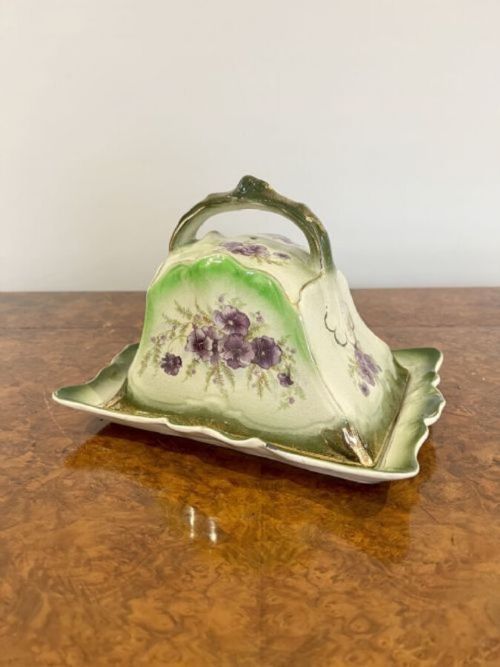
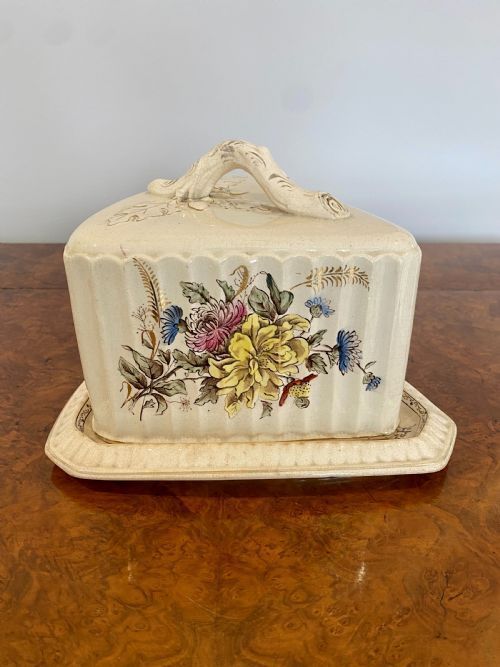
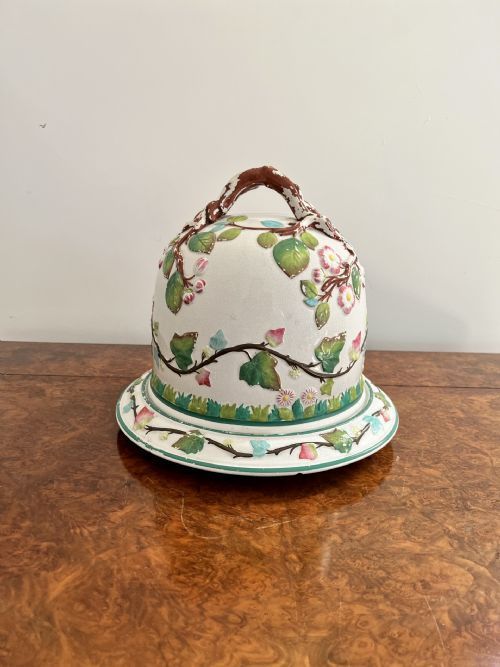


Covered Cheese Bell Dish
A covered cheese bell dish keeps dairy at the table in style, bringing heavy Victorian ceramic domes and stands to your dining room.
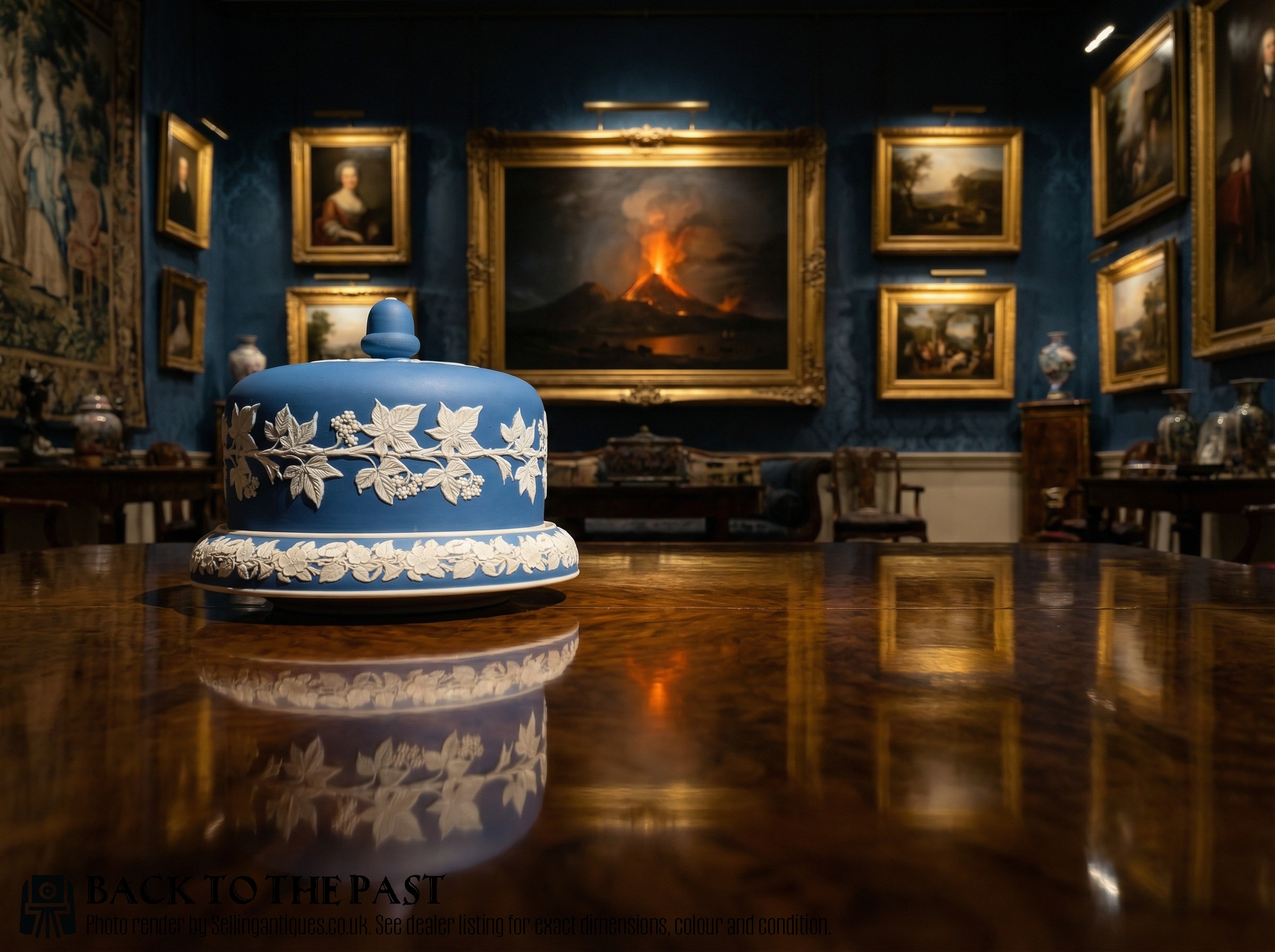
Covered Cheese Bell Dish
A covered cheese bell dish combines a fitted base plate with a domed cover designed specifically to preserve cheese at the table. You will frequently encounter heavy nineteenth-century Victorian examples, often styled as grand cheese domes or Stilton covers.
The selections span from the mid-nineteenth century into the Edwardian era, taking the form of large pottery dishes, smaller continental glass pieces, and silver-plated glass combinations. Most comprise both the matching stand and the bell cover as a complete set.
Makers ranged from large English potteries to continental workshops, producing earthenware, ironstone, and majolica pieces that served practical dining functions in wealthy households.
Materials and Manufacturing
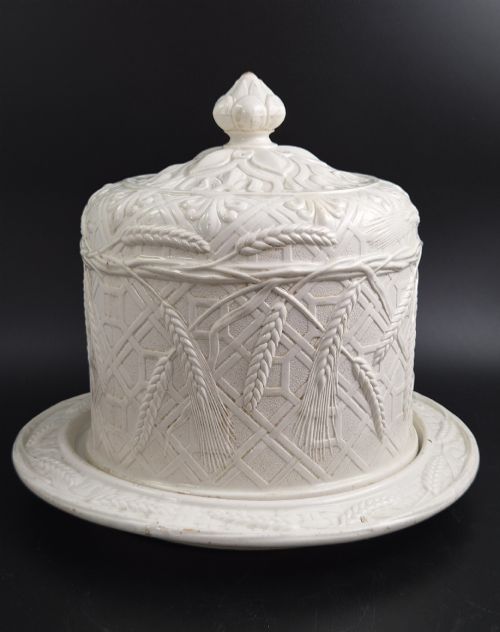
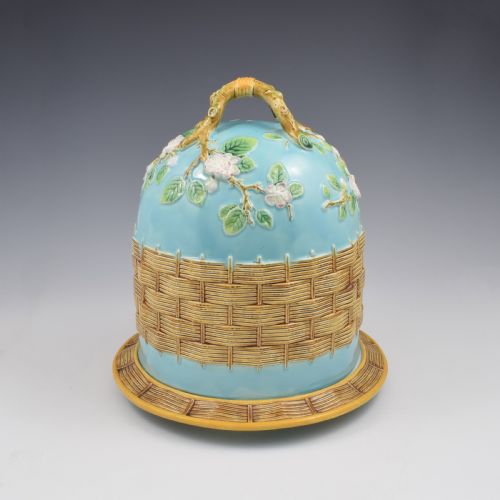
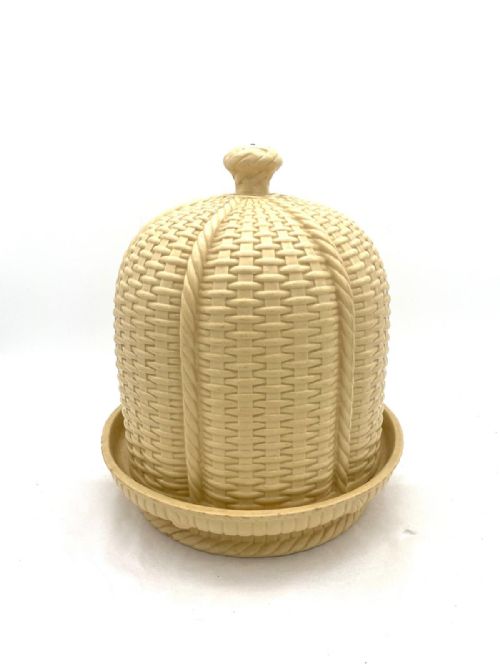
Potters used earthenware, ironstone, and stoneware to shape the heavy domes and stands, frequently applying thick colourful glazes to create majolica and drabware surfaces. Relief moulding produced textured motifs like wheat, lattice, basket weave, and apple blossom directly into the clay body.
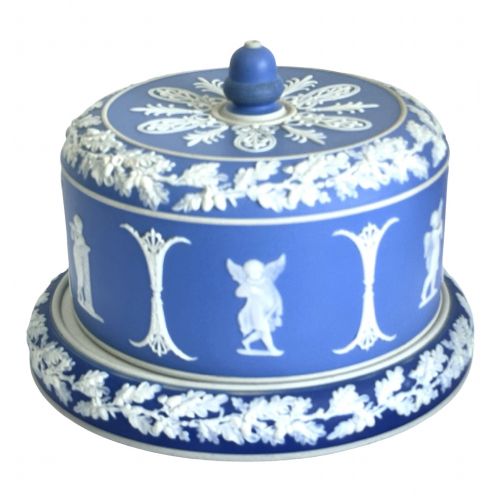
Jasperware pieces relied on fine-grained stoneware bodies with contrasting applied white clay reliefs, while other versions combined blown or pressed glass with silver plating. Firing these large hollow forms required careful temperature control to prevent warping in the kiln.
The listings on this page span from the mid-nineteenth century through the Edwardian period, featuring earthenware, jasperware, and silver plate.
Distinctions in Quality
Depth of relief modelling and crispness in the applied decoration separate standard utility wares from finer artistic pieces. Elaborate hand-painted majolica glazes or intricate basket weave impressions require superior craftsmanship compared to plain white ironstone.
Proportion and scale dictate the visual weight of the dome on its stand, with larger proportions and balanced matching sets commanding greater presence. The integration of materials, such as secure silver plating on glass or precise fitting between the bell and its base, defines the tier of execution.
George Jones·Wedgwood·James Dudson·Copeland
The Covered Cheese Bell Dish Glossary
- Cheese Bell
- A domed cover with a knob handle, shaped like a Victorian handbell, designed to fit over a ceramic stand.
- Majolica
- A type of earthenware covered with an opaque lead glaze containing tin oxide, brightly coloured with metallic oxides. It gained popularity during the Victorian period for richly decorated tableware.
- Ironstone
- A heavy, durable type of ceramic patented in the nineteenth century, bridging the gap between earthenware and porcelain. It was widely used for practical domestic serveware.
- Jasperware
- A fine-grained, unglazed stoneware developed by Josiah Wedgwood, characterised by contrasting raised white clay figures against a coloured background.
- Drabware
- Stoneware or earthenware featuring a muted greyish-brown or olive body, popular for utilitarian tableware during the early nineteenth century.
Covered Cheese Bell Dish: Frequently Asked Questions
How were cheese domes used?
A covered cheese bell dish sat on the dining table to protect strong-smelling cheeses and keep them moist between meals.
The dome trapped aromas and shielded the food from dust, while the matching stand caught crumbs and supported the wheel.
Are majolica cheese dishes heavy?
Yes, Victorian majolica and ironstone pieces are exceptionally dense and weighty due to the thick ceramic body required for large domes.
Lifting the cover usually requires two hands, reflecting the substantial domestic standards of nineteenth-century dining.
What is the difference between ironstone and majolica?
Ironstone provides a sturdy, white, utilitarian surface suited to heavy daily use, whereas majolica displays vibrant coloured lead glazes.
While ironstone focuses on crisp moulded patterns like wheat or lattice, majolica prioritises rich botanical or textural decoration.
Can I use these for modern cheese?
These ceramic and glass pieces accommodate modern cheeses just as they did historical ones, though hand washing is necessary.
The covered environment helps regulate moisture for hard and semi-hard cheeses kept at room temperature.