



Earthenware Cheese Cover
An earthenware cheese cover brings the charm of the Victorian dining room to the modern table, keeping your cheese protected in traditional style.
Earthenware Cheese Cover
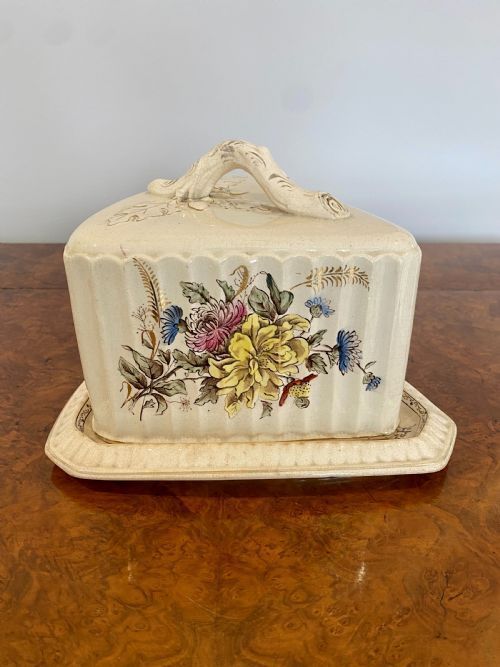
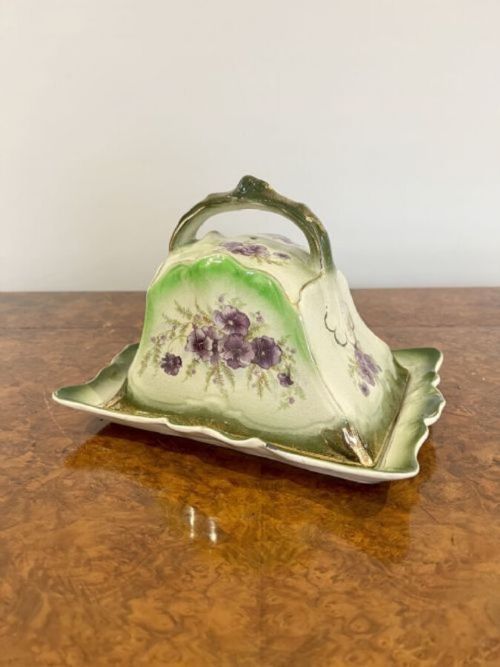
An earthenware cheese cover is a traditional tabletop vessel designed to preserve cheese, typically consisting of a domed cover paired with a matching base or stand. When you search for an earthenware cheese cover, you encounter substantial serving pieces intended for formal dining in the nineteenth century.
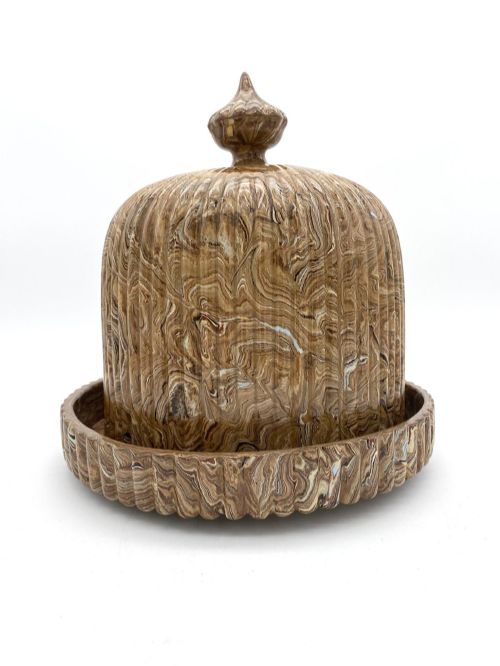
The pieces appearing on this page span the Victorian and Edwardian eras, with notable representation from around eighteen-eighty. Forms range from simple domed covers to complete cheese dishes that include both the bell and the underplate.
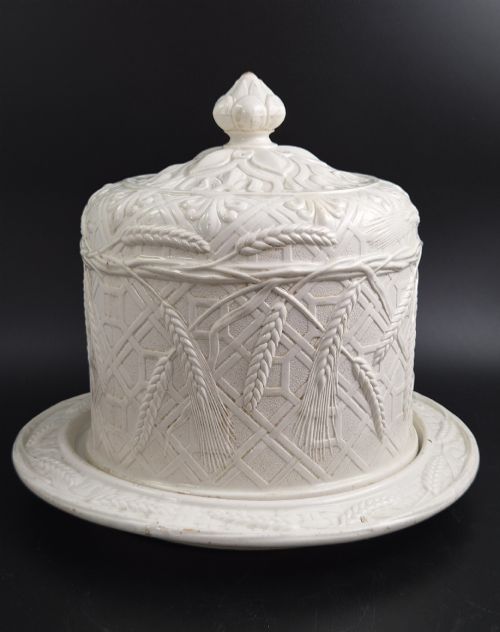
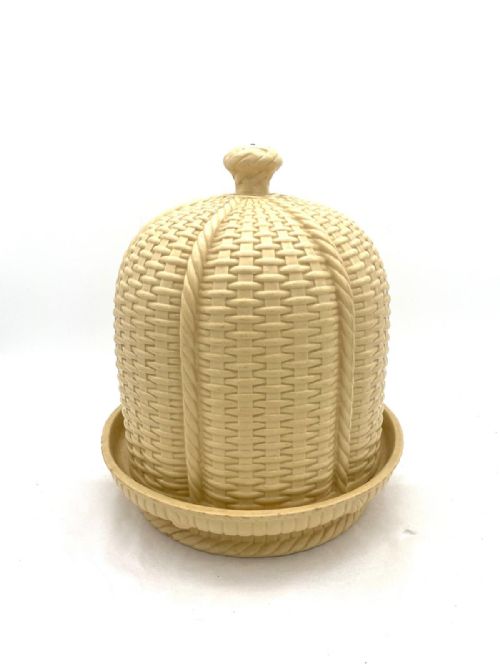
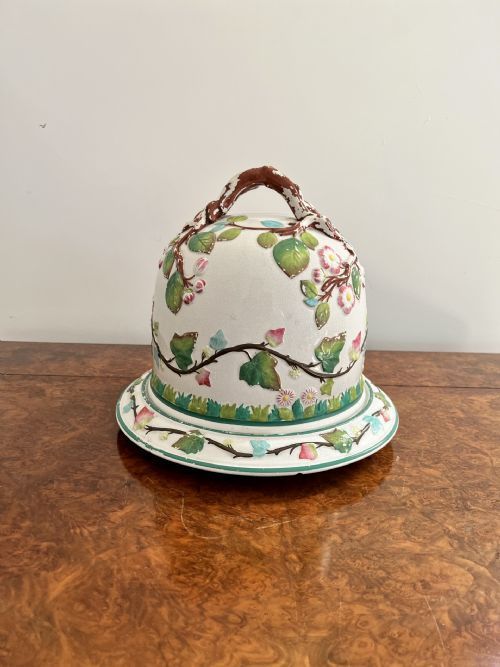
Makers of this period produced these domes in various distinct styles, including white ironstone decorated with wheat and lattice patterns, drabware featuring basket weave textures, and colourful majolica glazes.
How they were made
Potters shaped these vessels using durable ceramic bodies such as ironstone and earthenware, which provided the necessary weight and substance for daily use. These clay bodies were then finished with specialist coatings like majolica glaze or left with a clean white glaze.
Decoration often involved moulded relief work, creating tactile surface patterns such as basket weave and wheat motifs. Some examples received additional embellishment through gilding to highlight the moulded details.
Earthenware Cheese Cover Retail Price Guide 2026
Typical asking prices for earthenware cheese cover among the pieces listed under this phrase on Sellingantiques today, from the lower quarter to the upper quarter. They describe what is for sale here now, not the wider market.
Victorian diners apparently required specialised ceramic bells just to keep the Stilton from gossiping with the cheddar.
What varies in quality
Quality in these domestic wares is defined by the crispness of the moulded relief and the richness of the glaze application. Pieces featuring deeply detailed basket weave or botanical motifs demonstrate superior craftsmanship compared to simpler moulded versions.
The presence of a matching original stand elevates a piece, as many bases and domes became separated over years of domestic service. Richly coloured majolica glazes with strong depth and even coverage also represent the finer end of production.
James Dudson
The Earthenware Cheese Cover Glossary
- Earthenware
- A porous pottery body fired at lower temperatures, requiring a vitreous glaze to render it waterproof. It forms the structural base for many nineteenth-century serving vessels.
- Majolica
- A type of earthenware covered with an opaque tin glaze and painted with metallic oxide colours. This technique produces vibrant greens, browns, and blues often seen on Victorian decorative pieces.
- Ironstone
- A dense, durable ceramic developed in Britain as a robust alternative to porcelain. White ironstone versions frequently feature heavy moulded patterns.
- Drabware
- Pottery featuring unglazed or slip-coloured body tones in muted shades of grey, brown, or olive. It provides a subtle, understated background for textured mouldings like basket weave.
- Cheese Dome
- A bell-shaped cover designed to fit over a plate or stand to keep cheese fresh. These covers often include a top finial for lifting.
Earthenware Cheese Cover: Frequently Asked Questions
What is an earthenware cheese cover?
An earthenware cheese cover is a ceramic dome and stand combination used in the nineteenth century to store and serve cheese at the dining table.
These pieces protected the food from pests and trapped moisture while adding an decorative element to the sideboard.
How do I date an antique cheese dome?
Dating relies on stylistic clues, ceramic bodies, and registration marks stamped underneath the base. Victorian examples often feature heavy moulded relief work or bright majolica glazes.
Edwardian pieces generally show simpler lines and lighter decorative treatments reflecting changing tastes at the turn of the twentieth century.
Can I still use these for serving cheese?
These ceramic covers function well for modern dining, serving as practical storage and attractive table centrepieces.
Care should be taken with antique majolica and earthenware to avoid harsh detergents and sudden temperature changes.
What is the difference between ironstone and majolica?
White ironstone is a durable, heavy ceramic usually left plain white with crisp moulded decoration. It prioritises clean utility and structural strength.
Majolica employs colourful, glossy metallic glazes over earthenware to create vivid, highly decorative surfaces with rich visual texture.