


Edwardian Tableware Ceramics
Edwardian tableware ceramics bring formal dining rituals into focus with hand-painted porcelain, earthenware, and silver plate.
Edwardian Tableware Ceramics
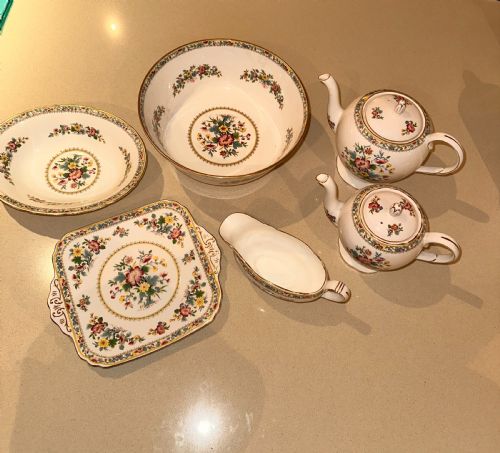
When you search for edwardian tableware ceramics, you encounter complete dinner services, specialised cheese dishes, and dessert sets spanning late Victorian to early twentieth century periods. The pieces on this page range from grand one-hundred-piece dinner services to individual chafing heat dishes and loving cups.
You are most likely to meet traditional English earthenware and porcelain creations, often enriched with gold leaf or gilding. Functional items such as coffee services, food warmers, and jugs reflect the domestic hospitality of the era.
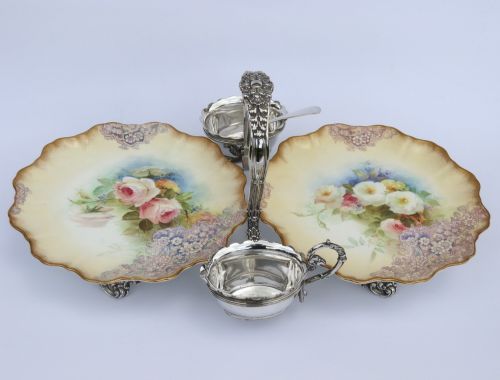
The objects frequently blend stylistic influences, moving from late Victorian ornamentation through distinct Art Nouveau curves towards early Art Deco geometry. Makers combined ceramic bodies with silver plate fittings to create durable and decorative table settings.
What varies in quality
The distinction between standard and superior pieces rests upon the execution of the hand-painted decoration and the crispness of the porcelain or ceramic moulding. Well-preserved gilding and intact enamel work elevate the presence of a set or individual dish.
Integration between ceramic vessels and silver plate mounts dictates the refinement of the object, particularly in complex items like food warmers and strawberry dessert sets. Completeness of service elements and original matching servers add substantially to the integrity of the ensemble.
Object forms range from complete dinner services and coffee sets to specialised cheese dishes, food warmers, and loving cups.
Walker and Hall·Doulton Burslem·Doulton Lambeth·Booths·Coalport·Royal Worcester·Wedgwood·Copeland Spode·Gladstone potteries
The Edwardian Tableware Ceramics Glossary
- Earthenware
- A porous ceramic body fired at lower temperatures, commonly used for traditional English dinner services and utilitarian kitchen vessels. It requires a protective glaze to hold liquids.
- Gilding
- The application of gold leaf or gold paint to ceramic surfaces, enhancing decorative details on plates and tea sets. This metallic enrichment reflects the formal dining tastes of the period.
- Silver Plate
- A thin layer of silver fused to a base metal, frequently utilised for mounts, handles, and serving utensils accompanying ceramic dishes. It offered the appearance of solid silver at a lower cost.
- Stoneware
- A dense, impermeable ceramic fired at high temperatures, suitable for durable jugs, bowls, and heavy-use kitchenware. It resists moisture naturally without relying solely on surface glazing.
Edwardian Tableware Ceramics: Frequently Asked Questions
What is an edwardian cheese dish?
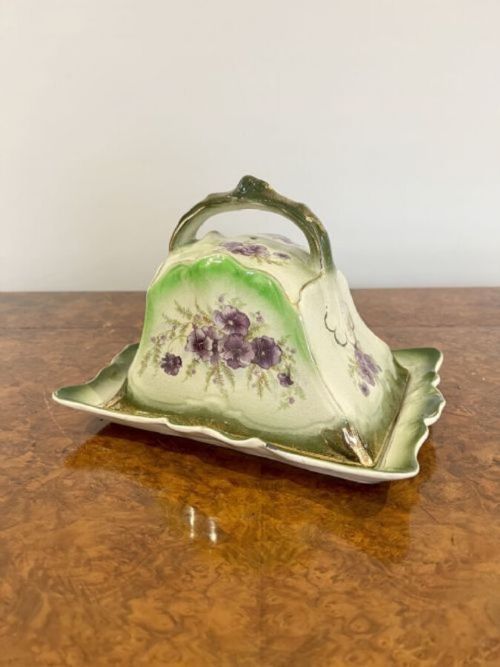
An Edwardian cheese dish is a specialised ceramic cover and base designed to keep cheese fresh on the dining table. These pieces often feature hand-painted floral or geometric motifs typical of the period.
They sit neatly on a matching ceramic plate, providing a decorative and practical centrepiece for the end of a formal meal.
How do I care for antique ceramics?
Antique ceramics and porcelain require gentle hand washing in lukewarm water with mild soap. Avoid abrasive sponges or harsh detergents that can wear away hand-painted details and delicate gilding.
Silver-plated mounts should be polished separately with a non-abrasive metal cleaner, taking care not to transfer chemicals onto the surrounding ceramic glaze.
Are these services suitable for daily use?
While these ceramics were originally created for functional dining, many collectors choose to reserve them for special occasions. The presence of hand-painted enamels and gold leaf makes them more vulnerable to wear over decades of use.
Sturdier earthenware pieces can handle careful, occasional dining use provided they are washed by hand rather than placed in modern dishwashers.