



Victorian Cheese Dome Stand
These Victorian cheese dome stand pieces bring nineteenth-century dining traditions directly to the table with heavy ceramic covers and matching plates.
Victorian Cheese Dome Stand
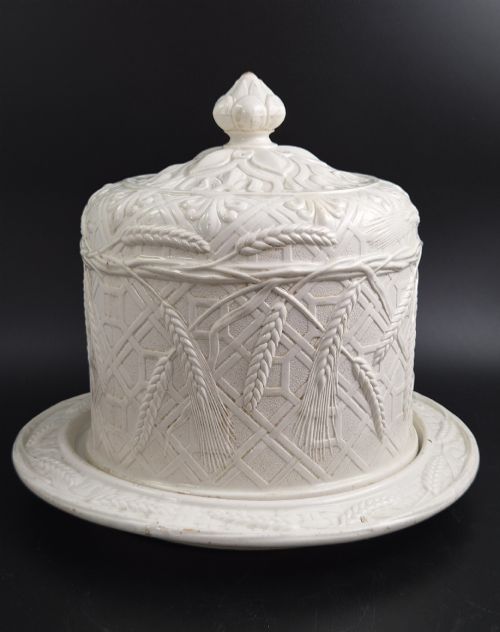
A victorian cheese dome stand pairs a fitted ceramic cover with a matching base plate designed to keep large cheeses fresh on the dining table. Most examples on this page date from the nineteenth century, including pieces from the eighteen-eighties and earlier Victorian decades.
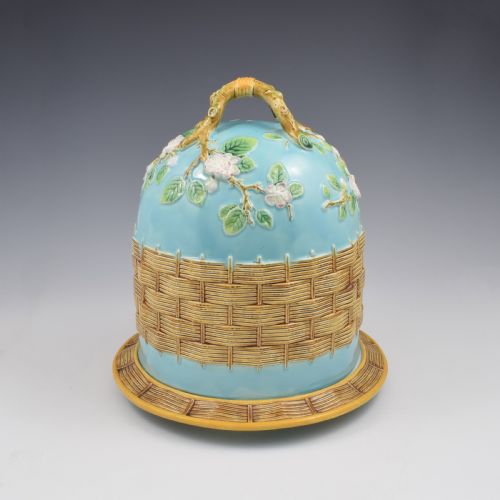
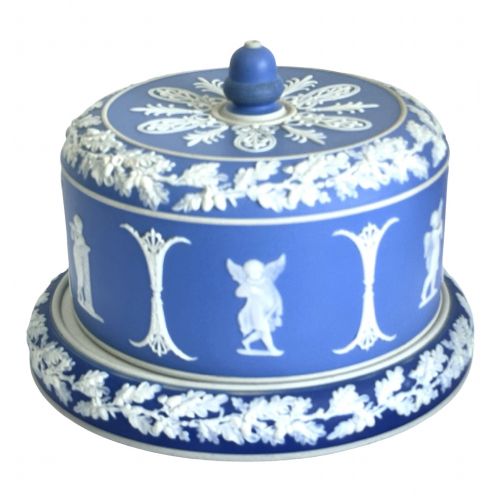
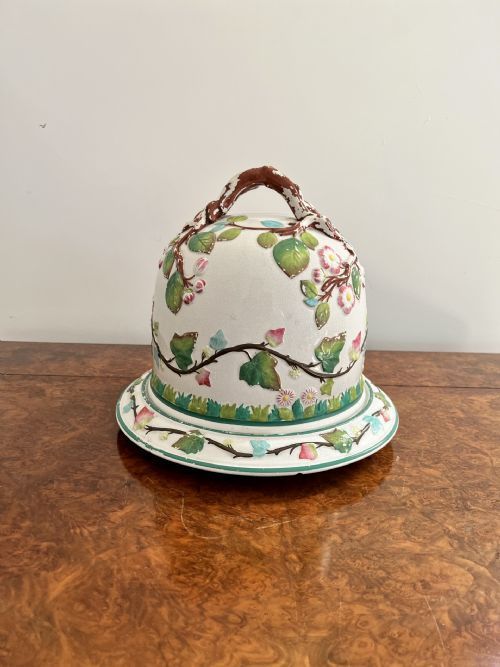
Forms range from plain white ironstone serving dishes to heavily decorated majolica bells and blue or coloured jasperware pieces. Collectors encounter substantial earthenware and stoneware bodies, often featuring elaborate moulded motifs like wheat, lattice, or apple blossom designs.
Originating as practical dining accessories for large households, these items now serve as striking centrepieces for modern interiors. The standard format combines a tall domed lid with a circular tray, though occasional variations include silver plate and glass combinations.
Materials and construction
Potters built these wares using dense earthenware, ironstone, or stoneware bodies capable of supporting heavy domed covers. Manufacturers applied coloured lead glazes to majolica examples, creating vibrant surfaces that catch the light.
Moulding techniques allowed makers to produce intricate relief decoration, from naturalistic apple blossoms to architectural pagoda patterns. Some pieces incorporate applied jasperware details or subtle gold leaf highlights across the moulded surfaces.
Victorian Cheese Dome Stand Retail Price Guide 2026
Typical asking prices for victorian cheese dome stand among the pieces listed under this phrase on Sellingantiques today, from the lower quarter to the upper quarter. They describe what is for sale here now, not the wider market.
Factors of quality
Quality depends heavily on the crispness of the moulded relief and the richness of the glaze application. Finer majolica pieces show deep, vibrant colour pooling in the recesses, whereas simpler ironstone items rely on clean lines and uniform white glazes.
Proportion and scale also separate standard utility items from exceptional display pieces, particularly among large majolica bells and Wedgwood or Dudson jasperware. The weight of the ceramic body and the precision of the fit between dome and base reflect the maker's skill.
George Jones·Wedgwood·James Dudson·Copeland·Masons
The Victorian Cheese Dome Stand Glossary
- Ironstone
- A dense, durable type of earthenware patented in the nineteenth century to rival porcelain. It provides a sturdy white body well suited for large culinary vessels.
- Majolica
- A type of earthenware covered with an opaque coloured lead glaze, popular during the Victorian period. It is known for rich, saturated tones and moulded botanical or figurative designs.
- Jasperware
- A fine-grained, unglazed stoneware developed by Josiah Wedgwood, typically featuring white relief ornaments against a coloured background. Pieces often display precise neoclassical or natural motifs.
- Dome
- The tall, bell-shaped cover designed to fit securely inside the rim of the base plate. Its primary function was to retain moisture and protect the cheese from pests.
Victorian Cheese Dome Stand: Frequently Asked Questions
What was a Victorian cheese dome used for?
These large covered dishes protected large blocks of cheese from drying out and kept household odours contained between meals. They sat prominently on the dining table during breakfast or after-dinner courses.
Servants brought the heavy ceramic bell and stand to the table, removing the cover to reveal the cheese when required. The design reflects the Victorian appetite for elaborate and specialised tableware.
How do I date a Victorian cheese dome?
Dating relies on identifying maker marks stamped into the ceramic base, stylistic clues, and manufacturing materials. Ironstone and majolica styles often point towards the middle and later decades of the nineteenth century.
Glaze characteristics and registration marks help narrow down the period of production. Reference books on British pottery marks provide exact timelines for specific factories.
Can I still use these for serving food?
Many collectors continue to use their ceramic stands for serving hard cheeses at room temperature. The dense earthenware bodies remain functional provided they are handled with care.
Owners should inspect older pieces for historical hairline cracks or crazing before placing food in direct contact with the glaze. Modern dishwashers and microwaves should be avoided entirely.