


Antique Ceramic Pharmacy Jar
An antique ceramic pharmacy jar carries centuries of apothecary history in tin-glazed earthenware and polychrome pigments.
Antique Ceramic Pharmacy Jar
When you search for an antique ceramic pharmacy jar, you encounter apothecary vessels, drug jars, albarellos, and pharmacy jugs spanning from the seventeenth century through the nineteenth century. These containers held medicinal preparations, syrups, and dried drugs in European dispensaries.
The version you are most likely to meet on this page is the Italian majolica or English delftware albarello, shaped with a waisted body for pharmaceutical storage.
The selection includes pieces created within English, Dutch, and Italian traditions, employing styles from the Baroque and Renaissance periods alongside Victorian designs.
How they were made
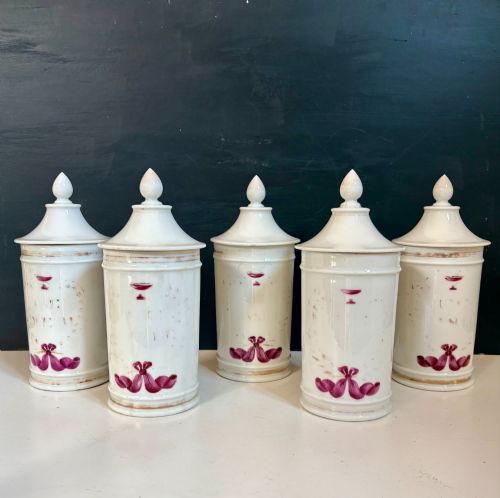
Potters shaped these vessels from earthenware and porcelain, applying a tin glaze to create an opaque white or cream surface suitable for holding liquids and dry medicines.
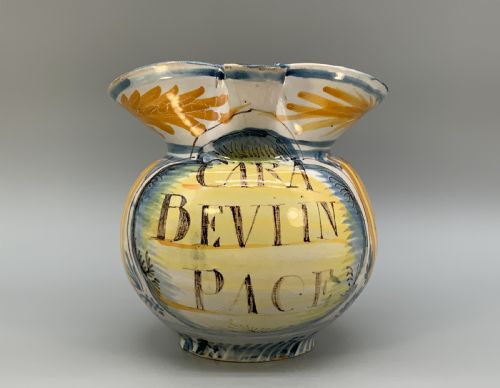
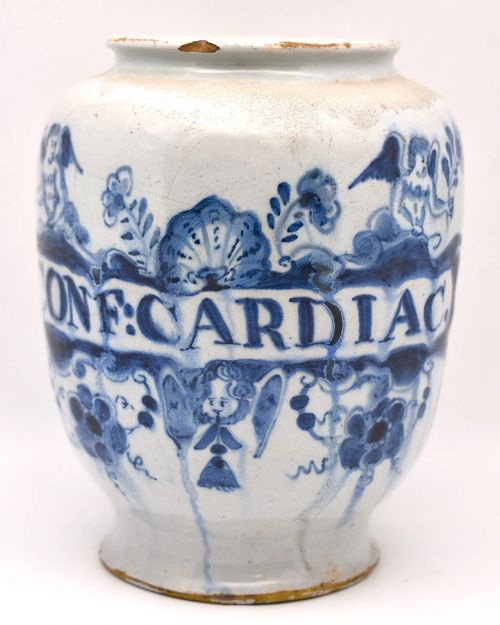
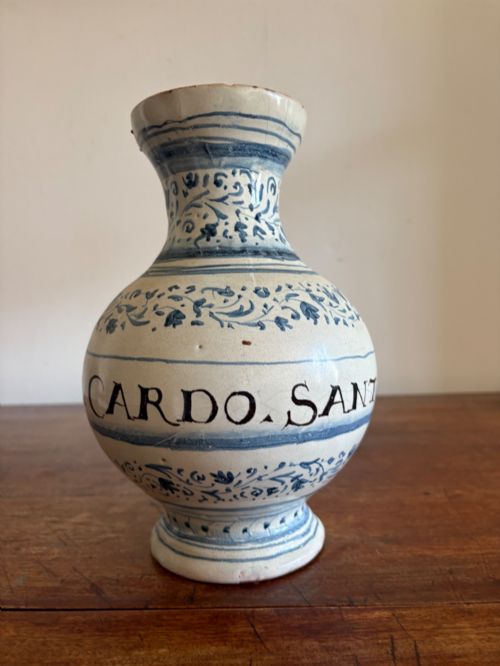
Decoration relied heavily on cobalt pigment for blue and white designs, alongside polychrome, manganese, and yellow pigments for pictorial elements and inscribed labels.
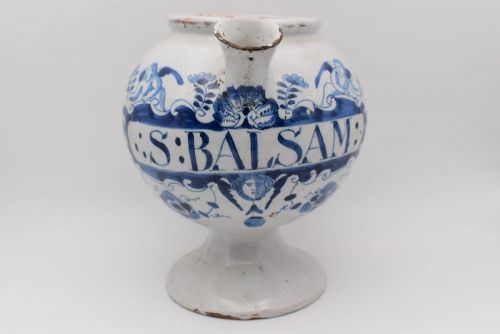
Some pharmacy jars come labeled for mysterious sounding contents like Aq Di Greedri and BALSAM.
What varies in quality
Quality rests in the precision of the hand-painted inscriptions, the complexity of the polychrome or blue and white palette, and the preservation of the tin glaze across the body and handles.
Early seventeenth and eighteenth-century examples show distinct potting techniques and glaze thickness that separate them from later nineteenth-century production.
Samuel Alcock and Co
The Antique Ceramic Pharmacy Jar Glossary
- Albarello
- A cylindrical or waisted ceramic jar designed for holding apothecary drugs and ointments. This form originated in the Middle East and became popular in Italian and European pharmacies.
- Tin Glaze
- A ceramic glaze made by adding tin oxide to a lead glaze, producing an opaque white surface. It serves as the ground for painted decoration on delftware and majolica.
- Delftware
- Tin-glazed earthenware produced in England and the Netherlands. Pieces typically display blue and white designs inspired by imported porcelain.
- Wet Drug Jar
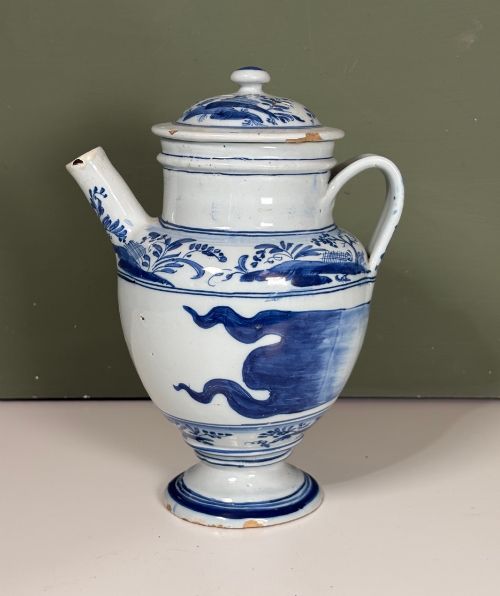
- An apothecary container featuring a spout or wider mouth designed specifically for liquid medicines, syrups, and oils. These often include painted handles and covers.
Antique Ceramic Pharmacy Jar: Frequently Asked Questions
What did an antique ceramic pharmacy jar hold?
These vessels stored dried herbs, chemical compounds, ointments, and medicinal syrups in historical dispensaries and apothecary shops.
The specific contents were often painted directly onto the jar body in Latin or local languages so the apothecary could identify the medicine quickly.
How do I tell Italian majolica from English delftware?
Italian majolica typically employs rich polychrome palettes including manganese, yellow, and blue on tin-glazed earthenware bodies. English delftware leans towards cobalt blue painting on tin glaze, often featuring distinct local drug labels and cherub motifs.
Examining the potting style and the secondary pigments provides further clues to the regional origin of each vessel.
What is an albarello jar?
An albarello is a straight-sided ceramic jar with a waisted, concave middle that allows an apothecary to grip the vessel easily with wet or powdery hands.
This distinct silhouette developed in the Near East and became the standard shape for dry drug storage across European pharmacies.
How should I display an apothecary jar at home?
These ceramic vessels suit open shelving, mantelpieces, or dedicated display cabinets where their painted surfaces remain visible. Some nineteenth-century examples have even been adapted as table lamps.
Keeping them away from direct sunlight and handling them by the body rather than the rim preserves the historic tin glaze.