



Antique Ceramic Drug Jars
Antique ceramic drug jars hold the tinctures and powders of past apothecaries, bringing centuries of apothecary history into a room.
Antique Ceramic Drug Jars
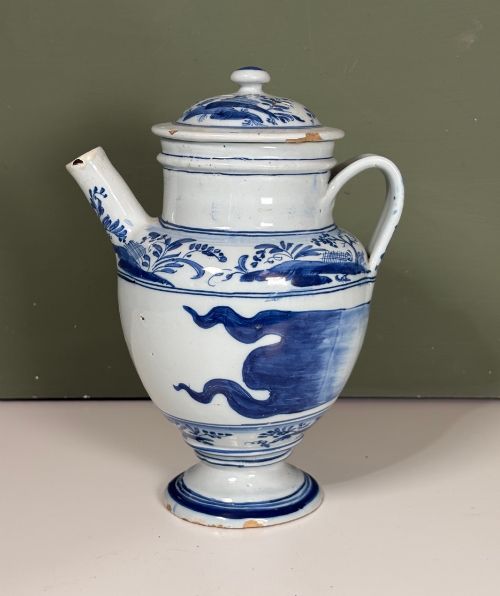
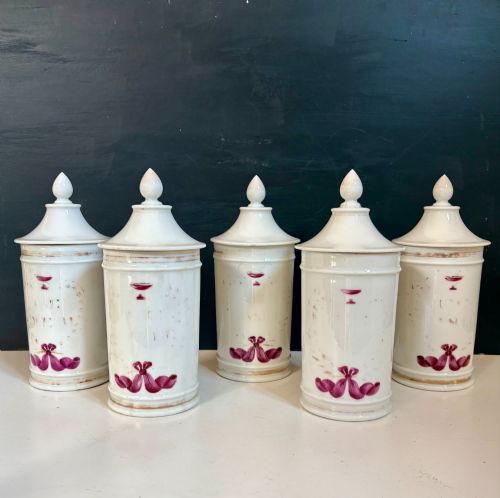
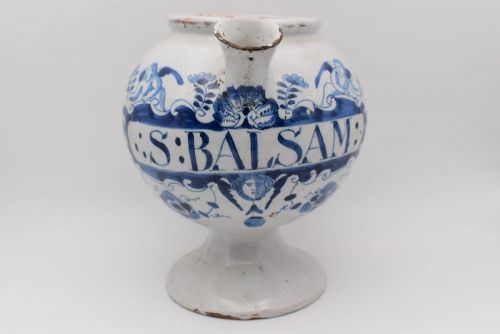
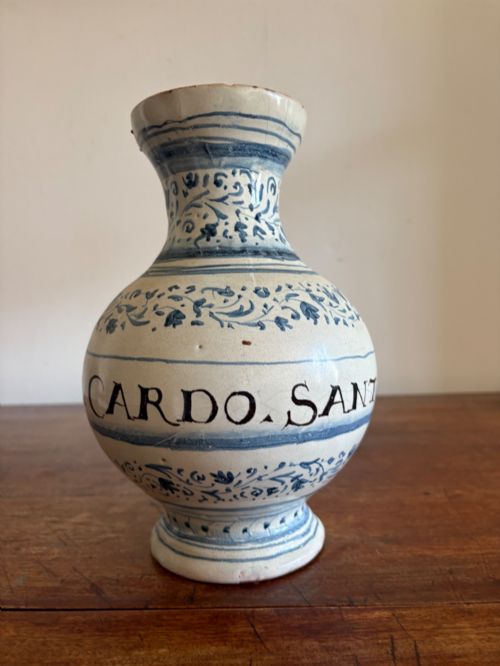
Antique ceramic drug jars are traditional apothecary vessels designed to hold dry herbs, wet medicines, syrups, and compounds in dispensaries and sickrooms. The pieces appearing in this selection span from the seventeenth century through the nineteenth century, taking forms such as cylindrical albarelli, handled pharmacy jugs, and decorative jars.
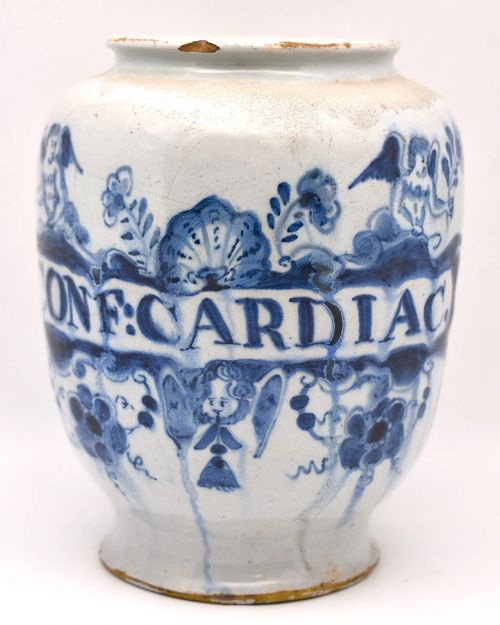
The most common versions met on this page belong to the eighteenth century and nineteenth century, originating from English, Dutch, and Italian traditions. These containers range from small individual bottles to large storage jars inscribed with pharmaceutical abbreviations and names.
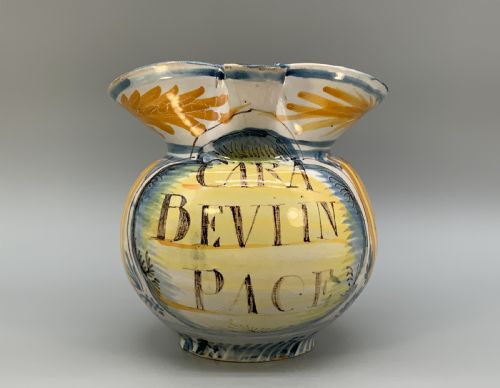
Makers and workshops across Europe produced these vessels in styles including Italian Baroque, Dutch Delft, Georgian, and Victorian. Buyers find both dry drug jars and wet drug jugs, often retaining their original painted labels or contents inscriptions.
How they were made
Potters shaped these vessels from earthenware, porcelain, and tin-glazed earthenware, applying an opaque white tin glaze that provided a smooth surface for painting. Artisans painted inscriptions and ornamentation directly onto the glaze using cobalt pigment, manganese, and polychrome mineral colours.
Many pieces received a secondary firing to fix the pigments and glaze, creating the durable surfaces seen on Italian majolica, faience, and English delftware examples. The resulting bodies vary from coarse earthenware to refined ceramic pastes.
Listings feature earthenware, porcelain, and tin-glazed earthenware vessels spanning the seventeenth, eighteenth, and nineteenth centuries.
What varies in quality
Quality in these jars rests upon the clarity of the painted decoration, the precision of the pharmacy inscription, and the richness of the palette, whether in deep cobalt blue or multi-coloured polychrome. Pieces with detailed motifs like cherubs, shells, or intricate cartouches demonstrate superior handwork.
The preservation of the original tin glaze and the sharpness of the form separate standard production wares from exceptional examples. Surviving covers and well-preserved inscriptions add significantly to the character of a jar.
Samuel Alcock and Co
The Antique Ceramic Drug Jars Glossary
- Albarello
- A cylindrical earthenware jar designed for holding dry drugs and ointments, originating in the Middle East and adopted throughout European pharmacies. Its waisted shape allowed pharmacists to stack jars easily on shelves.
- Tin-Glaze
- A pottery glaze containing tin oxide that fires to an opaque white, serving as a canvas for painted decoration. English delftware and Italian majolica both rely on this technique.
- Majolica
- Italian tin-glazed earthenware decorated with coloured pigments on an opaque white ground. The style encompasses vibrant polychrome and blue-and-white pharmacy wares.
- Faience
- European tin-glazed pottery, particularly associated with French and Italian production centres. The term often describes tin-glazed earthenware vessels produced outside traditional Dutch delft kilns.
- Wet Drug Jar
- A specialised pharmacy vessel featuring a spout or wide mouth suited for liquid medicines, syrups, and oils. These jugs often display abbreviated Latin inscriptions denoting their original medical contents.
Antique Ceramic Drug Jars: Frequently Asked Questions
What were antique ceramic drug jars used for?
Apothecaries and physicians used these vessels to store medicinal herbs, dried roots, powders, confections, and liquid syrups in dispensaries. The containers protected sensitive medical ingredients from light and air.
Each jar bore an inscription indicating its specific contents so the apothecary could locate remedies quickly during compounding.
Why do some drug jars have spouts?
Jars equipped with spouts and handles were designated as wet drug jugs for storing liquid medicines, oils, and syrups. The spout allowed the apothecary to pour liquids cleanly without removing a lid.
Dry drug jars lacked spouts, featuring straight or waisted cylindrical bodies designed to hold solid compounds and powders.
How do I display antique drug jars at home?
These jars look best arranged on open wooden shelving or within glass-fronted cabinets where their painted inscriptions and forms remain visible. Grouping pieces by period or palette highlights their historic variety.
Placing them away from direct heat sources protects the historic tin glaze and earthenware bodies from stress.