
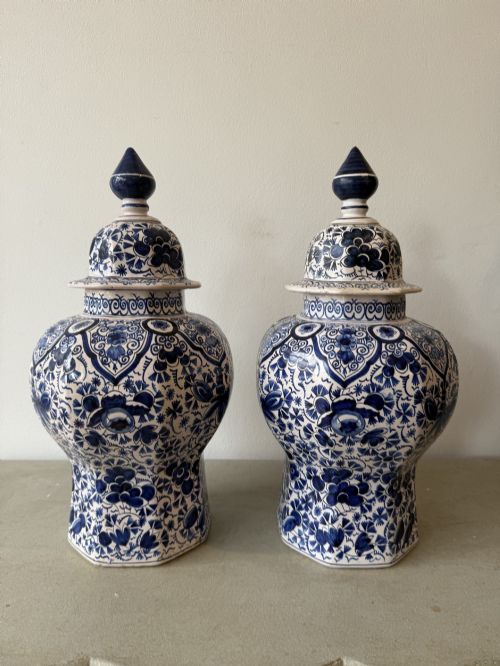


Dutch Delftware Urns
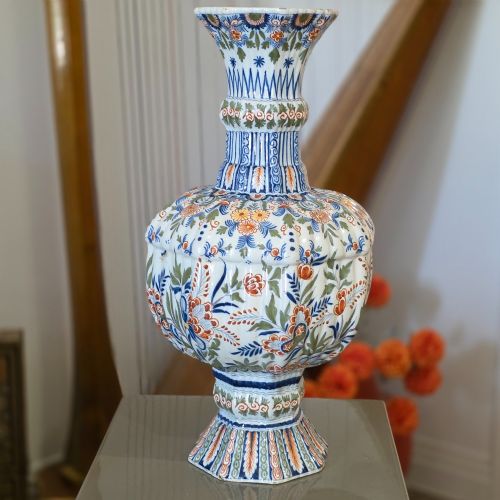
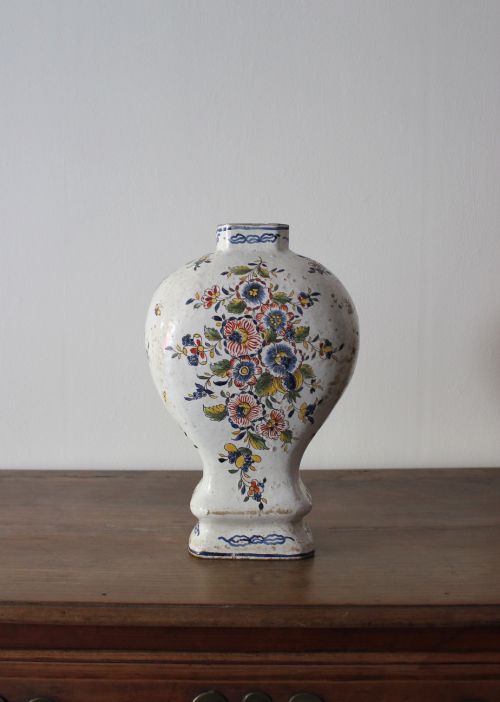
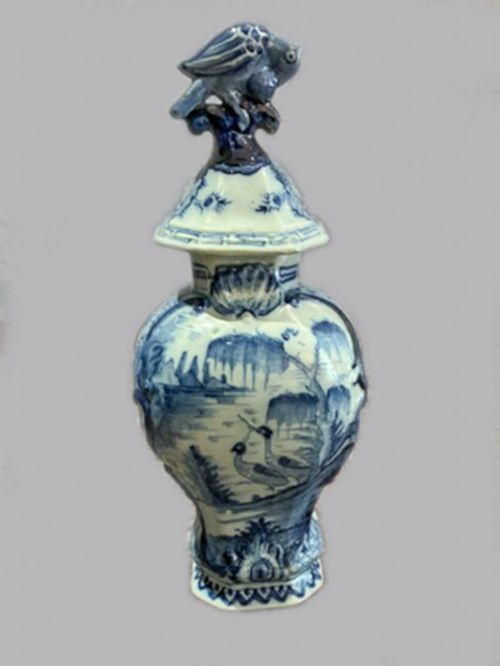
Dutch delftware urns are tin-glazed earthenware vessels brought home to display blue and white scenes of birds, flowers and garden vistas.
Dutch Delftware Urns
When you search for dutch delftware urns, you enter a field defined by tin-glazed earthenware shaped into lidded jars, garden urns and baluster vases. These vessels span from the seventeenth century through to the nineteenth century, capturing shifts in domestic decoration across several eras.
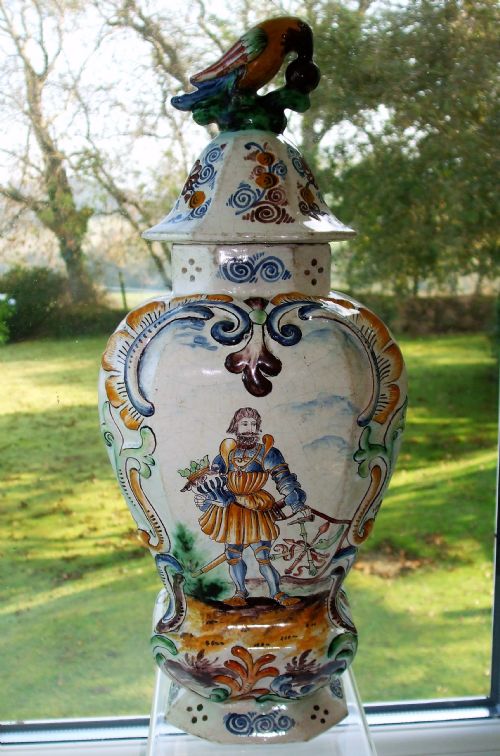
The version you are most likely to meet on this page is the eighteenth-century lidded vase or jar, often finished in blue and white or polychrome pigments. Makers also produced large garden planters, tobacco jars and beaker vases alongside pairs adapted later into table lamps.
Forms range from ribbed beaker vases to substantial handled garden urns. Many examples incorporate chinoiserie motifs, drawing on trade patterns that shaped European taste during the baroque and rococo periods.
Assessing quality
Quality rests on the crispness of the hand-painted brushwork and the stability of the tin glaze over the earthenware body. Pieces featuring detailed chinoiserie birds and botanical elements demonstrate superior control by the painter.
Proportion and the survival of matching covers distinguish finer vessels. Handles and ribbed profiles show the modeller's skill before glazing and firing.
Makers painted spirited birds and botanical scenes onto jars that eventually found a second life wired as nineteenth-century table lamps.
The Dutch Delftware Urns Glossary
- Tin-Glazed Earthenware
- Earthenware pottery coated with a lead glaze made opaque by the addition of tin oxide. This surface served as the canvas for blue and white painting.
- Baluster Vase
- A vase with a rounded body that tapers toward the base and swells above, resembling a architectural baluster. These form a major share of lidded vessel shapes.
- Chinoiserie
- European artistic styles reflecting Chinese motifs and landscapes, popular on seventeenth and eighteenth-century ceramics. Painters applied these scenes in cobalt blue.
- Polychrome
- Decoration employing multiple colours rather than a single pigment like cobalt blue. These examples introduce greens, reds and yellows alongside standard glazes.
- Tobacco Jar
- A jar produced for storing leaf tobacco, often fitted with a cover. These form a distinct functional category within the broader range of jars.
Dutch Delftware Urns: Frequently Asked Questions
What were dutch delftware urns used for?
These vessels served primarily as decorative ornaments displayed on mantelpieces, cabinets and side tables within prosperous homes.
Some larger examples functioned as garden urns or specialised containers such as tobacco jars, while others were later converted into table lamps.
How do I date an antique delft piece?
Dating relies on stylistic shifts, potting techniques and the characteristics of the tin glaze. Seventeenth-century examples often display distinct chinoiserie motifs, whereas later nineteenth-century pieces show different baseline forms.
Comparing the cobalt pigment depth and body weight helps determine whether a vessel belongs to the eighteenth century or a later revival period.
Are lids on delft jars original?
Many lidded vases and jars retain their original covers, which were potted and glazed alongside the main body. Because lids broke easily over centuries, replacements do occur.
Examining the glaze consistency and fit helps establish whether a cover belongs to the same period as the base.
How should I clean a delft urn?
Dusting with a dry, soft cloth is the safest way to maintain tin-glazed earthenware. Avoid harsh chemical cleaners or soaking, as the porous earthenware body beneath the glaze can absorb moisture.
Care must be taken around old repairs or converted lamp fittings to preserve the integrity of the ceramic.