

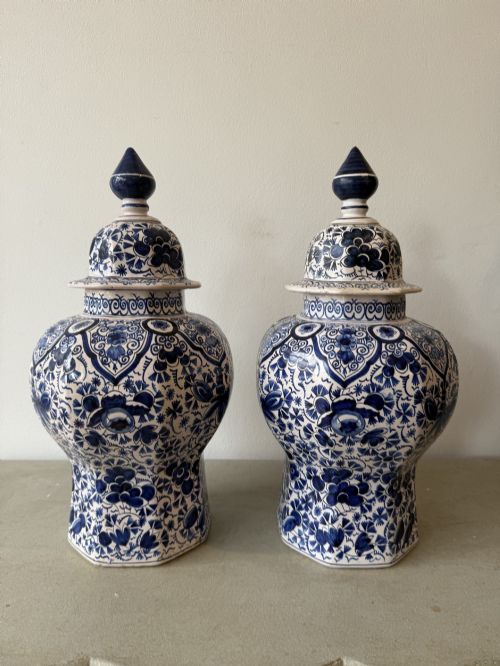


Blue White Delftware Pair
A blue white delftware pair brings matching hand-painted tin-glazed earthenware into a room, offering symmetric display pieces from centuries of ceramic tradition.
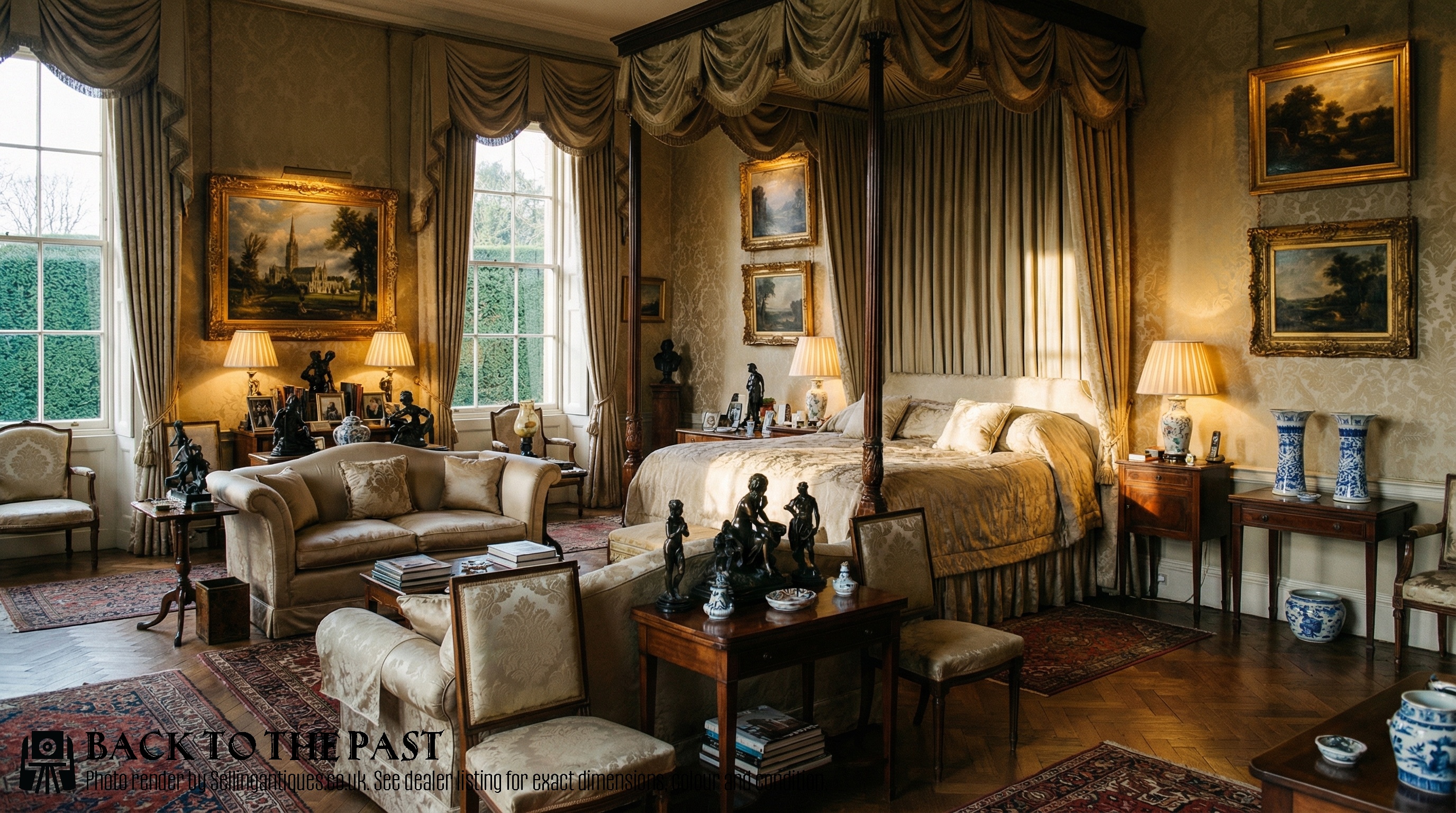
Blue White Delftware Pair
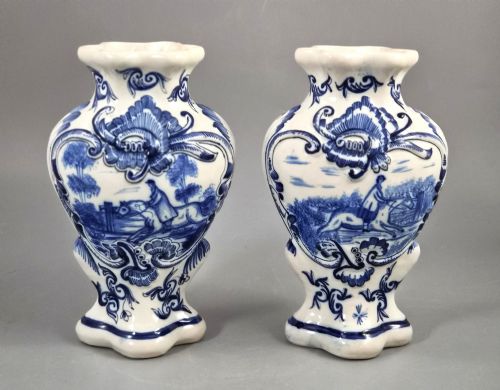
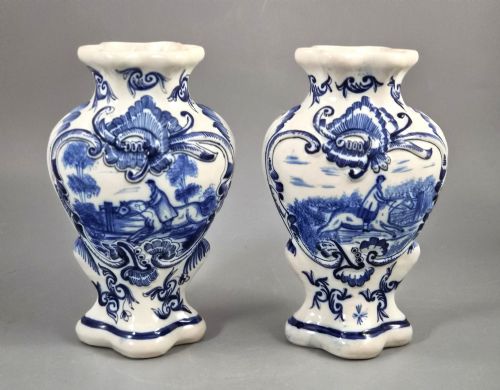
A blue white delftware pair consists of matched ceramic vessels, plates, or figures created to sit together in symmetric display. When you search for this phrase, you encounter items spanning the eighteenth and nineteenth centuries, originating from Dutch, English, and French workshops.
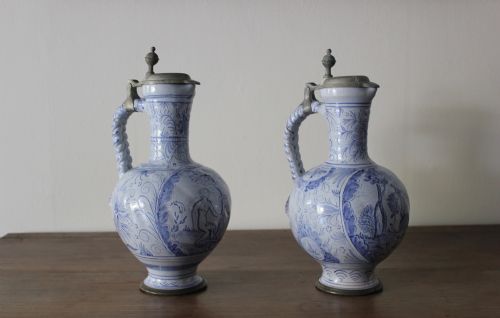
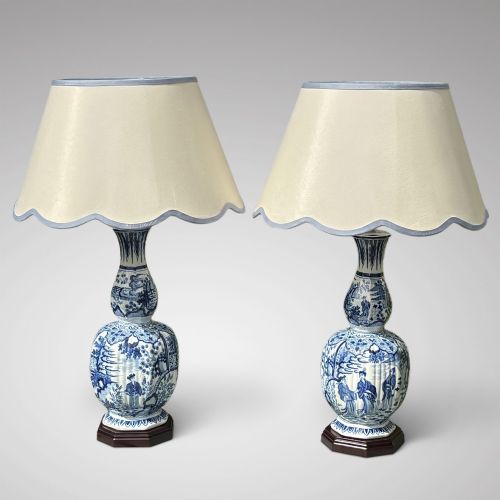
The selections on this page most frequently take the form of decorative plates, lidded jars, and vases. You also meet table lamps, ewers, and figurative groupings like pottery cows.
Geographic origins vary between traditional Dutch Delft, English production centres such as Lambeth, and French faience makers like Fourmaintraux-Courquin at Desvres. Each region brings distinct stylistic influences, ranging from Dutch Baroque and Chinoiserie to French Rococo Revival.
Materials and methods
Makers shaped clay and earthenware bodies before applying an opaque white tin glaze that provided a smooth canvas for painting. Artisans then brushed cobalt pigment directly onto this unfired or raw glaze to achieve the characteristic deep blue decoration.
Firing techniques varied across centuries, with pieces subjected to kiln heat that bonded the cobalt into the tin glaze. Some nineteenth-century examples incorporate additional mounts or handmade elements such as gilt bases and tailored lamp shades.
Listings here feature earthenware and tin-glazed items spanning the eighteenth, nineteenth, and twentieth centuries, including table lamps and pottery cows.
Judging quality in matching items
Quality rests in the precision and consistency of the hand-painted cobalt decoration across both objects in the pair. Crispness of line and depth of tone distinguish superior examples from simpler production.
The harmony of the matching pair determines its success on display. Uniformity in glaze coverage, shape, and proportion between the two pieces reflects the skill of the original workshop.
Fourmaintraux-Courquin
The Blue White Delftware Pair Glossary
- Tin Glaze
- An opaque white ceramic glaze containing tin oxide, which provides the pale background essential for traditional blue and white painting. This surface absorbs the cobalt pigment during firing to create soft, blurred edges on the painted motifs.
- Cobalt Pigment
- A metallic oxide used by potters to achieve deep blue colouration under the glaze. It withstands high kiln temperatures without losing its intensity.
- Chinoiserie
- European artistic interpretation of Chinese and East Asian decorative styles, frequently seen on Dutch and English delftware panels. The motifs typically involve imaginary landscapes, figures, and pavilions.
- Faience
- European tin-glazed earthenware, a term widely applied to French and continental pottery traditions analogous to English and Dutch delft. It encompasses decorative wares produced from the eighteenth century onward.
- Earthenware
- Porous pottery fired at lower temperatures than stoneware or porcelain, requiring a glaze to achieve impermeability. It forms the structural body of all traditional delftware pairs.
Blue White Delftware Pair: Frequently Asked Questions
What is a delftware pair?
A delftware pair comprises two matching tin-glazed ceramic objects created together for symmetric placement. They are most commonly found as plates, jars, or vases.
These matching sets allowed eighteenth and nineteenth-century interiors to achieve balanced mantelpiece or cabinet displays.
How do I date a delft pair?
Dating relies on stylistic clues, glaze characteristics, and potting techniques. Eighteenth-century pieces often show softer earthenware bodies and hand-mixed pigments, while nineteenth-century items may feature crisper factory output or later mounted adaptations.
Examining the foot ring and the tone of the tin glaze provides further context for the period of manufacture.
Where were these pairs made?
Production centres include traditional Dutch kilns in Delft, English sites such as Lambeth, and French faience factories like Desvres. Each region developed distinct interpretations of the blue and white palette.
Dutch works often leaned toward Baroque or Chinoiserie motifs, whereas French pieces embraced later revival styles.
How do I live with them?
Display these matched items on mantelpieces, sideboards, or within cabinets where their symmetry can be appreciated. Because tin-glazed earthenware has a porous body, keep them away from damp environments.
Dust them gently with a dry cloth and avoid using liquid cleaners on antique glaze surfaces.