


Vintage Pharmacy Display Jars
These vintage pharmacy display jars are heavy glass vessels that bring a striking clinical presence and brilliant colour to a modern room.
Vintage Pharmacy Display Jars
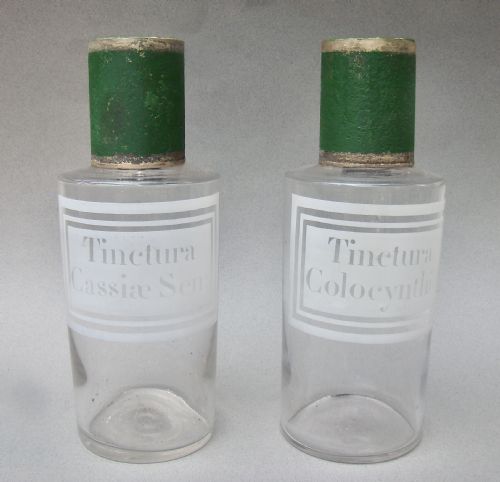
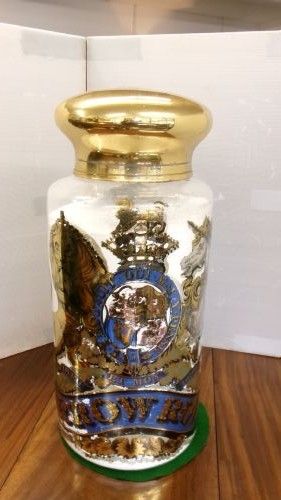
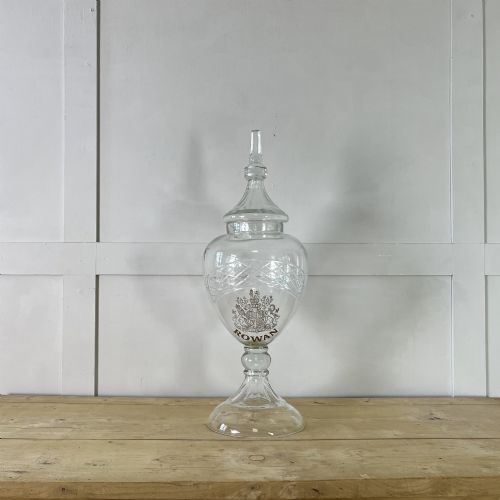
When you search for vintage pharmacy display jars, you are looking at substantial glass vessels designed to hold medicines, dry ingredients, or chemical solutions in apothecary shops. These pieces span the Victorian and Edwardian eras, coming to us from 19th-century Britain and France with clear utilitarian roots. On this page, you are most likely to meet large display jars and chemist bottles featuring stoppers and occasionally painted or etched labels denoting contents like arrowroot or gelatine.
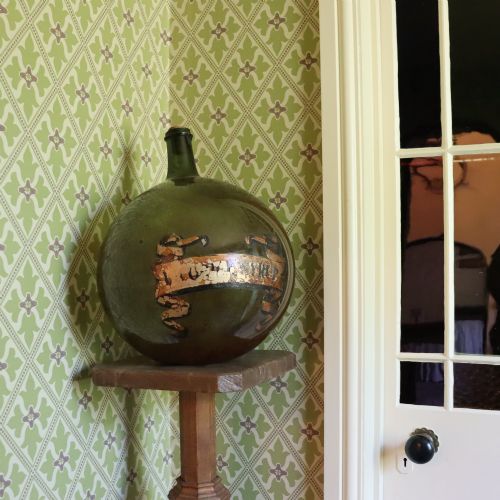
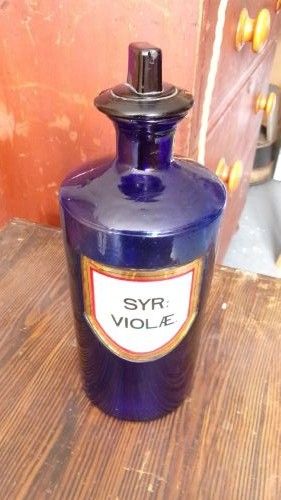
The forms range from towering carboys intended to catch the eye in a chemist's shop window to paired jars and smaller counter vessels. Many examples rely on blown glass techniques, showing the characteristic bubbles and irregularities of nineteenth-century manufacture. Alongside standard clear glass, you will find rich Bristol blue chemist bottles that provide an intense wash of colour when placed near a window.
How they were made
These vessels rely fundamentally on heavy blown glass, shaped by hand into large carboys, display jars, and chemist bottles with thick walls designed to withstand daily apothecary use. Artisans formed matching stoppers, such as lollipop stoppers, to seal the contents tightly against moisture and air.
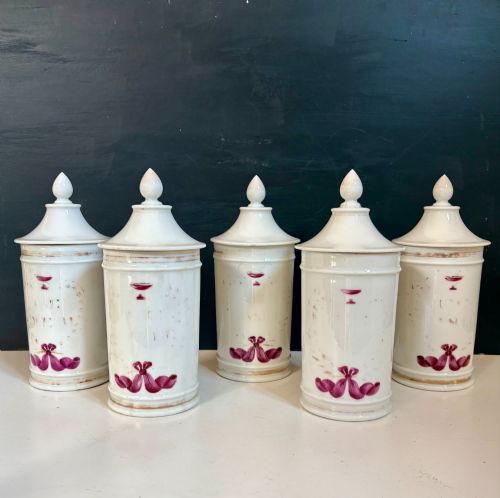
Decoration on these jars often involved delicate etching directly into the glass surface or hand-painted details enhanced with gold leaf. Brass and other metals occasionally appear on associated fittings or related pieces, while some related apothecary vessels utilise ceramic or porcelain bodies.
A Victorian chemist jar labeled for arrowroot once held the starch used to thicken everything from children's puddings to stiffen gentlemen's detachable collars.
What varies in quality
Quality in these display jars lies in the depth and clarity of the glass, the weight of the vessel, and the integrity of any original stopper. Heavier blown glass with deep colour saturation and minimal modern replacement parts commands greater attention from collectors.
The presence of crisp, original hand-etched lettering or intact gold leaf labels elevates an ordinary chemist bottle into a distinguished display piece. The survival of a matching cover or stopper that belongs correctly to the jar's neck completes the integrity of the object.
The Vintage Pharmacy Display Jars Glossary
- Carboy
- A very large glass vessel with a narrow neck, traditionally used in laboratories and apothecary shops for holding large volumes of liquids. These large display pieces often sat in shop windows to signal the chemist's trade.
- Chemists bottle
- A smaller glass container used on dispensary shelves to store specific dry drugs or liquid tinctures. They frequently feature ground glass stoppers and remnants of paper or painted labels.
- Lollipop stopper
- A glass stopper characterised by a flat, circular disc top that resembles a lollipop, designed to seal large apothecary jars securely. Finding a jar with its original matching stopper is a notable advantage.
- Blown glass
- Glass shaped by inflating molten glass on the end of a blowpipe, a technique that leaves subtle swirls and bubbles within the material. This method defines the production of nineteenth-century apothecary vessels.
- Gold leaf
- Extremely thin sheets of beaten gold applied to glass surfaces for lettering and decoration. It offers a luminous, reflective quality that contrasts sharply with dark liquids or deep blue glass.
Vintage Pharmacy Display Jars: Frequently Asked Questions
What were vintage pharmacy display jars used for?
Apothecaries and chemists utilised these large glass vessels to store dry medicinal ingredients, herbs, powders, and liquid remedies behind the counter or in the dispensary. Large carboys filled with coloured water also stood in front windows as glowing symbols of the apothecary's profession.
In modern interiors, these jars function purely as decorative objects, prized for their imposing scale, industrial history, and vibrant coloured glass.
How do I identify Victorian pharmacy jars?
Victorian pharmacy jars typically display the heavy walls, pontil marks, and trapped air bubbles characteristic of nineteenth-century hand-blown glass production. Look for traditional forms such as broad chemist bottles, tall display jars with matching covers, and pieces bearing etched labels for specific substances like gelatine or arrowroot.
French nineteenth-century examples often feature distinct etching styles and refined proportions compared to their heavier British counterparts. The presence of specific nineteenth-century stylistic cues helps separate these genuine antique pieces from later reproductions.
What is a chemist carboy?
A chemist carboy is a substantially oversized glass vessel with a rounded body and a short neck, designed to hold large quantities of chemical solutions. Apothecaries placed them prominently in shop windows, often filled with brightly coloured water to attract passing trade.
These large display pieces represent some of the most dramatic and sculptural items surviving from nineteenth-century pharmacies.