

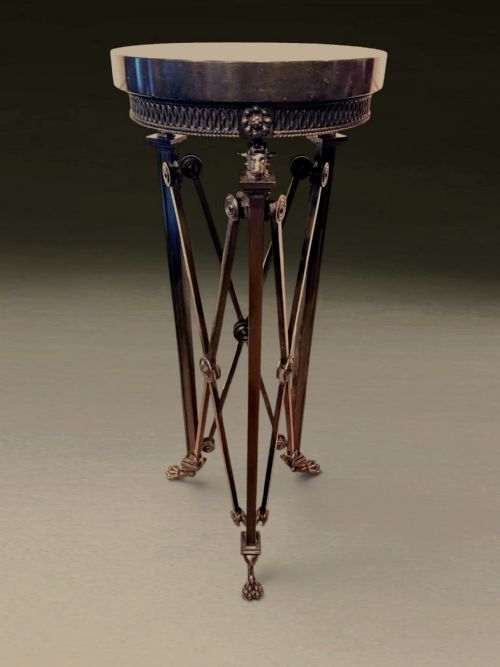
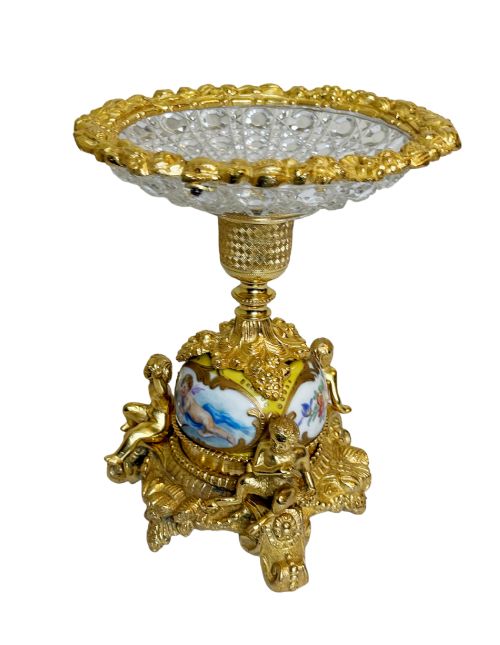
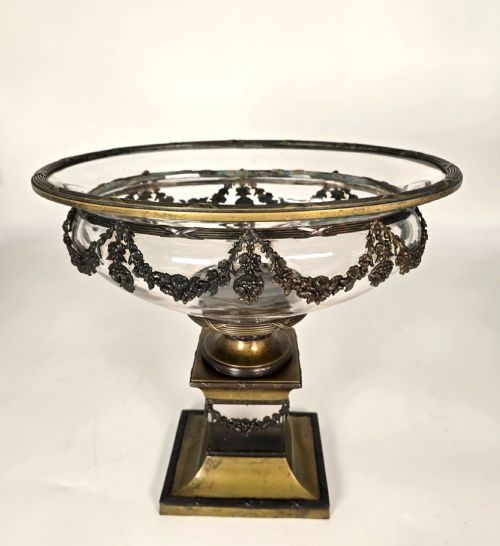
Antique Bronze Pedestals
Solid bronze pedestals and columns cast in nineteenth-century workshops elevate sculpture and display urns with classical weight.
Antique Bronze Pedestals
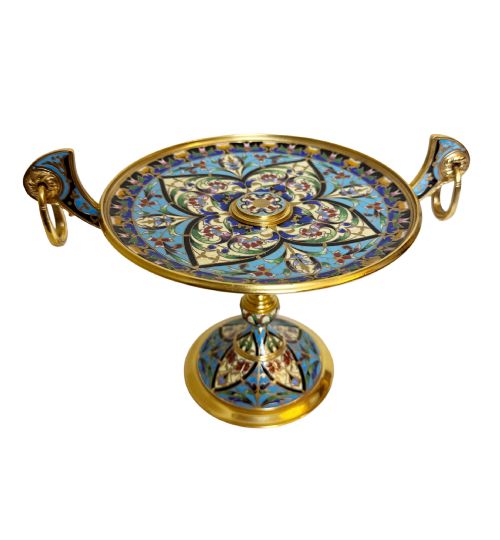
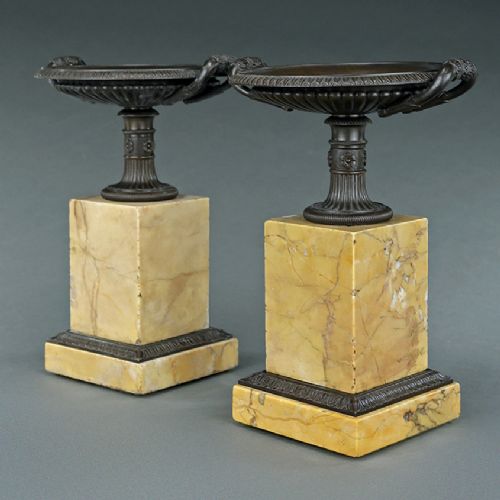
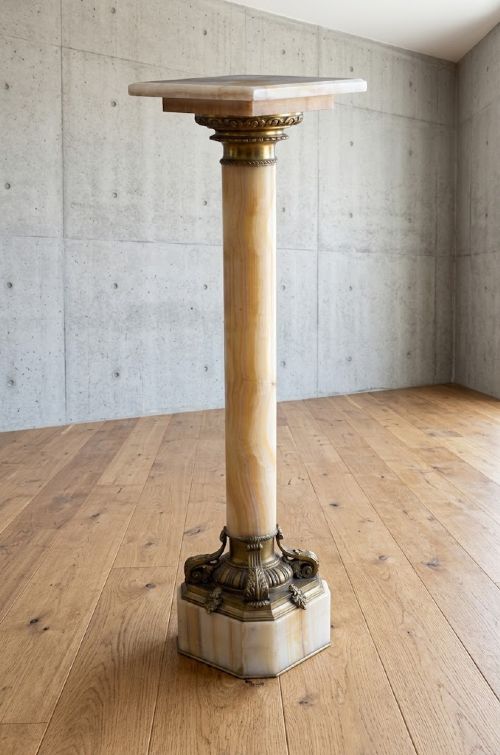
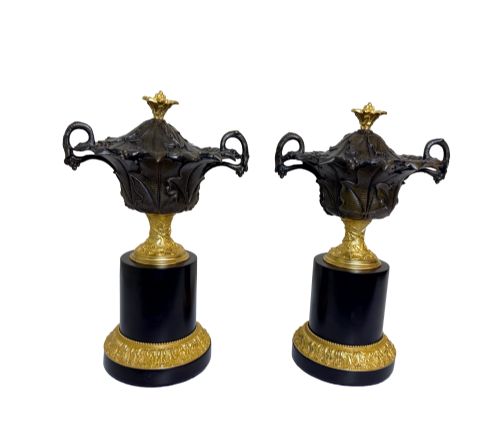
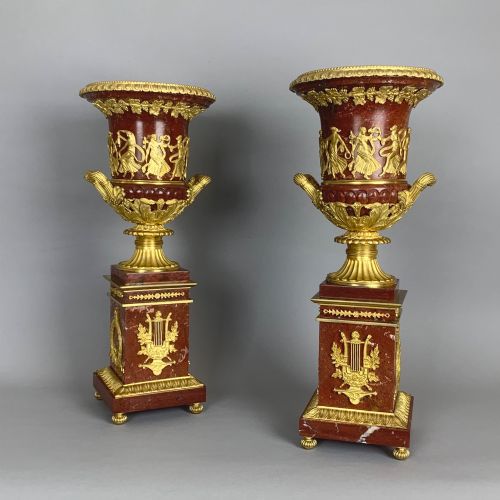
Antique bronze pedestals combine cast metal shafts with contrasting stone bases, often appearing as architectural columns supporting ornamental vessels. These pieces emerge predominantly from nineteenth-century French workshops influenced by classical revival movements and Grand Tour tastes.
The selection frequently includes marble columns fitted with ormolu collars, onyx supports, and associated pedestal bases designed for display. Makers adopted styles ranging from French Empire and Regency to Neoclassical Revival, integrating bronze mounts into mahogany, marble, and glass furniture forms.
Materials and Technique
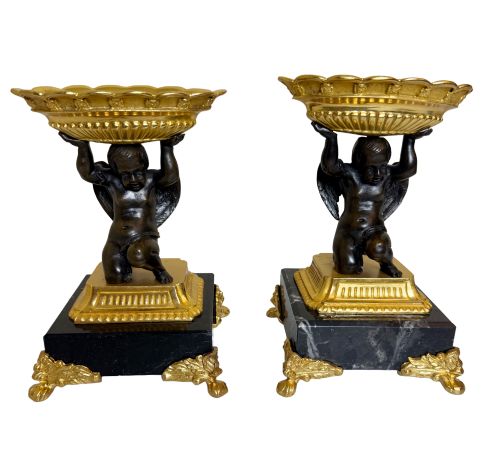
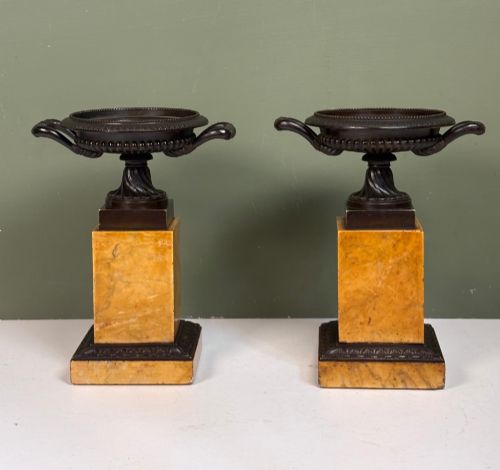
Craftsmen utilised cast bronze and fire-gilded ormolu alongside natural stones such as Siena marble, onyx, and white marble for column shafts and bases. Metal components were cast, chased, and occasionally gilt, then fitted mechanically to stone sections using threaded rods or collars.
Wood elements incorporate mahogany, kingwood, and ebonised timber, often accented with brass or silvered bronze mounts. The combination of patinated bronze and polished stone demanded precise turning and metal-fitting skills from nineteenth-century artisans.
Judging Quality
Quality rests upon the crispness of the bronze chasing and the selection of the stone. Superior examples display sharply defined cast ornament, deep hand-chased details, and dense, unblemished marble or onyx with harmonious natural veining.
Construction integrity and the weight of the metal distinguish finer works from standard productions. Heavy, well-balanced bronze mounts and tight joints between stone sections indicate superior workshop standards.
Mercier Frères·Josef Lorenzl·Emile Guillemin·Jean Antoine Houdon·George Smith·Thomas Hope·Benetfink And Co
The Antique Bronze Pedestals Glossary
- Ormolu
- Gilded bronze produced by applying a mercury and gold amalgam to a bronze base and heating it until the mercury vaporised. This technique creates a durable, golden surface finish characteristic of French decorative arts.
- Grand Tour
- A cultural journey undertaken by wealthy young Europeans in the eighteenth and nineteenth centuries to study classical art. Souvenirs from these travels included miniature bronzes and marble architectural fragments.
- Gueridon
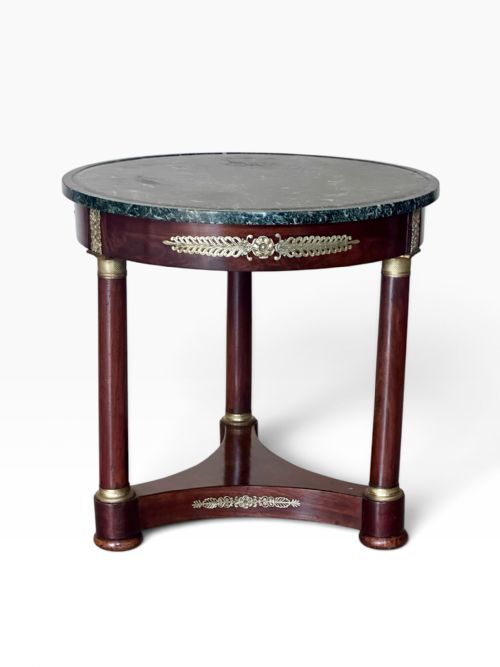
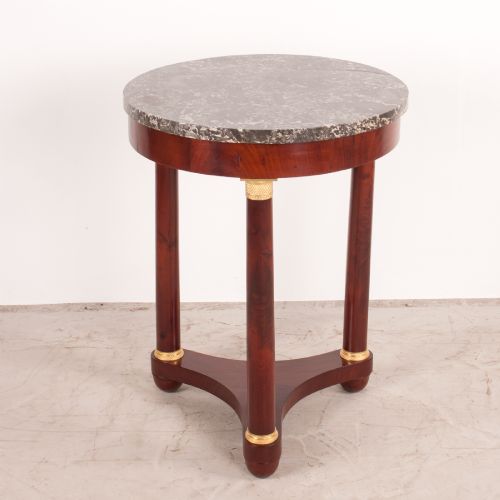
- A small circular table supported by a central column or figures, often topped with marble. These pieces share stylistic roots with classical pedestals.
Antique Bronze Pedestals: Frequently Asked Questions
What supported these bronze pedestals?
These supports typically rest on heavy marble or stone bases designed to provide stability for heavy ornaments. The weight distribution ensures that tall columns remain upright when holding urns or sculptures.
Makers frequently added bronze or ormolu feet to protect the stone edges and enhance the architectural profile of the base.
How do I date an antique bronze pedestal?
Dating relies on stylistic markers such as French Empire or Neoclassical motifs combined with the manufacturing techniques visible in the bronze casting. Examining the quality of the chasing and the type of stone used helps narrow the production period to the nineteenth century.
Connecting specific mount designs to known period pattern books or registered maker styles provides further chronological context.
Where were these pieces displayed?
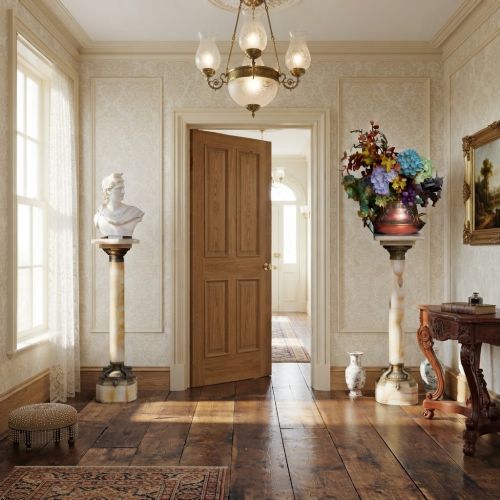
Nineteenth-century interiors utilised these columns and pedestals in reception rooms, libraries, and galleries to highlight sculpture and decorative urns. Their height drew the eye upward and created focal points within formal architectural schemes.
They also functioned as standalone decorative objects that echoed classical antiquity in domestic settings.
Are marble and bronze mixed on all pedestals?
Many examples combine bronze or ormolu with marble or onyx, though wooden torcheres and mahogany stands also appear in the category. The contrast between polished stone shafts and metallic collars defined much of the neoclassical aesthetic.
Selection depended on the specific decorative scheme of the room and the weight of the object intended for display.