
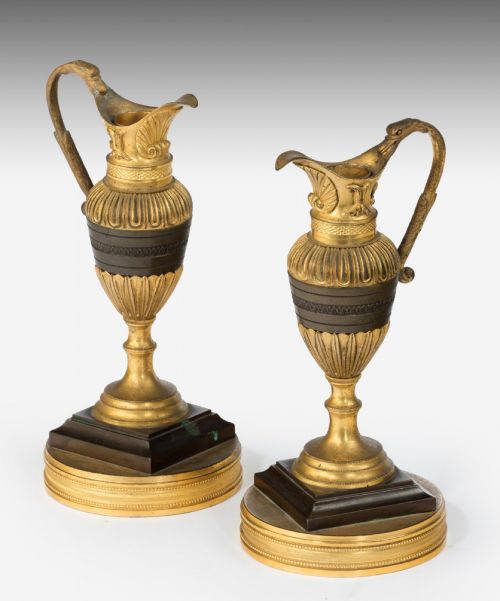


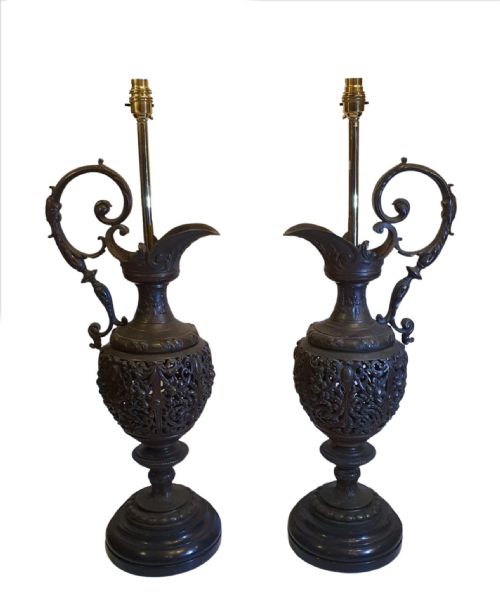


Bronze Ornamental Urns
Bronze ornamental urns bring classical proportion and rich metallic patination into a room, offering the collector a tangible piece of antiquity or its revival.
Bronze Ornamental Urns
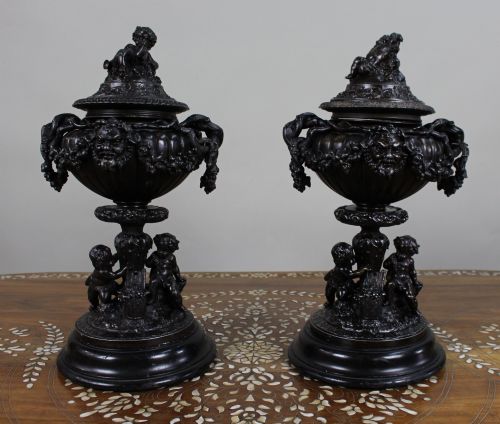
Bronze ornamental urns draw upon classical antiquity, often taking the form of campana vessels, cassolettes, or ewers created to evoke classical architecture and sculpture. When you search for bronze ornamental urns, you encounter works spanning the Regency and Victorian eras, alongside Grand Tour souvenirs brought back from Italy and France.
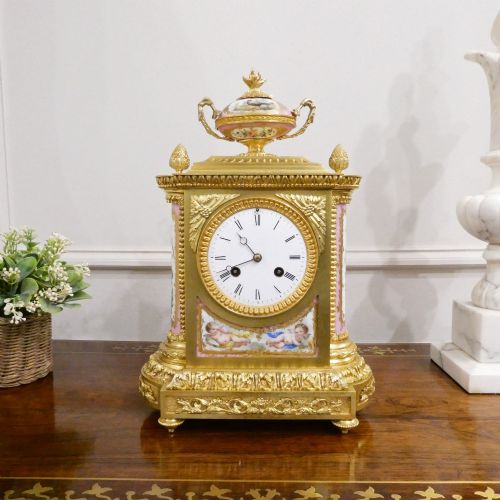
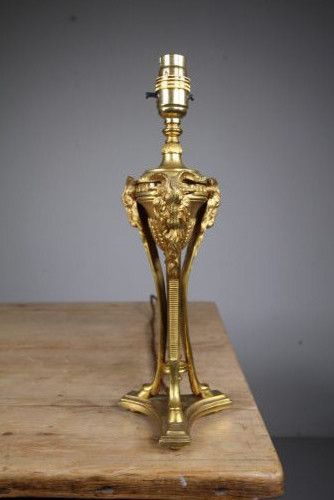
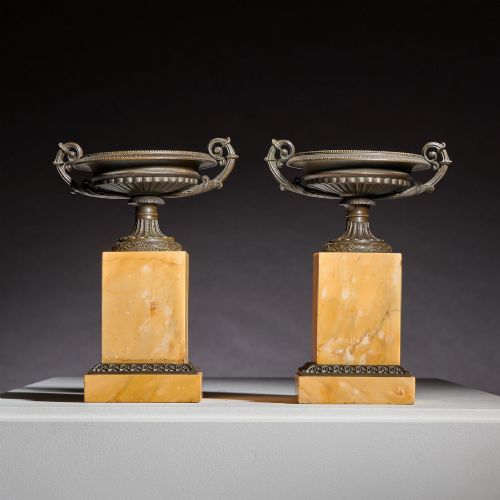
The objects frequently appear in pairs, designed for mantlepieces or side tables, and sometimes take utilitarian forms such as table lamps or clock garnitures. Neoclassical and Louis XVI revival styles dominate, showing disciplined ornamentation like rams' heads and bacchic masks cast in heavy metal.
Materials and Construction
Foundry work relies heavily on bronze, patinated bronze, and ormolu, combining dark metallic surfaces with bright gilt highlights. Makers mounted these metal vessels on bases of Siena marble, green marble, or quartz marble.
Decorative details often include applied cast brass elements, porcelain panels, and blue glass components, joined with threaded rods and pins beneath the stone bases.
Some nineteenth-century homeowners simply could not leave a good ewer alone, drilling neat holes through ancient designs to install modern lamp fittings.
Judging Quality and Execution
The richness and stability of the original patination or gilding also separate exceptional examples from those with flat or overworked surfaces, preserving the intended interplay of light across the metal.
Jean-Baptiste Delettrez
The Bronze Ornamental Urns Glossary
- Campana urn
- A bell-shaped vessel with a flared rim and footed base, frequently modelled on ancient pottery and stone finds. These forms appeared widely in nineteenth-century metalwork.
- Ormolu
- Finely ground high-carat gold applied to a bronze base through a mercury amalgamation process, yielding a durable golden finish. This technique defines much French decorative metalwork.
- Cassolette
- A dual-purpose vessel featuring a reversible lid that functions either as an urn or a burner for aromatics. They frequently incorporate marble bodies with gilt bronze mounts.
- Grand Tour
- The traditional journey through Europe undertaken by upper-class scholars and collectors to acquire antiquities and artistic souvenirs. These travels generated a steady market for miniature bronzes and marble vases.
- Ewer
- A large jug with a wide spout and looped handle, often adapted from classical drinking vessels into ornamental display pieces. Several examples in this category now function as table lamps.
Bronze Ornamental Urns: Frequently Asked Questions
How were bronze ornamental urns used originally?
These vessels served primarily as decorative focal points on mantelpieces, sideboards, and pier tables within formal rooms. Their designs echoed classical architecture to project classical learning and refined taste.
Some examples also functioned as cassolettes for burning perfumes or as parts of clock garnitures flanked by matching candelabra.
Are these urns heavy?
The combination of cast bronze, thick brass mounts, and solid marble or quartz bases makes these pieces substantially heavy. They require sturdy furniture placement to support their dense materials safely.
Lifting them demands care, particularly when dealing with tall ewers or pieces mounted on stone plinths.
How do I clean patinated bronze?
Dusting with a soft, dry cloth is sufficient for routine maintenance of patinated and gilt bronze surfaces. Avoid chemical cleaners and aggressive polishes that strip the historic finish.
Marble bases benefit from gentle wiping with a damp cloth, followed immediately by thorough drying to protect the stone.
How can I tell a Grand Tour piece apart?
Grand Tour items typically date from the nineteenth century and reflect specific archaeological discoveries made in Italy by travellers. They often combine deep green or Siena marble with patinated bronze castings of famous classical monuments or vases.
Scale is another clue, as these pieces were built as portable souvenirs rather than full-sized architectural elements.