



Ram Head Bronze Urns
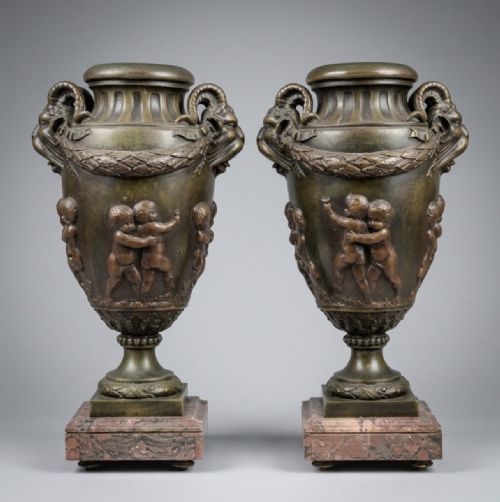
Ram head bronze urns are classical decorative vessels and lighting fixtures that bring grand neoclassical symmetry to a room.
Ram Head Bronze Urns
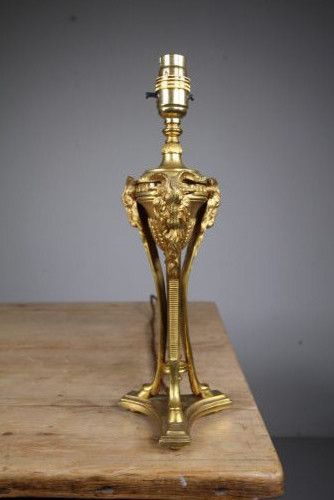
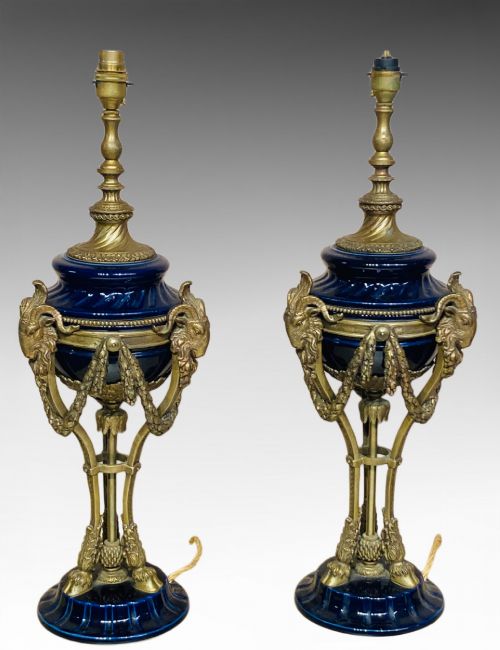
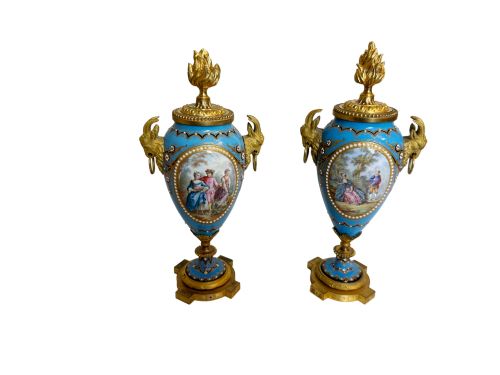
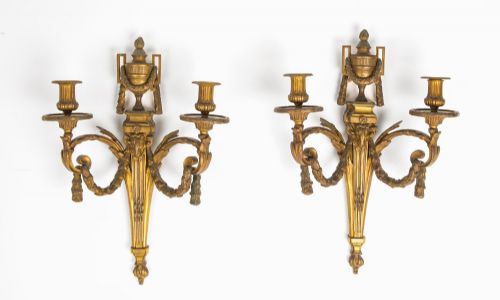
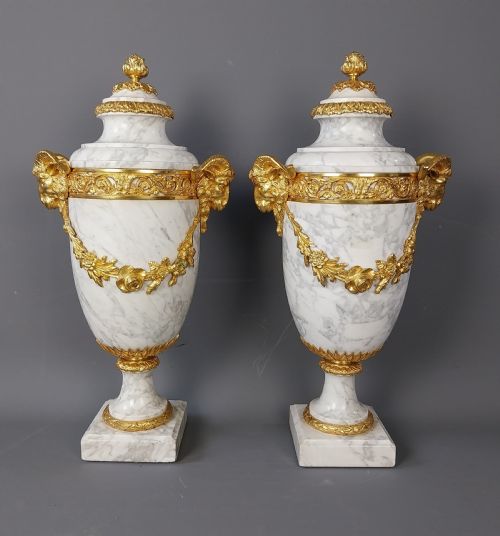
When you search for ram head bronze urns, you encounter a selection of decorative urns, table lamps, cassolettes, wall lights, and wine coolers and jardinieres. These objects date across the nineteenth century and up to nineteen forty, drawing heavily on neoclassical, Louis XVI style, Regency neoclassical, French Empire, and Gothic Revival aesthetics.
How they were made
The makers of these items utilised metals such as bronze, brass, ormolu, and spelter, often combining them with white marble, faux marble, and blue glazed elements. Metal elements were cast, patinated, or gilt to achieve rich surface textures, while stone bases provided substantial weight and contrast.
Decorative detailing incorporates cast ram's head masks and neoclassical mounts, aligning with Louis XVI and French Empire design traditions. Enamelled turquoise blue finishes and blue glazing appear alongside traditional patinated and gilt metal surfaces.
Materials recorded across the site include gilt bronze, marble, ormolu, patinated bronze, spelter, and brass.
What varies in quality
Quality rests upon the crispness of the metal casting in the ram's head masks and neoclassical foliage, where sharper chiselling and finer detail separate superior pieces from softer work. The choice of materials also defines the tier, particularly the density and polish of the marble bases versus simpler metal or spelter construction.
The integration of secondary materials, such as ormolu mounts fitted to marble vases or the precision of blue glaze and enamel work, dictates the overall refinement. Heavier cast bronze and genuine ormolu sit above lighter spelter alternatives in the hierarchy of these objects.
The Ram Head Bronze Urns Glossary
- Ormolu
- Gilded brass or bronze applied to decorative arts, providing a bright gold-coloured surface finish. It appears frequently on nineteenth-century French and English mounts.
- Cassolette
- A vessel functioning as a perfume burner or vase, often featuring a reversible lid that conceals an inner bowl. These pieces are commonly associated with neoclassical designs.
- Spelter
- A zinc alloy used as a less costly alternative to bronze for decorative castings. It is frequently patinated to resemble older bronze.
- Neoclassical
- A style drawing inspiration from the classical art and architecture of ancient Greece and Rome. It dominates the ornamentation of these urns and lighting fixtures.
- Patinated Bronze
- Bronze treated chemically to produce a specific surface colour or dark tone. This finish highlights the underlying form and cast details.
Ram Head Bronze Urns: Frequently Asked Questions
Where were these urns placed originally?
These decorative urns and cassolettes were designed to adorn mantelpieces, side tables, and grand architectural interiors during the nineteenth century. Their classical motifs suited formal reception rooms and libraries.
Larger scaled items like wine coolers and jardinieres served practical functions during dining and entertaining, combining utility with neoclassical display.
How do I distinguish ormolu from spelter?
Ormolu consists of gilt bronze or brass, offering a weightier feel and sharper cast details that hold crisp edges. Spelter is a softer zinc alloy which tends to feel lighter and can show smoother, less defined casting.
Examining the underside or mounting points often reveals the base metal beneath the surface finish, clarifying the material composition of the piece.
What periods do these pieces represent?
The available selection spans the nineteenth century, including specific references to the Regency period and eighteen eighty, alongside examples dated to nineteen forty. Design influences draw heavily on Louis XVI style and French Empire aesthetics.
Stylistic markers such as specific ram's head mask designs and marble pairings help indicate the nineteenth-century origins of individual items.
How should I care for marble and bronze?
Bronze and ormolu surfaces require gentle dusting with a soft cloth to preserve the patination and gilt finishes. Avoid harsh chemical cleaners that can strip the metal treatments.
Marble bases benefit from occasional wiping with a damp cloth followed by immediate drying to protect the stone from moisture and staining.