


Fluted Pedestal Urns
Fluted pedestal urns are classical decorative vessels and stands bringing architectural presence to interiors and gardens alike.
Fluted Pedestal Urns
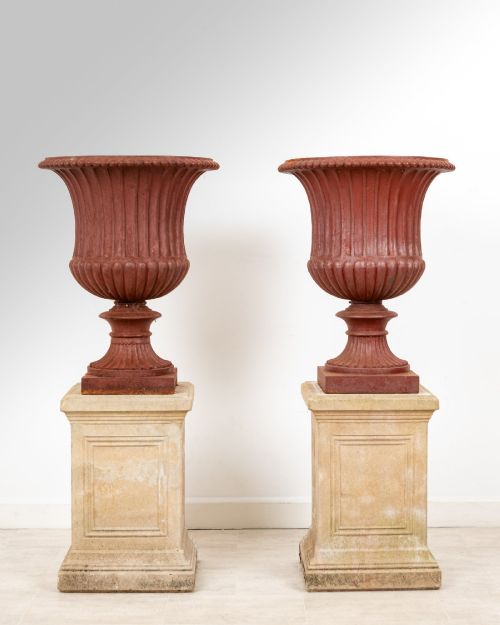
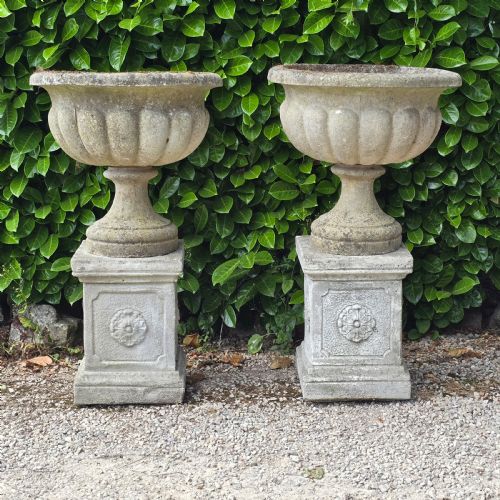
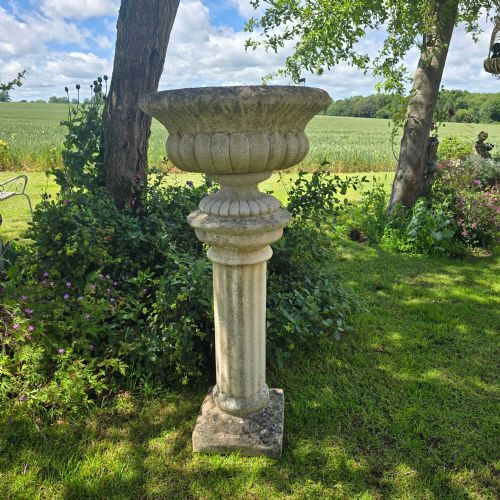
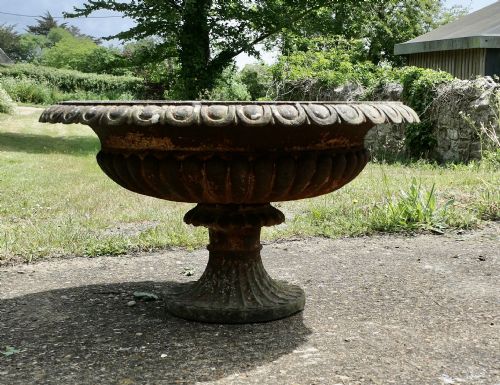
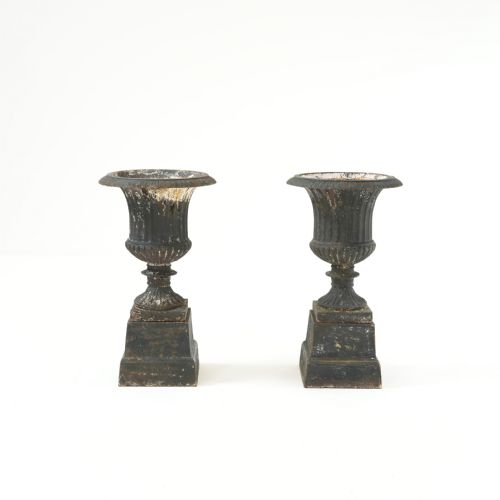
Fluted pedestal urns span the 18th century, Georgian, Regency, and Victorian periods, alongside later 20th-century revivals. The versions most commonly encountered on this page are cast iron garden urns mounted on stone pedestals or plinths.
Forms range from garden urns and planters to interior plant stands, torcheres, and decorative vases. Materials shift from robust cast iron and stone for exterior use to carved mahogany and rosewood for indoor display.
Stylistic influences draw heavily from neoclassical, classical revival, and George III design traditions. Buyers select these pieces to anchor a garden walkway or provide height for floral displays in a formal room.
How they were made
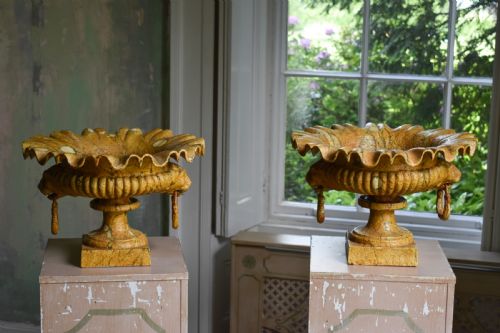
Metal items rely on foundry casting, utilising durable cast iron or patinated bronze shaped into campana and classical vessel profiles. Iron pieces often show the weathered surfaces accumulated over decades outdoors.
Wooden stands and pedestals utilise dense timbers like mahogany and rosewood, shaped through turning and hand carving. These interior pieces frequently incorporate slender shafts and stepped bases to support upper urns or torcheres.
Some 19th-century wooden pedestals conceal secret compartments for safeguarding valuables.
What varies in quality
Quality rests upon the crispness of casting detail in iron and bronze work, or the depth of hand carving in mahogany and rosewood stands. Superior examples maintain balanced proportions between the vessel and its supporting pedestal.
The integrity of the material surfaces dictates the grade of the piece, whether through stable patination on exterior metals or fine grain definition in polished interior hardwoods.
Andrew Handyside
The Fluted Pedestal Urns Glossary
- Campana urn
- A bell-shaped garden vessel with an everted rim and a tapering lower body. This classic silhouette originates from ancient Roman pottery and stone prototypes.
- Torchere
- A tall stand designed to hold a light, plant, or decorative urn. These slender wooden supports typically date from the 18th and 19th centuries.
- Plinth
- A heavy rectangular block or base supporting an urn or pedestal. It elevates the vessel to improve overall visual proportion.
- Jardiniere
- An ornamental pot or stand intended for holding plants or flowers. Interior examples often employ fine timbers like mahogany and rosewood.
- Neoclassical
- A style drawing inspiration from the classical art and architecture of ancient Greece and Rome. It dominates much of the 18th-century and 19th-century metalwork seen here.
Fluted Pedestal Urns: Frequently Asked Questions
Where should I place a cast iron urn?
Cast iron urns suit outdoor garden settings, courtyards, and terraces where weather-resistant materials endure the elements.
Their substantial weight anchors them firmly on patios, lawns, or garden steps without requiring permanent fixings.
How do I use wooden pedestals indoors?
Wooden pedestals and torcheres provide height for displaying table lamps, floral arrangements, or sculptural pieces.
Placed in corners or entryways, they draw the eye upward and add architectural structure to a room.
How do I date a mahogany torchere?
Dating relies on timber selection, turning techniques, and stylistic clues connecting the piece to Georgian, Regency, or Victorian cabinet-making traditions.
Examining the construction methods underneath reveals the period of manufacture.