





Neoclassical Bronze Garniture
A neoclassical bronze garniture brings architectural symmetry and classical discipline to a mantelpiece, combining gilt metal and stone in a balanced display.
Neoclassical Bronze Garniture
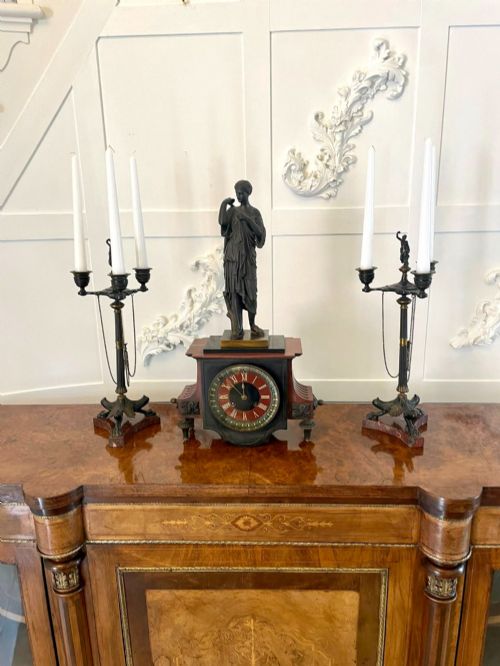
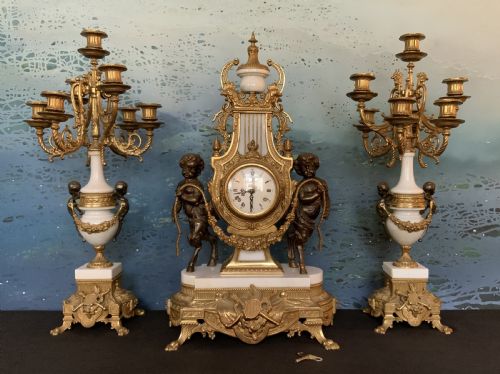
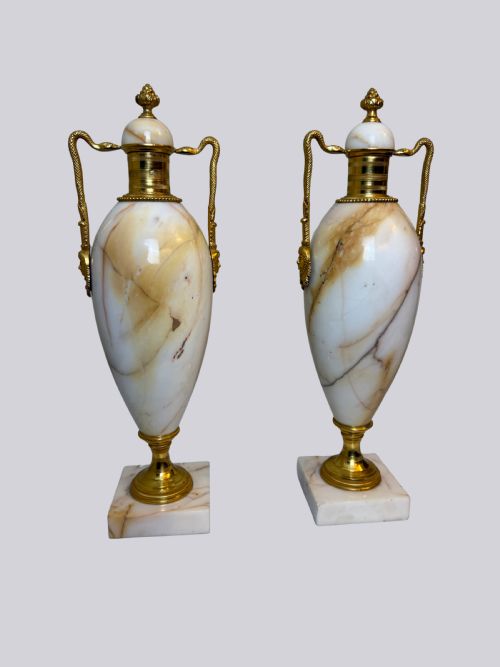
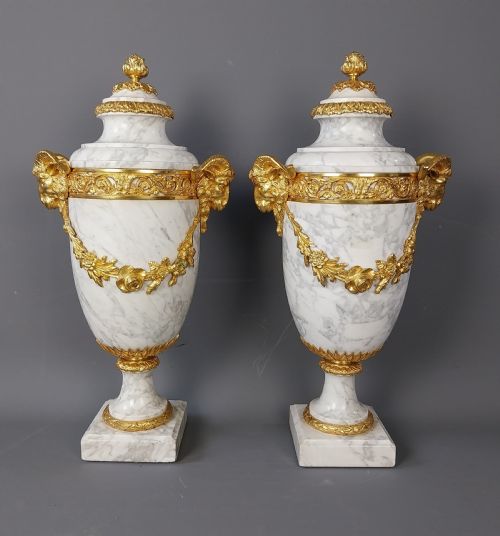
A neoclassical bronze garniture typically comprises a central mantel clock flanked by matching pairs of decorative urns, cassolettes, or candelabras. These decorative sets originate primarily from the nineteenth century, including Victorian examples and French Empire or Louis XVI styles.
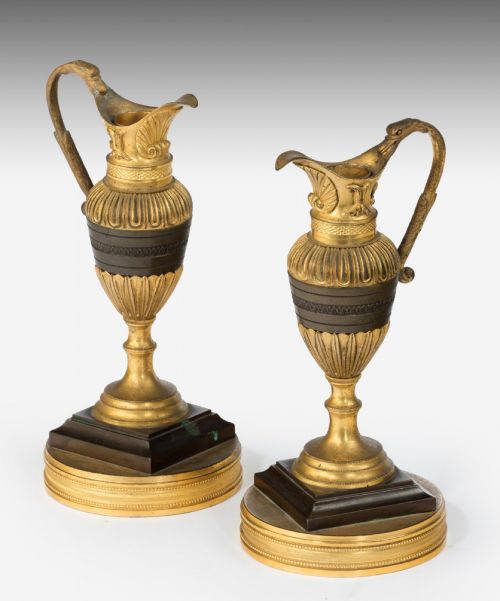
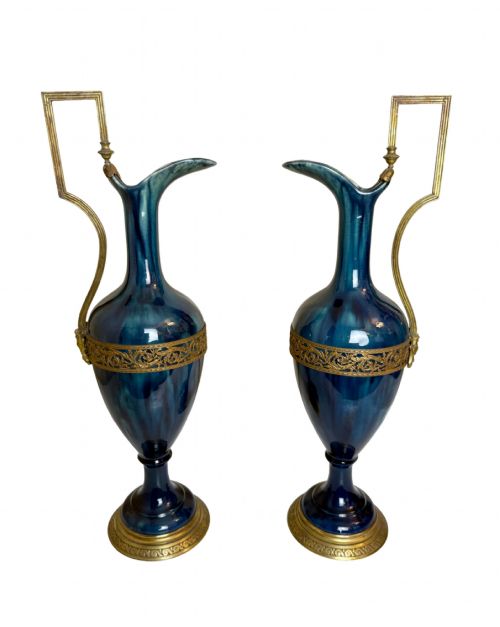
The objects take various classical forms such as amphora vases, decorative urns, and sculptural ewers mounted on stone plinths. Buyers most frequently encounter pairs of marble vases alongside central timepieces featuring eight-day movements.
Originating largely from French and Italian workshops, these arrangements reflect classical revival aesthetics through disciplined symmetry. The configuration serves both a practical timekeeping function and a formal decorative purpose on large mantelpieces.
Materials and construction
Maker workshops combined cast bronze and ormolu with natural stones like white marble, white onyx, and coloured marble. Metal elements were cast, chased, and fire-gilded to create contrasting metallic finishes against polished stone plinths.
Clock movements integrated mechanical gear trains, sometimes signed by makers such as AD Mougin or Ferdinand Berthoud, fitted within stone and gilt metal housings. Stonework was turned on lathes and joined with patinated and gilded metal mounts.
Current listings demonstrate a prevalence of nineteenth-century French and Italian manufacture, combining marble and gilt bronze across clock sets and decorative urns.
Quality differences
Quality rests in the crispness of the bronze chasing and the depth of the ormolu gilding. Finer pieces display sharply defined classical foliage and figures, whereas simpler items show softer cast details.
The selection of stone also divides the range, with solid white marble and figured onyx bases providing greater weight and presence than lesser composite materials. Complete three-piece matching sets demonstrate higher cohesion than assembled groups.
Ferdinand Barbedienne·AD Mougin Paris·Ferdinand Berthoud
The Neoclassical Bronze Garniture Glossary
- Garniture
- A set of matching decorative objects designed to be displayed together on a mantelpiece or sideboard. Typically consists of a central clock accompanied by two flanking urns or candelabras.
- Ormolu
- Finely ground high-carat gold mercury-gilded to a bronze object. This technique produces a durable, rich metallic lustre characteristic of French decorative metalwork.
- Cassolette
- A dual-purpose decorative vase featuring a reversible lid that transforms the vessel from a closed urn into a candleholder. These often incorporate marble and gilt bronze elements.
- Plinth
- A heavy rectangular or square base supporting a statue, urn, or clock. In these sets, they are frequently rendered in white marble or onyx.
Neoclassical Bronze Garniture: Frequently Asked Questions
What is a clock garniture?
A clock garniture is a matched decorative set designed for a mantelpiece, featuring a central clock paired with matching side pieces like urns or candelabras.
These sets create a balanced, symmetrical display that dominated nineteenth-century formal interior decoration.
How do you style a garniture?
Place the central clock in the exact middle of a mantelpiece or sideboard with the matching urns or candelabras positioned symmetrically on either side.
This arrangement maintains the classical architectural balance intended by nineteenth-century designers.
What periods do these pieces come from?
The majority of pieces date from the nineteenth century, encompassing Victorian production as well as French Empire and Louis XVI revival styles.
Earlier eighteenth-century examples also appear alongside later nineteenth-century interpretations of classical forms.
What materials were used?
Craftsmen utilised cast bronze, ormolu, and gilded brass combined with white marble, coloured marble, and white onyx.
Enamel dials and porcelain inserts also feature in the clock faces and decorative urn bodies.