



Pair Bronze Cassolettes
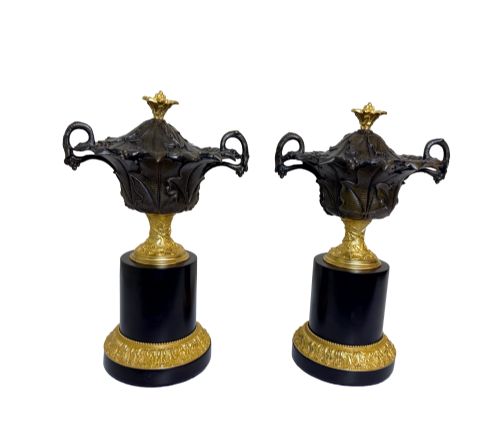
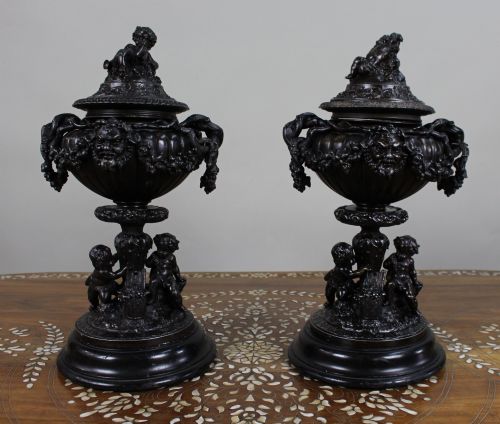
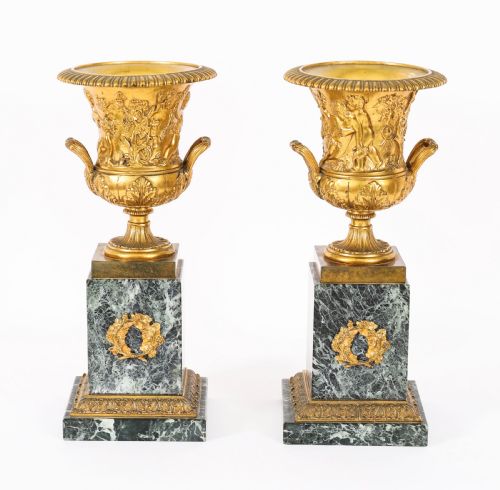
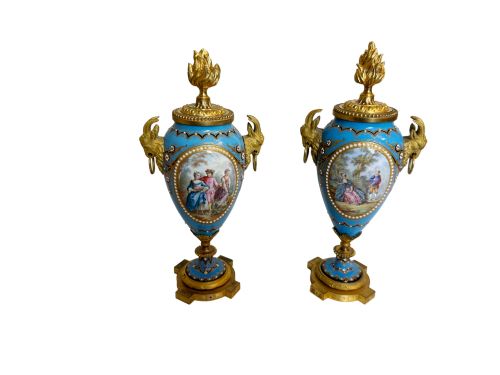
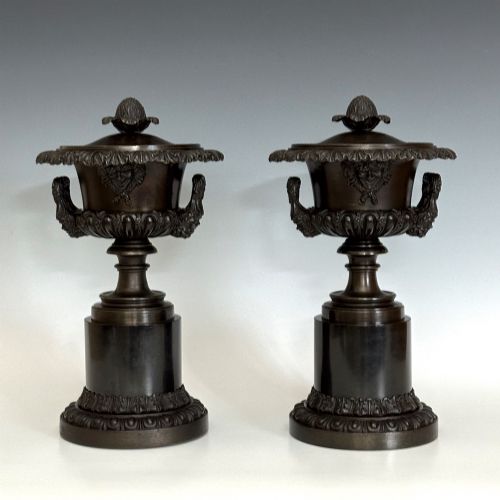
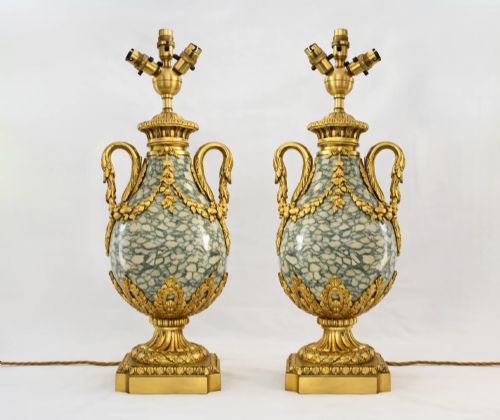
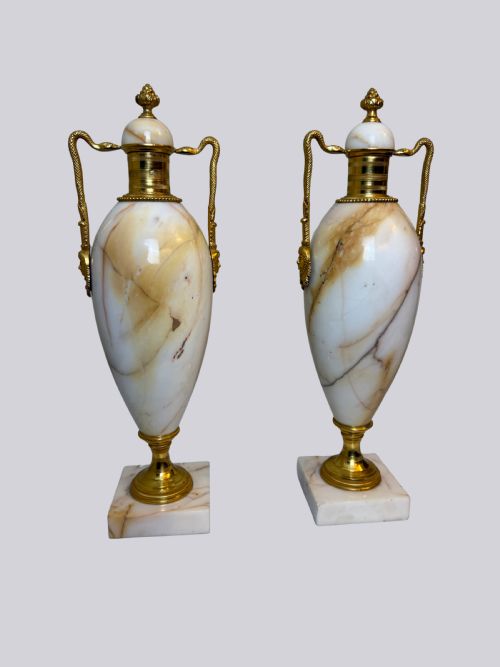
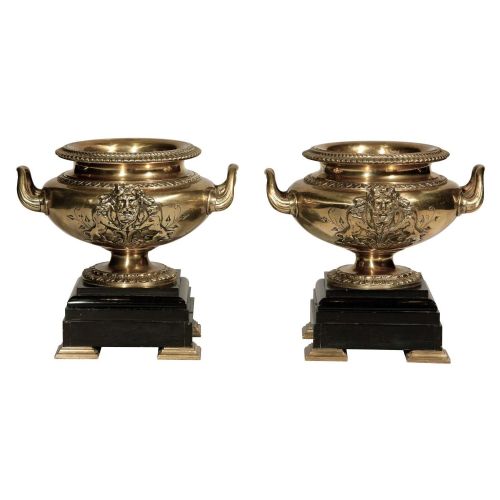
These pair bronze cassolettes bring dual-purpose neoclassical elegance to a room, turning effortlessly from a covered urn into a candle holder.
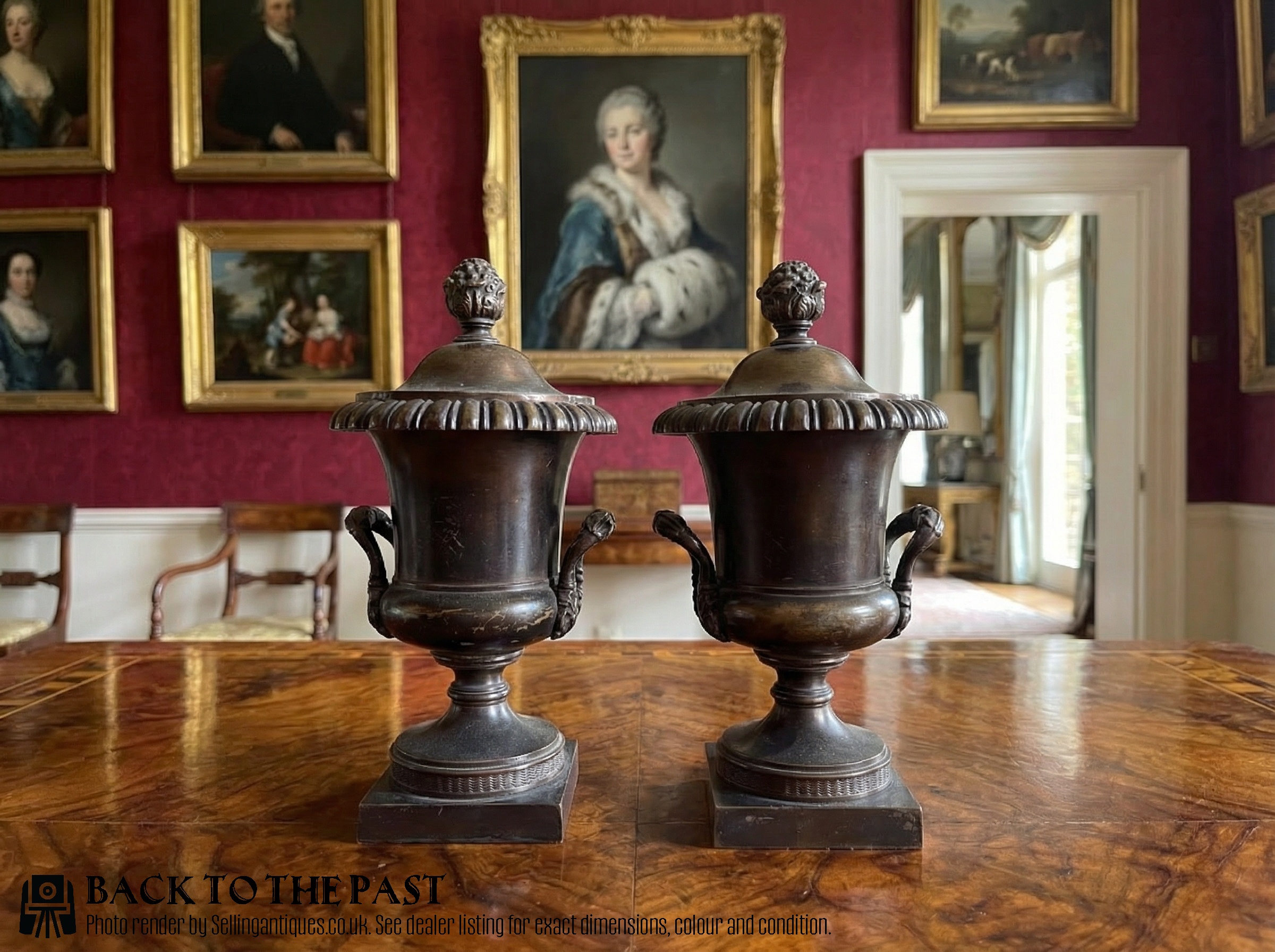
Pair Bronze Cassolettes
When you search for pair bronze cassolettes, you encounter decorative dual-function vessels designed during the nineteenth century, most frequently taking French or Italian neoclassical forms. These dual-purpose objects combine cast metal bodies with stone plinths, following classical campana or amphora shapes that emerged during the Regency and Victorian periods.
The version you meet most often on this page is the nineteenth-century French cassolette featuring a reversible lid that exposes either a solid top or a candle nozzle. Makers of the period drew heavily on Louis XVI and Empire styles, mounting patinated or gilt bronze onto marble bases of various colours.
Materials and construction methods
The primary materials recorded in these pieces are bronze, ormolu, and varied marbles such as white, green, sienna, and rouge. Founders utilised patinated and gilt bronze for the figural mounts, handles, and foliage, casting them to sit upon turned or block stone pedestals.
Craftsmen joined the metal components to the stone using threaded pins and securing nuts, allowing the dual-design lids to reverse cleanly. Many examples incorporate subsidiary elements in onyx, quartz, or silvered bronze to enrich the decorative surface.
Some models feature hidden dual personalities, transforming from a solemn classical urn into a candle holder with a simple flip of the lid.
Distinctions in quality
Quality in these vessels rests on the crispness of the chasing and the weight of the cast metal components. Finer examples display deeply undercut foliage and crisply defined masks on the bronze, whereas simpler pieces show softer, rounded contours from worn moulds.
The selection of the stone plinth also dictates the tier of the piece, with dense, unblemished marble and heavy fire-gilt ormolu mounts marking the upper end of the range. The precision with which the reversible lid fits the neck of the vase indicates the care taken by the original maker.
The Pair Bronze Cassolettes Glossary
- Cassolette
- A reversible vessel that functions as an ornamental urn on one side and a candlestick or burner when flipped. The double-ended lid allows the owner to change the visual function of the object.
- Ormolu
- Finely ground high-carat gold applied to bronze through a mercury amalgamation process, or later via electroplating. This technique gives the metal mount a rich, durable golden finish.
- Campana
- A bell-shaped vessel form derived from ancient Roman pottery. This classical silhouette appears frequently in nineteenth-century bronze and marble urns.
- Grand Tour
- A nineteenth-century cultural journey undertaken by wealthy Europeans to study classical antiquities. Objects made in this manner emulate the ancient artefacts collected during these travels.
- Patinated Bronze
- Metal treated with chemical solutions to produce a darkened surface colour ranging from deep brown to green. This treatment highlights the bright gilt mounts applied over the body.
Pair Bronze Cassolettes: Frequently Asked Questions
What is a cassolette?
A cassolette is a decorative dual-purpose vessel featuring a reversible lid that transforms the piece from an ornamental urn into a candlestick or burner.
This clever mechanical design allows the owner to alter the display of the mantelpiece or table setting by simply flipping the central top component.
How do I use them in a room?
These pieces sit well on mantelpieces, side tables, and pedestals where their neoclassical lines and contrasting stone bases catch the light.
They work effectively as symmetrical pairs framing a mirror or clock, adding height and architectural structure to an interior scheme.
How do I date these pieces?
Dating relies on examining the casting technique, the wear on the bronze, and the specific style of the marble mountings. Nineteenth-century examples often show hand-filed surfaces and traditional threaded fixings beneath the stone plinths.
Stylistic cues such as Louis XVI revival details or Empire motifs help narrow the period down within the broader Victorian and nineteenth-century eras.
What are the common materials?
The primary components combine cast bronze, gilt bronze, ormolu, and various types of marble including white, green, sienna, and rouge. Subsidiary elements in onyx, quartz, and silvered bronze also appear across the surviving examples.
These materials were chosen for their durability and the striking visual contrast between the dark or gilded metal and the polished stone.